crankshaft · 2026-05-30

Crankshaft Renault Manufacturer China: Sourcing Guide

If you are sourcing a crankshaft Renault manufacturer China for aftermarket distribution, OEM supply, or repair-network contracts, the key questions are simple: can the plant hold dimensional consistency, document traceability, and support export lead times without drifting on quality. Driventus manufactures engine and powertrain components in Taizhou, Zhejiang, with export programmes for Europe, North America, Australia, and Brazil. The focus is not on generic low-cost supply; it is on repeatable machining, inspection records, and practical buyer support. Driventus is an independent aftermarket manufacturer; brand names are referenced for fitment only. This matters when a drawing must match journal diameter, fillet radius, runout, heat-treatment condition, and surface finish across multiple lots. The sections below explain what procurement teams should verify before they place a sample or production order, and how to compare suppliers on evidence rather than claims.

What buyers should verify first

Renault sourcing is usually decided by evidence. A buyer should ask for the base drawing, revision level, alloy grade, heat-treatment route, and the inspection method for each journal before a sample is approved. The supplier should be able to explain how it controls journal concentricity, fillet condition, oil-hole geometry, and dynamic balance from one lot to the next. For aftermarket programmes, it also helps to know whether the part is supplied against drawing, verified sample, or a documented OE cross-reference. If you are building a supplier shortlist, start with our catalog and the broader engine components range.

Dimensional control and validation

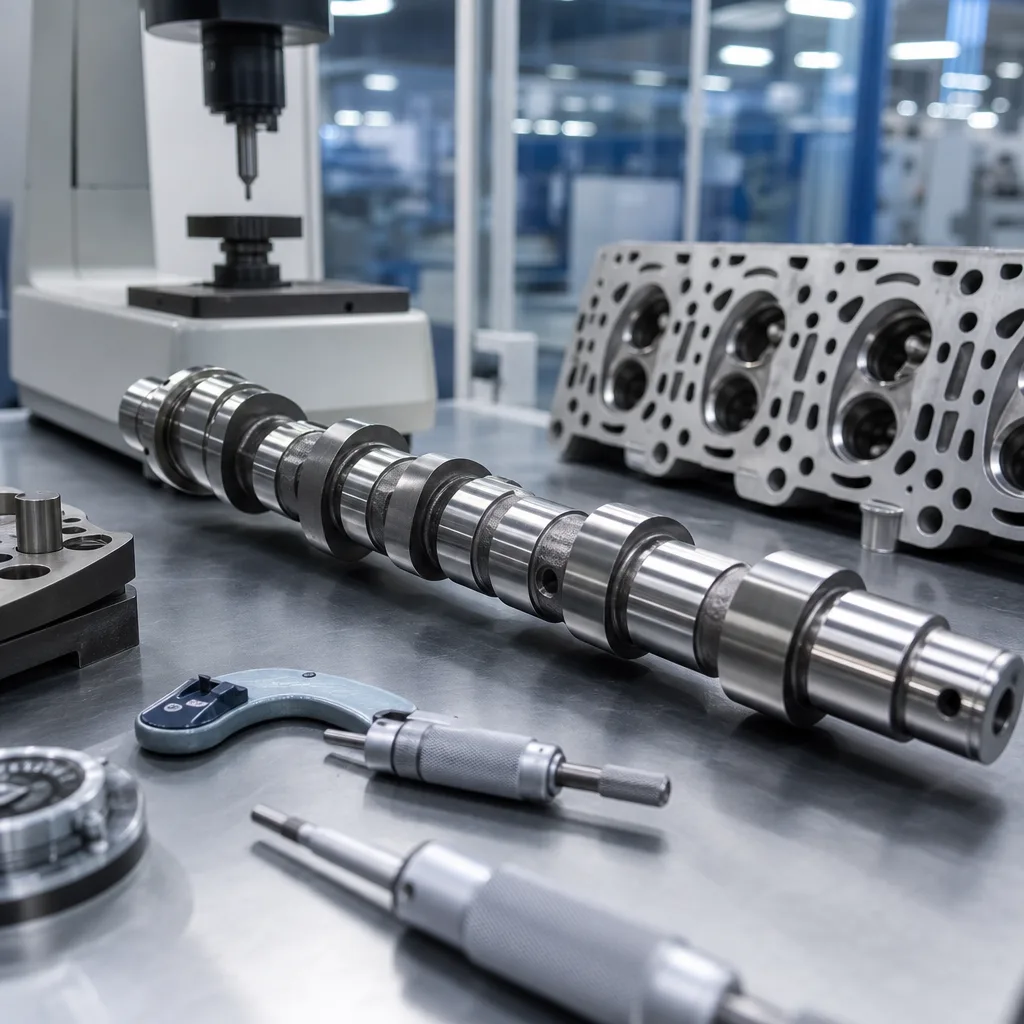
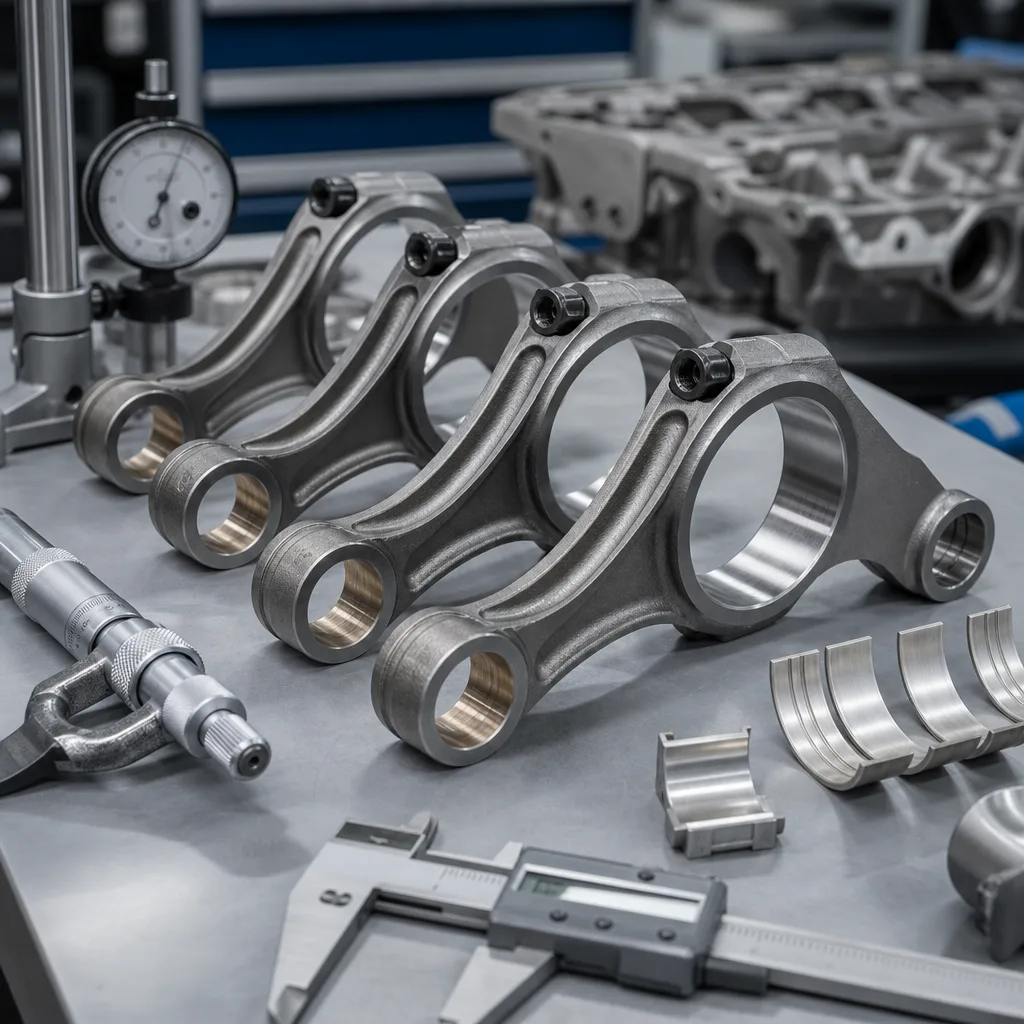
Dimensional control is where crankshaft supply succeeds or fails. The checks below are the minimum set we expect procurement teams to request before mass production. These controls fit naturally into IATF 16949:2016 and ISO 9001:2015 when they are treated as routine process gates, not as paperwork.

</tr></thead><tbody> </tbody></table>If the programme calls for a special finish, ask for the roughness limit and the inspection tool used. A quote without those documents is not complete.

Quality system and export documentation

Quality claims should be supported by paperwork. Ask for the control plan, gauge calibration status, first-article report, corrective-action process, and lot traceability fields. For EU exports, material declarations should be ready for REACH (EC) No 1907/2006 when the programme requires chemical compliance data. Driventus documents production under IATF 16949:2016 and ISO 9001:2015, and the same discipline should show up in inspection records, not only in certificates. You can review the structure of our quality system before sending drawings or samples.

Commercial terms for distributors and OEMs

B2B buyers usually need three commercial answers before they can place a trial order:

  • MOQ by part number, not just by product family
  • sample lead time versus production lead time
  • packing method for sea freight, air freight, and warehouse receipt
  • whether mixed-SKU export consolidation is available

A useful supplier will also state how it handles labels, carton strength, pallet height, and insurance documents. If the drawing changes, ask whether the factory can absorb a revised machining route without restarting the whole programme. That is where custom manufacturing becomes practical rather than theoretical.

When a custom route is better than a direct replacement

When a direct replacement is not enough, custom work is often the safer option. Reasons include a discontinued OE specification, a local requirement for different surface treatment, a change in engine tuning, or a need to reduce machining variation across multiple vehicle platforms. Driventus is an independent aftermarket manufacturer; brand names are referenced for fitment only. That means the buying process should stay anchored to dimensions, test data, and packaging requirements, not assumptions about manufacturer approval. If your team needs a revised drawing review, ask for a sample route and validation plan before releasing production volume.

The same approach applies whether you are buying one reference or building a long-term supply line across several engine families. The supplier should be able to align part geometry, packaging, and inspection data with your warehouse and service requirements, then repeat that result on the next order.

Frequently asked questions

Yes. We supply against drawings, samples, or documented cross-reference data where provided. We confirm dimensions, heat treatment, and packing before production release.

Typical files include material certificates, inspection reports, traceability data, and packing lists. Program-specific documents can be aligned with IATF 16949:2016, ISO 9001:2015, and customer requirements.

Yes. Packaging, labelling, and carton strength can be set to your distribution model, including export consolidation and mixed-SKU shipments when the order plan supports it.

Send your drawing, target annual volume, and required packing spec, and we will confirm the supply route, inspection plan, and lead time. [Request a quote](/contact.html)

Request a Quote
Control point Buyer should confirm Typical evidence
Journal sizeGround to drawing and gauged per lotCMM report or dedicated gauge record
RunoutMeasured after finish machiningFinal inspection sheet
Heat treatmentCase or core condition per specFurnace record and hardness report
Crack detectionMethod defined by programmeMagnetic particle or equivalent report
BalanceVerified on finished partBalance record and corrective action log