Crankshaft RAM OEM Supplier: Sourcing and QA Guide
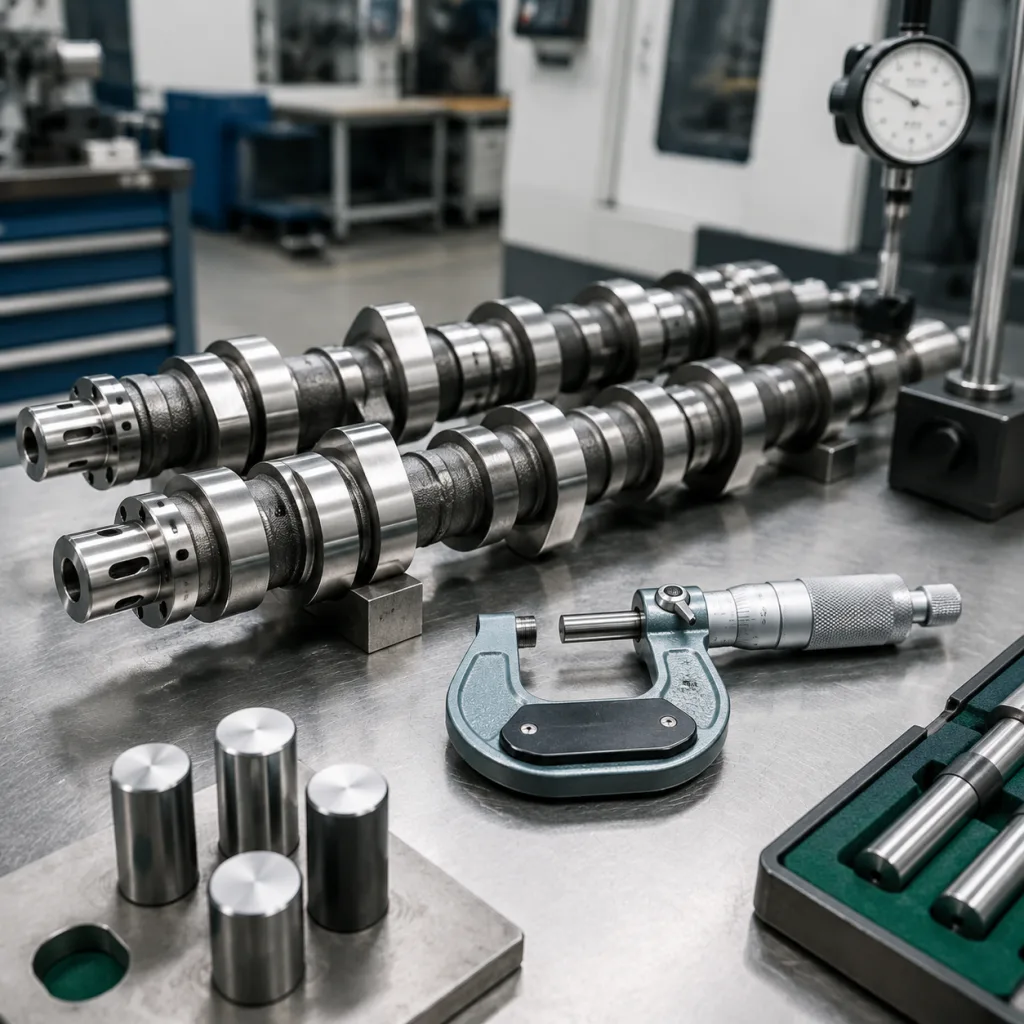
Selecting a crankshaft RAM OEM supplier is a quality and risk-control decision, not a catalogue lookup. Procurement teams need repeatable dimensions, stable metallurgy, traceable heat lots, and documentation that can stand up to a customer or vendor audit. For aftermarket distributors, OEM and Tier-1 programmes, and repair networks, the biggest sourcing risk is not only fitment. It is variation from order to order in journal size, runout, balance, surface hardness, oil passage quality, and export packaging. Driventus manufactures in Taizhou, Zhejiang, under IATF 16949:2016 and ISO 9001:2015 controls, giving buyers access to process data before volume orders are released. Driventus is an independent aftermarket manufacturer; brand names are referenced only to identify fitment. The guide below explains what to confirm in drawings, samples, lead times, compliance files, and release documents before approving a crankshaft source.
What buyers should verify first
Start by locking the technical baseline before price comparison. A RAM crankshaft programme should be quoted against a controlled drawing, the correct revision level, and a verified fitment map. If an OE cross-reference is available, keep it in the buyer file for application clarity, but make sure the supplier quotes against its own controlled part number, drawing pack, and acceptance criteria.
Confirm main and rod journal diameters, fillet radius, thrust face geometry, stroke, keyway position, oil hole details, and overall length.
Define dynamic balance, runout, hardness, surface finish, and any critical-to-quality characteristics directly on the print or inspection standard.
Ask how heat number traceability is maintained from raw material through machining, heat treatment, final inspection, packing, and shipment.
Request the approved packaging specification, including rust prevention, VCI use, palletisation, and corrosion protection for ocean freight or long storage.
Confirm whether the plant works under IATF 16949:2016 and ISO 9001:2015, and whether REACH (EC) No 1907/2006 declarations are available when the shipment scope requires them.
This early review is where a crankshaft ram oem supplier earns audit confidence. Once the first container has arrived, it is far harder to correct unclear drawings, weak traceability, or packaging assumptions.
Dimensional control and metallurgy
Crankshafts are rejected most often because a critical dimension, surface condition, or material characteristic falls outside the approved requirement. Buyers should ask for the actual control plan and inspection method, not a generic certificate that says the shipment passed.
Control point
Typical buyer request
Procurement value
Material route
Forged blank, cast route, or other approved process with mill certificates
Confirms the metallurgical base and approved manufacturing path
Journal geometry
Diameter, taper, ovality, fillet radius, thrust width, and runout by drawing revision
Protects bearing life, oil film stability, and NVH performance
Surface treatment
Induction hardening, nitriding, shot peening, or other specified process with depth and hardness checks
Supports wear resistance and fatigue performance
Oil passages
Deburring, cleanliness, passage confirmation, and plug integrity where applicable
Reduces assembly and lubrication risk
Crack detection
Magnetic particle inspection or the specified non-destructive test method
Helps identify latent defects before shipment
Validation
First article report, CMM data, hardness record, surface roughness data, and balance record
Supports APQP, PPAP-style review, or internal release
</tr></thead><tbody> </tbody></table>If corrosion protection or a coating claim is part of the specification, ask for the stated test method and acceptance limit. SAE J2527 may be relevant where it matches the finish or protective system being claimed, but the drawing and purchase specification remain the governing documents. A capable supplier should be able to explain which measurements are made in-process, which are final-inspection checks, and which records are retained for lot traceability.
Validation, packaging, and fitment
Validation should be completed before volume release. For most sourcing teams, that means an approved sample, a dimensional report tied to the drawing revision, and sign-off on special features such as oil passages, keyways, counterweights, reluctor or sensor trigger features, and any matched assembly requirements.
What to verify on the sample
Fit in the intended block, bearing set, thrust location, and mating components
Balance correction location, method, and remaining imbalance target
Surface roughness and finish consistency on main and rod journals
Hardness pattern, case depth, or treatment result where the drawing specifies it
Cleanliness of oil holes, chamfers, and deburred edges
Packaging condition after handling, transit simulation, drop test, or agreed internal check
Label traceability back to heat lot, production order, inspection record, and packing list
Packaging deserves the same attention as machining because crankshafts are heavy, polished, and vulnerable to impact or corrosion. Confirm separators, rust preventive oil, VCI material, carton strength, pallet layout, gross weight limits, and label format before shipment. A well-machined part can still become a claim if it moves inside the carton or arrives with surface oxidation.
Driventus is an independent aftermarket manufacturer; brand names are referenced for fitment only.
Commercial terms that affect total cost
Commercial terms can change the real cost of a crankshaft programme more than the quoted unit price. The items that usually create surprises are tooling, forging or casting setup, inspection time, balance requirements, export packing, documentation, and release delays.
MOQ should reflect the forging or casting setup, machining batch size, heat treatment lot, and packing efficiency rather than a generic sales target.
Lead time should be broken into tooling, sample approval, raw material allocation, blank production, machining, heat treatment, balancing, final inspection, and packing.
Confirm whether balancing, rust prevention, VCI packing, palletisation, markings, and special labels are included in the price.
Agree on Incoterms, carton count, pallet dimensions, gross weight, HS code support, certificate set, and document timing before freight booking.
For annual programmes, request a review of buffer stock, safety stock, release schedules, price breaks by volume, and any raw-material adjustment mechanism.
For private-label or distributor work, confirm carton artwork control, label language, barcode requirements, and responsibility for any regional compliance statement.
A low unit price is not low cost if the shipment arrives with missing traceability, weak packing, unclear revision control, or a late document pack. The better comparison is landed cost plus release risk: what it costs to qualify, receive, inspect, store, and sell the part without rework or customer claims.
How Driventus supports OEM and aftermarket sourcing
Driventus supports buyers that need a repeatable crankshaft source for standard coverage, second-source development, or drawing-based programmes. The company operates in Taizhou, Zhejiang, exports to more than 60 countries, and works with procurement teams that require document control, stable production records, and export-ready packing rather than broad sales claims.
The practical deliverables are straightforward: controlled revisions, traceable lots, inspection records, sample approval support, and packaging suitable for international movement. Those records help distributors, OEM and Tier-1 programmes, and multi-location repair networks build a supplier approval file that can be reviewed by quality, purchasing, and logistics teams.
For a new crankshaft programme, the fastest start is to provide the drawing, target annual volume, application or fitment reference, expected validation list, packaging requirement, and required compliance documents. Driventus can then review feasibility, tooling needs, sample timing, inspection depth, and export details before quotation. Use request a quote to begin the review.
If the part family expands beyond the crankshaft line, the same process applies across the wider powertrain range: define the technical baseline, confirm the inspection method, protect traceability, and release production only after the sample and document pack are aligned.
Frequently asked questions
Ask for the drawing revision, material certificate, heat number traceability, dimensional report, and packing specification. For controlled programmes, also request the process control points that support IATF 16949:2016 or ISO 9001:2015. If the shipment goes into the EU, confirm the REACH declaration where it is required by the product scope.
Yes. Drawing-based work is the normal route for custom crankshafts and re-engineering projects. Send the print, annual volume, target application, and any validation test list. We will confirm feasibility, tooling needs, and the acceptance criteria before production release.
Compare the revision control, traceability, inspection depth, packing, and written lead time. Do not compare price alone. A source with better process control, clearer documentation, and lower rework risk often wins on landed cost even if the unit price is higher.
If you are qualifying a new source or re-bidding an existing programme, send the drawing, target volume, and compliance list for review at /contact.html