Crankshaft Pulley Toyota Manufacturer China: Sourcing Guide
Buying a crankshaft pulley for Toyota applications is a sourcing exercise, not a simple parts purchase. Procurement teams need dimensional consistency, material control, packaging discipline, and traceability across batches. For distributors and importers, the real question is whether a supplier can maintain concentricity, balance, groove geometry, and surface finish within agreed limits while supporting stable lead times and documentation. Driventus supplies crankshaft pulleys from Taizhou, Zhejiang, with IATF 16949:2016 and ISO 9001:2015 systems in place. Driventus is an independent aftermarket manufacturer; brand names are referenced for fitment only. This guide explains what to verify before placing a PO, how to compare factory capability, and which records to request during supplier qualification. If you are evaluating a crankshaft pulley Toyota manufacturer China source, the sections below cover fitment control, QA evidence, audit points, and commercial terms that matter in B2B buying.
What buyers should verify first
Start with fitment confirmation tied to the exact Toyota application, not just a visual match. The supplier should verify OE reference, critical dimensions, pulley outside diameter, offset, hub bore, belt groove profile, and any damping or accessory-drive requirements before quoting production. Equivalent appearance is not enough when the part must align with belt tension, accessory load, and engine-speed demands.
Use concrete acceptance targets in the RFQ so every quote is based on the same bar. For many crankshaft pulley programmes, buyers ask for runout, concentricity, and balance limits stated on the drawing or inspection sheet, such as total indicated runout within 0.10 mm, groove width control within ±0.15 mm, and bore diameter within ±0.02 to ±0.05 mm depending on application. If the part uses a bonded rubber element or damper construction, ask for bond-strength or torsional-performance data rather than a generic fitment note.
A further check is the belt-system environment. High-temperature engine bays, long service intervals, and mixed accessory loads can expose weak dampers or poor rubber bonding. If your target market includes fleet, repair-chain, or regional distribution supply, insist on lot traceability, carton-level labelling, and retained samples so returns and field claims can be isolated quickly. Ask the supplier to state inspection frequency too, such as 100% visual inspection, first-piece approval at start-up, and AQL sampling at final packing.
Factory capability that supports stable supply
A dependable factory should be able to explain more than the nominal lead time. Buyers should expect tooling confirmation, sample approval, incoming material checks, in-process inspection, final dimensional verification, and then production scheduling. When a supplier can show the sequence, you can judge whether the quoted lead time is realistic or only promotional.
For planning purposes, ask for a commercial timeline with numbers: sample lead time, pilot-batch lead time, normal mass-production lead time, and reorder lead time. In this category, sample development may take 7 to 15 days after drawing confirmation, first article approval 10 to 20 days, and repeat production 25 to 35 days depending on material stock, machining load, and coating capacity. If the supplier cannot break lead time into these stages, it is difficult to forecast launch risk or replenish stock responsibly.
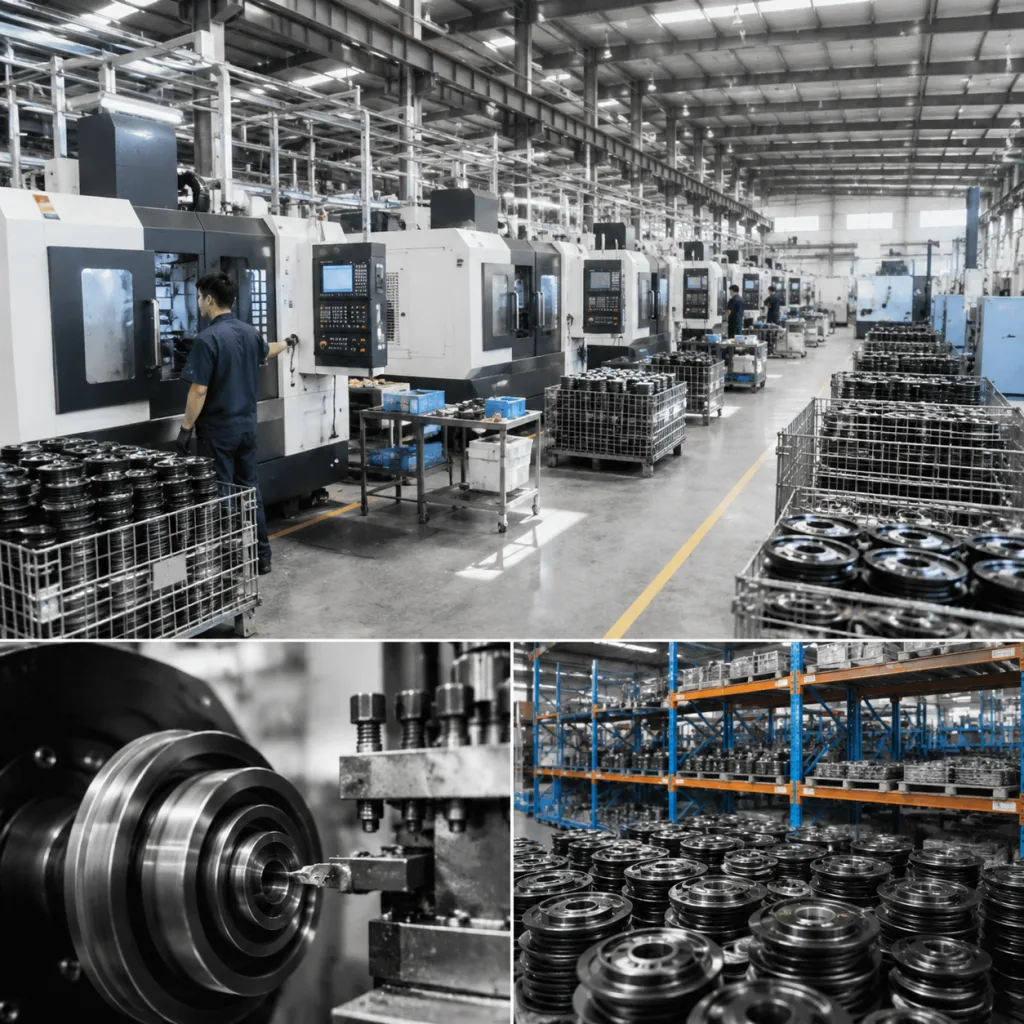
Capacity also matters. Ask how the plant handles repeat orders, peak-season demand, and shared production resources across multiple pulley programmes. A factory with controlled process flow, documented inspection points, and a stable packaging standard is far more likely to deliver consistent supply than one that relies on ad hoc scheduling. If you need monthly volume, request the factory’s practical MOQ by SKU and by finish. For example, some programmes can support 300 to 500 units per part number per run, while custom packaging or special coating can raise the MOQ to 1,000 units or more. Tie the MOQ to your forecast so you can judge whether the plant is quoting from real capacity or simply using a generic threshold.
For B2B buyers, the best indicator is whether the supplier can support a clear sample-to-volume transition. First orders should include approval records, retained samples, and defined release criteria so the next replenishment does not depend on re-arguing the specification. Ask for a pre-production sample, a golden sample, and a signed inspection record so the purchasing file includes the exact control points approved for mass shipment.
Material and tolerance checks for procurement
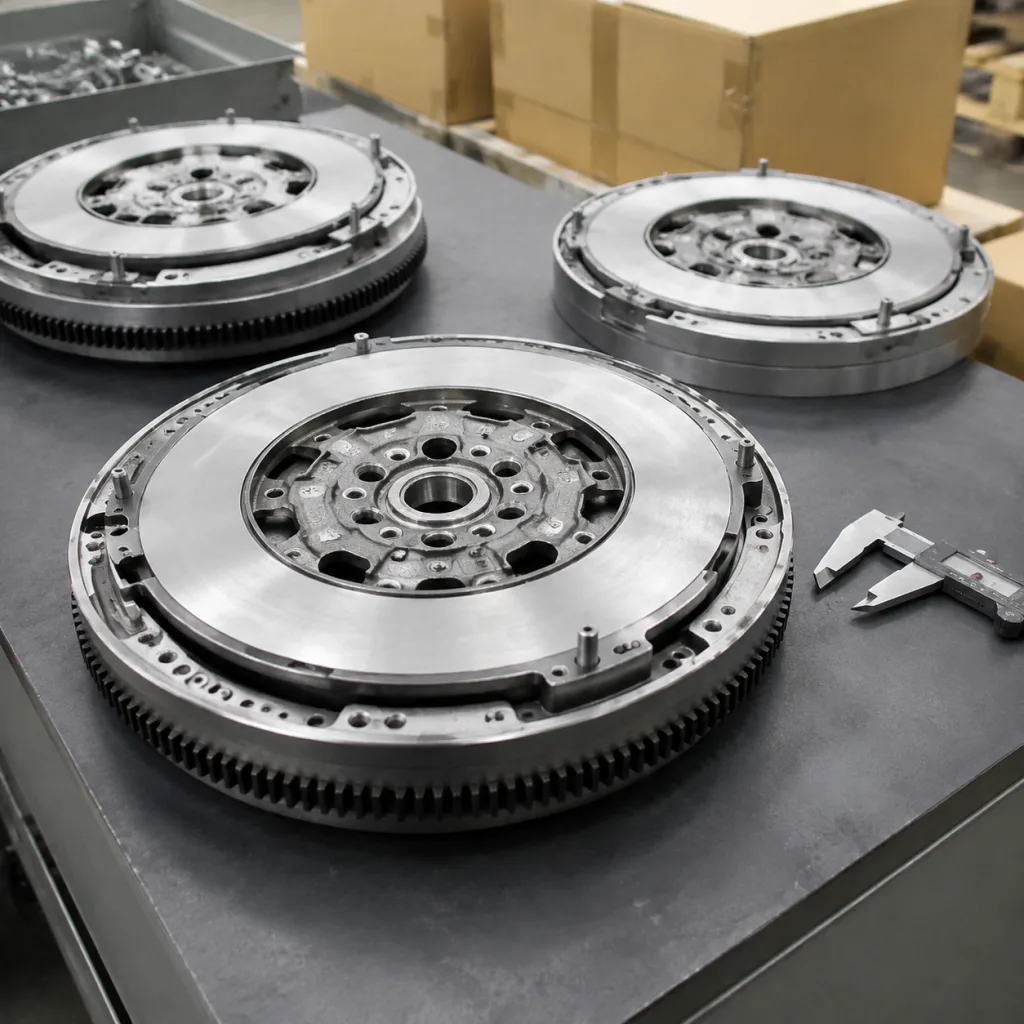
Procurement teams should ask for the material specification, heat-treatment or hardness data where applicable, and the dimensional report for the critical features. Depending on the design, that may include runout, concentricity, groove alignment, bore size, hub thickness, surface finish, and balance performance. The right records show whether the part was built to a controlled standard rather than copied by appearance.
If your programme is tied to an existing OE number, the supplier should confirm that the replacement unit reproduces the critical mounting and drive dimensions. Tolerances should be stated clearly, including which features are controlled tightly and which are cosmetic or secondary. For a sourcing brief, it is reasonable to require a dimensional report with at least 5 to 10 critical points per part number, plus a CPK target where the factory claims stable process capability. Common buyer asks include radial runout at or below 0.10 mm, axial runout at or below 0.15 mm, and dynamic balance within the application limit defined on the drawing or sample approval sheet.
Material consistency is equally important. Buyers should expect disclosure of alloy or substrate type, rubber composition if the design includes a bonded isolator, coating or corrosion-protection method, and any process controls used to keep those properties stable from lot to lot. Ask whether incoming material is checked by heat number or batch code, and whether the factory can provide mill certificates or internal material records for traceability. For coated parts, request salt-spray or corrosion-test data if your market conditions justify it; even a baseline 48- to 96-hour corrosion screen is more useful than a vague durability claim.
Do not overlook packaging tolerances in the spec set. If the pulley face, bore, or groove edge is sensitive to nicks, require protective sleeves, separator trays, or molded inserts and specify carton drop resistance or transit protection requirements. In international supply, ask whether the factory can support documentation requests for restricted substances or market-specific compliance files when needed, and whether those files are held per batch or per programme.
How Driventus supports buyer qualification
Driventus supports sourcing teams that need an auditable path from inquiry to approved supply. The process typically starts with OE references, drawings, target volumes, and any known customer constraints, followed by fitment review and technical clarification before quotation. That upfront review reduces the risk of approving a part that looks similar but does not hold the required dimensions or durability.
Driventus operates with IATF 16949:2016 and ISO 9001:2015 systems in place, which helps buyers align supplier qualification with the controls they expect in automotive supply. For private-label and distribution programmes, that matters because the real issue is repeatability: the same pulley geometry, the same packing method, and the same inspection discipline across successive batches. Buyers should expect a defined qualification path that includes drawing review, sample submission, dimensional inspection, and approval to ship only after the acceptance criteria are signed off.
A practical buyer workflow is to start with a request for quote, then issue a technical pack that includes OE reference, target annual volume, forecast by quarter, required finish, label format, carton configuration, and any compliance requirements. From there, compare the supplier’s response on price, MOQ, lead time, and inspection content. For example, a supplier that quotes a lower unit price but requires 90 days lead time, a high MOQ, or limited traceability may be costlier in practice than a slightly higher-priced source with 30-day replenishment and full batch records.
This is especially important when serving multi-location repair chains. They need consistent fitment across branches, and that means lower variation between lots, not just a low unit price. A supplier that can provide traceability, retained records, and a responsive corrective-action process is easier to manage over time.

Commercial terms that matter in B2B sourcing
Price should be reviewed alongside the commercial details that affect landed cost and supply continuity. Compare not only unit price but also packaging protection, pallet configuration, labelling accuracy, master-carton strength, and whether the factory can accommodate custom marks or customer-specific packing instructions. A cheaper quotation can become expensive if transit damage, relabelling, or chargebacks follow.
When you compare quotes, ask for a price ladder tied to volume so the economics are visible. Buyers often need breaks at 300, 500, 1,000, and 3,000 units because the actual landed price changes with machining setup, coating batch size, and carton efficiency. Also confirm whether the quote is EXW, FOB, or CIF, because freight and export handling can change the real unit cost by a meaningful margin. If the factory offers custom branding or barcode labels, have it quoted separately so you can see the incremental cost per unit and decide whether private-label value justifies it.
Payment terms, minimum order quantity, and release timing also influence procurement decisions. Ask how the supplier handles engineering changes, reorders, and urgent replenishment requests, especially when the part must be synchronized with workshop demand or regional promotion cycles. Clear commercial rules reduce friction once the programme is live. For ongoing supply, clarify deposit percentage, balance payment timing, and whether repeat orders can be released against a forecast with scheduled call-offs. That matters when your inventory policy targets 45 to 60 days of cover rather than spot buying.
If you need a supplier short list, compare balance data, coating durability, inspection records, packaging protection, and the factory’s willingness to support corrective action when a deviation appears. Strong suppliers do not just quote; they help protect your margin by reducing claims, delays, and avoidable rework.
Frequently asked questions
Yes, if you provide the OE reference and critical dimensions. Cross-reference checking is done against fitment data, not brand ownership. A sample approval step is recommended before volume release, and we normally ask buyers to confirm the pulley diameter, offset, bore, and groove profile before final quoting.
Request certificates, dimensional reports, material declaration, process flow, packaging spec, and traceability details. For compliance, ask for REACH documentation where relevant and any durability or corrosion test records. If possible, also request a control plan, inspection report, and retained-sample reference so the purchase file is audit-ready.
Tooling status, material availability, coating process, and inspection workload are the main drivers. First orders usually take longer than repeat orders because samples and approval records must be completed first. A practical order timeline is often 7 to 15 days for samples and 25 to 35 days for repeat production, with longer timing if the order needs custom packaging or a higher MOQ run.
If you are qualifying a new source or comparing replacement options, send your OE reference, drawings, annual demand, target MOQ, and packaging requirements through /contact.html and we will review the fitment, tolerance, and supply requirements.
Request a Quote