Crankshaft Pulley Symptoms of Failure: Diagnosis Guide
A crankshaft pulley can fail in ways that affect belt drive stability, accessory function, and engine vibration. Common symptoms include belt misalignment, visible wobble, rubber separation, unusual noise, and charging or cooling issues caused by belt slip. On some engines, the crankshaft pulley also acts as a torsional vibration damper, so failure can progress from a minor accessory-drive problem to a drivability issue. For procurement teams and workshop buyers, the key is to separate pulley wear from belt, tensioner, or accessory faults before ordering replacements. Driventus is an independent aftermarket manufacturer; brand names are referenced for fitment only. The points below explain symptom patterns, inspection checks, and replacement criteria for buyers who need OE-equivalent dimensional match and repeatable quality.
What a failing crankshaft pulley looks like
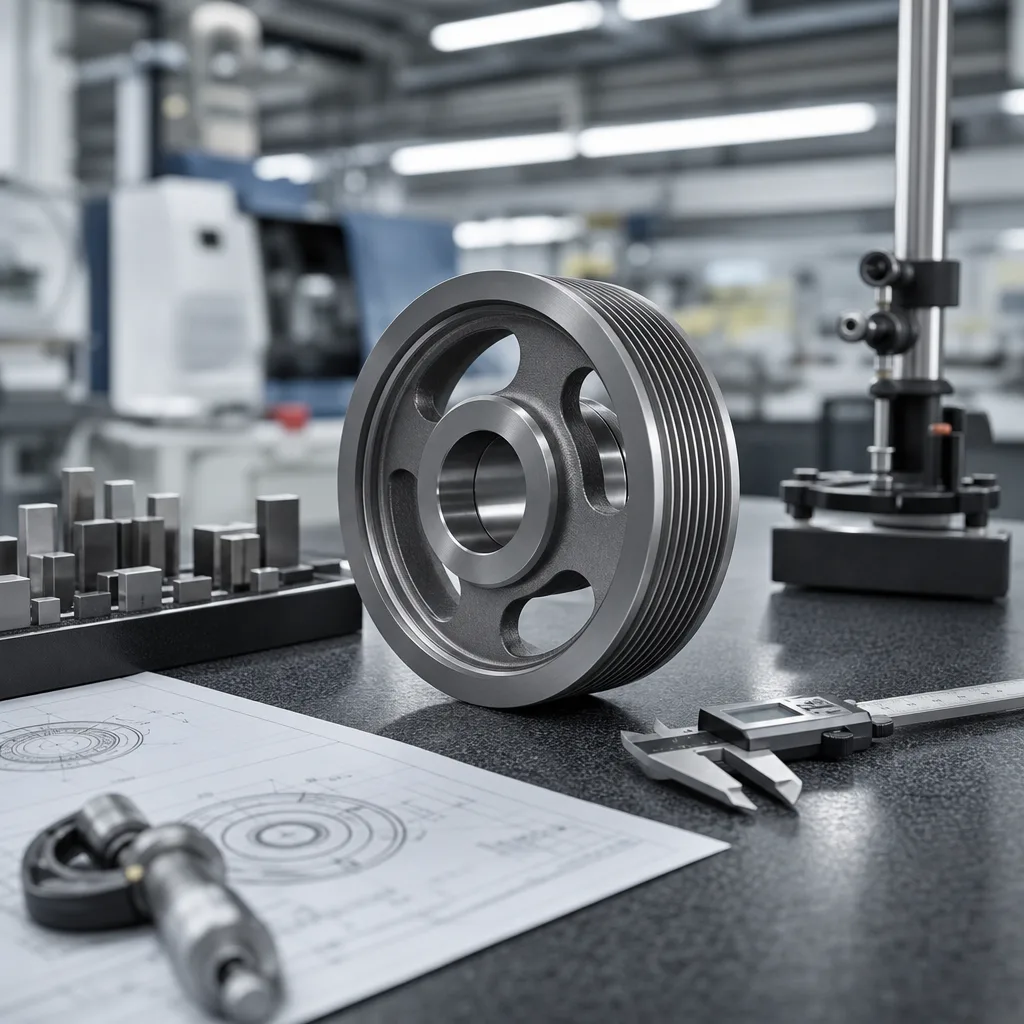
The first signs are usually visible or audible. A damaged pulley may wobble at idle, run eccentrically, or show cracks in the elastomer ring on a bonded damper design. On solid steel pulleys, look for groove wear, corrosion, or distortion. On bonded units, rubber delamination between the hub and outer ring is a clear rejection criterion.
Common symptoms include:
Squealing or chirping from the accessory belt area
Belt dust around the front of the engine
Intermittent charging faults from alternator slip
Poor air-conditioning or power steering assist at idle
Noticeable vibration at specific engine speeds
Visible radial runout when the engine is idling
If the pulley is the vibration damper type, failure can also increase crankshaft torsional vibration. That can accelerate wear in the belt drive and the front crank seal.
Symptom to cause mapping for buyers and technicians
Not every belt-area symptom means the pulley is at fault. Procurement and service teams should use a symptom-to-cause check before replacement.
Symptom
Likely cause
Inspection focus
Belt squeal under load
Belt slip, weak tensioner, pulley glazing
Belt tension, groove condition, alignment
Wobble at idle
Bent pulley, failed rubber bond, loose fastener
Radial runout, hub fit, bolt torque
Vibration at certain RPM
Damper deterioration, crankshaft torsion issues
Rubber separation, outer ring movement
Charging or cooling loss
Belt slip from misalignment
Accessory drive alignment, pulley diameter match
Front seal oil leak
Heat and oscillation at pulley nose
Seal lip wear, pulley face condition
</tr></thead><tbody> </tbody></table>For purchasing teams, this distinction matters. A returned part often tests within specification when the root cause is a worn tensioner or incorrect belt length. A proper fault tree reduces false claims and repeat replacements.
Inspection steps before replacement
A useful inspection does not need special equipment, but it should be consistent.
Basic field checks
1. Stop the engine and isolate the battery. 2. Remove the belt and inspect the pulley grooves for scoring, rust, or stepped wear. 3. Check the outer ring for axial movement relative to the hub. 4. Rotate the pulley by hand and feel for roughness from the front crank seal area. 5. Refit the belt and observe runout at idle with a safe viewing distance.
Measurement checks
Verify pulley diameter against the OE reference or validated sample
Measure axial and radial runout with a dial indicator if available
Check fastener thread condition and seating face flatness
Inspect the crank nose for fretting or taper wear
Confirm belt length and tensioner travel are within specification
For crankshaft pulley symptoms of failure, the critical point is whether the pulley remains concentric under load. A part that looks acceptable on the bench may still show wobble on engine start if the bond has separated or the bore fit is poor.
When replacement is the correct action
Replace the pulley when inspection confirms any of the following:
Rubber separation or bond failure on a damper pulley
Cracks, deformation, or visible eccentricity
Persistent runout after checking belt, tensioner, and accessory alignment
Groove wear that affects belt tracking
Fastener damage, stripped threads, or hub fretting
For buyers sourcing replacements, dimensional match is more important than visual similarity. Confirm bore diameter, offset, groove count, pulley width, mounting pattern, and overall mass where the damper design depends on inertia. If a part cross-reference is available, use the OE number as a fitment reference only, for example OE 06A107065. Do not treat brand references as approval.
Driventus manufactures crankshaft pulleys under IATF 16949:2016 and ISO 9001:2015 controlled processes. Material and corrosion controls can be aligned with REACH (EC) No 1907/2006 when required for destination markets.
What procurement teams should verify on a replacement pulley
A replacement order should be based on documented fitment data, not only photos or application names. The minimum verification set should include:
OE reference or validated sample number
Engine code and vehicle platform
Pulley type: solid, bonded damper, or decoupler style
Bore, offset, groove count, and diameter
Surface finish and coating requirement
Packaging, barcode, and traceability needs
Required validation tests, including dynamic balance and runout control
Driventus is an independent aftermarket manufacturer; brand names are referenced for fitment only. Buyers can review our catalog, check the quality system, or discuss custom manufacturing when a special material, coating, or dimensional variant is needed.
For larger programmes, confirm lot traceability, inspection records, and sample approval before release. For private label or application-specific supply, the same dimensional controls should be applied to every batch.
Failure prevention and service-life considerations
Crankshaft pulley life depends on heat, belt load, engine speed range, and installation accuracy. Over-tensioned belts increase bearing and hub loading. Misalignment can cut service life sharply, even when the pulley itself is correctly manufactured. Contamination from oil or coolant can also degrade bonded rubber and belt friction.
A practical prevention checklist:
Replace belts and tensioners when wear is evident
Clean the crank nose and mating faces before installation
Use the specified torque and tightening sequence
Verify accessory alignment after assembly
Recheck for noise or wobble after a short road test
If your programme needs repeat supply across multiple vehicle lines, a stable manufacturing partner matters as much as the part design. Buyers can request a quote for OE-matched pulleys, controlled tolerances, and export-ready documentation.
Frequently asked questions
Yes. On damper-type pulleys, rubber separation or outer-ring movement can increase torsional vibration and create a noticeable shake at certain RPM.
No. Belt condition, tensioner wear, misalignment, and contaminated belt surfaces can produce the same symptom. Inspect the full accessory drive before replacing the pulley.
Confirm OE reference, bore, offset, groove count, diameter, hub fit, and whether the design is solid or bonded. Use fitment data, not appearance alone.
If you need an OE-matched crankshaft pulley or a validated cross-reference review, contact Driventus for technical support and a quotation: /contact.html