For buyers sourcing crankshaft pulley Jeep wholesale, the main risk is not price alone. It is dimensional mismatch, unstable rubber bonding on damped units, and inconsistent runout control between batches. Driventus supplies engine and powertrain parts from Taizhou, Zhejiang, with IATF 16949:2016 and ISO 9001:2015 systems in place. We support aftermarket distributors, OEM and Tier-1 buyers, and repair networks that need repeatable supply, traceable lots, and clear technical data. Driventus is an independent aftermarket manufacturer; brand names are referenced for fitment only. For procurement teams, a correct sourcing process starts with OE cross-reference validation, material confirmation, and inspection criteria such as groove geometry, dynamic balance, and pulley face runout. This article outlines what to check before placing a wholesale order, how to compare supplier capability, and which standards and tests matter for export markets in the EU, UK, US, Canada, Australia, and Brazil.
What buyers should confirm before placing a wholesale order
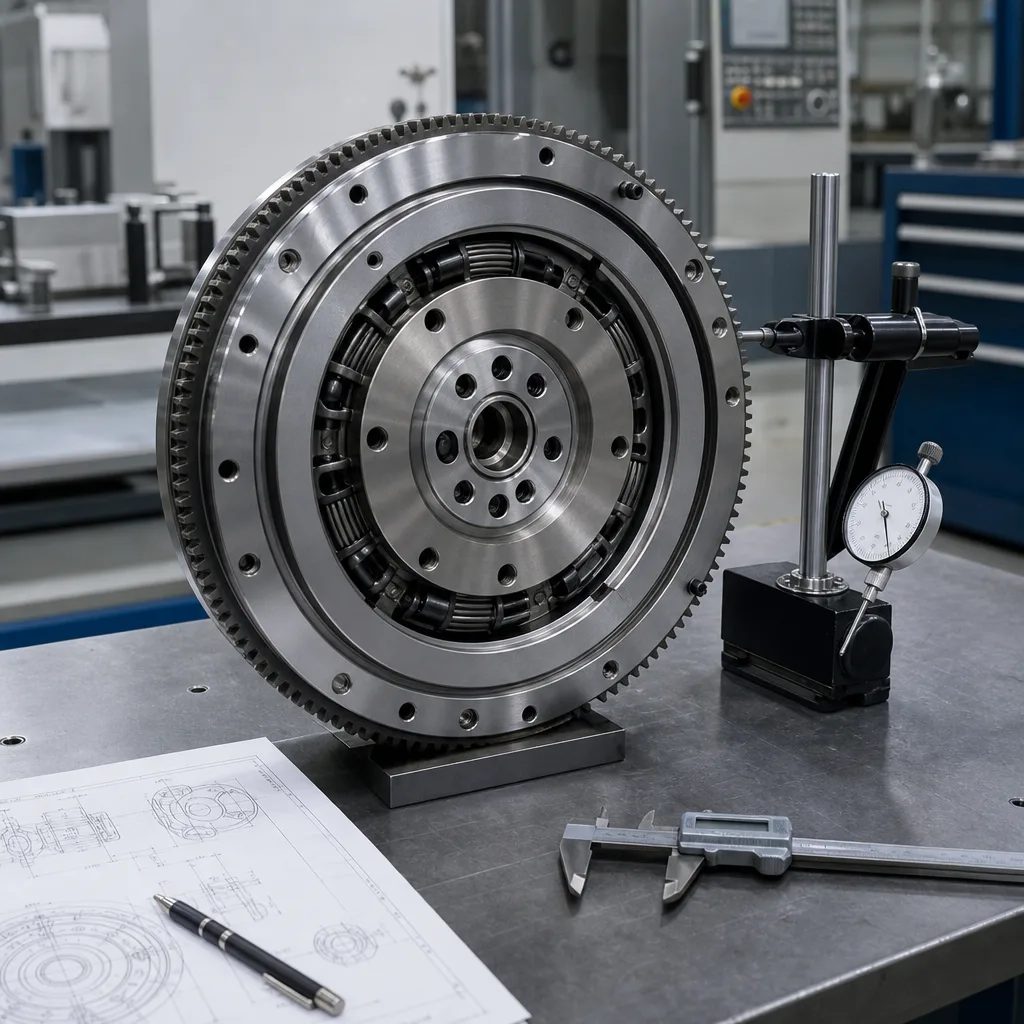
A crankshaft pulley is not a simple turned part. On many Jeep applications it is a harmonic damper or bonded pulley assembly, so the buyer must confirm the design type before purchase.
Minimum data to request from the supplier:
OE cross-reference, for example OE 06A107065 when applicable to the platform being sourced
Engine code and displacement
Pulley type: solid, bonded damper, or accessory drive pulley
Belt groove count and section
Outer diameter, hub bore, offset, and keyway or locating feature
Radial runout and face runout limits
Material specification for the hub and ring
Balance grade and test method
Coating or surface protection
Packaging standard for export and carton labelling
If any of these items are missing, procurement teams often end up comparing parts that look similar but do not fit the same engine family. For wholesale programs, a clear technical sheet reduces claims and avoids stock obsolescence.
Key specifications to compare across suppliers
A supplier quote should include measured dimensions, not only part names. For many engine families, the difference between acceptable and rejected stock is a few tenths of a millimetre on bore or offset.
Item
What to verify
Why it matters
Outer diameter
Match to OE drawing or verified sample
Affects belt speed and accessory alignment
Hub bore
Exact fit on crank snout
Prevents fretting and installation issues
Offset
Hub-to-face distance
Controls pulley alignment with serpentine drive
Runout
Radial and axial values
Reduces vibration and belt tracking problems
Balance
Static or dynamic balance report
Important on damped assemblies
Material
Cast iron, steel, elastomer bond
Impacts durability and heat resistance
Finish
Phosphate, E-coat, paint, or black oxide
Helps with corrosion protection in transit
</tr></thead><tbody> </tbody></table>For export orders, ask whether the supplier controls dimensional inspection under IATF 16949:2016 or ISO 9001:2015 procedures, and whether records are retained by lot number. If the part is intended for regulated markets, confirm material and surface treatment alignment with REACH (EC) No 1907/2006 where applicable.
How Driventus supports wholesale sourcing
Driventus manufactures engine and powertrain components in a vertically integrated operation. That matters for wholesale buyers because critical steps such as machining, balancing, and final inspection can be coordinated in one process flow.
We support buyers who need:
Batch-level traceability
Stable repeat ordering for catalogue programs
Sample approval before mass production
Export packing for mixed-container or palletised shipments
Technical drawings and inspection data on request
For Jeep applications, buyers often need a programme across multiple engine families rather than a single SKU. That is where our catalog and engine component range help sourcing teams map related parts, then consolidate purchases by platform. If a buyer needs a non-standard hub profile, balance target, or coating, custom manufacturing can be evaluated against drawing and sample requirements.
Quality checks that reduce claims and returns
Wholesale buyers should treat validation as part of the purchase order, not an afterthought. A low unit price does not offset returns caused by vibration, belt noise, or premature seal wear.
Typical quality controls for a crankshaft pulley programme include:
1. Incoming material verification 2. Dimensional inspection against drawing or approved sample 3. Concentricity and runout measurement 4. Balance verification for damped designs 5. Surface finish and coating check 6. Packaging drop and transit review 7. Final lot release with traceable records
For buyers auditing a supplier, ask to review the quality system, including inspection equipment, calibration control, corrective action workflow, and nonconformance handling. In many procurement reviews, this documentation is as important as the sample itself.
If the application is subject to emissions-related accessory drive concerns or regional fitment requirements, published references such as ECE R-83 and SAE J2527 may be relevant to the broader validation environment, although the pulley itself is typically assessed by fit, function, and durability rather than emissions test cycles.
Lead time, MOQ, and export logistics for wholesale orders
For wholesale sourcing, lead time is usually driven by tooling status, coating queue, and packing configuration. Buyers should separate standard catalogue supply from custom programmes.
Common procurement questions:
What is the MOQ for each OE cross-reference?
Is the item in stock or made to order?
What is the sample lead time?
Can cartons be mixed by part number for consolidation?
Are barcodes, lot codes, and country-of-origin labels available?
Which incoterms and shipment methods are supported?
A supplier that handles export regularly should be able to provide a realistic schedule, not only a nominal production promise. For new programmes, ask for a written confirmation of inspection points and an agreed first-article sample. For ongoing replenishment, buyers usually get better control when forecast releases are aligned to monthly or quarterly demand rather than ad hoc spot orders.
If your team is comparing suppliers across regions, note that shipment packaging can affect corrosion risk, especially for machined steel parts. VCI protection, sealed liners, and pallet stability should be part of the quotation.
When to use an aftermarket supply partner instead of ad hoc buying
Wholesalers and importers often move from spot purchasing to structured supply when returns or stockouts begin to affect service levels. The decision point is usually repeatability.
Choose a structured supply partner when you need:
Stable fitment across multiple production lots
Less variation in surface finish and balance data
A documented audit trail for customer complaints
Private label or box-ready packing
Cross-referenced sourcing for one Jeep platform family
Driventus is an independent aftermarket manufacturer; brand names are referenced for fitment only. That position matters because it keeps the discussion focused on technical compatibility, not brand affiliation. For buyers who need a formal quotation, technical review, or sample plan, request a quote with engine code, OE number, target annual volume, and destination market.
Frequently asked questions
Yes. We support wholesale orders with OE cross-reference review, sample approval, and export packing. Buyers should provide the engine code, OE number, and annual forecast so we can confirm the correct variant.
We can provide manufacturing and inspection details under IATF 16949:2016 and ISO 9001:2015 processes, plus lot traceability and dimensional reports where required for the programme.
Yes. If the application needs a different offset, bore, finish, or balance requirement, we can review [custom manufacturing](/oem-services.html) based on drawings or samples.
If you need pricing, sample timing, or technical confirmation for a Jeep programme, send the OE reference and target volume. [Request a quote](/contact.html) and our team will respond with the next steps.