Crankshaft Lexus Wholesale Sourcing for Importers
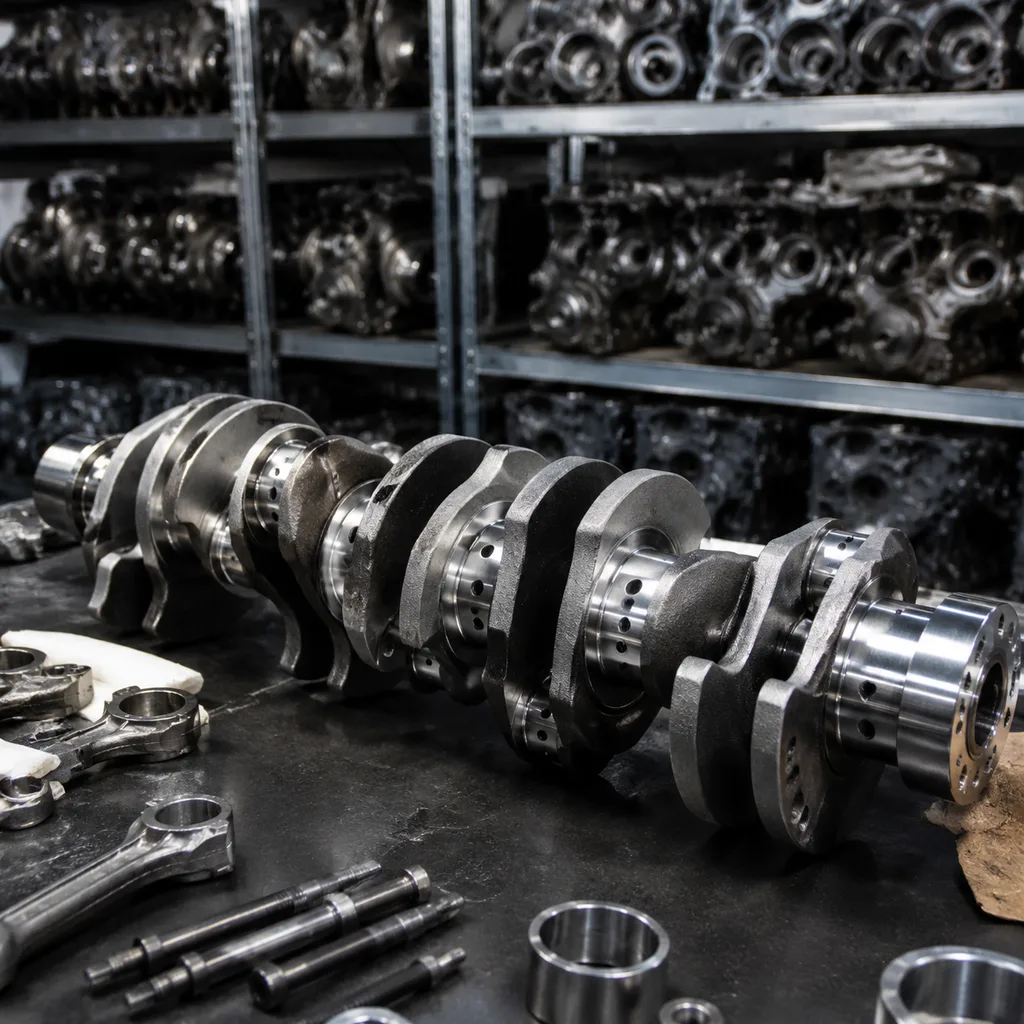
Crankshaft Lexus wholesale purchasing fails when the order is treated as a commodity. The risky parts are usually not obvious on the proforma invoice: mixed fitments, journal drift, poor oil-hole finishing, weak rust protection, missing heat records, or inspection sheets copied from another batch.
Driventus Auto Parts manufactures crankshafts and related powertrain components in Taizhou, Zhejiang, under IATF 16949:2016 and ISO 9001:2015 management controls. We support B2B importers, distributors, and engine rebuilders in Europe, the UK, North America, Australia, Brazil, and other export markets. Programs include aftermarket replacement lines, private-label supply, and scheduled production for slower Lexus-fitment references that need continuity rather than one-off availability.
Driventus is an independent aftermarket manufacturer. Vehicle brand names are used only to identify fitment. The guide below is structured as a buying decision tool: what to lock down first, where failures enter production, how MOQ changes cost, which documents matter, and which specifications protect warranty position.
Start with the application decision, not the price list
A crankshaft Lexus wholesale project should begin with a controlled application file. If the buyer sends only a model name, the risk of wrong supply rises quickly. Lexus-fitment coverage may include inline-four, V6, V8, and hybrid-related engine applications, with regional differences by market and model year.
Define the buying target before asking for a quote:
- OE part-number cross-reference format where available, or a buyer-controlled reference number
- Engine code, displacement, fuel type, aspiration type, market, and model-year range
- Whether the order is for a bare crankshaft or a kit with bearings, thrust washers, locating dowels, timing parts, or other items
- Main journal diameter, rod journal diameter, stroke, flange pattern, nose diameter, keyway, and timing gear or reluctor interface
- Drawing-controlled tolerance targets, such as journal diameter within ±0.005 mm, roundness within 0.003 mm, and taper within 0.005 mm unless the drawing states otherwise
- Required material route: forged steel, cast iron, or ductile iron, with grade supported by mill certificate or chemical analysis
- Surface hardening, hardness range, case depth, and fillet rolling requirement where specified
- Target order volume by SKU, annual forecast, first shipment quantity, and destination port
- Packaging rule: neutral, distributor brand, private label, barcode label, pallet mark, or mixed-SKU carton control
- Inspection documents needed for customs, warranty review, incoming QC, and distributor claim handling
This decision file becomes the quote baseline. It also prevents a common sourcing failure: comparing suppliers on different technical assumptions. Buyers building a wider engine program can review related items through our catalog and the engine component range at /products/engine-components.html.
Where crankshaft production usually goes wrong
A crankshaft can look acceptable and still create field problems. The failure point may be a burr inside an oil passage, an uncontrolled fillet radius, a shallow hardened layer, or journal geometry that shortens bearing life. For Lexus-fitment wholesale orders, the factory route matters as much as the final photo.
Driventus applies production controls within an IATF 16949:2016 and ISO 9001:2015 framework, including process routing, inspection records, and corrective-action handling.
| Failure mode to prevent | Why buyers should care | Typical control or evidence | |
|---|---|---|---|
| Wrong or inconsistent material batch | Strength, wear resistance, and machining behavior change | Mill certificate, heat number, incoming inspection | |
| Datum error during rough machining | Later grinding cannot fully correct geometry | First-piece approval, in-process dimensional checks | |
| Heat-treatment variation | Journals may wear early or distort | Hardness test, case-depth check, furnace record where specified | |
| Excess runout after heat process | Grinding allowance increases; final straightness risk rises | Dial indicator runout check against routing limit | |
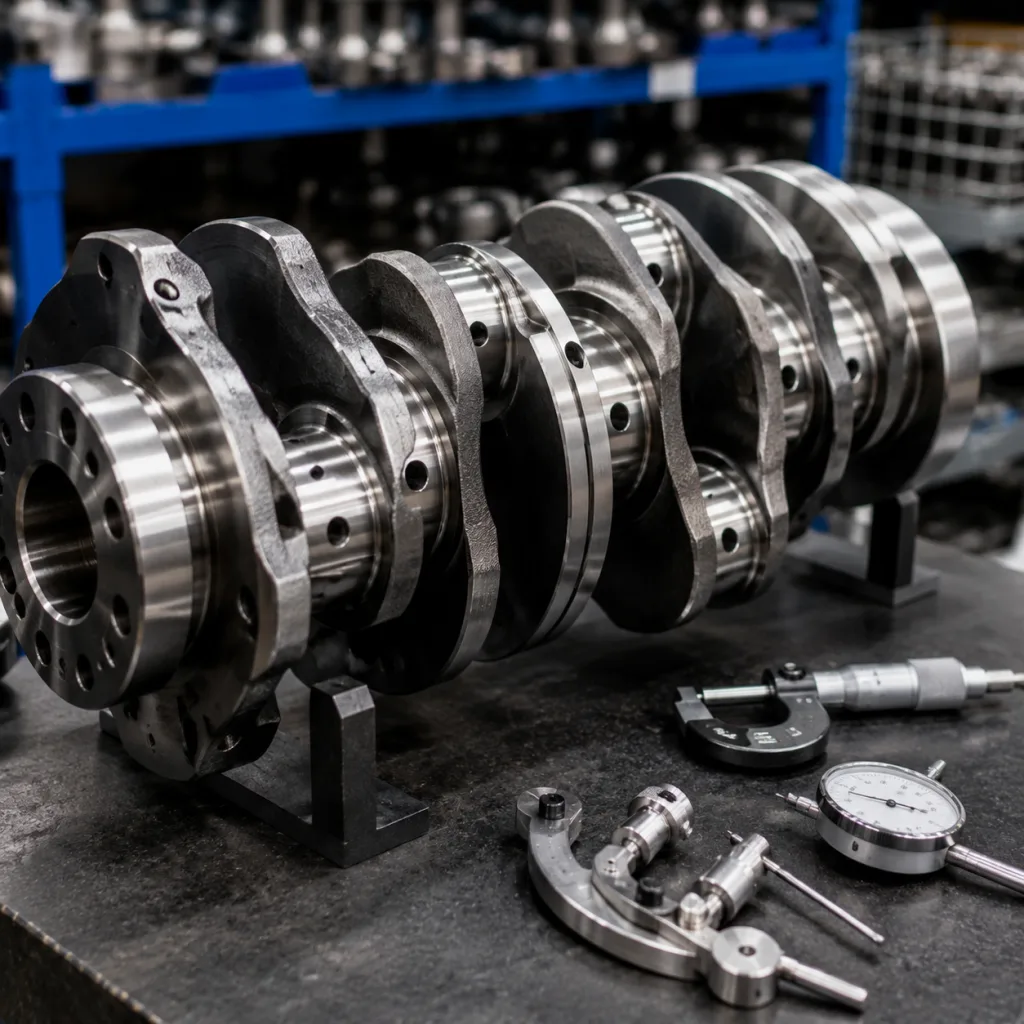
| Journal grinding drift | Bearing oil film and clearance are affected | Micrometer, roundness, taper, width, and radius checks | |
| Burrs or debris in oil holes | Bearing scoring and lubrication failure risk | Chamfer check, deburring, borescope or visual inspection, cleanliness control | |
| Poor fillet transition | Fatigue resistance may be reduced | Radius gauge, surface transition review, fillet rolling record where required | |
| Balance inconsistency | Vibration and customer complaints | Balance report by batch or approved sample plan, correction position recorded | |
| Undetected cracks or grinding burn | High warranty exposure | Magnetic particle test or equivalent NDT when agreed | |
| Weak rust prevention | Corrosion before installation | Oiling record, VCI packing check, packing audit |
| Order scenario | Typical quantity logic | Lead-time logic | Best use |
|---|---|---|---|
| Sample check | 1–5 pcs per SKU when available | Stock item: about 7–15 days; new sample: about 30–45 days | Fitment confirmation, packaging review, dimensional baseline |
| Trial wholesale shipment | 20–50 pcs per SKU or mixed pallet | Usually 30–60 days depending on SKU status | Market test, claim-rate check, distributor onboarding |
| Repeat LCL order | 50–150 pcs mixed SKUs | Usually 35–65 days after deposit and packing approval | Balanced cash flow with broad SKU coverage |
| Repeat container program | 200+ pcs mixed program, SKU-dependent | Usually 45–75 days with consolidation schedule confirmed | Better pallet optimization and sea-freight cost control |
| Private-label order | MOQ tied to carton print run and label rules | Add 7–15 days for artwork, barcode, and carton approval | Distributor brand programs requiring label consistency |
| Custom manufacturing | MOQ set after drawing, tooling, and material review | Prototype often 45–90 days; production after sample approval | Low-volume or modified references requiring engineering review |