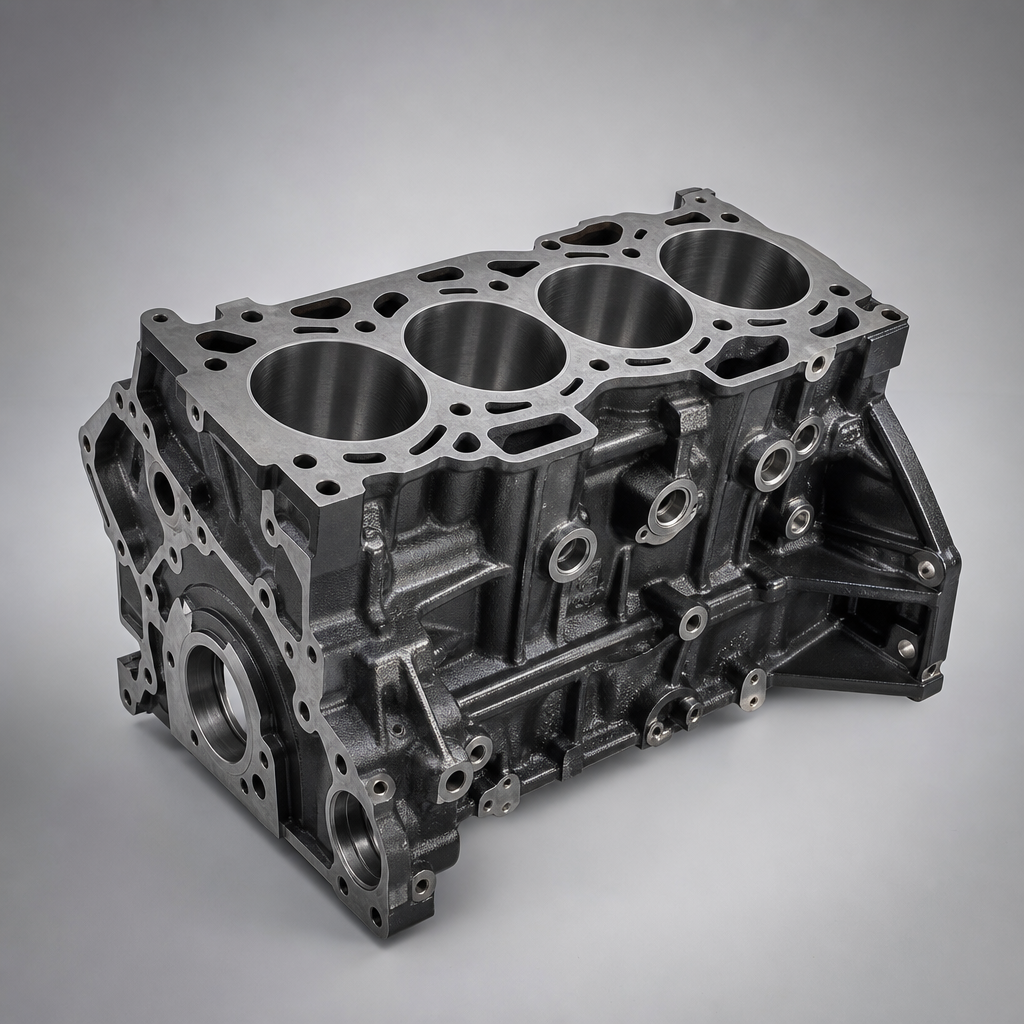
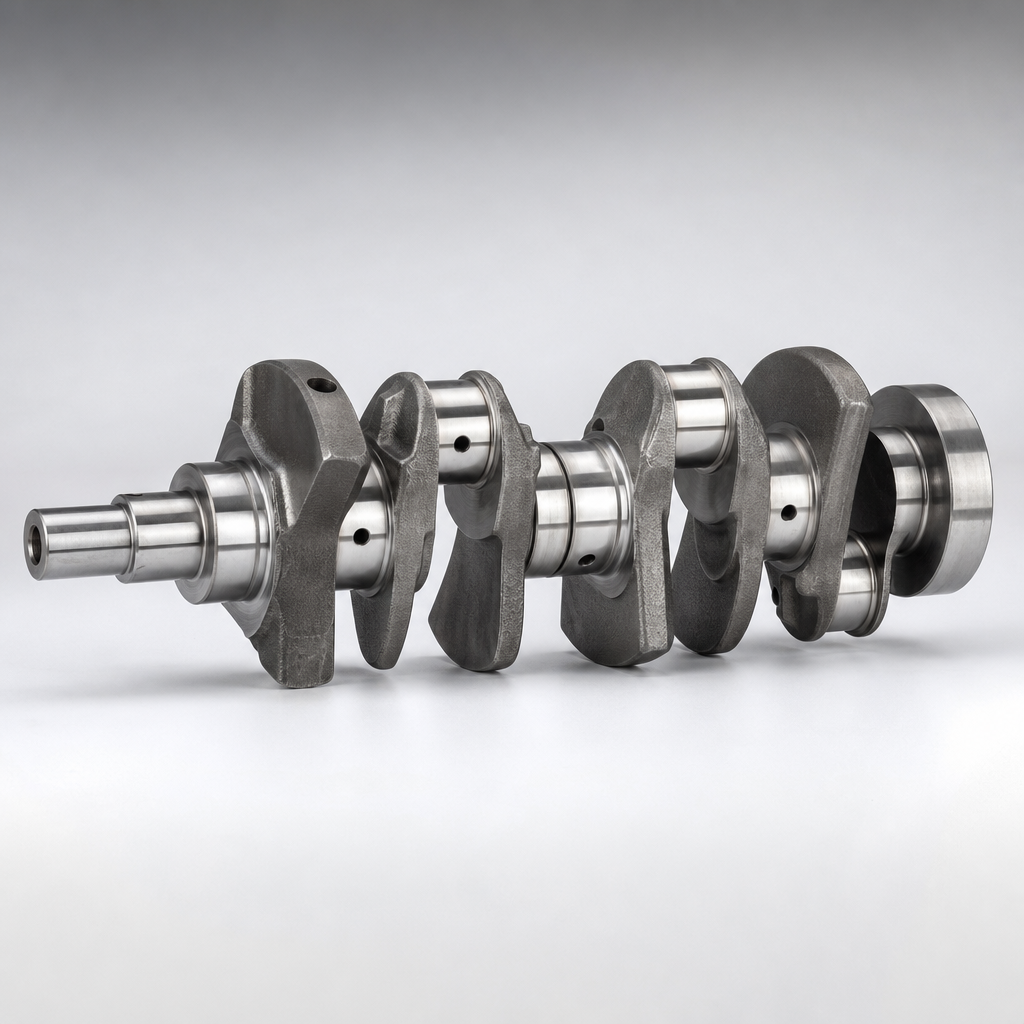
Crankshaft Lexus Supplier: What B2B Buyers Should Check
Choosing a **crankshaft lexus supplier** is a risk-control decision before it is a price decision. A low quote can disappear quickly once scrap, warranty claims, emergency freight, and stock-outs enter the picture. For Lexus-fitment programmes, buyers usually care most about four things: stable metallurgy, repeatable machining, credible lot traceability, and lead times based on actual capacity.
That shifts the sourcing conversation. Instead of asking only for a unit price, procurement and quality teams need evidence: can the supplier hold journal tolerances consistently, document heat treatment properly, manage OE cross-reference use with care, and retrieve batch records fast during a claim? They should also look across the full process, from forging or casting input through finish grinding, balancing, crack testing, preservation, and export packaging.
Quality-system alignment still matters, but only if it shows up on the shop floor. Buyers commonly benchmark controls against IATF 16949:2016 and ISO 9001:2015, plus substance compliance where required, including REACH (EC) No 1907/2006. This article breaks the evaluation into practical lenses so B2B teams can qualify a crankshaft lexus supplier with fewer assumptions and better sourcing discipline.
Start with a buyer scorecard, not the quotation sheet
A serious supplier should be able to explain its process window, inspection method, traceability flow, and production limits before discussing price concessions. If those basics are vague, the quote is not mature yet.
A useful first-pass scorecard usually includes:
- Material route: nodular cast iron such as QT600-3 / GGG60 equivalent for standard-duty applications, or forged steel such as 42CrMo / SAE 4140 equivalent where the drawing and duty cycle require higher fatigue margin
- Hardness control: documented heat-treatment or induction-hardening range by journal area, commonly around HRC 52-60 on hardened journal surfaces with effective case depth often in the 1.5-3.0 mm range where specified
- Critical tolerances: main and rod journal diameter typically controlled within ±0.005 to ±0.010 mm, roundness and taper often held to 0.003-0.008 mm, and total runout commonly limited to ≤0.03 mm depending on design and overall length
- Surface finish: controlled journal finish, often Ra 0.2-0.4 µm after finish grinding and polishing, to support bearing life and oil-film stability
- Dynamic balance: measured and recorded against an internal specification, with residual unbalance limits commonly defined in g·cm by crankshaft weight class and rpm target
- NDT coverage: magnetic particle inspection or equivalent crack testing before dispatch, especially at fillets, oil-hole exits, and flange transition zones
- Traceability: batch code linked to raw material, heat number, machining lot, grinding line, and final inspection status within minutes, not days
- Packaging: rust-preventive oil or VCI protection, individual wrap, separator control, and pallet stability suited to 30-45 day export transit
For aftermarket distributors, range support matters too. The supplier should be able to manage fitment mapping, packaging variations, and label control across markets. If you source a wider engine-parts portfolio, it also helps when crankshafts can be aligned with related rotating parts from our catalog or the broader /products/engine-components.html range.
One more filter is often overlooked: ask for the standard inspection frequency at RFQ stage. A practical baseline is 100% checking for appearance, marking, and key go/no-go items, with recorded dimensional checks every 10-30 pieces on critical journals during steady production. If the supplier cannot explain that plan clearly, you are still looking at a sales proposal, not a controlled manufacturing offer.
Audit for weak links: where crankshaft programmes usually fail
A factory audit is most useful when it looks for failure modes. Crankshaft problems rarely begin with the final inspection report; they start earlier, in material mix-ups, fixture instability, weak grinding discipline, or poor record retrieval.
Audit checklist for buyers
During an on-site or remote audit, check these points:
| Audit area | What to verify | Why it matters |
|---|---|---|
| Incoming material control | Mill certificates, heat numbers, segregation by lot, chemistry review against drawing requirement | Prevents mixed chemistry and inconsistent strength |
| Rough machining | Fixture repeatability, datum control, in-process checks, tool-life control | Reduces cumulative error before finish grinding |
| Journal grinding | Gauge calibration, wheel dressing records, SPC trend logs, last-piece/first-piece comparison | Directly affects bearing clearance and wear |
| Heat treatment | Furnace records or induction-hardening parameters, quench control, hardness maps | Supports fatigue resistance and journal durability |
| Balancing | Equipment capability, correction records, and residual unbalance acceptance standard | Limits vibration and field complaints |
| NDT | Magnetic particle inspection procedure, bath concentration or consumable control, operator training | Helps detect cracks before shipment |
| Final inspection | Runout, journal size, stroke, flange, keyway or trigger-feature checks where applicable | Confirms shipment conformity |
| Traceability | Marking method, ERP or manual lot retrieval speed, containment procedure | Important for warranty containment |
| Criterion | What good looks like | Common risk signal |
|---|---|---|
| Certification | Current IATF 16949:2016 and ISO 9001:2015 scope | Expired or unclear scope statement |
| Process capability | Measured control on journals, runout, balance, and hardness | Only final visual inspection |
| Documentation | Batch traceability, inspection reports, material records, NDT evidence | Limited lot history |
| Sampling support | Defined sample timing, report format, and approval process | Vague sample commitment |
| MOQ flexibility | Pilot order option for validation and mixed-order discussion | Full MOQ required before approval |
| Lead-time reliability | Clear production schedule with buffer planning and capacity explanation | Quotation lead time only, no plan |
| Communication | Fast engineering and quality feedback with named contacts | Sales-only responses |
| Range support | Linked parts available through our catalog | Single-item sourcing only |