crankshaft · 2026-05-27

Crankshaft Lexus Manufacturer China: Sourcing Guide

For procurement teams sourcing a crankshaft Lexus manufacturer China partner, the main questions are consistency, traceability, and fitment control. A supplier should be able to support OE cross-reference review, dimensional verification, and batch traceability without relying on consumer-style claims. For engine rebuilders, distributors, and OEM/Tier-1 buyers, the useful checks are simpler: material grade, journal geometry, hardness, balancing, packaging, and evidence of repeatable inspection. Driventus manufactures engine and powertrain components in Taizhou, Zhejiang, and exports to 60+ countries. We operate under IATF 16949:2016 and ISO 9001:2015. Driventus is an independent aftermarket manufacturer; brand names are referenced for fitment only. This article explains what to verify before you place a sourcing order, how to compare supplier capability, and which documents to request before shipment.

What buyers should verify first

When a crankshaft is purchased for Lexus applications, the sourcing review should begin with fitment data, not catalogue language. Confirm the engine family, OE reference, journal count, stroke, thrust face arrangement, and sensor or tone-wheel interface where applicable. If an OE cross-reference is available, keep it in your internal record as OE 06A107065 or the relevant family-specific reference provided by the buyer. Do not rely on visual similarity alone.

A supplier should provide at least the following:

  • Material specification and heat-treatment route
  • Journal diameter, roundness, and runout inspection values
  • Dynamic balancing method and residual imbalance target
  • Surface hardness and fillet treatment data
  • Packaging method to prevent corrosion and transport damage
  • Batch traceability from melt or forging lot to finished part

Driventus is an independent aftermarket manufacturer; brand names are referenced for fitment only.

Factory capability that matters in procurement

For B2B sourcing, factory capability is more important than a long product list. A reliable crankshaft manufacturer should control forging, machining, heat treatment, grinding, and final inspection with documented process checks. Vertical integration reduces handoffs and makes it easier to maintain dimensional consistency across repeat orders.

Capability comparison

</tr></thead><tbody> </tbody></table>For suppliers serving the EU, UK, US, Canada, Australia, and Brazil, published compliance references should include IATF 16949:2016, ISO 9001:2015, and material compliance support for REACH (EC) No 1907/2006 where relevant to the finished good and packaging materials.

Dimensional and material checks before approval

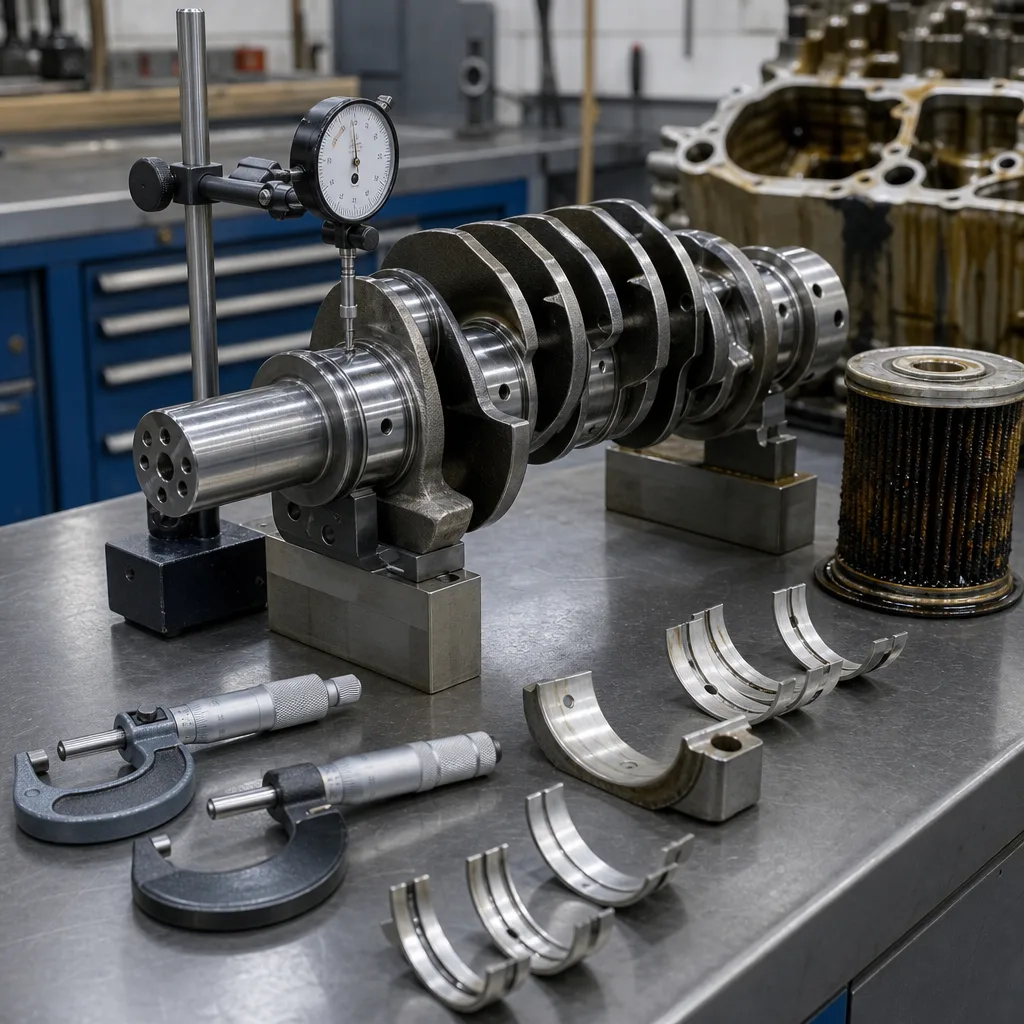
A crankshaft is a precision rotating assembly. Buyers should request a drawing pack or inspection sheet that shows the actual measured values from production samples, not only nominal dimensions. For replacement programmes, dimensional match is the primary acceptance criterion; for OEM and Tier-1 supply, process capability is also expected.

Use this checklist during approval:

  • Main journal and rod journal diameters
  • Journal taper and out-of-round limits
  • Overall length and flange geometry
  • Thrust width and end-play compatibility
  • Keyway or tone-wheel location, if present
  • Nitriding, induction hardening, or other surface treatment details
  • Static and dynamic balance record

Comparison table: supplier document set

Capability area What to ask for Procurement impact
Raw material controlSteel grade, incoming inspection, lot traceabilityAffects fatigue life and scrap risk
Forging and rough machiningProcess route, die maintenance, control planAffects grain flow and geometry stability
Heat treatmentHardness range, case depth where applicable, furnace recordsAffects wear resistance and distortion
Grinding and finishingJournal tolerance, surface finish, fillet radius controlAffects bearing life and NVH
Final inspectionRunout, balance, crack detection, gauge recordsAffects warranty rate and installation risk

</tr></thead><tbody> </tbody></table>If the application is being used in harsh-duty service, ask for validation references such as SAE J2527 where the supplier provides corrosion-related test evidence, or other documented durability and inspection methods suitable to the application.

MOQ, lead time, and commercial terms

Supplier selection is not only a technical decision. It also depends on MOQ, lead time, and how well the factory can support repeat purchasing. For an engine component such as a crankshaft, a common procurement error is approving a sample from one batch and then receiving different dimensional drift on the next order.

Ask these commercial questions before you place a trial order:

  • What is the MOQ by engine family and finish level?
  • What is the standard lead time for stocked, semi-finished, and made-to-order parts?
  • Can the supplier hold production records for future reorders?
  • What is the packing method for sea freight and mixed-pallet export?
  • Can the factory support phased release, partial shipment, or forecast-based scheduling?

Buyers in distribution should also confirm whether the supplier can support private-label packaging, barcode labelling, and export documentation aligned with destination-market requirements. For OEM or Tier-1 use, the commercial file should include a clear change-control process and revision management.

Validation, audit, and after-sales support

Before switching sources, conduct a factory audit or remote audit focused on process stability. The goal is to verify that the supplier can repeat the same result after the first sample approval. In an audit, review maintenance logs, gauge calibration, nonconformance handling, and final inspection staffing.

A practical audit list includes:

  • Calibration status for micrometers, bore gauges, and balance equipment
  • Corrective action records for rejected lots
  • Incoming material segregation and identification
  • Heat-treatment furnace monitoring records
  • Final crack detection method and frequency
  • Shipping release sign-off and traceability retention

For buyers who need broader component sourcing, see our catalog and engine components. If the programme requires a special geometry, machining variation, or packaging format, custom manufacturing should be part of the discussion early, before sample approval. A documented quality system matters because it reduces variation across repeat orders and supports audit readiness.

How Driventus supports sourcing teams

Driventus is based in Taizhou, Zhejiang, and manufactures engine and powertrain parts for export markets. For crankshaft programmes, our support is structured around drawing review, sample control, batch traceability, and export packaging. Buyers use us for aftermarket distribution, OEM/Tier-1 supply, and multi-location repair chains.

What procurement teams usually request from us:

  • OE cross-reference review for application confirmation
  • Material and inspection documentation
  • Sample submission with measured values
  • Repeat-order consistency controls
  • Export packing for sea and air freight

If you are comparing a crankshaft Lexus manufacturer China option against other sourcing routes, focus on the same controls every time: documented metallurgy, measured dimensions, repeatable inspection, and response time on sample issues. That is the basis for lower risk in supply continuity and fewer warranty disputes. For an initial enquiry, request a quote and include engine code, OE reference if available, annual volume, and required pack configuration.

Frequently asked questions

Yes. We can review the application against the engine code and any OE reference you provide. We do not claim vehicle manufacturer approval or endorsement.

Request material certification, dimensional inspection results, balance records, and traceability data. For regulated programmes, also ask for compliance support relevant to the destination market.

Yes. Through custom manufacturing, we can review special machining, packaging, labelling, and order-release requirements based on your specification.

If you are sourcing a crankshaft programme and need a documented supplier review, send your specification and volume target through /contact.html.

Request a Quote
Document Why it matters Typical buyer use
Material certificateConfirms chemistry and heat lotIncoming quality review
Inspection reportShows actual dimensional resultsSample approval and PPAP-style review
Balance recordConfirms rotating mass controlNVH and durability control
Traceability sheetLinks batch to production lotWarranty and recall management
Packaging specReduces transport damageWarehousing and export handling