Crankshaft GMC OEM Supplier: Technical Sourcing Guide for Buyers
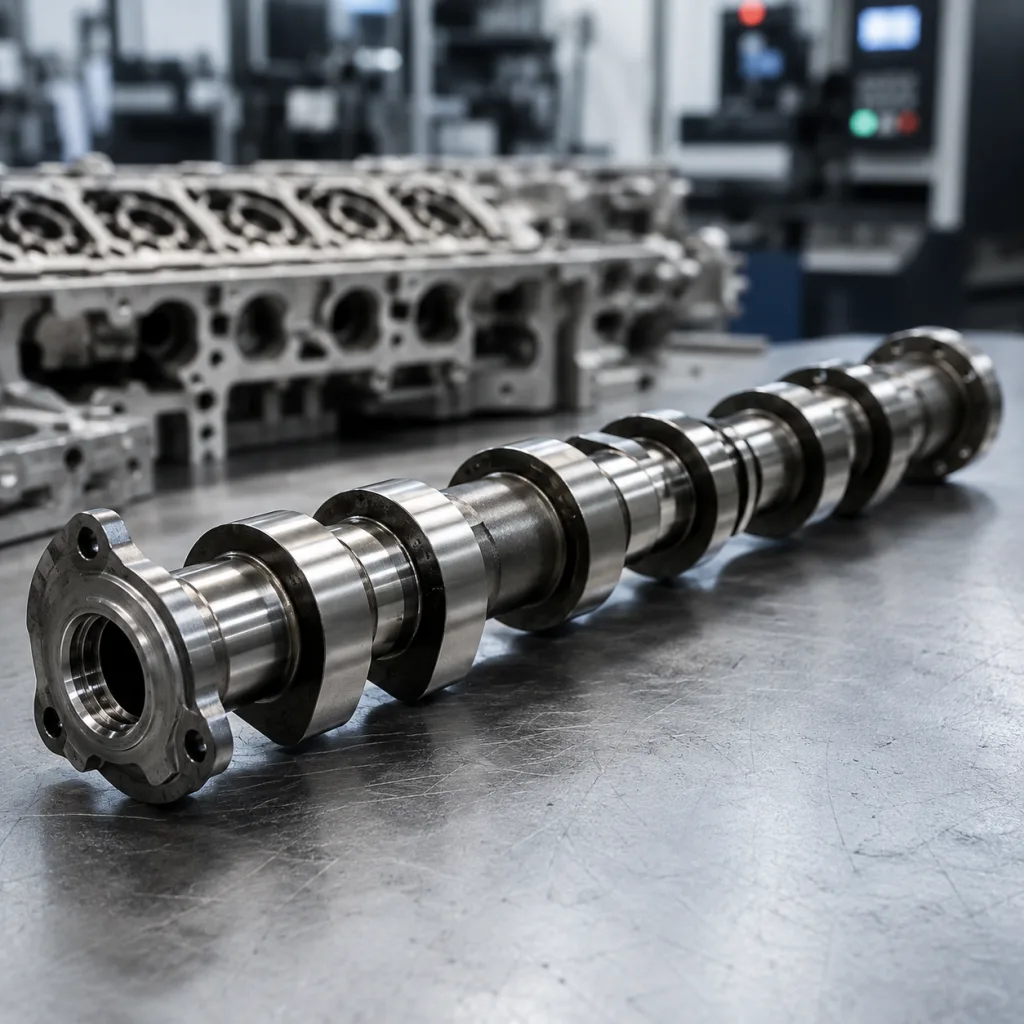
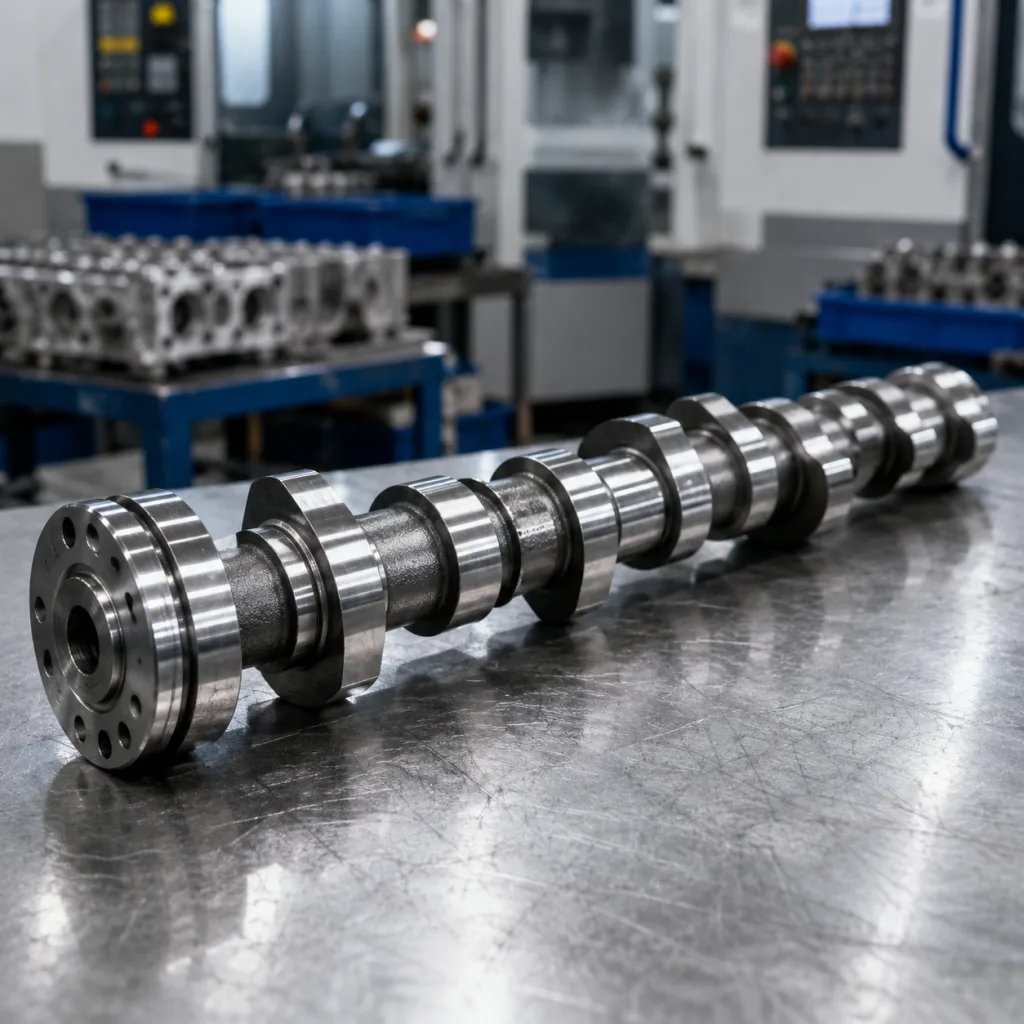
Sourcing a crankshaft for GMC engine programmes takes more than matching a catalogue number. A crankshaft is a high-load rotating component that converts piston force into torque, so buyers need to confirm far more than basic fitment. Dimensional compatibility, metallurgy, heat treatment, machining capability, surface finish, balance control, preservation, packaging protection, and batch traceability all matter before release.
A capable crankshaft GMC OEM supplier should be able to work from OE references, controlled drawings, approved samples, or engine application data. Just as important, the supplier should support the order with inspection records that connect raw material, process route, final inspection, packing, and shipment. Driventus supplies engine and powertrain components from Taizhou, Zhejiang, with production managed under IATF 16949:2016 and ISO 9001:2015 systems.
For purchasing and quality teams, the checks are practical: does the crankshaft match the target OE geometry? Can the factory hold journal size, taper, ovality, runout, hardness, surface roughness, and dynamic balance across batches? Is the export process ready for scheduled releases with documented quality control? Driventus is an independent aftermarket manufacturer; GMC and other brand names are referenced for fitment identification only. This guide explains what to verify before placing an order, how to compare suppliers, and which technical and commercial documents belong in a serious quotation package for GMC crankshaft sourcing.
What buyers mean by a GMC crankshaft OEM supplier
A crankshaft GMC OEM supplier is usually expected to deliver OE-equivalent fit, controlled machining quality, repeatable batch production, and documentation that supports future orders. In B2B sourcing, however, “OEM” can mean several different things. It may refer to a genuine OE supply relationship, production to an OE drawing, an aftermarket part made to OE-equivalent dimensions, or an OEM-style quality process backed by inspection evidence. Define the requirement at the start so both sides know whether the programme is for aftermarket replacement, private-label distribution, service-parts supply, or production against a controlled customer drawing.
For GMC applications, a supplier should not rely only on a vehicle model name, engine family, or displacement. Ask for confirmation against the OE reference, engine RPO or engine code where available, year range, market region, displacement, stroke, main journal diameter, rod journal diameter, journal width, flange pattern, pilot bore, keyway or dowel position, reluctor wheel interface where applicable, counterweight layout, and thrust bearing position. Similar V6 and V8 engine families can share broad application descriptions while differing in rear flange, trigger wheel, oil-hole arrangement, thrust location, or journal detail.
If your team is cross-referencing a known application, include the OE reference and any superseded numbers in the RFQ. Ask the supplier to confirm the application by measurement, not assumption. Where the OE reference is not enough, send a new sample, approved service part, or 2D/3D drawing so the supplier can check critical dimensions before quoting. Used samples should be clearly identified as used because worn journals, polished fillets, or damaged keyways can distort reverse-engineering measurements.
Fitment data to request
- OE reference number, aftermarket cross-reference, and superseded numbers
- Engine code/RPO, displacement, model year range, vehicle platform, and market region
- Main journal diameter, rod journal diameter, journal width, and thrust face width
- Stroke, overall length, rear flange bolt pattern, pilot bore, gear or pulley interface, and keyway/dowel data
- Thrust bearing location and end-play control dimensions
- Counterweight layout, reluctor wheel or trigger pattern interface, and oil-pump drive interface where applicable
- Oil-hole position, oil-hole chamfer, journal edge break, and lubrication passage detail
- Fillet radius, undercut geometry, and any fillet rolling requirement
- Target material, such as forged steel, cast nodular iron, or billet steel depending on application
- Heat treatment method, journal hardness range, case depth if applicable, and core hardness expectation
- Main and rod journal roughness target, commonly specified as Ra values rather than visual finish
- Dynamic balance specification, correction method, and acceptance unit such as g·mm or equivalent
- Packaging, labelling, barcode, palletisation, and batch traceability requirements
Why certification and audit access matter
Certification does not replace part-level validation, but it gives buyers a useful view of the supplier’s management system. Crankshaft quality depends on many controlled steps: steel or iron chemistry, forging or casting quality, heat treatment consistency, machining discipline, grinding wheel control, oil-hole deburring, gauge calibration, and inspection frequency. Suppliers operating under IATF 16949:2016 and ISO 9001:2015 systems should be able to show how they control incoming material, process parameters, special characteristics, nonconforming product, corrective action, change control, and final release records.
Audit access is important because first-sample approval is only one milestone. The larger question is whether the factory can repeat that result month after month. During a supplier review, ask how the factory controls forging, casting, or billet inputs; rough turning; CNC machining; oil-hole drilling; heat treatment; straightening; journal grinding; fillet rolling where specified; polishing; washing; magnetic particle inspection where applicable; dynamic balancing; rust prevention; and export packaging. Strong suppliers can connect each production batch to material heat numbers, route cards, in-process inspections, final inspection data, operator or machine records, and shipment documents.
For high-risk or high-volume programmes, ask the supplier to identify critical-to-quality characteristics in the control plan. Typical crankshaft CTQs include main and rod journal diameter, taper and ovality, journal spacing, stroke, crankpin indexing angle, thrust width, flange runout, nose runout, oil-hole chamfer, fillet radius, surface roughness, hardness, straightness, and balance. Confirm the measuring method as well. Micrometers, air gauges, CMM, roundness tester, surface roughness tester, hardness tester, magnetic particle inspection equipment, and dynamic balancing machine should be calibrated and suitable for the tolerance band being claimed.
Documents a buyer should request
- PPAP-style submission, first article inspection, or equivalent sample approval package
- Process flow diagram, control plan, and inspection plan for repeat production
- Material certificate for forging, casting, or billet input, including heat number where applicable
- Chemical composition and mechanical property evidence when required by the drawing
- Heat treatment record, hardness results, case depth report if applicable, and microstructure report where specified
- Magnetic particle inspection or other crack-detection record for relevant forged or hardened parts
- Dimensional layout report covering critical and major characteristics
- Main and rod journal data for diameter, taper, ovality, width, and fillet radius
- Runout, concentricity, straightness, flange face runout, and pilot bore inspection report
- Surface roughness data for main journals, rod journals, thrust faces, and seal surfaces where applicable
- Oil-hole position, chamfer, deburring, and cleanliness inspection evidence
- Dynamic balance report, correction location, and balancing method description
- Gauge calibration status for micrometers, air gauges, CMM, roughness testers, hardness testers, and balancing equipment
- Traceability record by batch, lot, casting/forging batch, or heat number
- Packaging, rust prevention, and preservation specification with expected protection period
- Corrective action procedure for nonconforming parts and customer complaints
- Change-control procedure for tooling, material source, heat treatment, machining process, or packaging revisions
Technical checks that reduce sourcing risk
The biggest sourcing risks often sit in details that are easy to miss during a unit-price comparison. For crankshafts, buyers should review both dimensional and functional requirements. Main journals and rod journals need control for diameter, taper, ovality, width, side-clearance interface, fillet radius, and surface finish. Runout, journal indexing, and concentricity affect vibration, oil-film stability, and bearing life. Fillet geometry, oil-hole chamfering, hardening depth, residual stress, and material cleanliness influence fatigue performance. Even when a part fits physically, weak control in these areas can lead to bearing wipe, low oil pressure, noise, imbalance, seal leakage, or field returns.
Before order release, request a dimensional layout report that marks each critical characteristic against the drawing, OE-equivalent specification, or approved sample. The report should show actual measured values, not only pass/fail marks. For reverse-engineered parts, ask how the sample was measured, how many samples were used, whether the sample was new or worn, and how wear on journals, thrust faces, seal surfaces, and keyways was compensated. Reverse engineering from one used crankshaft carries more risk than working from a controlled drawing or multiple unworn references.
For production orders, agree on inspection frequency, acceptance criteria, and the record format that will ship with the goods. A practical inspection plan may include 100% visual inspection for handling damage and rust, defined sampling for dimensional characteristics, periodic hardness checks, surface roughness checks by batch or machine setup, crack detection where required, and dynamic balance verification according to the agreed control plan. This agreement becomes especially important when multiple engine variants share similar crankshaft geometry but differ in journal size, rear flange design, reluctor wheel interface, thrust location, or oil-hole arrangement.
Standards and test references
Dimensional control should follow the customer drawing, approved sample, or mutually confirmed OE-equivalent specification. If the buyer has not supplied numerical tolerances, the supplier should propose measurable acceptance criteria for review, such as journal diameter tolerance bands, maximum taper and ovality, maximum runout, surface roughness Ra target, hardness range, and balance limit. These values should be application-specific. Avoid vague terms such as “standard size,” “smooth finish,” or “good balance” unless they are tied to a measurement method.
Crankshaft validation should focus on material, heat treatment, fatigue-sensitive geometry, hardness, crack detection, balance, machining quality, and cleanliness. Common verification methods include spectrographic material analysis, hardness testing, microstructure review, magnetic particle inspection for surface cracks, CMM or dedicated crankshaft gauge dimensional inspection, surface roughness testing, and dynamic balancing. Salt spray testing such as ASTM B117 or SAE J2334 is more relevant to corrosion protection of coated parts, hardware, or packaging-preservation validation than to the functional durability of a finished crankshaft journal.
A practical technical review should include sample approval, first article inspection, batch inspection, and packaging verification. Confirm that the crankshaft will be protected against corrosion, impact, seal-surface dents, and journal damage during ocean or air freight. Export-packed crankshafts should normally use VCI protection or approved anti-rust oil, individual journal protection, separation from hard contact points, reinforced cartons or crates, and pallet loading that prevents movement under vibration during transit.
MOQ, lead time, and export supply planning
MOQ and lead time depend on the sourcing route. An existing catalogue item, a repeat production part, a modified specification, and a new development based on a sample or drawing all require different planning. Existing applications can move faster because tooling, routing, fixtures, gauges, balancing data, and packaging methods are already defined. New or custom programmes need more time for technical review, sample development, material sourcing, machining trials, first article inspection, buyer approval, corrective actions if needed, and production scheduling.
When discussing MOQ, separate sample quantity, pilot order quantity, and repeat order quantity. A small initial order may be enough for fitment confirmation or market testing. Stable distribution programmes usually need a forecast, scheduled releases, and agreed safety stock. For crankshafts, buyers should also account for part weight, carton dimensions, pallet strength, stacking limits, rust-prevention period, HS code confirmation, destination import rules, and customs documentation.
In the RFQ, state whether the requirement is for EXW, FOB, CIF, DAP, or another Incoterm, and name the destination port or delivery location. Clarify whether the shipment will move by sea, air, express, or consolidated container. Crankshafts are dense machined parts, so packaging design affects both damage risk and landed cost. Buyers should specify inner protection, VCI bag or anti-rust treatment, carton or wooden crate requirement, pallet material, fumigation or ISPM 15 requirement for wooden packaging, barcode format, and maximum carton or pallet weight.
Driventus supports B2B export to more than 60 countries and supplies aftermarket and OEM-oriented programmes from a vertically integrated manufacturing base in Taizhou, Zhejiang. For export planning, include the destination port, preferred Incoterms, target delivery window, carton or pallet requirements, barcode or label format, and any market-specific import documentation in the RFQ. Buyers can review our catalog and, for broader engine programme sourcing, engine components.
How Driventus supports custom and private-label programmes
Custom and private-label crankshaft programmes require more than adding a buyer’s label to a box. A serious programme needs controlled specifications, revision management, sample approval, inspection standards, packaging rules, traceability, and steady communication between engineering, quality, purchasing, and logistics teams. Driventus can support B2B buyers that need OE-equivalent sourcing, application-based development, private-label packaging, or consolidated engine component supply.
For custom requirements, provide the OE reference, engine code, drawing or 3D model if available, sample condition, material target, heat treatment requirement, hardness range, surface finish requirement, balance specification, inspection standard, target annual volume, and delivery schedule. If the part will be sold under a private label, also define carton artwork, barcode structure, label language, country-of-origin marking, inner protection, pallet marking, master-carton data, and any required distributor documentation. If the specification changes after sample approval, the change should be documented by revision level so future batches remain aligned with the approved version.
For private-label distribution, packaging should be treated as part of the controlled sourcing specification. Crankshaft returns often come from handling damage, corrosion, or incorrect labelling, not machining defects alone. Define how each crankshaft is oiled or VCI-packed, how journals and seal surfaces are protected, how the part is immobilised inside the carton or crate, how pallets are strapped and wrapped, and how labels identify part number, batch number, quantity, gross weight, net weight, and destination.
If your team is consolidating suppliers, compare production systems, inspection coverage, engineering support, quotation response time, sample lead time, corrective-action discipline, and repeat-batch traceability. A dependable crankshaft GMC OEM supplier should be able to explain how it handles nonconforming parts, urgent replacement needs, batch segregation, engineering changes, packaging updates, and customer complaint analysis. Our quality system outlines the controls used in manufacturing and inspection.
When to request a quote
Request a quote when your team has enough information for the supplier to confirm fitment, evaluate production feasibility, and price the programme accurately. A basic inquiry with only a vehicle model often leads to delays, or to a quotation that still needs technical confirmation. A stronger RFQ includes the OE reference, engine code or RPO where available, target application, required quantity, annual forecast, destination country, preferred Incoterms, shipment method, expected delivery window, and any private-label or documentation requirements.
For technical sourcing, attach a drawing, 3D file, sample photos, existing supplier part number, inspection standard, or sample measurement report if available. State whether the sample is new or used, and identify any known wear, damage, or prior machining. Confirm whether you need one or more approval samples, a pilot order, or a repeat supply contract. Also clarify whether the order must include material certificates, dimensional reports, hardness results, surface roughness records, crack-detection reports, balance records, PPAP-style documentation, custom packaging, or customer-specific labelling.
The best quotation packages separate part price from tooling, sample cost, testing cost, documentation cost, packaging cost, and freight terms where applicable. This avoids misunderstandings when a buyer expects full validation records but the initial quote was based only on commercial supply. For ongoing programmes, ask the supplier to confirm price validity, MOQ, production lead time, inspection lead time, packing method, export documents, and response process for quality issues.
For a quotation package, request a quote with your OE reference, quantity, annual forecast, and target delivery window. Driventus can review fitment data, confirm available applications, advise on documentation needs, and support export-ready supply planning for GMC crankshaft sourcing and related engine components.
Frequently asked questions
Yes, where the OE reference, engine code, drawing, or sample allows dimensional verification. Buyers should provide application data and any superseded numbers so journal dimensions, stroke, flange pattern, thrust location, oil-hole layout, and other critical features can be confirmed before order release.
Typical documentation includes material certificates, dimensional inspection data, hardness results, surface roughness records, balance reports, packaging specifications, and batch traceability. For higher-risk programmes, request first article inspection, PPAP-style records, crack-detection reports, heat-treatment data, and control-plan evidence.
Yes. Custom manufacturing and packaging options are available for B2B buyers who need programme-specific labelling, barcoding, carton artwork, pallet marking, controlled revisions, VCI or anti-rust protection, and distributor-ready documentation.
If you need a quotation, sample review, or technical comparison for your next programme, send your OE reference, engine code, volume target, destination market, Incoterms, and delivery window through /contact.html.
Request a Quote