Crankshaft Genesis Supplier: OEM and Aftermarket Sourcing
If you are sourcing a crankshaft genesis supplier, the key questions are not promotional claims. You need dimensional control, traceable metallurgy, repeatable heat treatment, and a supply plan that fits your programme volume. Driventus Auto Parts manufactures crankshafts in Taizhou, Zhejiang, for aftermarket distributors, OEM and Tier-1 supply chains, and multi-location repair groups. We support OE part-number cross-references where fitment data is available, and we do not claim vehicle-manufacturer approval. Driventus is an independent aftermarket manufacturer; brand names are referenced for fitment only. For procurement teams, the decision usually comes down to certification, process stability, lead time, MOQ, and how quickly a factory can respond to drawings, samples, and audit requests. This article outlines what to verify before you place a trial order or approve a new source.
What procurement teams should verify first
When evaluating a crankshaft genesis supplier, start with the supply conditions that affect landed cost and repeatability.
- Certification: Ask for current IATF 16949:2016 and ISO 9001:2015 certificates, plus the scope of certification.
- Material control: Confirm alloy grade, incoming mill traceability, and batch-level heat numbers.
- Process route: Ask whether the shaft is forged or cast, then machined, induction hardened, nitrided, or fillet rolled as specified.
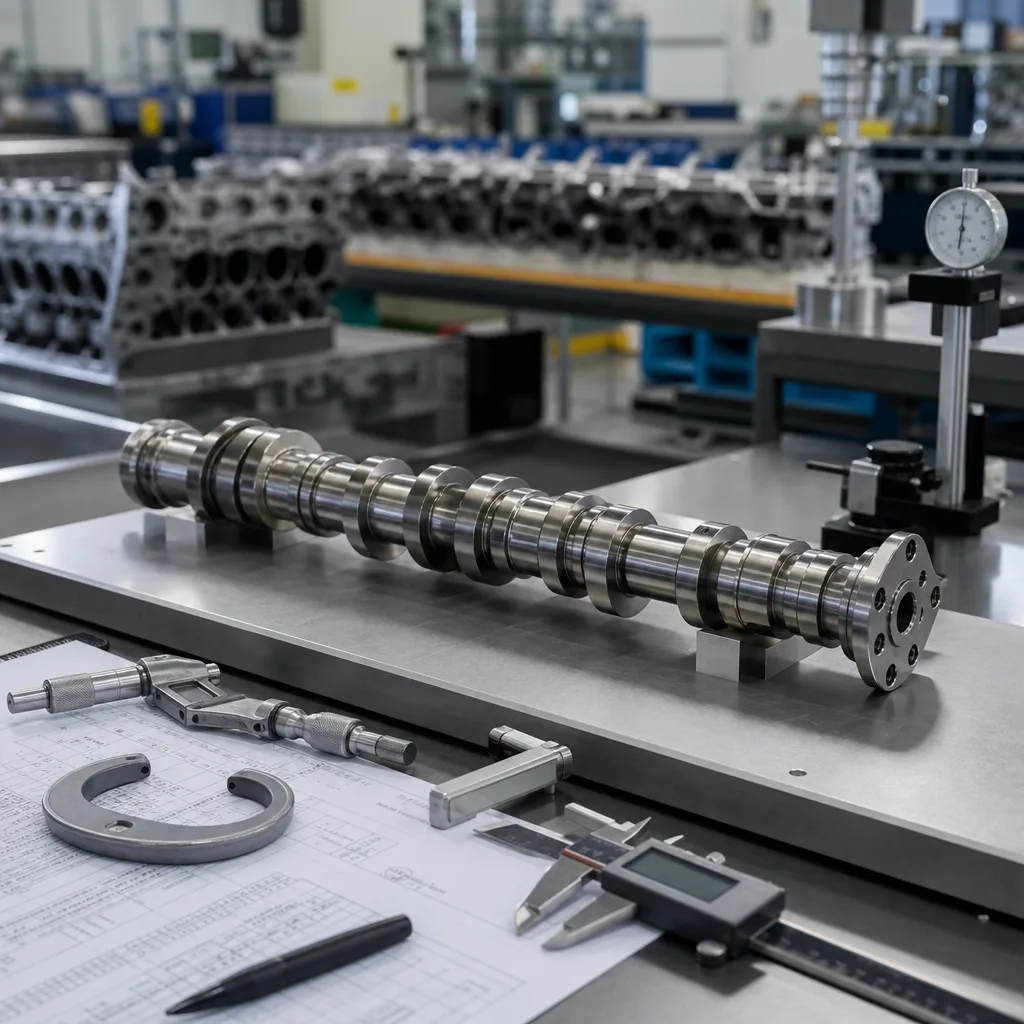
- Inspection plan: Require CMM reports, runout checks, journal diameter records, surface roughness data, and hardness profiles.
- Packaging and logistics: Confirm rust protection, VCI packing, carton strength, palletisation, and export labelling.
- Commercial terms: MOQ, sample lead time, production lead time, and spare capacity for peak demand.
For buyers managing multiple SKUs, the first filter is not price alone. It is whether the factory can hold tolerance, document each lot, and ship on schedule without changing the agreed process window.
How Driventus supports crankshaft sourcing
Driventus manufactures engine and powertrain components in a vertically integrated facility in Taizhou. For crankshaft programmes, that means less handoff risk between forging, machining, heat treatment, balancing, and final inspection.
We support procurement teams with:
1. Drawing review for critical dimensions, journal geometry, oil passage requirements, and counterweight layout. 2. OE cross-reference checking where catalogue data permits, including formats such as OE 06A107065 when the keyword set already includes a reference. 3. Prototype and sample runs for fitment validation before volume release. 4. Production control under documented work instructions and in-process checks. 5. Export packaging for distribution warehouses and replenishment programmes.
If your team needs adjacent parts as well, see our catalog and the broader engine components range. Driventus is an independent aftermarket manufacturer; brand names are referenced for fitment only.
Key specifications buyers should compare
A professional source review should compare physical data, not only catalogue descriptions. The table below shows the main items buyers usually request in an RFQ or supplier audit.
| Item | What to verify | Typical buyer question |
|---|---|---|
| Base material | Forged steel, nodular iron, or specified alloy | Can you provide heat and chemistry traceability? |
| Journal dimensions | Main and rod journal diameter, width, and concentricity | What are the tolerance bands and measurement method? |
| Runout | Total indicated runout after final grind | Is each shaft checked individually? |
| Surface finish | Journal Ra and fillet condition | What finish is controlled at the bearing surfaces? |
| Hardness | Surface and core hardness after heat treatment | Can you share hardness map records? |
| Dynamic balance | Residual unbalance after balancing | What balance threshold is used for release? |
| Corrosion protection | Oil, VCI, desiccant, carton spec | How is damage prevented in sea freight? |