Crankshaft BMW Wholesale Sourcing Guide
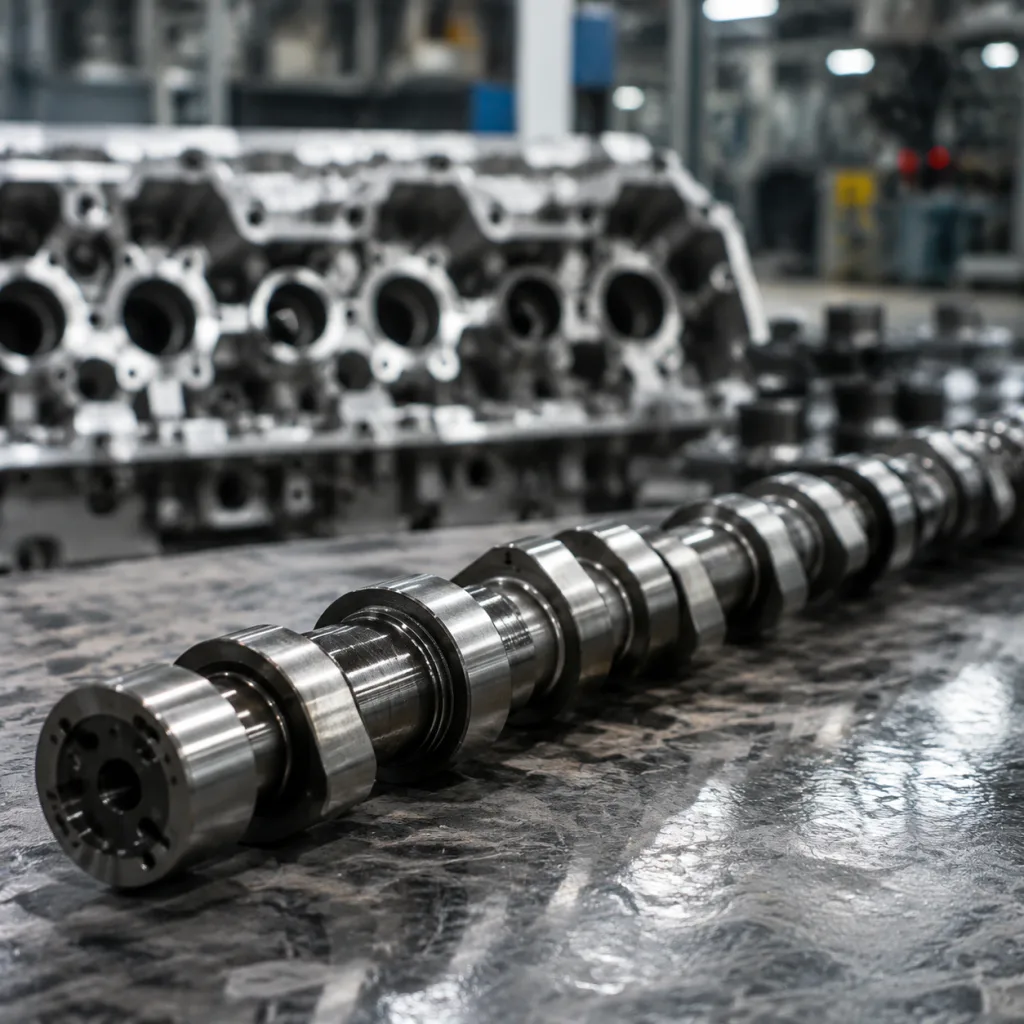
Crankshaft BMW wholesale sourcing is a risk-control decision before it is a price negotiation. The part is heavy, precision-machined, and unforgiving: one poor journal finish or blocked oil passage can turn into bearing failure, rod damage, piston damage, oil-pump stress, or a cracked block. Importers need more than a fitment claim. They need stable journal geometry, controlled metallurgy, documented fatigue and wear controls, corrosion-safe packing, and accurate part-number mapping across BMW-fitment engine families. Driventus manufactures engine and powertrain components in Taizhou, Zhejiang, under IATF 16949:2016 and ISO 9001:2015 systems covering incoming material, machining, heat-treatment coordination, inspection, traceability, and export packing. This guide gives procurement teams a practical way to screen suppliers, compare quotations, define tolerances, plan MOQ, and reduce claim exposure when buying BMW-fitment crankshafts for aftermarket distribution, repair-chain supply, or private-label programs. Driventus is an independent aftermarket manufacturer; brand names are referenced for fitment only.
Start With the Buying Decision, Not the Part Number
A crankshaft program should not begin with a spreadsheet of model years and target prices. Start with the commercial route. Are you filling warehouse stock for distributors, supporting engine rebuilders, covering warranty replacement, or launching a private-label range? Each route changes the inspection depth, carton design, label format, and acceptable inventory risk.
Build the RFQ around use case, demand, and technical control:
- Engine code, displacement, fuel type, and production-year range; model-year references alone are too easy to misread
- Buyer-supplied OE cross-references where available, for example generic references such as OE 11251…, plus supersession notes
- Main journal and rod journal nominal dimensions, tolerance band, and standard or undersize requirement
- Stroke, counterweight design, flange pattern, keyway, oil-pump drive, and trigger wheel details matched to the engine family
- Bearing compatibility, thrust-width requirement, and approved repair sizes such as 0.25 mm or 0.50 mm undersize
- Heat-treatment route, surface hardness target, and batch hardness records for wear surfaces
- Dynamic balance report, residual unbalance target, or documented balance-control method by application
- Export carton, pallet, corrosion protection, VCI bag, and journal-protection specification for sea freight
Then split the range by demand class. A-items may justify 50–200 pieces per SKU with scheduled replenishment. B-items often work better in 20–50 piece mixed batches. C-items should not be quoted casually; confirm tooling status, material availability, and realistic annual movement first. One slow SKU can trap more working capital than ten fast ones.
For program planning, importers can review our catalog and the engine component range at /products/engine-components.html. For non-standard drawings, private-label packaging, or controlled-brand distribution, custom manufacturing is the correct route.
Audit the Failure Points a Bad Crankshaft Supplier Hides
A supplier audit should prove repeatability. One good first article does not prove that the next 200 pieces will hold journal size, runout, hardness, oil-hole cleanliness, and rust protection. Follow one finished batch backward: final carton, inspection report, machining record, heat-treatment record, material heat number, and incoming material certificate.
| Audit area | What to verify | Procurement relevance |
|---|---|---|
| Quality management | IATF 16949:2016 and ISO 9001:2015 scope, internal audit records, corrective actions closed within agreed timing | Confirms structured process control |
| Material traceability | Steel grade records, heat numbers, supplier certificates, receiving inspection lot numbers | Supports batch-level containment |
| Machining control | CNC programs, fixture management, tool-life rules, in-process inspection frequency such as first-off and every 20–50 pieces | Reduces journal and runout variation |
| Heat-treatment control | Hardness range, case depth where applicable, outsourced process records, furnace batch traceability | Supports wear and fatigue resistance |
| Measurement system | Calibrated micrometers, bore gauges, roundness testing, CMM or profile checks, gauge calibration within valid period | Confirms dimensional evidence |
| Final inspection | Journal size, taper, ovality, runout, oil-hole deburring, balance checks, 100% visual review of machined surfaces | Reduces warranty exposure |
| Export packing | Anti-rust oil, VCI bag, end protection, carton drop resistance, pallet strapping and moisture barrier | Protects heavy parts in sea freight |
| Order type | Suitable use | Planning notes |
|---|---|---|
| Sample order | Dimensional verification, fitment confirmation, packaging approval | Usually 1–3 pieces per SKU; confirm whether sample price includes inspection report and export packing |
| Trial wholesale order | New distributor launch or range extension | Often 10–30 pieces per SKU across several applications; prioritize high-demand engine codes first |
| Repeat batch | Stock replenishment for proven references | Commonly 50–200 pieces per SKU depending on demand, tooling status, and raw-material batch size |
| Private-label program | Regional distributor or repair-chain supply | Requires label, carton, pallet marking, documentation approval, and may require higher MOQ for printed packaging |
| Comparison factor | Low-risk quotation should include | Risk if omitted |
|---|---|---|
| Fitment basis | Engine code, buyer cross-reference, drawing or sample confirmation | Wrong application shipment |
| Inspection scope | Journal dimensions, runout, hardness, oil-hole condition, sampling or 100% check rule | High claim rate after installation |
| Traceability | Batch number, material heat number, and production records | Slow containment after defect report |
| Packing | Corrosion protection, journal protection, carton strength, pallet plan | Rust or handling damage in transit |
| MOQ | Clear SKU-level minimums and quantity price breaks | Unplanned inventory imbalance |
| Lead time | Production, inspection, packing, and document schedule | Stockouts or missed launch dates |
| After-sales process | Claim photos, measurement evidence, return rules, credit timing | Disputes and delayed credit handling |