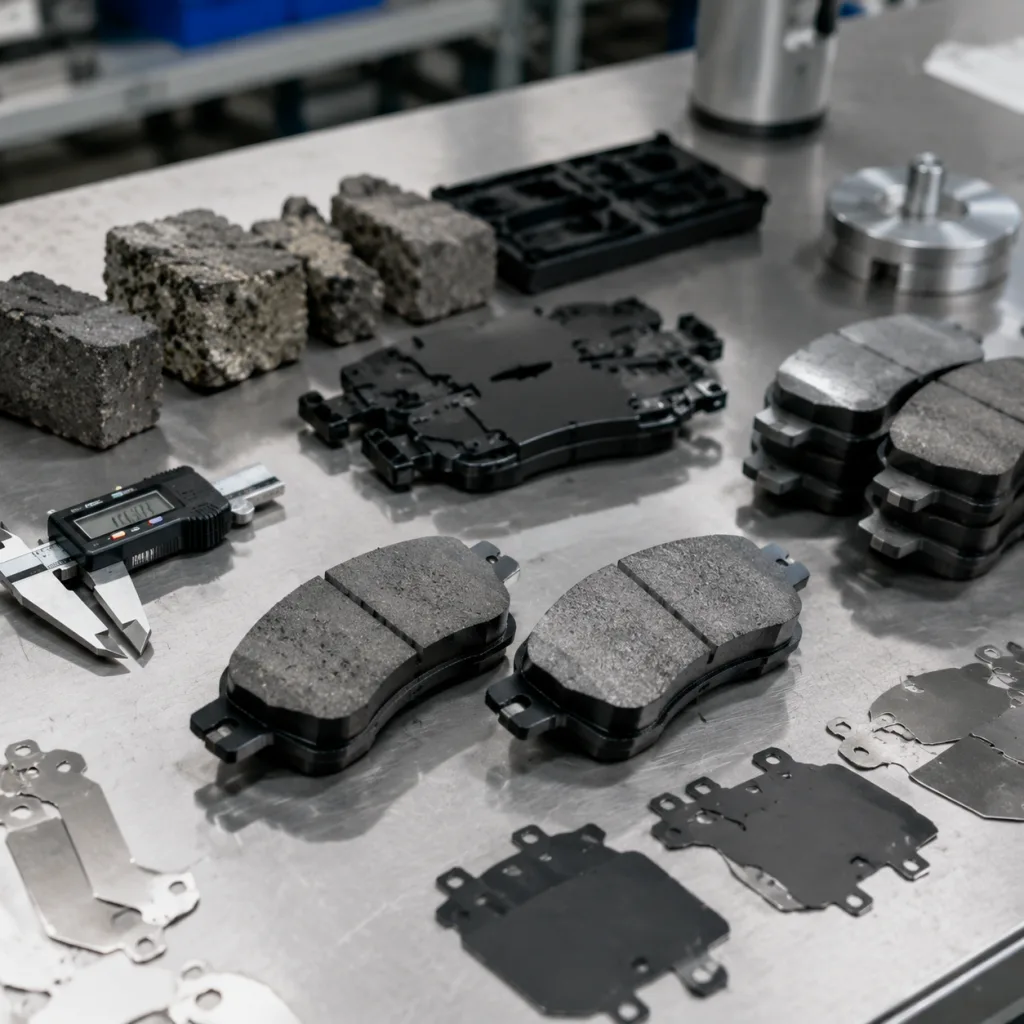
The cost to change brake pads and rotors is rarely a single number. It shifts with axle layout, vehicle mass, rotor diameter, pad compound, and local labour rates, and it changes again if the parts do not fit cleanly the first time. For procurement teams, the better comparison is not just invoice total. It is fitment accuracy, compliance, traceability, and service life after installation. A low parts price can turn expensive if the rotor thickness is wrong, the pad shape needs rework, or the batch lacks quality data you can audit later. Driventus is an independent aftermarket manufacturer; brand names are referenced for fitment only. If you need repeatable supply, the real question is how to source an OE-equivalent brake set that installs cleanly, meets the required standards, and holds up in service without avoidable warranty claims.
Start with the invoice, then test the risk
Brake pricing breaks into two buckets: components and labour. That sounds simple until you compare quotes that hide hardware, vary rotor finish, or leave out the sensor lead. The cheapest line item is not always the cheapest axle.
What usually moves the number:
Vehicle segment: compact cars are typically cheaper than SUVs, vans, and performance platforms.
Rotor size and mass: larger rotors cost more to cast, machine, and ship.
Spec level: coated rotors, low-dust pads, and fitted sensors increase the parts bill.
Region: hourly labour rates and tax treatment vary significantly by market.
Condition at inspection: uneven wear, corrosion, or caliper issues can expand scope.
If two quotes look close but one includes clips, shims, and wear sensors while the other does not, they are not comparable. For sourcing, always compare full axle sets, not single-pad pricing.
What a typical replacement really costs
For a standard passenger vehicle, a practical budget range in USD looks like this. Premium European applications, large SUVs, and high-performance vehicles often sit above these bands.
Cost element
Typical range (USD)
Notes
Brake pads, per axle
60-180
OE-equivalent compounds, fitted as a set
Rotors, per axle
80-300
Coated rotors and larger diameters cost more
Hardware and sensors
20-120
Clips, pins, shims, wear sensors
Labour, per axle
120-350
Often 1.0-2.5 hours depending on access
Typical total, per axle
280-950
Higher for luxury, EV, and heavy-duty applications
</tr></thead><tbody> </tbody></table>That range assumes the caliper, hub, and ABS-related parts are serviceable. If the workshop finds seized slides, damaged hoses, or rotors below minimum thickness, the final invoice rises fast. For fleet planning, use the upper end for risk reserves and the midpoint for routine budgeting.
Choose the repair scope by inspection, not habit
Pads alone can be replaced when the rotor remains above minimum thickness, has acceptable runout, and shows no heavy scoring, cracking, heat spots, or pulsation. In practice, many shops still replace both parts together. They are trying to avoid comeback risk and keep friction behaviour consistent across the axle.
A simple decision rule helps:
Replace pads only when rotor wear is uniform and the surface is within spec.
Replace rotors and pads together when the rotor is near minimum thickness, warped, or heavily grooved.
Replace caliper hardware when slide movement is not smooth or boots are damaged.
Replace wear sensors when the original lead is heat-damaged or the connector is brittle.
For high-mileage fleets, a full axle set often gives the lowest cost per mile even if the ticket is higher on day one. That matters most when downtime costs more than the parts line.
Failure modes that make a cheap quote expensive
Most overspend in brake sourcing comes from avoidable mismatch, not from the baseline price of the pad or rotor. The part is cheap; the correction is not.
Common failure modes include:
Rotor diameter or offset mismatch that forces a second-order replacement.
Pad shape that matches the vehicle family but not the exact caliper carrier.
Missing hardware, so the workshop reuses fatigued clips or stops the job.
Poor coating or packaging, which creates rust or transit damage before installation.
Weak traceability, which makes claims and containment slow when a batch fails.
This is why a procurement team should ask for the full application data, not just the catalogue number. If the supplier cannot show the fitment logic, the cost to change brake pads and rotors can climb after the order is placed.
Check the spec before you place volume
The lowest quote is not the lowest risk. A brake programme should be validated for dimensional match, friction stability, packaging, and chemical compliance before it moves into volume.
Key checks include:
Exact pad outline, backing plate thickness, and shim design.
Rotor outside diameter, height, centre bore, and bolt pattern.
Minimum thickness, casting quality, and surface finish.
ECE R90 compliance where the market requires it.
REACH (EC) No 1907/2006 compliance for restricted substances.
Manufacturing controls aligned with IATF 16949:2016 and ISO 9001:2015.
Test evidence such as dynamometer fade, wear, noise, and corrosion exposure, including methods aligned with SAE J2527 where applicable.
If you want to review the range of parts we supply, see our catalog. For factory and process details, review our quality system.
How buyers cut cost without cutting spec
Cost control is usually a sourcing problem, not a compromise problem. The biggest gains come from standardising by platform, buying axle sets, and reducing SKU fragmentation across similar vehicles. Once the fitment file is stable, you can consolidate volume and negotiate better freight, packing, and test costs.
A few practical steps help:
Lock the OE-equivalent geometry before you request pricing.
Ask for the same friction family across the platform where duty cycle is similar.
Specify boxed axle sets to reduce missing hardware and counting errors.
Request batch traceability so claims can be isolated quickly.
Confirm whether private-label artwork, language packs, and barcoding are included.
For programmes that need private label, multi-market packaging, or application consolidation, use custom manufacturing rather than forcing a catalogue part into a bespoke brief. That usually shortens lead time and avoids rework later.
Frequently asked questions
Often yes, but only if the rotor is above minimum thickness, has low runout, and shows no heavy scoring or heat damage. If the rotor is marginal, replacing both parts is usually better value because it reduces repeat labour and brake noise complaints.
Quotes move with rotor size, pad compound, wear sensors, labour rate, taxes, and whether hardware is included. A quote for a coated axle set from one market is not directly comparable with a basic uncoated set from another.
For many markets, look for ECE R90 on replacement friction parts, plus REACH (EC) No 1907/2006 for chemical compliance. For supply control, IATF 16949:2016 and ISO 9001:2015 are the core quality-system references.
If you need application-level pricing, validation support, or a private-label brake programme, send your fitment list and annual volume through [request a quote](/contact.html).