Connecting Rod Supplier: Sourcing Guide for B2B Buyers
Selecting a connecting rod supplier is a procurement decision that affects engine durability, machining consistency, warranty exposure, and landed cost. For distributors, OEMs, and repair-network buyers, the key questions are not only price and availability, but metallurgy, dimensional control, batch traceability, and the supplier’s ability to support repeat orders. Driventus is an independent aftermarket manufacturer; brand names are referenced for fitment only. Our manufacturing base in Taizhou, Zhejiang supplies engine and powertrain parts to buyers in more than 60 countries, with processes aligned to IATF 16949:2016 and ISO 9001:2015. If you are sourcing rods for passenger car, light commercial, or performance rebuild applications, the minimum review should cover material grade, big-end and small-end tolerances, surface treatment, packaging, and audit evidence. The sections below outline what to verify before you place a purchase order.
What buyers should expect from a connecting rod supplier
A qualified connecting rod supplier should be able to provide stable repeat supply, documented process control, and part-level traceability. For B2B sourcing, the practical checklist is below:
Material declaration and heat-treatment route
Dimensional inspection report for critical features
Batch traceability by lot or heat number
Packaging suitable for export and warehouse handling
Lead-time confirmation by production schedule, not estimate only
Access to audit evidence for factory review
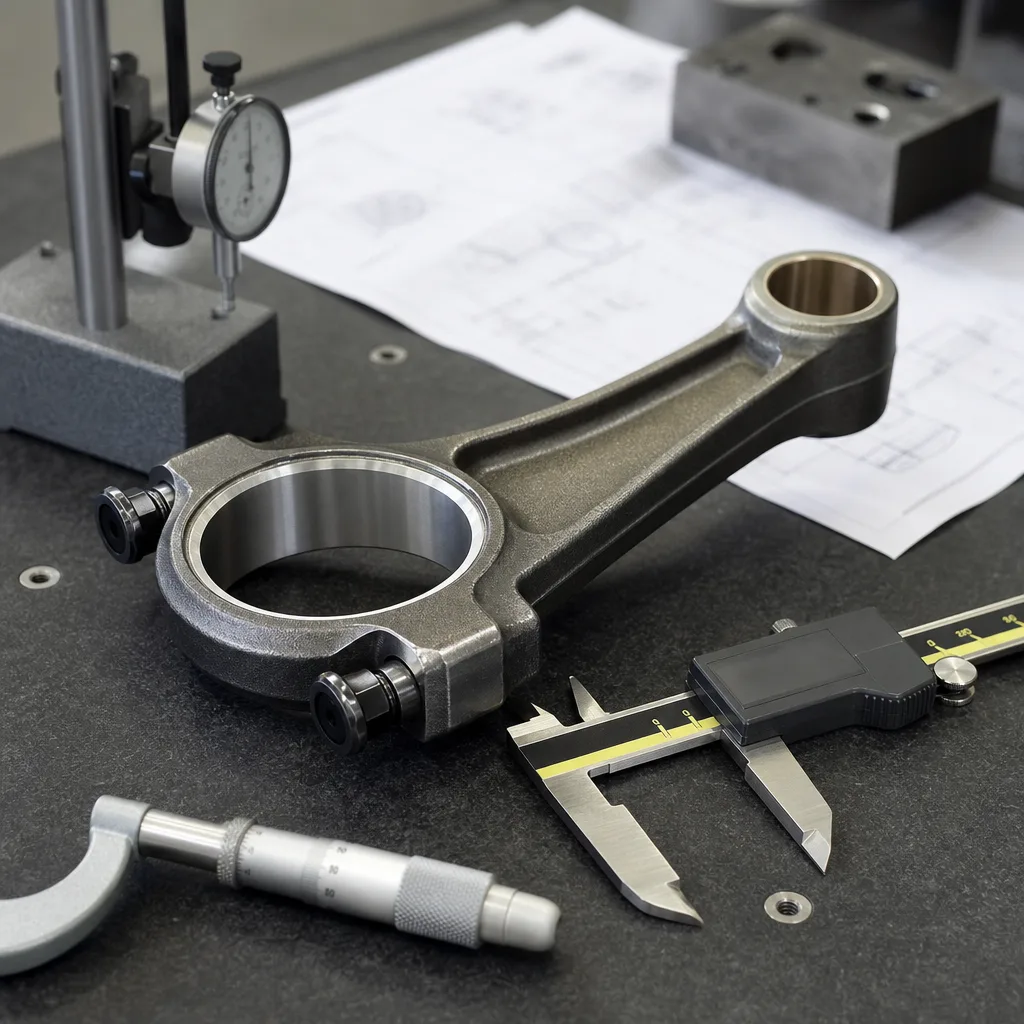
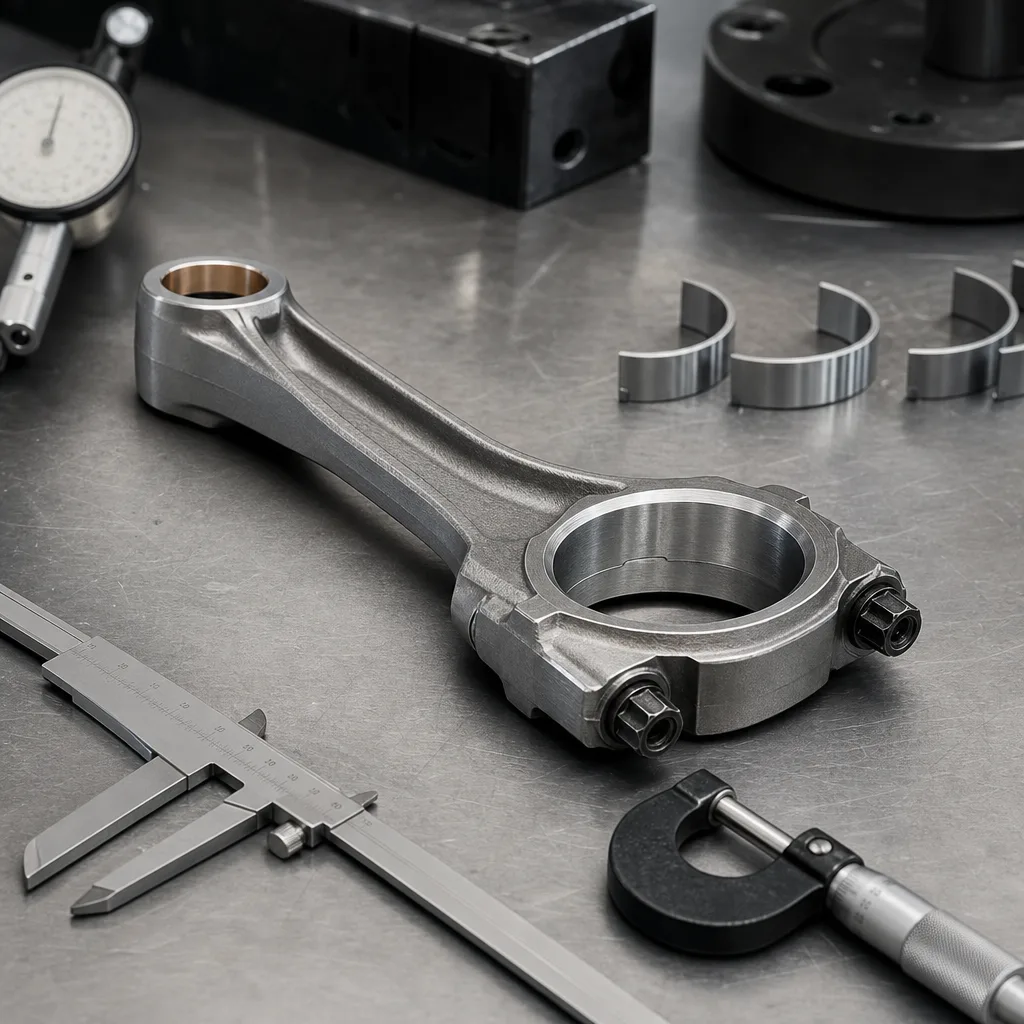
For connecting rods, buyers commonly check rod length, big-end bore, small-end bore, centre-to-centre distance, weight match, and cap alignment. If the rod is supplied with bolts, ask for bolt grade, tightening method, and replacement policy. Driventus can support mixed-volume orders for aftermarket distribution and private-label programmes through our catalog and custom manufacturing.
Key technical specifications to verify before purchase
Use a written specification sheet. For procurement teams, this reduces claim disputes and helps standardise incoming inspection.
Item
What to verify
Typical buyer question
Material
Forged steel, powder metal, or other stated grade
Is the heat-treatment route documented?
Dimensional control
Centre distance, bore size, parallelism, roundness
What tolerance band is guaranteed?
Mass control
Unit weight and matching set tolerance
Are rods supplied as matched sets?
Surface finish
Shot peening, polishing, coating
Is surface treatment consistent by lot?
Fasteners
Bolt type and tightening spec
Are bolts new and traceable?
Packaging
VCI, partitioning, export carton strength
How is transit damage prevented?
</tr></thead><tbody> </tbody></table>For OEM and aftermarket programmes, the important point is not only nominal dimensions but repeatability from lot to lot. Ask for inspection records linked to the production batch. Where a cross-reference is available, suppliers should state fitment using OE 06A107065 or similar OE-style references only for identification, not as approval claims. Driventus is an independent aftermarket manufacturer; brand names are referenced for fitment only.
Certification, audit, and compliance documents to request
A serious supplier should be able to show more than a brochure. For imported engine components, request the following documents before approval:
IATF 16949:2016 certificate, if the product is part of an automotive quality system scope
ISO 9001:2015 certificate
Material compliance statement for REACH (EC) No 1907/2006, when applicable to the destination market
Test report or internal inspection summary for each shipment or lot
Company profile with production capacity and export history
Corrective-action process for nonconforming product
If your business serves the EU or UK, ask whether the supplier maintains traceability records and change-control notifications. For customers in North America and Brazil, export packaging, palletisation, and carton labelling are also part of the quality discussion. You can review our quality system for the controls we apply across engine components.
MOQ, lead time, and supply planning for distributors
For purchasing teams, MOQ and lead time are usually the two variables that decide whether a supplier is usable. A good connecting rod supplier should state both clearly.
Typical questions to resolve in the RFQ stage:
1. What is the MOQ per part number or per build family? 2. What is the standard lead time for repeat orders? 3. Can the supplier hold safety stock for fast-moving references? 4. Is mixed-SKU packing available for distributor orders? 5. Can shipments be split by warehouse region or customer programme?
For higher-volume programmes, forecast sharing improves scheduling and reduces stock-outs. For lower-volume or niche references, ask whether the factory can consolidate similar parts within a production window. Driventus also supports sourcing across adjacent engine parts through our catalog and engine-component programmes at /products/engine-components.html, which helps buyers reduce supplier count without losing specification control.
How to compare suppliers on more than price
Price alone does not show the real cost of a connecting rod programme. Compare suppliers on the items below:
Dimensional consistency across batches
Rejection rate at incoming inspection
Documentation completeness
Response time for corrective action
Packing quality and transit damage rate
Ability to support custom marking or private label
Export experience for your market
A lower unit price can become expensive if the supplier cannot maintain bore size, rod weight, or bolt consistency. If you are building a long-term sourcing list, ask for sample approval, then compare production samples against your inspection plan. When your requirement includes private label or design adaptation, review custom manufacturing options early, before tooling or fixture decisions are locked in.
Why factory audit readiness matters
Factory audit readiness is a practical indicator of sourcing risk. Buyers should expect a supplier to explain:
Incoming material control
Heat-treatment process checks
Machining and gauging points
Final inspection frequency
Traceability between raw material and finished part
Handling of nonconforming product
A supplier that can walk an auditor through process flow, inspection records, and corrective actions is usually easier to work with after the first order. That matters when you are planning repeat supply for a regional distribution network or a repair-chain programme. If you want to review commercial and technical details together, use request a quote with the target OE reference, annual volume, and destination market. Driventus is an independent aftermarket manufacturer; brand names are referenced for fitment only.
Frequently asked questions
Start with material grade, heat treatment, dimensional tolerances, MOQ, lead time, and certification. Ask for inspection records and traceability details for the current batch.
Yes. We can review OE-style references for fitment identification, such as OE 06A107065 where applicable, but we do not claim OEM approval or endorsement.
Yes. We support custom manufacturing for approved specifications, packaging, and marking requirements, subject to technical review and order volume.
If you are comparing a connecting rod supplier for distribution, OEM support, or repair-chain supply, send your target part numbers, volume, and market requirements. Request a quote at /contact.html.