Connecting Rod Mercedes-Benz Supplier: Sourcing Guide
If you are sourcing a connecting rod Mercedes-Benz supplier for aftermarket, OEM, or Tier-1 channels, the decision is less about marketing language and more about control. Fitment, metallurgical consistency, traceability, and lead-time stability determine whether a program runs smoothly or turns into claims and rework. A connecting rod must hold dimensional accuracy under cyclic load, so the supplier should prove process control from forging or machining through final inspection. Driventus manufactures engine and powertrain components in Taizhou, Zhejiang, and exports to more than 60 countries. We work to IATF 16949:2016 and ISO 9001:2015 requirements, and we supply B2B buyers who need documented quality, repeatable production, and clear OE cross-reference handling. Driventus is an independent aftermarket manufacturer; brand names are referenced for fitment only. The sections below focus on how to qualify the part, where supplier programs fail, and what commercial details matter before you issue a PO.
Start with fitment, not price
For a connecting rod Mercedes-Benz supplier, the first filter is application control. Price only matters after you know the rod matches the engine family, center-to-center distance, big-end and small-end dimensions, and fastener specification. A cross-reference to OE part numbers is useful, but only if it is backed by dimensional inspection and material control.
Before RFQ shortlisting, ask the supplier to confirm the engine code, the OE or aftermarket reference used for catalogue matching, and the revision level of the drawing or sample. Also request the inspection plan for critical-to-function points such as center distance, big-end bore, small-end bush bore, beam thickness, and cap alignment. For passenger-car programs, a practical approval package usually includes first-article measurements, hardness records, and traceability tied to a heat number or batch number.
Key checks:
Engine application and OE reference mapping
Forging route, machining sequence, and heat treatment control
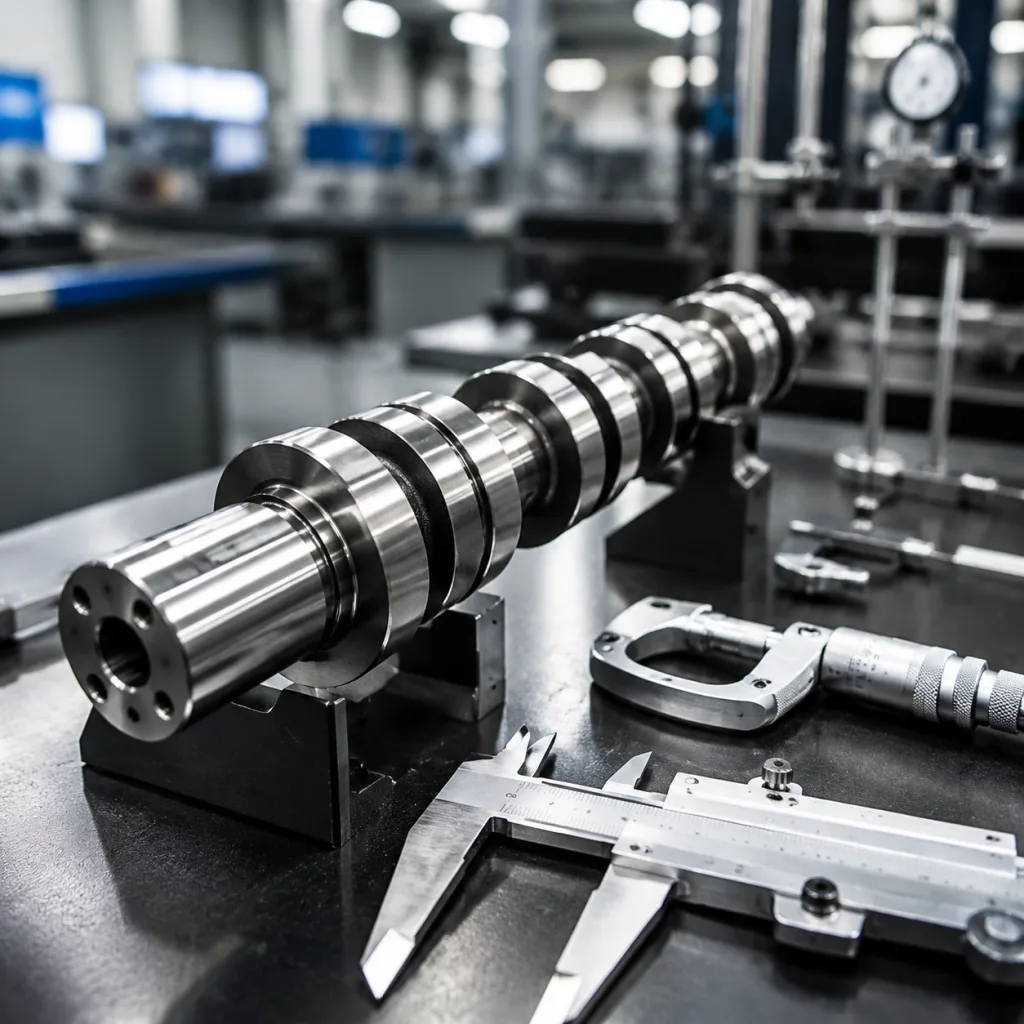
Dimensional inspection on critical bores, widths, and center distance
Material declaration and hardness range
Traceability by batch, date code, and inspection record
Packing standard for export and warehouse handling
If the sourcing brief spans multiple markets, ask for REACH (EC) No 1907/2006 material compliance where applicable, plus any customer-specific restricted-substance documentation. The best suppliers make that evidence easy to retrieve and consistent across lots.
Ask for numbers, not slogans
A qualified supplier should provide a drawing-controlled specification sheet, not a sales description. For rods used in passenger vehicle applications, procurement teams typically need the following data before approval:
Item
What to confirm
Material
Forged steel grade or powder-forged specification
Heat treatment
Hardness range, quench and temper route
Center distance
Nominal value and tolerance
Big-end bore
Finished diameter, roundness, and bore alignment
Small-end bore
Bush material, finished diameter, and finish
Weight
Part weight and balancing tolerance
Fasteners
Bolt grade, torque method, and reuse policy
Surface finish
Shot peen, chamfering, and corrosion protection
</tr></thead><tbody> </tbody></table>Do not accept “OEM standard” as an answer. Ask for the actual numerical targets. A supplier should state center-to-center length as a nominal dimension with a defined tolerance, big-end bore roundness within a measurable limit, and part-to-part weight spread within an agreed gram range. If the rod uses a pressed-in bushing, specify the bushing material and the acceptable bore finish after honing. If the fastener is supplied assembled, ask for bolt grade, tightening torque, and whether yield or torque-to-angle installation is required.
For commercial RFQs, request process capability targets such as Cp/Cpk for bore diameter, width, and center distance. Many B2B buyers use a minimum Cpk of 1.33 for critical dimensions, with a tighter internal target for launch parts. Where the program requires it, buyers may also ask whether validation testing follows published methods such as SAE J2527 for corrosion exposure or other customer-required durability cycles. The supplier should be able to separate standard tests from optional ones without hand-waving.
Where programs usually fail
The most expensive sourcing mistakes are rarely obvious at the quotation stage. They show up when the part reaches production. Common failure modes include a catalog match that does not survive dimensional verification, inconsistent heat treatment, poor cap alignment, and packaging that allows damage in transit.
Another frequent issue is confusing sample quality with production consistency. A supplier can send a good-looking sample and still miss the same tolerance after the third or fourth lot. That is why buyers should ask for batch traceability, inspection records, and any process capability data the plant can actually defend. If a supplier cannot show how nonconforming material is isolated, corrected, and prevented from recurring, the risk belongs to the buyer.
Watch for these red flags:
OE reference claimed without drawing-level confirmation
Hardness values reported without load records or batch traceability
No visible control of bores, cap alignment, or center distance
QC reports that do not match the quoted part number
Packing that protects the outer carton but not the finished surface
Lead times that change after sample approval
A clean audit trail matters as much as the rod itself. Ask to see incoming bar or forging certificates, heat-treatment load charts, in-process measurement sheets, final QC reports, and calibration status for bore gauges, micrometers, and hardness testers. If the supplier treats those records as optional, the commercial offer is not ready.
How Driventus supports sourcing programs
Driventus supplies engine components from a vertically integrated manufacturing base, which reduces handoffs between forgings, machining, and final inspection. For buyers, that usually means faster issue resolution and tighter control over batch consistency. We also support OE part-number cross-references in the format buyers expect, including references such as OE 06A107065 when the keyword set already cites a reference.
For procurement teams, the practical advantages are:
Single-source control over key production stages
Export documentation for EU, UK, US, Canada, Australia, and Brazil
IATF 16949:2016 and ISO 9001:2015 aligned process control
Support for sampling, pre-production approval, and repeat orders
Packaging options for distributors, wholesalers, and repair networks
A typical buyer workflow starts with OE reference validation, then sample approval, then production release. During sample review, our team can compare the request against the catalog item, confirm fitment scope, and align the inspection points that matter for the order. For repeat programs, buyers often request a shipment plan that separates launch quantity from replenishment quantity, so the first run can absorb validation while later orders follow a stable reorder cadence.
If you need a broader view of available engine parts, see our catalog and the engine-focused range at [/products/engine-components.html).
Step through MOQ and audit questions
Commercial terms matter as much as product fit. For a connecting rod Mercedes-Benz supplier search, ask early about MOQ by part number, whether mixed-model cartons are possible, and the expected lead time for first order and repeat production. Procurement teams should also confirm whether the supplier can hold safety stock for fast-moving references.
A practical sourcing model is to separate the first commercial lot from steady-state replenishment. A launch order may need a higher MOQ because tooling setup, inspection, and packing validation are spread over fewer pieces, while repeat orders can often be quoted at a lower MOQ once the process is running. Buyers should ask for both quantities in writing: trial order MOQ, mass-production MOQ, and the price break at each volume tier. A useful commercial quote should also state whether the price is EXW, FOB, or CIF, because freight and packing can materially change landed cost.
When comparing offers, request the following numbers in the quote sheet:
MOQ by part number and by packing format
Unit price at 100, 300, 500, and 1,000-piece levels
Sample charge, if any, and whether it is credited after order confirmation
Standard lead time for samples, pilot run, and bulk production
Buffer for peak season, Chinese New Year, or raw material constraint risk
Whether safety stock is available and how long it is held
A factory audit should cover:
Incoming material control and supplier qualification
CNC process stability and tool-change control
Heat treatment records and hardness verification
Final inspection sampling plan and gauge calibration
Nonconforming material segregation and corrective action flow
During the audit, buyers should ask to see records, not just procedures. That includes incoming bar or forging certificates, heat-treatment load charts, in-process measurement sheets, final QC reports, and calibration status for bore gauges, micrometers, and hardness testers. If your program has a target return rate, ask how corrective action is triggered, who approves containment, and how replacement timing is managed if a lot is rejected. If you are comparing suppliers, weigh audit evidence against sample quality and shipping reliability. A lower unit price is not useful if dimensional variation creates claim volume later. The most dependable programs combine stable process capability, clear documentation, and on-time delivery performance.
When to bundle rods with adjacent parts
Connecting rods are often purchased alongside pistons, crankshafts, gaskets, water pumps, and turbocharger-related components. That makes consolidation useful for buyers managing fewer vendors and fewer inbound inspections. Driventus supports both standard replacement demand and customer-specific development through custom manufacturing when the program needs different materials, geometry, or packaging.
For procurement teams, a sensible sourcing structure is:
1. Confirm OE reference and application scope. 2. Review dimensional drawing and material declaration. 3. Validate sample fit and inspection results. 4. Align MOQ, annual volume, and replenishment rules. 5. Lock packaging, labeling, and quality documentation.
If you are building a multi-item sourcing basket, it is efficient to group rods with adjacent engine components and define one shared control plan. That usually reduces the number of inbound checks, simplifies container planning, and makes reordering more predictable across product families. If the buyer expects recurring demand, establish a reorder point, an expected monthly consumption rate, and a target replenishment window so stockouts do not interrupt workshop supply.
If you need to assess broader quality controls before onboarding, review our quality system. This approach gives sourcing, engineering, and warehouse teams a shared checklist, which reduces delays during approval and replenishment.
Frequently asked questions
Yes. We support OE cross-reference handling for fitment and catalogue use, including references such as OE 06A107065 when applicable. Driventus is an independent aftermarket manufacturer; brand names are referenced for fitment only.
At minimum, ask for IATF 16949:2016 and ISO 9001:2015 process coverage, plus product-specific inspection records. Depending on the market, REACH (EC) No 1907/2006 declarations may also be relevant. Buyers may also request sample reports showing key dimensions, hardness, and traceability for the exact batch being quoted.
Yes. We support private-label and drawing-based programs through our OEM service flow. Share the application, target volumes, annual forecast, packaging requirements, and inspection criteria via the contact page for a sourcing review. If you already have a target MOQ, requested lead time, and preferred Incoterm, include those in the first message so we can respond with a more accurate commercial proposal.
If you are qualifying a new supplier, send the application details, target volume, and OE cross-reference list through /contact.html and we will review the fitment and commercial options.