Connecting Rod Iveco OEM Supplier: Sourcing Guide
Procurement teams sourcing a connecting rod Iveco OEM supplier need more than a price list. The part must match OE geometry, material grade, heat treatment, and balance requirements, while also supporting stable delivery and documentation for incoming inspection. Driventus supplies engine and powertrain components from Taizhou, Zhejiang, with IATF 16949:2016 and ISO 9001:2015 systems in place. We export to 60+ countries and work with aftermarket distributors, OEM and Tier-1 supply chains, and repair networks. Driventus is an independent aftermarket manufacturer; brand names are referenced for fitment only. For buyers, the key questions are consistent dimensional control, batch traceability, packaging, lead time, and whether the factory can support OE cross-reference, sample approval, and production validation before volume release.
What procurement teams should verify first
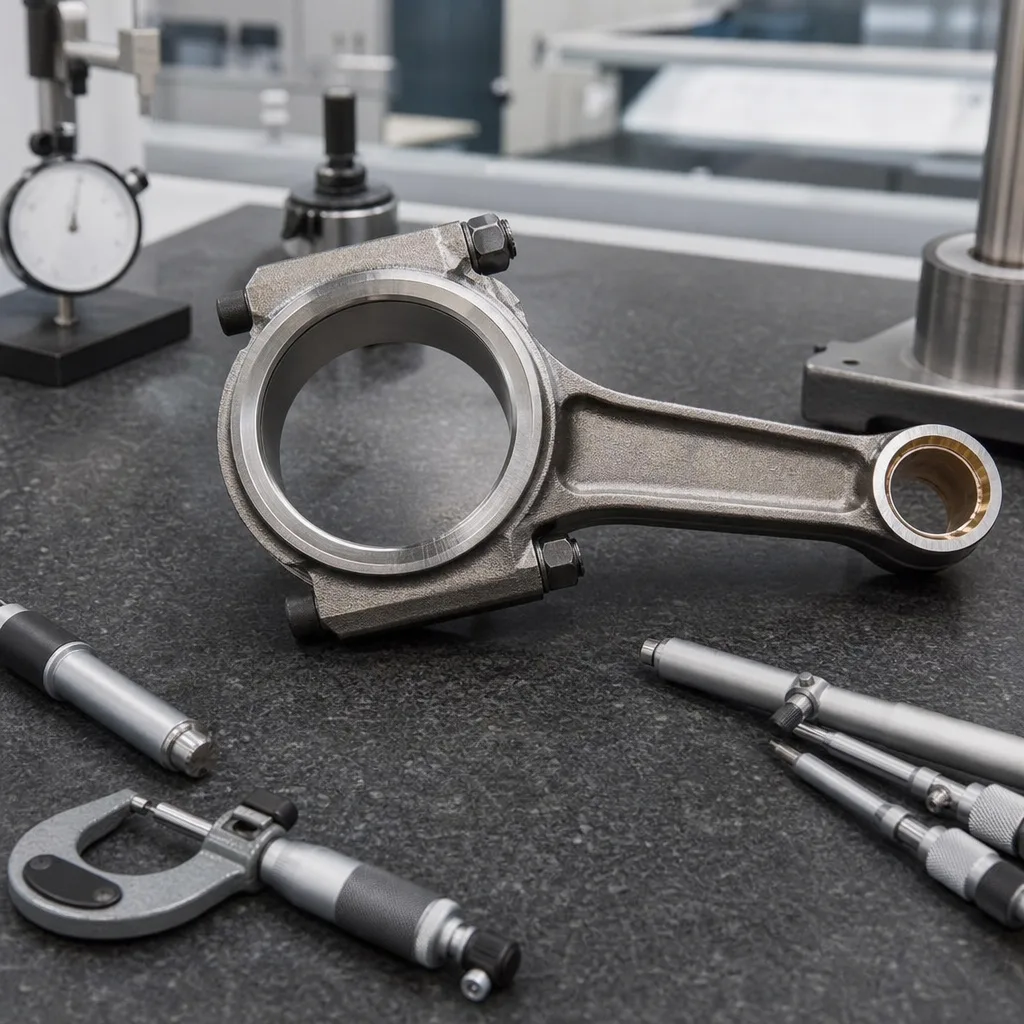
A connecting rod for Iveco engines is not a generic forged part. Buyers should confirm application, engine family, centre-to-centre length, big-end and small-end bore, centre distance, beam profile, weight class, and cap fastener specification. If the sourcing file includes an OE reference, keep it as a fitment cross-check only, for example OE 06A107065 where applicable to the engine family being reviewed.
Before RFQ release, verify:
- Engine code and displacement
- OE reference or superseded reference
- Rod material and manufacturing route
- Heat-treatment condition and hardness range
- Small-end bush requirement and surface finish
- Big-end bore tolerance after machining
- Batch marking and traceability method
- Packaging requirements for export freight and warehouse handling
For commercial buyers, this reduces the risk of short-shipment disputes and reduces incoming inspection rejects at the DC or rebuild facility.
Why certification and audit readiness matter
For B2B sourcing, certification is part of supplier qualification, not a sales claim. Driventus operates under IATF 16949:2016 and ISO 9001:2015 systems, which support controlled process documentation, inspection planning, calibration discipline, and corrective action handling. For European supply chains, material and chemical compliance may also require REACH (EC) No 1907/2006 declarations where applicable to the finished item or associated packing materials.
A practical supplier audit should cover:
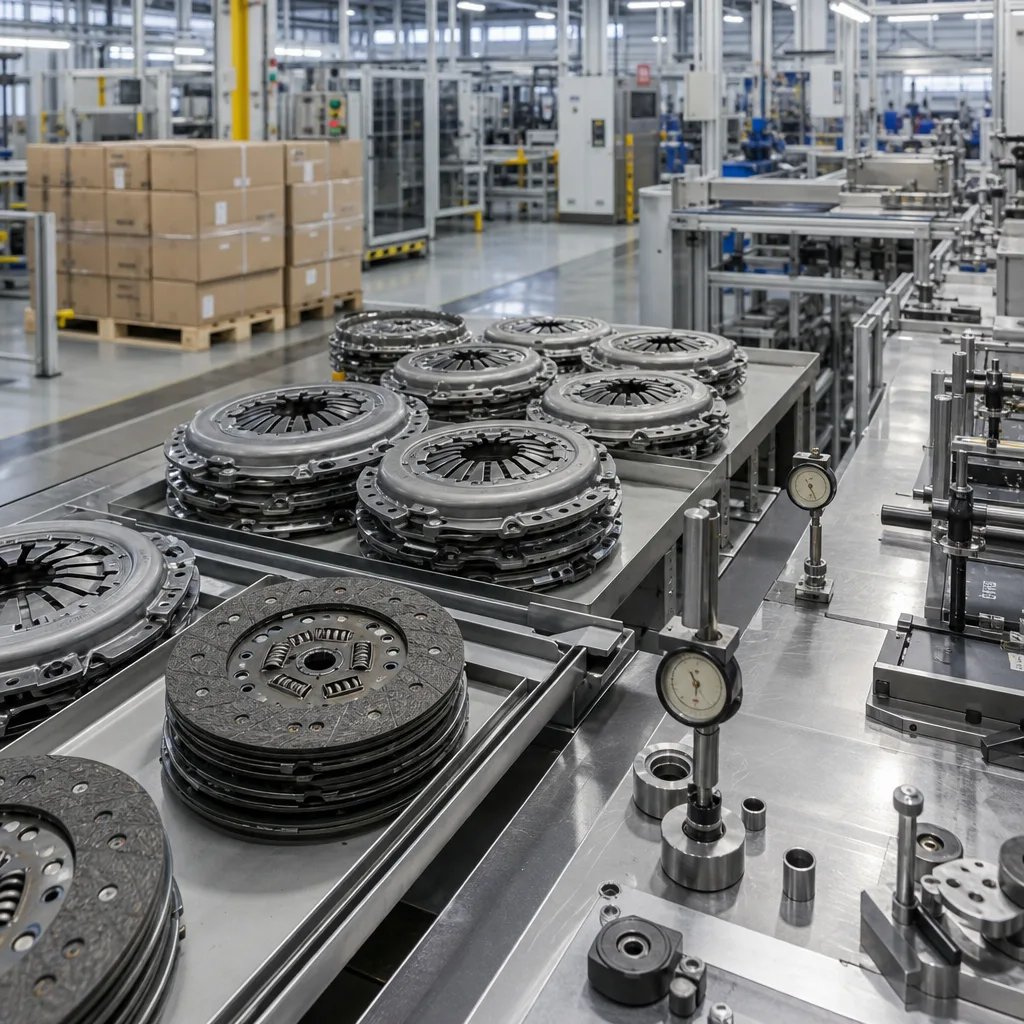
1. Incoming material control and mill test documentation 2. Forging, machining, and heat-treatment process flow 3. In-process gauging and final dimensional inspection 4. Traceability from batch to carton label 5. Nonconformance handling and sample retention 6. Packing standard, corrosion protection, and export palletisation
If your team audits multiple factories, compare not only certificates but also how each plant controls revision changes and handles product equivalence requests.
Typical technical specifications buyers request
Below is a typical specification set used in RFQs for commercial engine rods. Exact values depend on engine code and revision level.
| Item | Typical buyer request |
|---|---|
| Material | Forged alloy steel or application-specific carbon/alloy steel |
| Heat treatment | Quench and temper, controlled hardness range |
| Machining | Precision bored big end and small end |
| Surface finish | Controlled bearing and pin contact surfaces |
| Balance | Matched weight set by engine family |
| Traceability | Heat number, lot code, carton label |
| Documents | Dimensional report, inspection record, material certificate |