Connecting Rod for Hyundai Santa Fe Replacement Guide
Choosing a connecting rod for Hyundai Santa Fe replacement work is a fitment problem first and a sourcing problem second. The vehicle badge is not enough; buyers need the engine code, OE cross-reference, rod length, big-end and small-end bore, journal size, piston pin diameter, bolt specification, and mass class before release. Driventus supplies replacement engine components from Taizhou, Zhejiang, with production controlled to IATF 16949:2016 and ISO 9001:2015 processes. Driventus is an independent aftermarket manufacturer; brand names are referenced for fitment only. This guide focuses on the decisions that prevent noise, bearing damage, and avoidable returns: how to verify the rod, where replacement parts fail, what testing should be requested, and how procurement teams compare suppliers without relying on appearance alone.
Start with fitment, not the vehicle name
For a connecting rod for Hyundai Santa Fe replacement order, the first question is not trim level or model year. It is engine code. Santa Fe fitment changes across generations, markets, fuel types, and displacements, so the same vehicle badge can point to different rod dimensions.
Minimum checks before you quote
Engine code and displacement
OE part-number cross-reference, if available
Centre-to-centre length
Big-end bore and small-end bore
Rod bolt thread, under-head length, and grade
Rod cap orientation and match marking
Mass class and pairing requirements
If a used rod is available, measure it. A visual match with the wrong bore or length still becomes a warranty claim.
When a rod looks right but fails anyway
The common failure mode in replacement sourcing is assuming that shape equals compatibility. It does not. The rod controls piston travel, bearing loading, and balance, so a small dimensional miss can create a loud engine very quickly.
Check item
What goes wrong if it is off
Why buyers should care
Centre-to-centre length
Compression stack-up shifts
Piston deck height changes
Big-end bore
Oil clearance mismatch
Bearing crush and oil film suffer
Small-end bore
Pin fit becomes unstable
Knock, seizure, or scuffing can follow
Beam profile and mass
Balance drift
Vibration and mixed batches become more likely
Bolt specification
Clamp load changes
Cap movement can destroy the rod
</tr></thead><tbody> </tbody></table>Steel and powdered-metal rods add another layer: material route, heat treatment, and hardness range. If the application uses fracture-split caps, pairing must remain intact through machining, packing, and dispatch.
Spec-by-spec comparison before release
Procurement teams usually compare suppliers too early on price and too late on technical detail. A better method is to compare the rod specification line by line before sample approval.
Compare these points side by side
OE cross-reference against target engine family
Length and bore dimensions against the removed part
Bolt design and clamp method
Weight class and balancing tolerance
Material route and heat-treatment declaration
Surface finish, roundness, and cap alignment
Packaging method for matched caps and traceability
If two parts share the same external profile but differ in bore control or bolt grade, they are not interchangeable in service. The safer supplier is the one that can prove the dimensions, not describe them.
Validation checks that separate a usable part from a risky one
A dependable replacement rod should come with evidence, not just a catalog line. At minimum, the supplier should document incoming material control, in-process machining inspection, and final acceptance against the stated OE-equivalent target.
Common validation steps include:
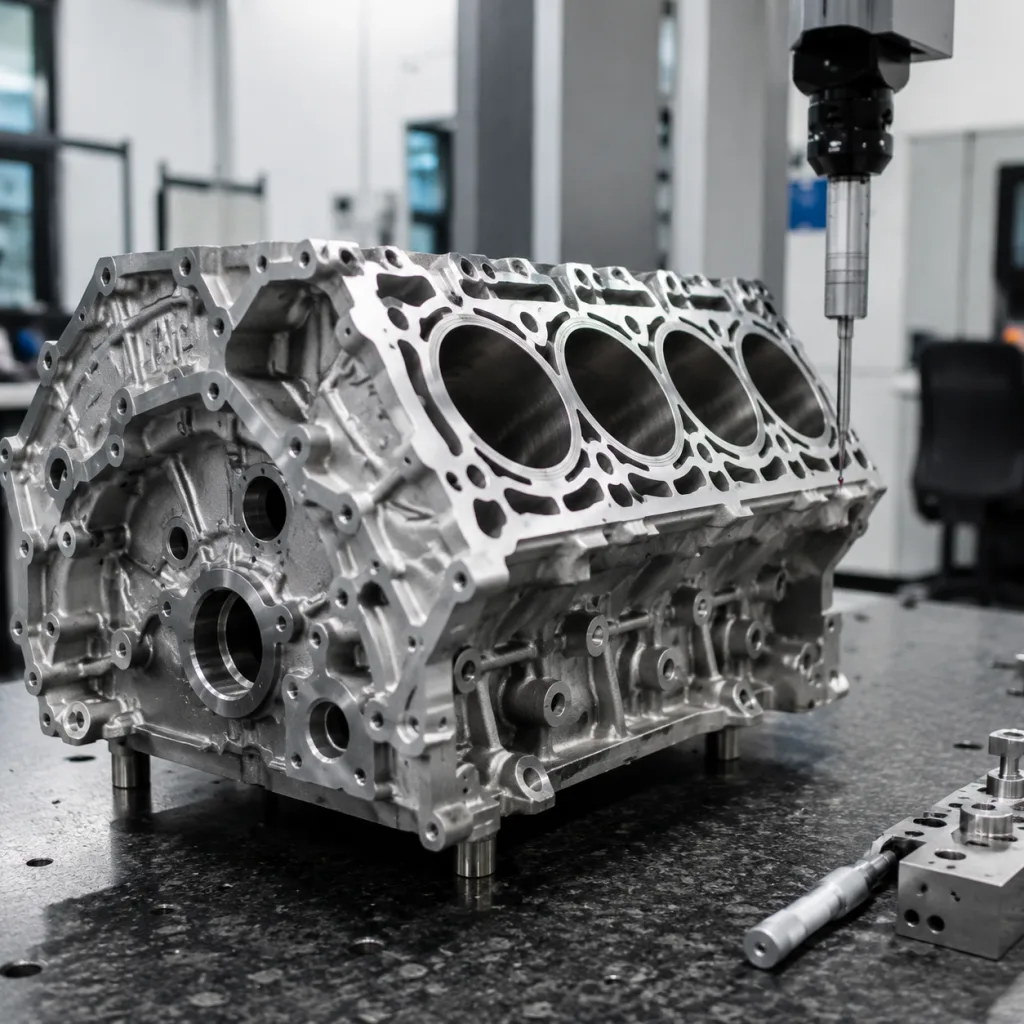
Coordinate measurement of bore sizes and lengths
Weight sorting and batch traceability
Bolt torque or stretch verification
Hardness testing after heat treatment
Magnetic particle or crack inspection where applicable
Runout and cap alignment checks
In broader quality programs, buyers may also request references to IATF 16949:2016, ISO 9001:2015, REACH (EC) No 1907/2006, and customer-specific test methods. For export programs, ask for inspection records and traceability before approval rather than after delivery.
How Driventus fits into the sourcing decision
Driventus supplies engine and powertrain parts from a vertically integrated manufacturing base, which helps control machining consistency and lead-time planning. That matters when a replacement program supports workshop downtime targets, distributor fill rates, or regional stocking.
You can review our catalog and the broader engine component range to compare rods with pistons, crankshafts, gaskets, and water pumps.
If your programme needs a non-standard fitment, custom manufacturing is available for approved drawings and samples. The same quality controls apply through the quality system, including lot traceability and inspection records suitable for B2B supply chains.
Driventus is an independent aftermarket manufacturer; brand names are referenced for fitment only.
What to ask for before you place the order
Price only tells part of the story. Buyers should request the full package, especially when the rod will be used in rebuilds that have to return to service quickly.
Ask for these items before approval
Sample and production drawings
OE cross-reference only where the platform already uses that format
Material and heat-treatment declaration
Dimensional inspection report
Packaging and label format
Batch traceability and carton lot code
Lead-time and MOQ confirmation
If the supplier cannot explain how rods are sorted by weight, machined to tolerance, and packed for traceability, the risk usually lands on the workshop or distributor channel. That is a poor trade for a relatively low-cost engine component.
Frequently asked questions
Match the engine code, OE cross-reference, centre-to-centre length, bearing bore, and pin bore. If possible, compare a sample rod and verify bolt specification before ordering.
Not safely. Santa Fe engines vary by displacement, fuel type, and generation. Always confirm the exact engine family and dimensional data before replacement.
Ask for dimensional inspection data, material and heat-treatment details, traceability records, and quality certification such as IATF 16949:2016 and ISO 9001:2015 where applicable.
If you need a verified replacement rod programme or a sample matched to your target application, contact Driventus to request a quote: /contact.html