Connecting Rod for Jeep Grand Cherokee Replacement: Fitment
Selecting a connecting rod for Jeep Grand Cherokee replacement work is a fitment exercise first and a procurement decision second. The part has to match the engine family, rod length, big-end bore, small-end bore, fastener specification, and assembled weight, otherwise the engine may run with poor balance, low oil clearance, or premature bearing wear. For buyers, the useful question is not whether a part is labelled as compatible, but whether it can be verified against measured dimensions and documented process control. Driventus supplies aftermarket engine components for B2B buyers, and brand names are referenced for fitment only. If you are sourcing for a rebuild programme, a repair chain, or a regional distributor, the practical goal is OE-equivalent geometry, repeatable metallurgy, and stable lot-to-lot quality. The sections below explain what to verify, which specifications matter most, and what data to send when you request supply.
What OE-Equivalent Fitment Means
For a replacement connecting rod, OE-equivalent means the rod can be installed without changing the engine's intended geometry or bearing behaviour. The main checks are dimensional, not cosmetic.
A credible replacement should match:
Centre-to-centre length within the engine's required tolerance
Big-end bore and bearing housing size
Small-end bore or bushing specification
Rod bolt grade, thread form, and clamp load method
Beam offset, cap design, and orientation features
Assembled weight and weight matching across the set
If the original rod has been damaged, do not use a bent or heat-affected sample as the only reference. Measure against a known-good unit or an engine build record. For procurement teams, the safest approach is to tie the purchase order to engine code, model year, and measured sample data, not to a generic description alone. That is the difference between a part that looks correct and a part that performs correctly.
Critical Dimensions to Verify
The fastest way to reduce returns is to lock down the few dimensions that control fitment. The table below shows the checks that matter most in replacement sourcing.
Check
What to confirm
Why it matters
Rod length
Centre-to-centre measurement against the engine spec
Affects compression height, deck position, and piston travel
Big-end bore
Housing diameter after cap torquing
Controls bearing crush and oil clearance
Small-end bore
Pin fit or bushing diameter
Prevents pin seizure or excessive play
Bolt specification
Size, grade, coating, and torque or stretch method
Clamping force affects cap stability
Rod weight
Total and end-to-end matching
Helps maintain rotating assembly balance
Surface finish
Machined surfaces and shot-peened areas
Influences fatigue resistance and bearing seating
</tr></thead><tbody> </tbody></table>For the Jeep Grand Cherokee platform, the exact requirements depend on the engine code, because the vehicle range spans multiple petrol and diesel applications across model years. Buyers should verify the engine family before release. If your team works from an OE sample, record all dimensions before the core is returned or discarded. If you work from catalogue data, confirm that the listed dimensions are tied to the same engine family, not just the same model name.
Material and Fastener Choices
Material choice affects fatigue life, machinability, and cost. For replacement programmes, the decision is usually between forged steel, powdered metal, and machined billet solutions. Forged steel remains common where high cyclic load capacity is required. Powdered metal can offer consistent mass production control in some applications, while billet options are typically used for specialised builds rather than standard aftermarket replacement.
Key procurement points:
Heat treatment must be consistent across lots
Rod bolts should be specified by grade and fastening method, not by generic description
Shot peening and other surface treatments should be documented when used
Bushing material at the small end should be stated clearly if the rod is not fully floating
If a buyer needs a rod for a rebuild shop network, the best practice is to standardise on one material and one bolt strategy across the kit range. That simplifies assembly training and reduces mixed-fit errors. If the programme includes different power outputs or towing duty cycles, ask for separate validation by application rather than assuming one rod covers every variant.
Testing and Quality Controls
Replacement parts should be supported by test data, not only by dimensional claims. Driventus works to IATF 16949:2016 and ISO 9001:2015 process control principles, with material and compliance documentation that can support regulated markets.
Useful validation items include:
Incoming material verification and heat-number traceability
Hardness checks after heat treatment
Magnetic particle inspection or equivalent crack detection on critical metal parts
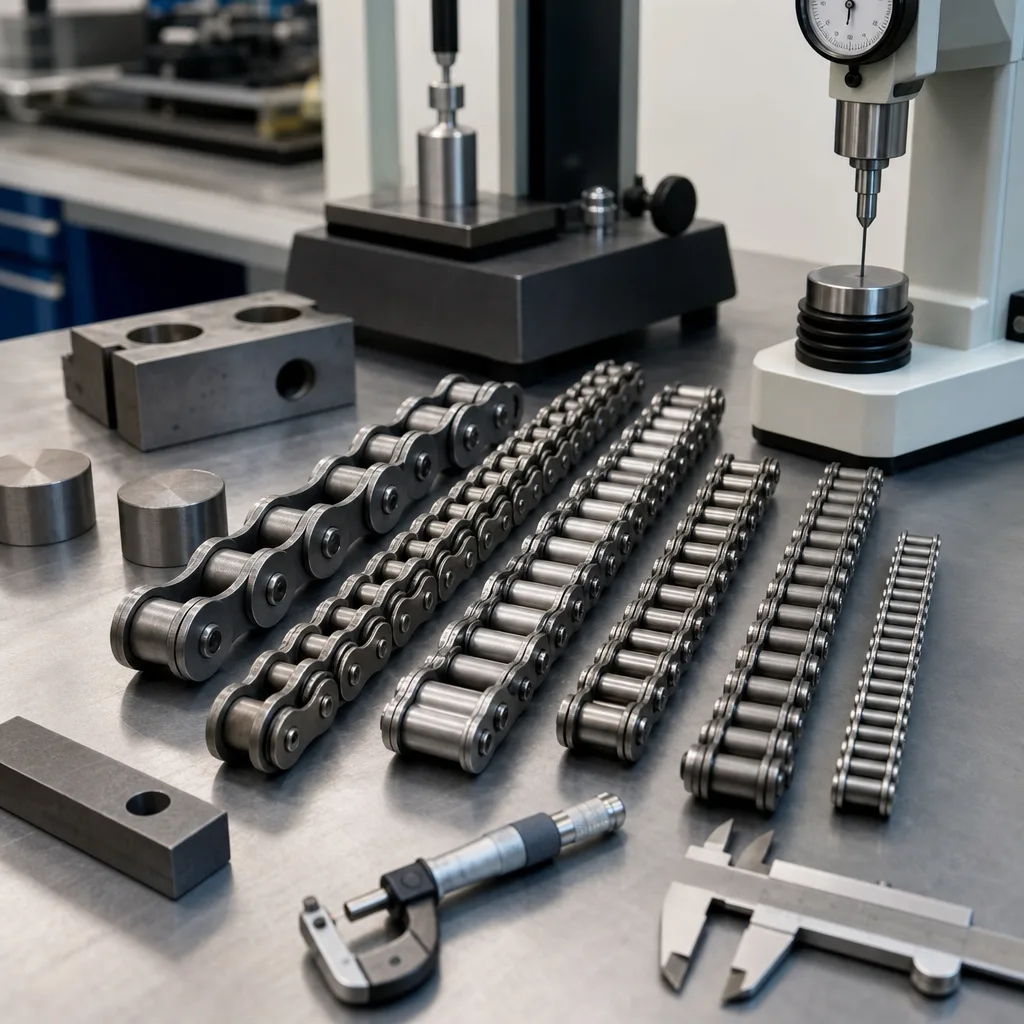
Dimensional inspection of bore, length, and parallelism
Torque or bolt-stretch verification for the rod fastener system
Packaging controls that protect machined surfaces during export
For international supply, material declarations should also support REACH (EC) No 1907/2006 where applicable. Where coated or treated components require environmental performance evidence, buyers sometimes specify salt-spray or corrosion resistance methods aligned to SAE J2527 or a customer-defined equivalent. The exact test plan should be written into the technical agreement before mass production, especially when a repair chain or distributor wants consistent claims across multiple markets.
How To Source The Right Part
A clean sourcing request shortens lead time and reduces sample cycles. Before you place a purchase order, prepare the following:
Vehicle model, year range, and engine code
OE or aftermarket sample measurements
Desired quantity, packaging needs, and forecast
Target market and any compliance requirements
Photos of the removed rod, cap, bolts, and bearings if available
Driventus is an independent aftermarket manufacturer; brand names are referenced for fitment only. We do not claim vehicle manufacturer approval or endorsement. The objective is a part that matches the measured application and can be supplied consistently at scale. If your team needs sample evaluation, volume pricing, or a cross-reference review, the next step is to request a quote with the engine code and sample dimensions.
Frequently asked questions
Start with the engine code, then verify centre-to-centre length, big-end bore, small-end bore, and bolt specification against a known-good sample or build record. Model name alone is not enough because the platform uses multiple engines.
Yes, matched-set supply is usually the better option for rebuild programmes. Ask for weight matching, lot traceability, and the bolt specification so the full set can be assembled and balanced consistently.
Send the vehicle year range, engine code, required quantity, target market, and any sample measurements or photos. If you have an OE or service part reference, include it for fitment review.
Send your engine code, sample measurements, and target volume, then request a quote at /contact.html.