Connecting Rod for Iveco Stralis Aftermarket Replacement
A connecting rod for Iveco Stralis aftermarket replacement must match the original geometry, mass, and material performance closely enough to maintain bearing life and cylinder balance. For fleet repair, wholesale supply, and rebuild shops, the main issue is not only fitment. It is repeatable dimensional control, correct big-end and small-end alignment, and stable metallurgy after heat treatment. Driventus supplies engine and powertrain components for B2B buyers who need consistent parts for commercial diesel repairs. Driventus is an independent aftermarket manufacturer; brand names are referenced for fitment only. For procurement teams, the practical checks are part number cross-reference, bore size, centre-to-centre length, cap fit, and documentation against IATF 16949:2016 and ISO 9001:2015 controls. This article explains what to verify before placing a replacement order and how to compare supplier claims with inspection data.
What a replacement connecting rod must match
For heavy-duty diesel service, a replacement rod must preserve the original engine geometry and load path. If the dimensions deviate, bearing clearance, piston deck height, and crankshaft loading can move outside acceptable limits.
Key fitment points to verify:
Centre-to-centre length: must match the OE rod specification for the engine family.
Big-end bore: must suit the bearing shell and crank pin diameter.
Small-end bore or bush ID: must match the wrist pin arrangement.
Beam section and weight class: should stay within the balancing window used during overhaul.
Cap fit and fastener seat: must maintain joint integrity under diesel firing loads.
For the Iveco Stralis platform, buyers should cross-check the application against OE 06A… or 11251… style references only when the supplier provides a documented match. Do not accept a visual similarity claim without dimensional evidence.
Material, heat treatment, and fatigue control
Commercial vehicle rods fail from fatigue, bearing distress, and cap separation when material quality is inconsistent. A reliable aftermarket part should state the base material, forging route, and heat treatment condition.
Typical procurement checks include:
Item
What to verify
Why it matters
Material
Forged alloy steel or equivalent specified grade
Fatigue strength and crack resistance
Heat treatment
Controlled hardening and tempering record
Stable mechanical properties
Shot peening
If used, process confirmation
Improves surface fatigue life
Hardness
Test report with range
Confirms process consistency
Marking
Traceable batch or lot code
Supports warranty and recall control
</tr></thead><tbody> </tbody></table>For export supply, documentation should also support REACH (EC) No 1907/2006 compliance where applicable. Buyers serving mixed-market inventories should ask whether the supplier can provide batch traceability, mill certificates, and incoming inspection records.
Dimensional control for OE-equivalent replacement
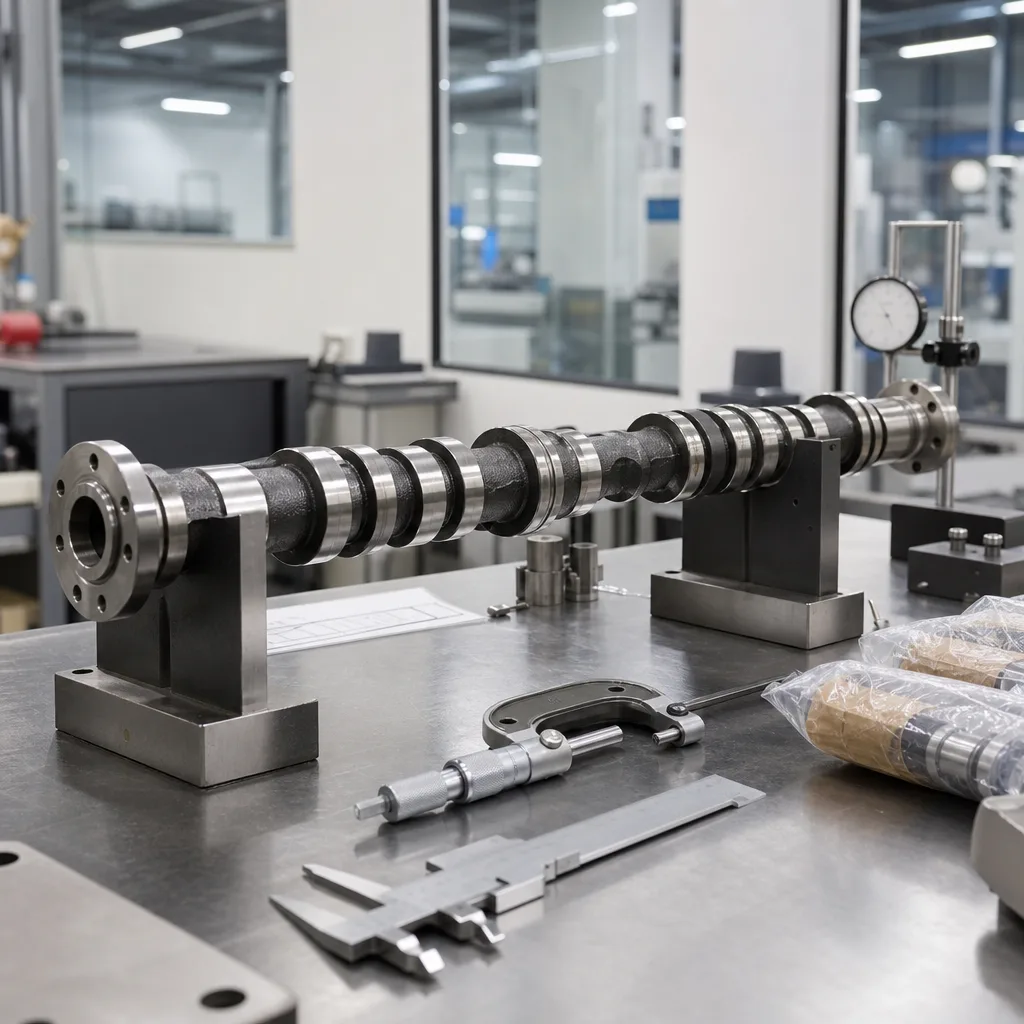
Replacement quality is determined by repeatable measurement, not by appearance. A proper inspection report should cover the critical dimensions used by rebuilders and engine assemblers.
Critical dimensions to request
Centre-to-centre length, measured on calibrated equipment
Big-end bore diameter and roundness
Small-end bore diameter or bush press-fit condition
Parallelism and twist
Part weight and pair-matching tolerance
Cap mating accuracy and bolt-hole alignment
Procurement teams should ask whether the supplier controls these dimensions under a documented quality plan and whether final inspection uses calibrated CMM, bore gauges, and balance equipment. Driventus operates under IATF 16949:2016 and ISO 9001:2015 quality controls, which support repeatable production and inspection discipline. Details are available in our quality system.
How buyers should validate fitment before purchase
Before ordering, confirm the exact engine code, cylinder configuration, and rod revision. On mixed-age Stralis fleets, previous repairs can introduce variant pistons, pins, or crankshafts that affect rod choice.
Use this validation sequence:
1. Record the engine serial number and current OE reference from the old rod, if legible. 2. Measure the crank pin journal and wrist pin size during teardown. 3. Confirm whether the engine uses a bushed small end or direct-pin fit. 4. Compare the sample rod mass against the rebuild target. 5. Review the supplier’s dimensional report and packing list.
If the application is uncertain, request a drawing review or sample check before volume purchase. For buyers sourcing multiple engine families, our catalog and engine components can be used as a first filter before final cross-reference confirmation.
Why commercial fleets need consistent supply and packaging
Fleet repair operations and wholesalers need more than a single compliant part. They need repeatable supply, protected packaging, and lot-level traceability so parts can move through warehouse, workshop, and warranty channels without rework.
Points that matter in procurement:
Stable lead times for planned maintenance windows
Protective packaging to prevent bearing-seat damage and corrosion during transit
Barcode or batch identification for stock control
Carton quantity suitable for distributor and repair-chain demand
Clear declaration of interchangeability and application limits
Driventus can also support custom manufacturing for buyers that need special coatings, revised weight classes, or private-label packaging. That is useful when a platform has multiple rod revisions across engine codes or model years.
What to ask before issuing a purchase order
A purchase order should define the technical acceptance criteria, not only the quantity. This reduces disputes when the part is received and inspected.
Include these requirements in the PO or specification sheet:
OE cross-reference and engine application
Material and heat-treatment declaration
Dimensional report with tolerances
Surface finish or coating requirement, if any
Packaging and labelling format
Inspection documents required on shipment
Warranty terms and nonconformance process
If you need pricing, sampling, or application review for a connecting rod for Iveco Stralis aftermarket replacement, use request a quote. A technical enquiry is better than a catalogue-only order when the engine history is incomplete or the rebuild uses mixed components.
Frequently asked questions
Match the engine code, OE cross-reference, centre-to-centre length, big-end bore, and small-end fit. If the old rod is available, measure it and compare the supplier drawing and inspection report before ordering.
Yes, if it is dimensionally equivalent, properly heat-treated, and traceable. Buyers should request material data, hardness results, and dimensional inspection records before approval.
Yes. Driventus supplies engine and powertrain components for B2B customers, including rods and related rebuild parts. Driventus is an independent aftermarket manufacturer; brand names are referenced for fitment only.
If you need a technical match, sample review, or production quote for your application, contact our team through /contact.html and we will help confirm fitment and documentation.