Connecting Rod for Infiniti QX80 OE Equivalent: Sourcing Guide
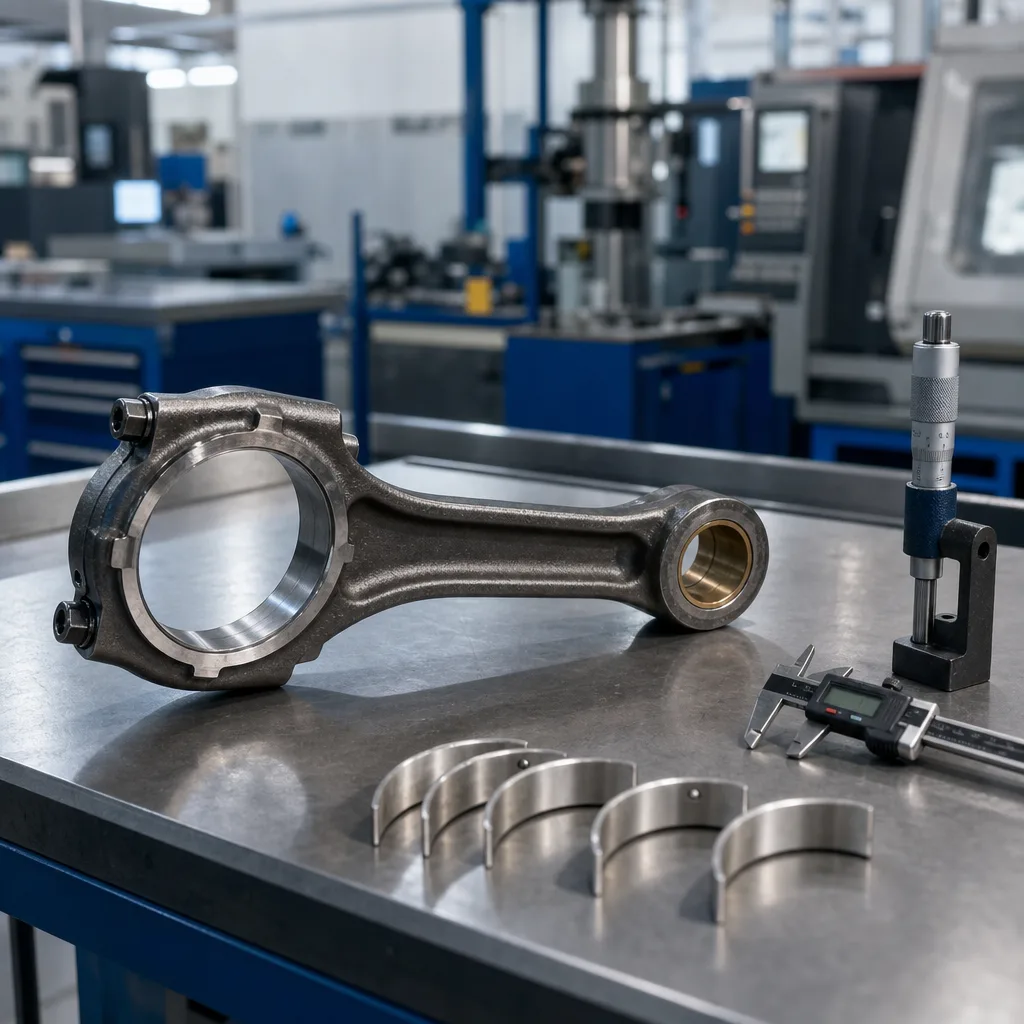
A connecting rod for Infiniti QX80 OE equivalent applications must match the original part in dimensions, material behaviour, and fatigue performance. For procurement teams, the main risk is not the headline part type, but variation in centre distance, big-end bore, small-end bore, weight, and cap joint quality. For replacement demand, the part must fit the engine architecture without changes to the crankshaft, piston pin, or bearing set.
Driventus supplies engine components for aftermarket and B2B repair channels. Driventus is an independent aftermarket manufacturer; brand names are referenced for fitment only. Our production and inspection systems are built around IATF 16949:2016 and ISO 9001:2015, with material control and traceability suitable for export markets. This article explains what to verify before purchase, how OE-equivalent connecting rods are validated, and which documents buyers should request when sourcing for Infiniti QX80 engine repair programs.
What OE-equivalent means for this application
OE-equivalent does not mean identical branding or manufacturer approval. It means the replacement connecting rod matches the original installation and functional requirements closely enough for direct use in the specified engine family.
For procurement and catalogue selection, focus on measurable attributes:
Centre-to-centre length
Big-end bore diameter and bearing fit
Small-end bore diameter and wrist pin fit
Beam profile and weight class
Cap joint design and fastener specification
Material grade and heat-treatment condition
If these values are outside tolerance, the result can be bearing distress, pin bushing wear, abnormal noise, or imbalance across cylinders. Driventus is an independent aftermarket manufacturer; brand names are referenced for fitment only.
Key specifications buyers should verify
When sourcing a connecting rod for Infiniti QX80 OE equivalent replacement, ask for a dimensional sheet and material declaration before release.
Item
What to confirm
Why it matters
Centre distance
Match to OE drawing or validated sample
Controls compression height and piston position
Big-end bore
After torquing cap, within specified tolerance
Affects bearing crush and oil clearance
Small-end bore
Matches pin diameter and bushing spec
Prevents pin seizure and cold start wear
Weight
Match by set, not only by part number
Supports balance across all cylinders
Material
Commonly forged alloy steel or powder-forged steel
Drives fatigue life and distortion resistance
Fasteners
Bolt grade, thread condition, torque spec
Cap separation risk if incorrect
</tr></thead><tbody> </tbody></table>For purchasing, request the inspection report, hardness range, and dimensional sample data. If the application uses OE 06A-style cross-reference logic in your system, keep the record format consistent, but do not rely on part name alone for fitment.
Materials and manufacturing controls
Most replacement rods in this segment are forged from alloy steel and then machined, shot-peened, and heat-treated. The exact alloy choice depends on the load target and the engine speed profile, but the process control matters as much as the base metal.
Typical controls include:
Forging fibre flow aligned along the beam
Heat treatment to stabilise hardness and tensile performance
Shot peening to improve surface fatigue resistance
CNC machining of bores, faces, and parting surfaces
Magnetic particle or crack detection for critical production lots
For buyers, the useful question is not only “what is the material?” but “what evidence shows repeatable manufacturing?” Published system standards such as IATF 16949:2016 and ISO 9001:2015 are relevant because they support process discipline, traceability, and nonconformance control.
Validation tests that reduce replacement risk
Before approving stock, a procurement team should confirm the part has passed functional and durability checks relevant to engine rebuild supply.
Recommended validation items:
1. Dimensional inspection on a reference sample or first article 2. Torque-to-yield or torque-retention review for cap fasteners where applicable 3. Hardness testing on the finished rod body and cap area 4. Weight matching across a set of rods 5. Surface integrity review after shot peening 6. Packaging and corrosion protection inspection
If your programme requires environmental compliance, ask for declarations aligned to REACH (EC) No 1907/2006 for the materials supplied into the EU market. For purchasers in mixed fleets or export distribution, it is also sensible to keep validation records by batch, not only by SKU.
Sourcing checklist for distributors and repair chains
A replacement rod should be bought as a controlled technical item, not as a generic commodity. This is especially important for multi-location repair chains and distributors that carry warranty exposure.
Use this checklist before PO release:
Confirm engine code and VIN-based application data
Verify whether the engine uses standard or undersize bearing selection
Request OE cross-reference documentation for the listed application
Confirm whether rods are sold individually or as matched sets
Ask for minimum order quantity, lead time, and carton count
Review label traceability, heat number, and lot identification
Check whether the supplier can support custom packaging through custom manufacturing
For broader category planning, buyers can also review our catalog and the engine component range at engine components.
Why documentation matters for international procurement
For buyers in the EU, UK, US, Canada, Australia, and Brazil, documentation reduces receiving disputes and warranty claims. A technically sound rod can still become a sourcing problem if the paperwork is incomplete.
Request these documents with the shipment:
Commercial invoice and packing list
Certificate of conformity or inspection record
Material declaration
Heat treatment summary where available
Traceability label tied to batch or lot number
Photos of the finished part, box label, and seal
Driventus operates as a B2B manufacturer for aftermarket and OEM/Tier-1 supply chains. Our quality system describes the controls used for production release and inspection. If you need a controlled supply plan for a programme or catalogue line, request a quote with the engine code, target quantity, and required documentation.
Frequently asked questions
No. OE-equivalent means the part is designed to match fit, function, and key dimensions for the application. It does not mean vehicle manufacturer approval or endorsement.
Start with centre distance, big-end bore, small-end bore, weight, and cap fastener specification. These have the greatest effect on fit and durability.
Yes. We can provide batch traceability, inspection records, and commercial documents suitable for international B2B procurement. Send your requirements through the contact form.
If you are sourcing a validated replacement rod for this application, send the engine code, quantity, and required documents. We will review the build specification and response time at /contact.html