connecting rod · 2026-06-04

Connecting Rod for GMC Acadia Replacement: Fitment Guide

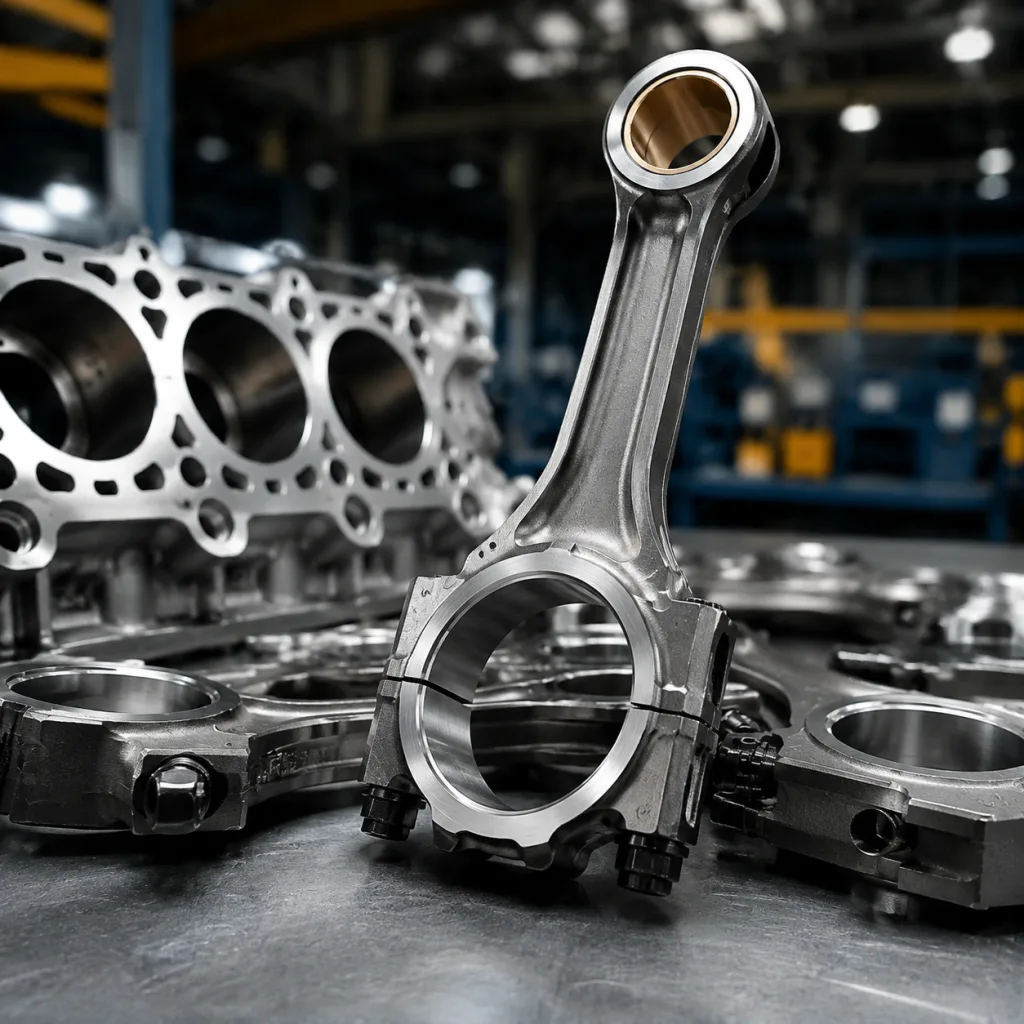
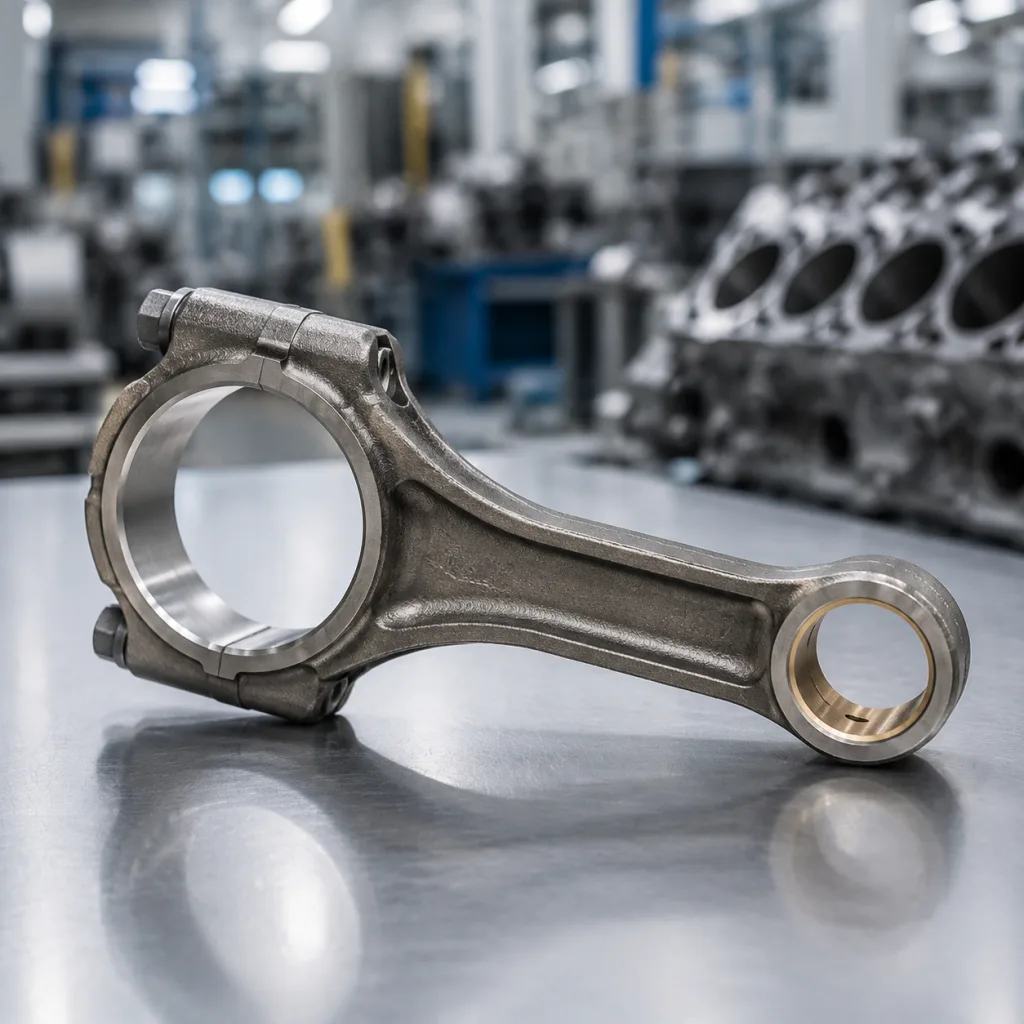
A connecting rod for GMC Acadia replacement has to match the exact engine family, piston pin diameter, center-to-center length, big-end bore, cap design, rod bolt specification, and finished weight class. Ordering by vehicle name alone leaves too much room for error. The GMC Acadia has used several engine configurations across model years, including different V6 and four-cylinder applications depending on market and production period. Internal hardware can also change by VIN break, engine code, or production date.

Driventus is an independent aftermarket manufacturer; brand names are used only to identify fitment. For procurement teams, the practical goal is OE-equivalent geometry backed by material traceability, heat-treatment control, and repeatable lot inspection. When comparing suppliers, give more weight to controlled drawings, bore and width data, hardness records, and packaging traceability than to broad catalogue claims. Our catalog and engine-component range are built for distributors, repair chains, fleet rebuilders, and B2B buyers that need documented validation files, stable replenishment, and predictable landed cost.

Verify the engine family before you buy

The Acadia nameplate covers more than one engine configuration, so start by confirming the engine code, model year, VIN break, production date, displacement, and fuel system where applicable. A rod that fits one engine variant may not fit another, even when the badge, trim, or model year range looks similar. This becomes especially important around generation changes, supplier updates, and late-production revisions that affect the crankshaft, piston, wrist pin, bearing shell, or rod bolt package.

Begin with the vehicle identification data, then verify the engine architecture before releasing a purchase order. Use our catalog and the engine components range as a starting point, but do not treat a catalogue listing as final proof of fitment. For every connecting rod for GMC Acadia replacement order, the minimum fitment review should include:

  • Engine code, displacement, model year, VIN break, and production date
  • Center-to-center length measured from big-end bore center to small-end bore center
  • Big-end housing bore, big-end width, and bearing shell seat geometry
  • Small-end bore or piston pin diameter, including bushing status where applicable
  • Rod bolt thread, shank diameter, under-head length, torque-angle requirement, and replacement rule
  • Cap design, including cracked cap, machined cap, dowel location, or serrated joint where used
  • Finished weight class and matched-set tolerance for multi-cylinder rebuilds

If the supplier cannot provide a controlled drawing, dimensional report, and clear OE cross-reference, the part should not be treated as released for purchase. For replacement programs, dimensional confirmation matters more than a broad vehicle listing. One wrong-fit batch can lead to teardown labor, bearing damage, warranty exposure, and branch-level stock corrections.

Dimensional checks that prevent install problems

For procurement and QA teams, the strongest comparison is a line-by-line check against a validated OE sample or an approved drawing. A connecting rod may look right in a product photo and still be unusable if the big-end bore, pin bore, side width, or weight class falls outside the rebuild target. Small deviations can reduce bearing crush, change piston deck position, increase side-clearance noise, or create cylinder-to-cylinder imbalance.

The table below gives the minimum review set for a connecting rod for GMC Acadia replacement.

</tr></thead><tbody> </tbody></table>For mixed-year sourcing, request a dimensional report for every production lot, not just the first article. Incoming inspection should also check burrs at oil holes, bearing tang seating, cap alignment marks, and thread cleanliness. If you are consolidating inventory for multiple branches or rebuild programs, lot-level records let you isolate returns by batch instead of blocking the entire SKU.

Material and machining details that affect durability

A replacement rod is more than a forged shape. Durability comes from the full process chain: steel grade, forging temperature control, heat treatment, shot peening where specified, cap machining, bore finishing, fastener quality, and final inspection. A part can pass a visual check and still fail in service if the metallurgy, hardness profile, or bore geometry is inconsistent.

Key points to review:

  • Forged steel or equivalent high-strength steel should be documented by heat number and production lot.
  • Heat treatment should include hardness targets and records, commonly reported in HRC or HB depending on the material specification.
  • Big-end and small-end bores should be controlled for roundness, taper, cylindricity, and surface finish after final honing.
  • Bearing seats should be free of chatter, nicks, raised edges, and cap mismatch that could disturb bearing crush.
  • Rod bolts should be verified for material grade, thread rolling quality, under-head radius, torque repeatability, and preload behavior.
  • Shot peening, stress relief, or surface treatment should be declared when it is part of the OE-equivalent design.
  • Magnetic particle inspection is useful after machining and before packing to detect cracks at the beam, cap joint, bolt boss, and fillet areas.

Do not assume that cast, forged, powdered-metal, cracked-cap, or machined-cap rods can be interchanged without checking the original engine architecture. Some engine families require a specific cap fracture pattern, bolt package, bearing geometry, and piston pin arrangement. In repair work, the lower-risk route is to preserve the OE design intent and change supplier only after geometry, material, and validation evidence match the approved reference.

Validation, traceability, and compliance

For buyers serving the EU, UK, North America, and Brazil, documentation is as important as physical fitment. A supplier should be able to show process control under our quality system, with production governed by IATF 16949:2016 and ISO 9001:2015 where applicable to the manufacturing scope. For EU shipments, material declarations should address REACH (EC) No 1907/2006 when relevant. Commercial documentation should also support customs classification, country-of-origin requirements, and customer labelling rules.

A practical validation pack should include:

  • Controlled drawing or approved sample reference
  • Material certificate with heat number and lot traceability
  • Dimensional inspection report for critical bores, widths, length, alignment, and weight
  • Hardness report and heat-treatment summary
  • Rod bolt specification and tightening instruction
  • Visual inspection and magnetic particle inspection record
  • First-article or PPAP-style submission for new programs where required
  • Packaging, barcode, and labelling standard by part number and buyer SKU

When a project requires tighter control, ask for PPAP-style evidence such as process flow, control plan, FMEA, measurement system analysis, capability results for critical dimensions, and initial sample inspection. This is especially useful when a distributor is consolidating stock for multiple repair branches or a fleet operator needs consistent rebuild quality across locations. The more variable your downstream demand, the more valuable it is to attach a stable document set to every shipment.

Sourcing terms for distributors and repair groups

Commercial terms deserve the same discipline as fitment data. Lead time, MOQ, sample approval, incoterms, carton count, pallet configuration, barcode format, and private-label requirements all affect landed cost and service levels. A technically correct part can still be a poor purchase if the supply terms create stock-outs, excess handling, relabelling work, or mixed-batch confusion at the warehouse.

For larger programmes, custom manufacturing can align geometry, weight class, inspection level, and packaging to your bill of materials. Typical procurement questions include:

  • What is the sample lead time and what inspection report is included with samples?
  • Can you supply matched rods by set, cylinder bank, or finished weight range?
  • What MOQ applies to standard packaging, private-label packaging, and custom marking?
  • Are export cartons barcoded by internal part number, buyer SKU, batch number, and quantity?
  • Can cartons and pallets be configured for branch replenishment or repair-chain distribution?
  • What is the repeat-order lead time after sample approval or tooling approval?
  • Which incoterms, payment terms, and warranty claim process apply to distributor orders?

If you are sourcing a connecting rod for GMC Acadia replacement at scale, request a written commercial offer before placing a blanket order. Use request a quote when you need pricing tied to quantity, target delivery window, packaging specification, and the exact engine variant. This keeps supplier comparisons clean instead of mixing fitment risk, documentation gaps, packaging differences, and lead-time uncertainty.

For buyers expanding into related parts, our catalog can support a wider engine-component basket so you can consolidate shipments, reduce inbound administration, and keep QA records under one supplier file.

Frequently asked questions

Match the engine code, displacement, model year, VIN break, production date, center-to-center length, big-end bore, small-end bore or pin diameter, cap design, rod bolt specification, and finished weight class. Vehicle name alone is not enough because the Acadia has multiple engine variants across model years.

At minimum, ask for a controlled drawing or approved sample reference, dimensional inspection report, material certificate, hardness data, heat-treatment summary, rod bolt specification, crack inspection record, and lot traceability. For export programs, the supplier should also show process control under IATF 16949:2016 and ISO 9001:2015 where applicable.

Yes. For repeat programmes, custom manufacturing can be aligned to an approved sample or controlled drawing, provided the engine fitment data, critical dimensions, material target, inspection level, packaging requirements, and quality documents are defined before quotation.

If you need a validated replacement rod, send the engine code, VIN break, production date, sample or drawing status, and target quantity through our [request a quote](/contact.html).

Request a Quote
Check Why it matters Evidence to request
Center-to-center lengthControls piston deck position and compression heightControlled drawing with tolerance and CMM or fixture report
Big-end housing boreSets bearing crush and oil clearance after bearing installationBore gauge record with roundness and taper data
Big-end widthControls crankshaft side clearance and oil film stabilityWidth measurement report by lot
Small-end bore or bushing IDMust match wrist pin diameter, press-fit or floating-pin design, and oiling pathPlug gauge, bore gauge, or CMM record
Parallelism and twistPrevents piston skirt loading and uneven bearing wearRod alignment report or fixture inspection
Rod bolt specificationDetermines clamp load, cap stability, and fatigue marginFastener grade, thread data, torque or torque-angle instruction
Finished weightMaintains engine balance across the setMatched-weight report by piece or set
Beam and cap clearancePrevents contact with piston, block, oil squirter, or crank counterweightTrial-fit record against sample engine or validated fixture