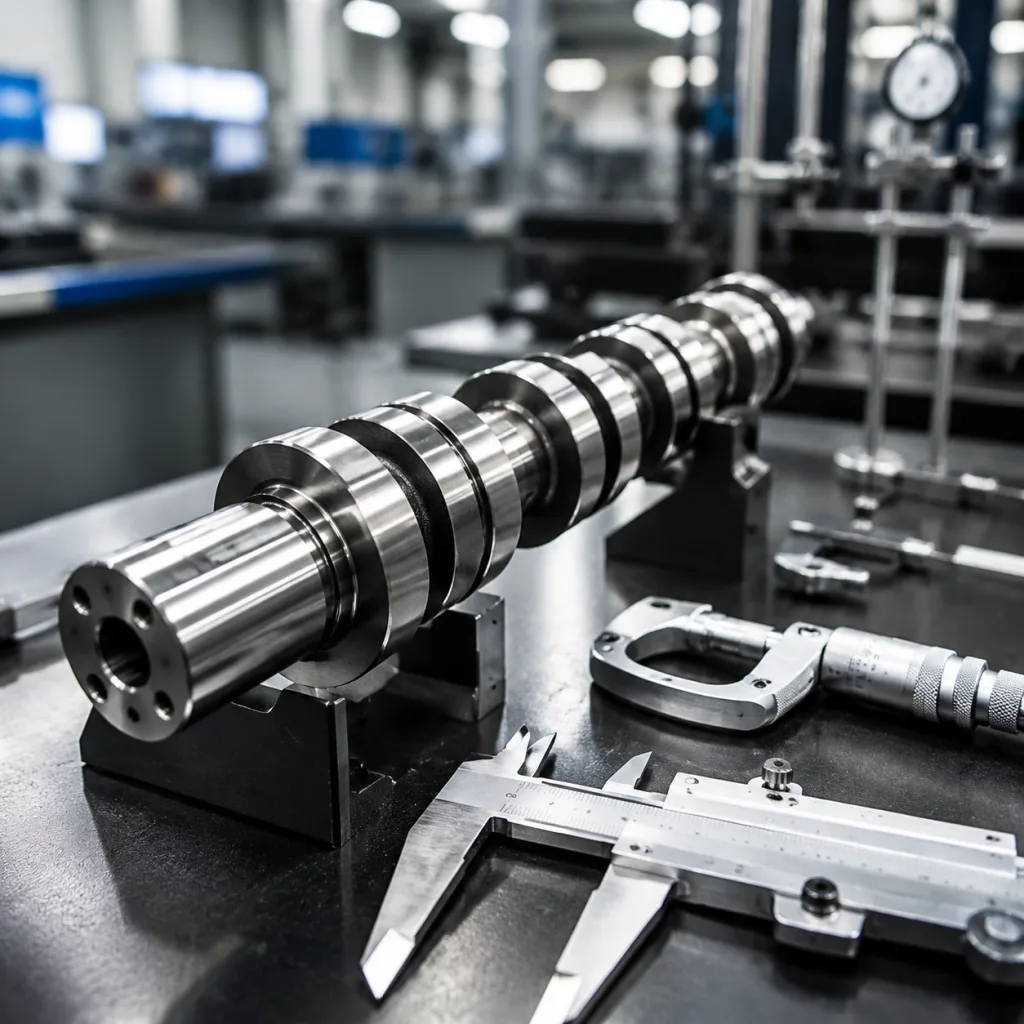
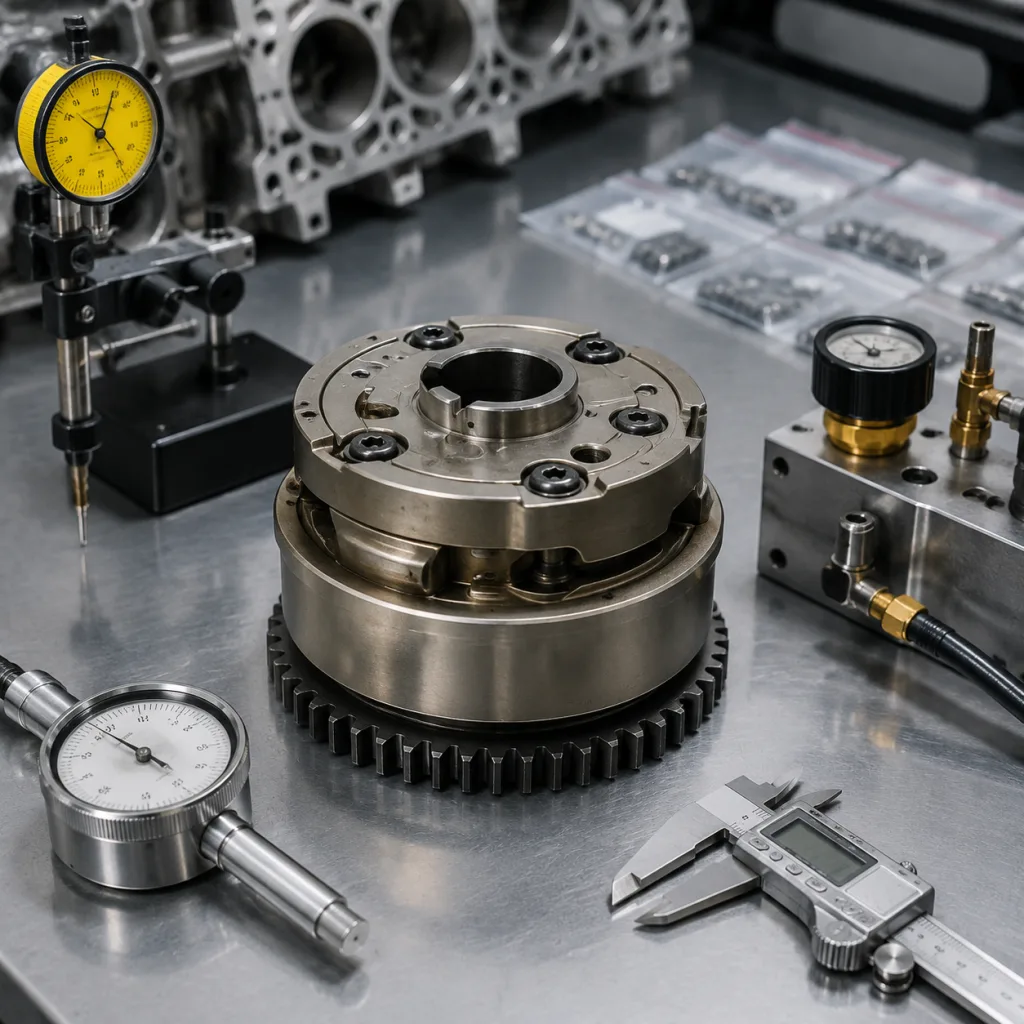
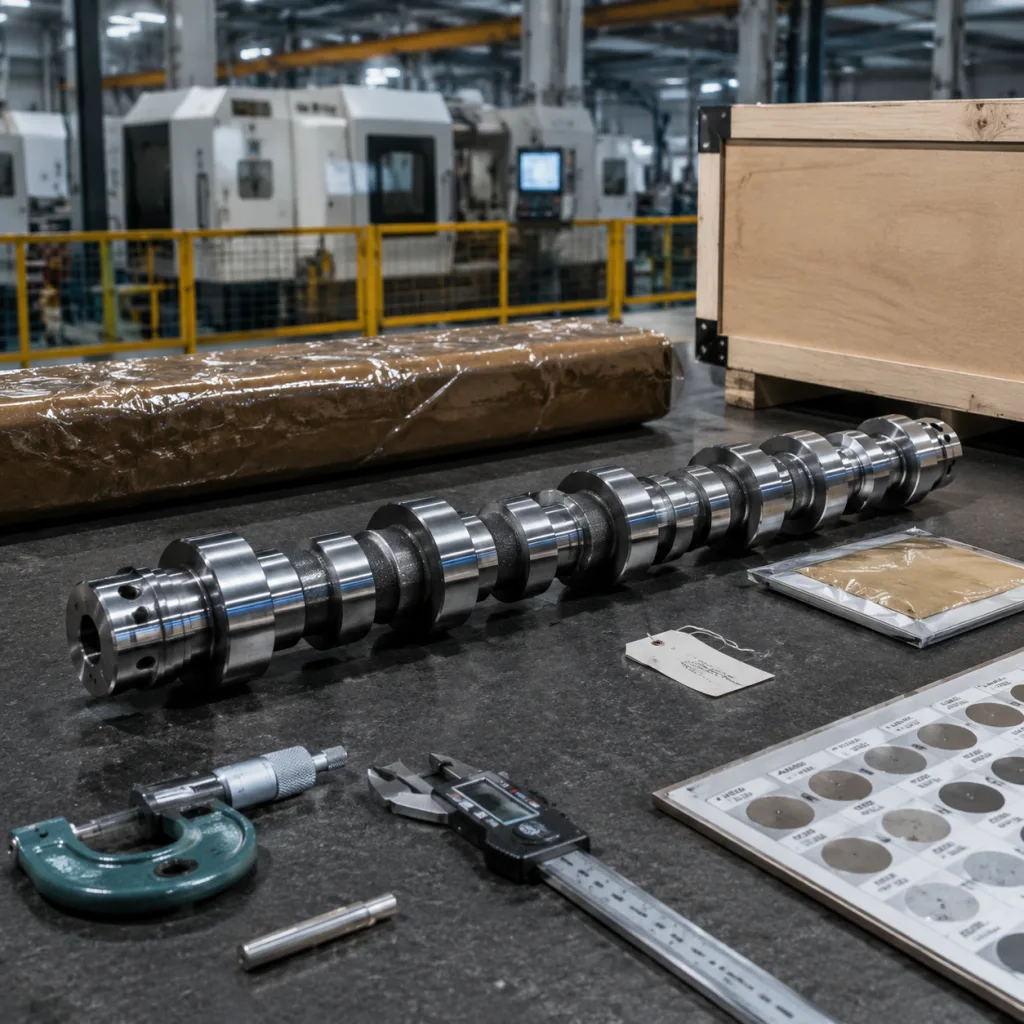
Camshaft Opel wholesale sourcing works best when buyers treat it as a decision exercise, not a commodity quote. Price matters, but fitment, metallurgy, heat treatment, traceability, and repeatability decide whether the part keeps performing across the second and third shipment. For Opel applications, the real risk is not finding one sample that measures correctly; it is keeping every batch within the same dimensional window.
Driventus produces engine and powertrain components in Taizhou, Zhejiang, with IATF 16949:2016 and ISO 9001:2015 systems in place. We supply B2B buyers who need stable catalogue supply, OE cross-reference support, and documented quality control. Driventus is an independent aftermarket manufacturer; brand names are referenced for fitment only. If you are building a programme for distributors, repair networks, or private label supply, start with the engine codes, annual volume, and acceptance criteria. That is the fastest way to cut sourcing risk and avoid quoting the wrong camshaft.
Start with the fitment decision
The first question is not price. It is whether the camshaft matches the exact engine family you are buying for. Match the profile to the engine code, cylinder head layout, valve count, sensor drive arrangement, and OE reference where available. If your enquiry includes a reference such as `OE 06A107065`, keep it tied to the exact engine variant and model year range.
A practical buyer check:
Base the enquiry on engine code, not only vehicle model
Confirm intake, exhaust, or paired camshaft application
Verify journal diameters, overall length, and lobe timing data
Request inspection records for runout, hardness, and surface finish
Confirm whether the part is supplied as raw machined, finished, or assembled with trigger features
Ask for carton labelling, barcodes, and batch traceability
Journal diameter tolerance: typically hold `±0.01 mm` on critical bearing journals unless the drawing calls for tighter control
Overall length tolerance: usually `±0.10 mm` for catalogue parts; request tighter limits for OE-sensitive applications
Lobe lift repeatability: define nominal lift and acceptable variation per engine family, commonly within `±0.02 mm` on controlled lines
Runout limit: specify a maximum total indicator reading, often `≤0.03 mm` for production supply unless the application requires stricter control
Surface roughness: set a journal finish target such as `Ra 0.2–0.4 μm` for bearing surfaces and confirm the supplier’s measurement method
Packaging condition: require anti-rust oil, individual sleeves, or tray protection if the camshaft will sit in warehouse stock for more than 90 days
Material and process choices that change cost and life
Camshaft performance depends on the base material and the heat-treatment route. Buyers should ask whether the shaft is cast iron, chilled iron, or forged steel, and whether the lobe surface is induction hardened, carburised, or nitrided. Each route shifts wear resistance, core strength, machining behaviour, and cost.
Typical sourcing data to request:
Item
What to confirm
Why it matters
Material grade
Cast iron or steel specification
Strength and machining stability
Hardness
Surface and core values
Wear life and lobe durability
Runout
Measured across the shaft
Valve timing consistency
Journal finish
Surface roughness target
Bearing life and oil film stability
Heat treatment
Method and batch record
Repeatability between lots
Coating / anti-rust
Packaging oil or protective layer
Export storage protection
</tr></thead><tbody> </tbody></table>For export supply, ask for conformity support with REACH (EC) No 1907/2006 where chemical substances in coatings or packaging are relevant. If you need more than a catalogue line item, custom manufacturing can align the design to your target engine family and packaging spec.
Process controls buyers should ask to see in writing:
Material certificate tied to heat number and production lot
Hardness range recorded at both lobe and core locations, with acceptance windows agreed before mass production
Induction or carburizing depth report for treated lobes, with target case depth defined by engine family
Final grinding control plan showing critical dimensions, gauge method, and sampling frequency
SPC or lot audit records for repeated orders so that second and third shipments stay within the same tolerance band
Rust-prevention and storage spec, including fogging oil type, VCI use, and allowed warehouse humidity during packing
A useful rule is to name the material route first, then lock the acceptance criteria: for example, steel camshaft, hardened lobes, journal `Ra 0.4 μm` max, runout `≤0.03 mm`, and hardness verified per batch. That forces the supplier to price the real process instead of a generic blank.
Wholesale terms that separate a good quote from a risky one
Wholesale buying is a commercial system, not a single unit price. The key variables are MOQ, lead time, validation effort, and replenishment stability. A low quote is not useful if the supplier cannot hold the same hardness window or machining tolerance on the next production run.
Common terms to define in advance:
MOQ by part number and by mixed batch
Sample lead time versus production lead time
Pre-shipment inspection scope
Packaging standard for export freight
Label format for warehouse receiving
Warranty return conditions for transit damage and dimensional non-conformance
If you manage multiple branches or regional warehouses, ask for palletisation and outer carton counts that fit your distribution model. For long-term supply, a supplier with an established quality system can support repeat orders with less inspection effort from your side. Buyers in the EU and UK often also request material declarations and lot-level traceability before first shipment.
Commercial terms to state in the RFQ so pricing is comparable:
MOQ: confirm whether the minimum is 50, 100, or 200 pieces per part number, and whether mixed SKUs can share the same order
Sample order: ask for 1–3 pilot units if you need dimensional approval before mass purchase
Production lead time: request a normal range such as 30–45 days after sample approval, with expedited options stated separately
Price breaks: ask for tiered pricing at 100, 300, and 500+ units so annual planning is visible
Payment terms: align deposit, balance, and release conditions before approval to avoid shipment delays
Inspection hold point: define whether final inspection happens at factory, by third-party inspector, or on arrival at your warehouse
A better rule is to compare landed cost, not just ex-works price. Include freight, packaging, inspection, and expected return rate in the calculation. If a supplier offers a slightly higher unit price but better lot consistency and lower claims risk, that is usually the better wholesale result.
How to validate a camshaft before you release volume
Validation should mirror the end use. Aftermarket distributors usually care about catalogue coverage and return rates, while repair chains care about installation consistency and reduced comebacks. The camshaft should be checked against the head casting, rocker geometry, valve spring load, and lubrication path before release.
Useful validation points:
Compare new part dimensions against a confirmed OE sample
Check lobe lift and base circle dimensions
Inspect trigger wheel or gear indexing if fitted
Confirm oil passage alignment and bearing journal spacing
Review packaging protection for lobe and journal surfaces
For performance or service fleets, some buyers also request durability data aligned to published test methods such as SAE J2527 for corrosion exposure where relevant to coated or packaged components, and ECE R-83 only when the part is tied into an emissions-sensitive vehicle package. Do not rely on generic fitment alone. The supplier should document exactly which engine codes and applications are covered.
A usable validation workflow for wholesale buyers looks like this:
Stage 1: dimensional approval against a verified sample or drawing, including journal size, lobe lift, overall length, and key indexing features
Stage 2: lab or shop-floor checks for hardness, runout, and surface finish, with pass/fail criteria signed off before mass order
Stage 3: installation trial on 1–5 vehicles or engines, depending on programme size, to confirm timing alignment and assembly clearance
Stage 4: short durability review after a defined mileage or run-in period, especially for fleet supply or high-return applications
Stage 5: approval of packaging, labelling, and warehouse handling so the part arrives ready for distribution, not rework
If you need tighter control, specify a PPAP-style document pack even for aftermarket work: drawing, material cert, dimensional report, hardness report, and traceability record. That shortens internal approval and gives purchasing a clear release basis.
Where Driventus fits the sourcing model
Driventus is set up for B2B engine-component supply, not retail. That matters because wholesale buyers need predictable engineering control, document packs, and the ability to scale volume without changing the part definition. Our manufacturing base in Taizhou supports camshafts alongside pistons, crankshafts, gaskets, water pumps, and turbocharger-related components, which helps buyers consolidate sourcing.
What procurement teams usually value:
IATF 16949:2016 and ISO 9001:2015 management systems
Export experience in 60+ countries
Batch traceability and inspection records
Support for OE cross-reference programme planning
Option to discuss private label or programme-specific packing
If you are consolidating suppliers, Driventus can also support related engine parts under one sourcing account. For a first RFQ, include annual demand, target MOQ, engine code list, and any required reference number such as `OE 06A107065` where applicable. That lets our team confirm the correct match before quotation.
Procurement details that help us quote accurately:
Annual volume by engine code, not just total units, so we can identify the right production path
Target release schedule, such as quarterly calls or monthly replenishment, so lead time can be matched to your stock plan
Packaging target, including single-box, tray, or master-carton configuration and any barcode standard
Acceptance criteria, including tolerance, hardness, finish, and corrosion-protection requirements
First-order timing, because sample approval, tooling checks, and production slotting affect the commercial offer
If your programme needs predictable resale pricing, ask for a quotation structure that separates tooling, sample charges, mass-production unit price, and freight. That gives your team a real basis for comparing camshaft Opel wholesale offers across suppliers instead of evaluating only the headline unit number.
Frequently asked questions
Yes, where the engine code and OE reference are provided. We use cross-references for fitment only and do not claim manufacturer endorsement. Please include the exact application, such as engine code, model year range, and any OE number already on your source list.
Send the part type, engine code, annual volume, target MOQ, packaging needs, and any dimensional or hardness requirements. If you have a sample or drawing, that helps us confirm the correct production route and lead time before pricing.
Yes. We support programme-specific packaging, labelling, and other custom manufacturing needs under a B2B supply model. Share your carton, barcode, and warehouse receiving requirements with the enquiry.
If you are sourcing camshaft Opel wholesale supply for distribution or fleet service, send your engine list and volume target through our request a quote page: /contact.html