Camshaft Hyundai Supplier: Sourcing Guide for Buyers
A camshaft Hyundai supplier must do more than offer a part number match. Procurement teams need consistent metallurgy, controlled machining, traceable heat treatment, and export packaging that survives long transit. For aftermarket distributors, OEM and Tier-1 buyers, and repair-chain networks, the main risks are dimensional drift, incorrect lobe timing, inconsistent surface finish, and delayed replenishment. Driventus manufactures engine and powertrain components in Taizhou, Zhejiang, with IATF 16949:2016 and ISO 9001:2015 systems in place. We supply camshafts and related engine parts for B2B customers in more than 60 countries. Driventus is an independent aftermarket manufacturer; brand names are referenced for fitment only. This article explains what to verify before placing a PO, how to compare supplier capabilities, and which documents should be requested during sourcing review.
What procurement teams should verify first
When sourcing a Hyundai camshaft, the first check is fitment control. Confirm the OE cross-reference, engine code, valve count, and whether the application uses a single overhead camshaft or dual overhead camshafts. A supplier should be able to support the OE number format used in your catalogue, for example OE 06A107065 when the application data already cites it, without claiming manufacturer endorsement.
For import and quality teams, the minimum supplier file should include:
- Material specification and bar stock or casting route
- Heat treatment method and hardness range
- Journal diameter, lobe height, and runout targets
- Surface finish requirement on bearing journals and lobes
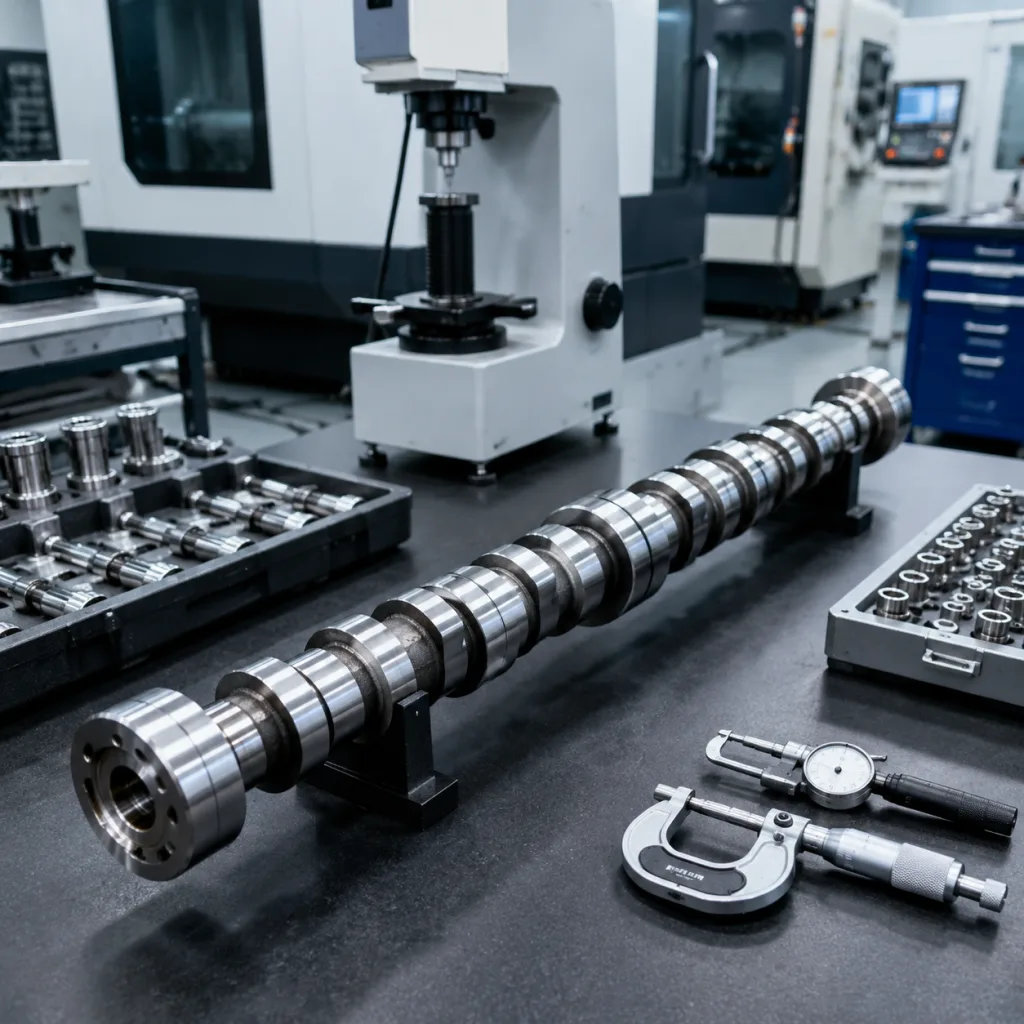
- Inspection report with CMM or micrometer data
- Traceability lot code and packing date
For audit purposes, ask for the current certificates to IATF 16949:2016 and ISO 9001:2015, plus declarations aligned to REACH (EC) No 1907/2006 where applicable.
Typical camshaft purchasing criteria for Hyundai applications
Buyers usually compare suppliers on measurable production and logistics items, not brochure claims. The table below is a practical starting point for sourcing review.
| Criterion | What to confirm | Why it matters |
|---|---|---|
| Material | Alloy cast iron or forged steel, depending on application | Affects wear resistance and fatigue life |
| Hardness | Defined range by lobe and journal zone | Controls wear and surface spalling |
| Runout | Measured on finished part | Excess runout can affect valve timing and noise |
| Surface finish | Journals and lobes checked separately | Improves oil film retention and durability |
| Traceability | Lot code, production date, inspection record | Supports complaint isolation and recall response |
| Packing | Rust prevention, separator trays, carton strength | Reduces transit damage and corrosion |
| Lead time | Stable schedule for repeat orders | Prevents stock-outs in distributor channels |