connecting rod · 2026-05-30

Connecting Rod BMW Wholesale: Sourcing Guide for Buyers

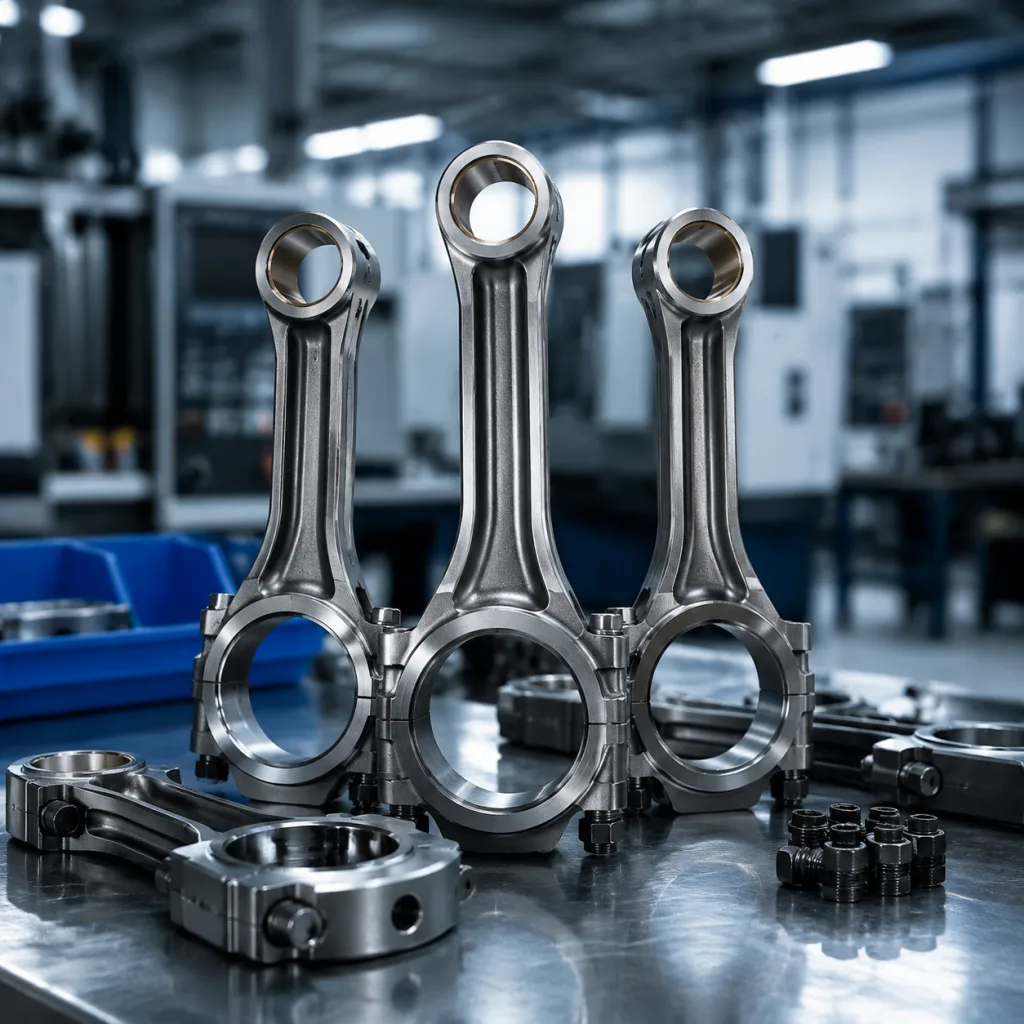
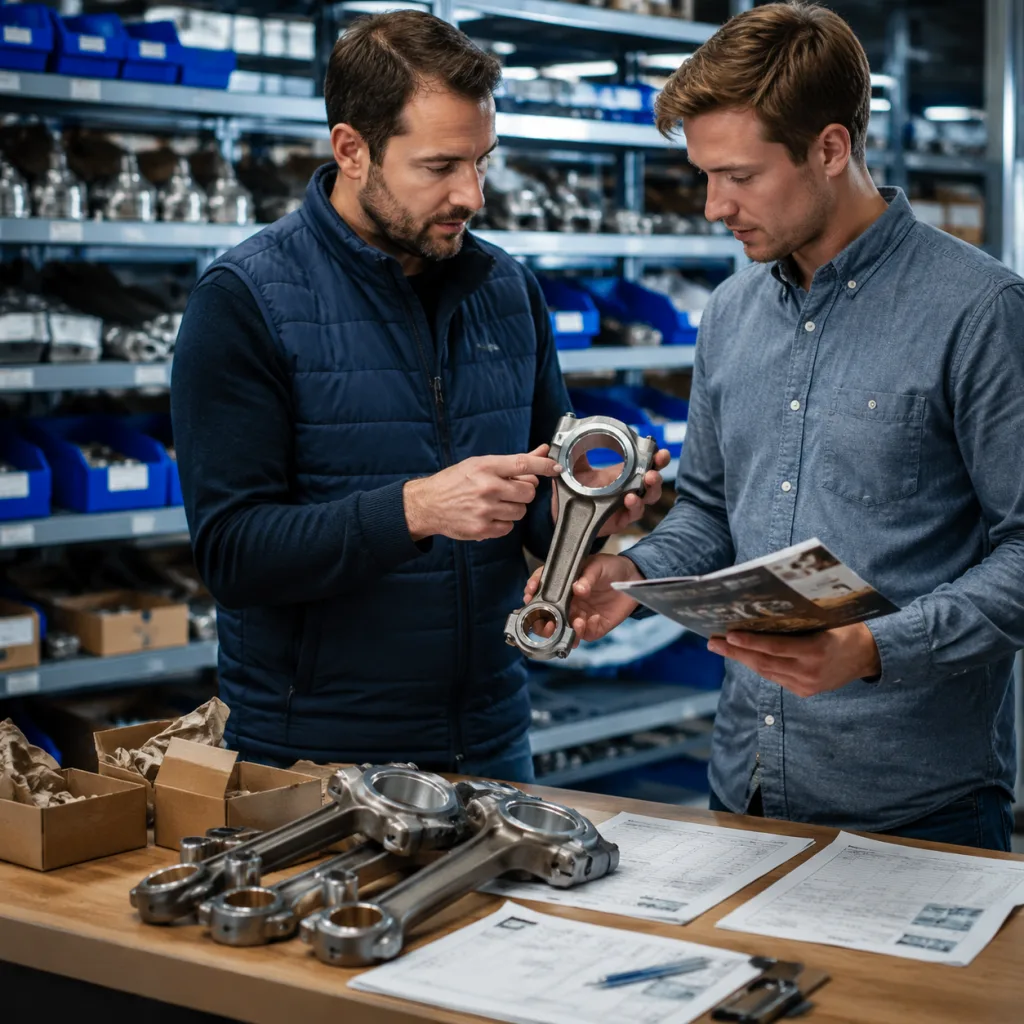
For procurement teams buying a connecting rod BMW wholesale supply, the main risks are dimensional mismatch, inconsistent material properties, and poor traceability between batches. A connecting rod must match the OE geometry, big-end and small-end bore control, centre-to-centre length, and weight balance needed for the target engine family. Driventus supplies engine and powertrain components from Taizhou, Zhejiang, with controlled production under IATF 16949:2016 and ISO 9001:2015. We support aftermarket distributors, OEM and Tier-1 programmes, and repair-chain replenishment orders. Driventus is an independent aftermarket manufacturer; brand names are referenced for fitment only. If you are building a BMW-line purchasing programme, the right approach is to verify fitment by engine code, OE 06A… or 11251… cross-reference where applicable, and confirm the inspection records before placing volume orders.

What buyers should verify before placing a BMW rod order

Procurement teams should treat a connecting rod as a precision rotating component, not a generic forged part. For BMW applications, the buying file should confirm engine family, piston pin diameter, rod length, big-end journal size, and bearing width. In wholesale sourcing, the following points matter most:

  • Centre-to-centre length within the required tolerance band
  • Big-end bore roundness and taper control
  • Small-end bush ID and alignment
  • Beam weight and matched-set consistency
  • Surface finish at the cap joint and fastener seats
  • Material route, typically forged alloy steel or powdered-metal variants depending on application

If the application uses OE cross-references, record the OE number format exactly as supplied by the buyer, for example OE 06A107065. Do not rely on visual similarity alone. The same external shape can hide different pin diameters or bearing dimensions.

Wholesale supply model: MOQ, lead time, and documentation

Wholesale buyers usually need stable replenishment rather than one-off cartons. A practical sourcing plan should define MOQ, sample lead time, mass-production lead time, and the documents required for customs and vendor approval.

</tr></thead><tbody> </tbody></table>For import managers, packing specification matters as much as the part itself. Each batch should be identifiable by lot code, carton count, and inspection status. That reduces receiving disputes and improves warehouse rotation.

Dimensional control and validation testing

A BMW rod programme should be validated with both dimensional and mechanical checks. Typical inspection points include big-end bore, small-end bore, centre-to-centre length, bend, twist, and weight variation within a matched set. Buyers should request the inspection method used for each characteristic and the acceptance criteria applied at final inspection.

Common validation checks

1. Incoming material verification by heat number 2. Machining inspection of journal-related dimensions 3. Cap alignment and fastener-seat confirmation 4. Random fit check with bearings or bushings where specified 5. Final weight matching across the set

Where requested, validation can include hardness control, magnetic particle inspection, and load-related process checks for programme qualification. For export programmes, document control should remain aligned with IATF 16949:2016 and the buyer’s PPAP or equivalent approval flow. If the buyer requires a custom match for a specific engine build, Driventus can support custom manufacturing based on the application drawing and sample review.

Material choices and application fitment

BMW engines across multiple generations use different rod concepts. A buyer should not assume one rod design will cover all displacements or fuel systems. The correct choice depends on engine output, expected service load, and whether the part is intended for standard replacement or a performance rebuild.

Common sourcing options:

  • Forged steel rods for high-load applications
  • OE-style replacement rods for general aftermarket supply
  • Matched-weight sets for engine rebuild programmes
  • Package-specific rods for kit assemblers and distributors

For distribution customers, the key question is whether the rod must mirror the OE form factor or whether an equivalent replacement is acceptable under the buyer’s own specification. Driventus can supply by sample, drawing, or cross-reference when the application data is complete. For catalogue browsing, see our catalog and the broader engine components range.

Factory audit points for sourcing teams

A supplier audit for connecting rods should focus on process control, not only certificates. Procurement and quality teams should review:

  • Material traceability from incoming bar or forging to finished lot
  • CNC process capability and tool-change discipline
  • Measuring equipment calibration records
  • Final inspection method and sampling plan
  • Packaging controls for rust prevention and transit damage
  • Nonconformance handling and corrective action records

A supplier that cannot show controlled records for these areas is a higher-risk source, even if unit pricing is attractive. Driventus operates under an established quality system and supports customer audits for programme approval. For buyers consolidating multiple engine SKUs, it is useful to align packaging, barcode structure, and replenishment forecasts before the first PO is issued.

How wholesale buyers reduce replacement risk

The lowest-cost rod is not always the lowest-risk purchase. Return rates rise when engine code mapping is incomplete or when the buyer receives mixed batches without clear lot separation. To reduce claims, purchasing teams should use a short approval checklist before release:

  • Confirm engine code and OE reference
  • Verify pin diameter, length, and bore data
  • Request sample photos and a dimensional report
  • Check surface protection and pack quantity
  • Confirm conformity to buyer documentation requirements

If your team is building a long-term supply programme, the next step is to align target annual volumes, forecast variability, and regional stock requirements. That is the point where request a quote becomes more useful than comparing catalogue prices alone.

Frequently asked questions

Yes. We support B2B wholesale supply for aftermarket distributors, repair networks, and OEM/Tier-1 programmes. Fitment is confirmed by engine data, dimensions, and OE cross-reference where supplied by the buyer.

Yes. We can support custom manufacturing based on drawings, samples, or target dimensions. Final feasibility depends on material, geometry, and annual volume.

Production is controlled under IATF 16949:2016 and ISO 9001:2015. Compliance documentation such as material declarations can be provided when required by the buyer.

If you are planning a BMW rod sourcing programme, send your engine code, target OE reference, and annual volume for review. Start with a fast quotation through /contact.html.

Request a Quote
Item Typical buyer requirement What Driventus provides
MOQDepends on engine family and packagingProject-based MOQ by part number
Sample lead time2-4 weeks is commonSample scheduling with dimensional report
Mass lead time30-45 days after approvalProduction plan tied to order volume
CertificationIATF 16949:2016, ISO 9001:2015Controlled system and traceable records
ComplianceREACH (EC) No 1907/2006 where applicableMaterial declarations on request
Fitment dataOE cross-reference and engine codePart mapping for B2B buyers