For buyers sourcing engine components for Audi applications, unit price is only part of the decision. The bigger risks usually appear later: center-to-center variation, big-end distortion after bolt tightening, weak heat-lot traceability, or sample reports that do not match the production revision. Driventus supplies aftermarket connecting rods from Taizhou, Zhejiang to distributors, repair networks, and industrial importers that need repeatable fitment, controlled documentation, and dependable export execution. Driventus is an independent aftermarket manufacturer; Audi and other brand names are used only for fitment identification.
A solid connecting rod Audi wholesale RFQ should spell out center distance, big-end and small-end bore, housing width, cap style, mass target, rod bolt specification, surface treatment, and packaging. It should also make clear whether the target is an OE-equivalent replacement, a heavy-duty service part, or a custom specification for a defined engine program. The sections below show how procurement teams can compare offers on technical, quality, and commercial terms before placing a sample order.
What to specify in the RFQ
A useful RFQ removes ambiguity before samples are quoted or approved. For Audi-fit rod sourcing, a part name alone is not enough. A general Audi connecting rod description leaves too much open to interpretation. The RFQ should define measurable characteristics, the intended service duty, and the acceptance criteria that will be checked during sample approval.
At minimum, include:
Engine code or application family, if known
OE reference or aftermarket cross-reference for verification
Center-to-center length and overall rod length
Big-end bore, housing width, and parting-line condition
Small-end bore, pin diameter, bushing requirement, and pin type
Cap style, machining method, and fracture-split or machined-cap requirement
Forging material, heat-treatment route, and hardness range
Rod bolt grade, thread size, tightening method, and torque or stretch requirement
Weight target, end-to-end matching tolerance, and balance class
Surface finish, shot peening, deburring, and corrosion protection
Packaging format, carton label content, barcode rules, and pallet requirements
Required inspection documents, sample quantity, and target annual volume
If your internal system already uses an OE reference, include it for cross-checking. Do not assume a brand name by itself defines the correct geometry. Audi applications vary by engine code, production period, crankshaft journal size, piston pin size, and market-specific service requirements. A supplier needs enough detail to confirm whether an existing rod can be used, whether a controlled modification is needed, or whether the project should move into custom development.
It also helps to state the commercial use up front: service replacement, program stocking, private-label distribution, or a validated heavy-duty line. That choice affects the documentation level, sample quantity, approval timing, and cost structure. A replacement stocking order may prioritize dimensional repeatability and packaging consistency. A heavy-duty program may require fatigue validation, tighter mass matching, and more detailed heat-treatment records.
The cheapest rod on paper is rarely the cheapest after landing. For procurement teams buying connecting rod Audi wholesale volumes, the more useful comparison is specification versus risk. A small unit-price saving can disappear quickly if the parts create incoming sorting, warranty claims, delayed program approval, or inconsistent fitment across engine codes.
Option
Typical use
Main advantage
Main trade-off
OE-equivalent forged steel
Standard replacement stock
Closest dimensional match and simple resale story
Less room for performance upgrades
Heavy-duty forged upgrade
High-load, fleet, or tuned engines
Higher fatigue margin when validated correctly
Higher cost and longer approval cycle
Custom geometry
Special mass, width, pin, or bolt package
Exact fit to a defined program
Higher MOQ, tooling review, and longer lead time
</tr></thead><tbody> </tbody></table>When evaluating a supplier, ask for the tolerance stack, not just the nominal dimension. A rod may look correct on a datasheet and still cause trouble if big-end roundness, center distance, small-end finish, or weight spread are not well controlled. The same applies to cap alignment, bolt consistency, housing-bore stability after tightening, and surface condition around the beam and fillets.
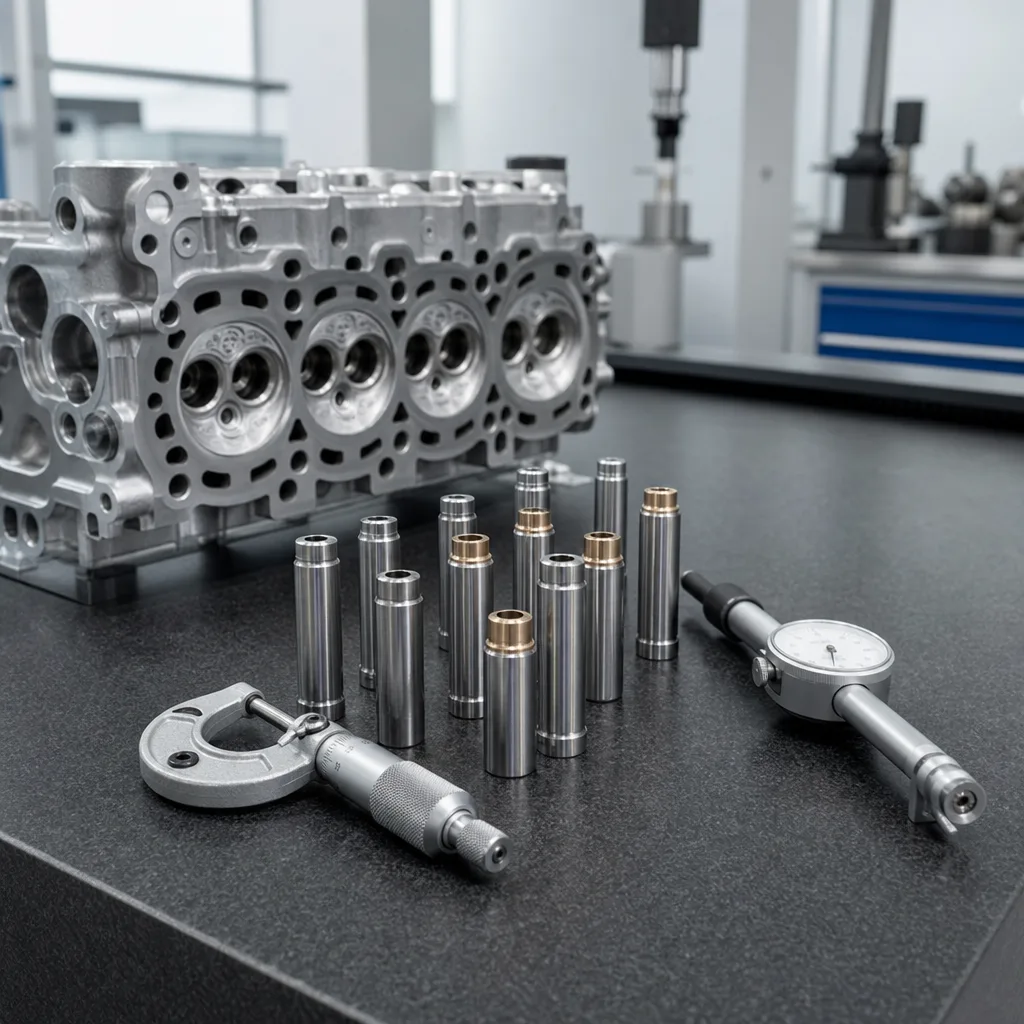
A disciplined buyer compares sample approval data, not catalogue claims. The sample record should show actual measurements from the revision being quoted, including bore sizes, center distance, hardness, mass, and visual inspection notes. For a practical comparison, ask which CMM or gauge method was used, how many pieces were inspected, the recording resolution, and the measured spread between parts. If the supplier cannot show measurement data from the exact revision you intend to buy, the commercial offer is incomplete.
It also helps to separate technical value from resale positioning. OE-equivalent rods are often the right fit for repair networks because they are easier to stock and explain. Heavy-duty rods can make sense for high-load applications, but only when the supplier can support the claim with material control, heat treatment, and disciplined inspection. Custom rods are best reserved for programs with a defined technical need, because they add approval steps and create a tighter link between buyer forecasts and factory scheduling.
Quality documents buyers should request
A credible supply proposal should line up with published systems and export requirements. At minimum, ask for evidence of compliance with IATF 16949:2016 and ISO 9001:2015, including the certificate number, issuing body, and scope of the factory site that will produce your order. For material-sensitive programs, request heat-lot traceability, chemistry verification, and the applicable inspection records. For European shipments, ask how the part and packaging align with REACH (EC) No 1907/2006.
The document pack should normally include:
Material certificate or heat-lot traceability
Dimensional inspection report for the approved sample
Hardness report and heat-treatment record
Incoming inspection and final inspection summary
Batch coding method and carton traceability
Packaging specification for sea freight and warehousing
Nonconforming product handling process
Calibration status for key inspection equipment
Control plan or inspection plan for repeated production
For connecting rods, documentation should follow the production lot rather than sit as a generic sales attachment. Buyers should be able to connect the carton label, batch code, inspection report, and material heat to the same shipment. This matters even more when a distributor is supplying multiple repair networks or warehouses and needs to isolate one concern quickly without blocking unrelated stock.
If the application is sensitive, request additional checks such as magnetic particle inspection, ultrasonic inspection, torque-and-roundness verification after bolt tightening, or mass-matching records. These are not universal requirements, but they do reduce dispute risk when volumes increase or when the rod is positioned for heavier-duty service. Where the part is sold as forged steel, ask whether the forging is open-die or closed-die, whether shot peening is performed on the beam, and whether the small end uses a bronze or steel bushing.
You can review our quality system to see how controlled inspection, traceability, and release records are handled for export programs.
Traceability
Every batch should be traceable back to the production run, material heat, operator process record, and inspection result. That is what allows buyers to isolate a deviation without freezing the full program. For a connecting rod Audi wholesale order, traceability should also support after-sales investigation: which cartons shipped, which warehouse received them, which drawing revision was active, and which inspection record applied at the time of production.
Lead times, MOQ, and packaging
Sourcing teams often underweight logistics until the first shipment is delayed. For connecting rods, the commercial terms should be tied to production reality, not just a sales estimate. MOQ, sample timing, packaging, and export documentation all affect whether the part can move cleanly through the buyer's warehouse and into the service market.
Commercial item
What to confirm
Why it matters
MOQ
Per part number, per finish, and per packaging style
Affects stocking cost and SKU rationalization
Sample lead time
First article and revised sample timing
Drives validation schedule
Production lead time
Standard run, material availability, and peak season
Impacts service levels
Packaging
Oil protection, separators, labels, palletization
Reduces transit damage and intake delays
Export docs
Commercial invoice, packing list, origin data
Speeds customs clearance
Forecast plan
Call-off timing and buffer stock expectation
Helps stabilize price and availability
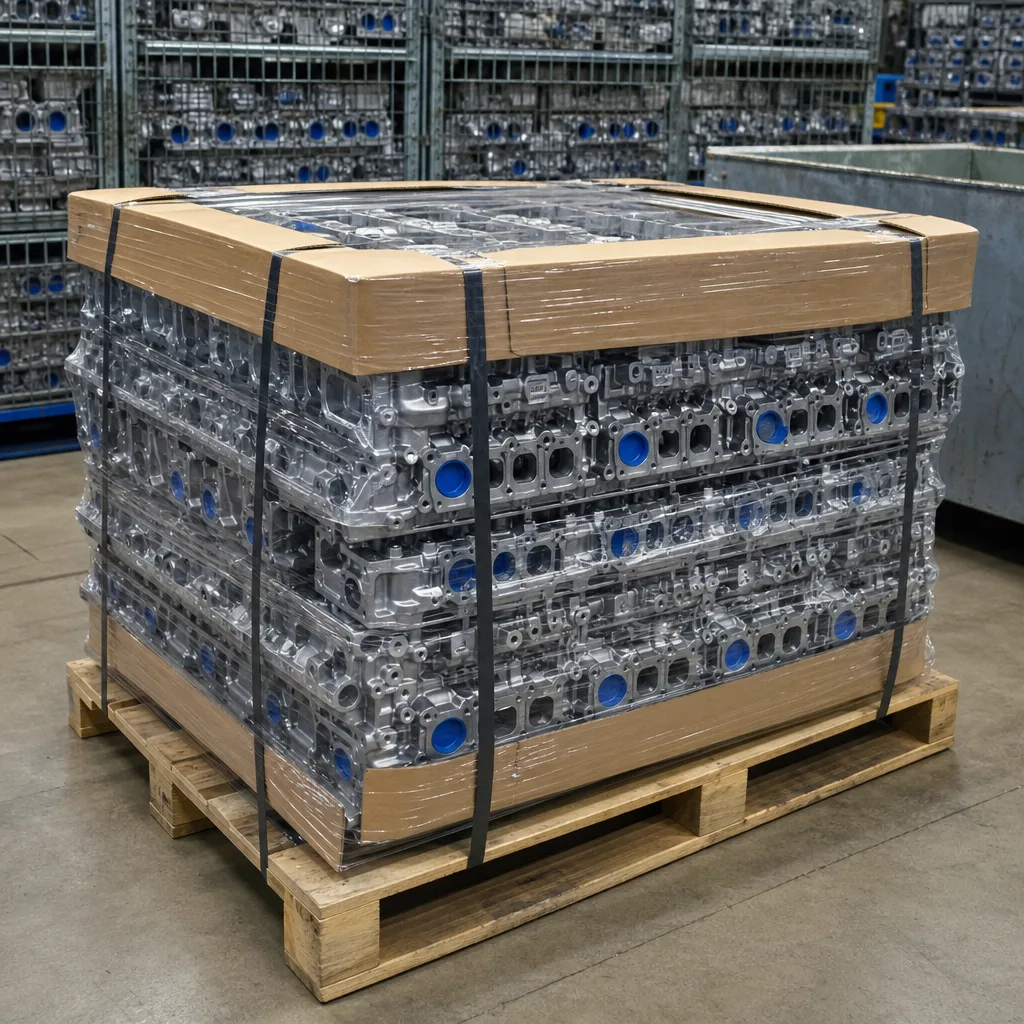
</tr></thead><tbody> </tbody></table>For export lots, stable packaging matters almost as much as the component itself. Rods should be protected from nicks, corrosion, carton collapse, and movement during sea freight. Partitioned cartons, rust-preventive oil or vapor-phase inhibitor, edge protection, and clear batch labels are preferable to loose bulk packing. If the product will move through a regional warehouse network, confirm barcode format, carton count, gross weight, pallet height, and label language before the first shipment.
Buyers should also clarify whether the quoted MOQ is linked to forging, machining, heat treatment, surface treatment, or final packaging. Those steps may have different batch economics. A low machining MOQ does not always mean the whole supply chain can run economically at that level.
This is also the point where forecast visibility should be aligned with the supplier. A larger annual call-off can justify better pricing, but only if the release plan is realistic. For a program stock item, share the expected annual demand, first order quantity, reorder trigger, and preferred shipping rhythm. That gives the factory enough information to plan material and production capacity without forcing the buyer to overstock early.
When custom manufacturing makes sense
Custom work is justified when the program has a defined technical reason, not simply because the buyer wants a different quotation format. The strongest reasons are a specific center distance, a non-standard pin arrangement, a target mass window, a special big-end width, or a controlled rod-bolt package for a known engine family.
If you need that route, custom manufacturing is the correct channel. A proper development cycle should include:
Drawing review and dimensional confirmation
Application and engine-code confirmation
Material, forging, and heat-treatment sign-off
Sample stage with measurement report
Fitment review against the target engine family
Bolt tightening and bore-stability verification
Surface finish and marking approval
Packaging approval for the final release
Pilot order review before full production
Custom development should begin with a clear target rather than an open-ended request. Buyers should define the reason for the change, the acceptable tolerance range, the expected annual volume, and the validation route. If the rod must match a piston, crankshaft, bearing set, or rod bolt already selected by the buyer, those interfaces should be documented before tooling or sample machining begins.
For buyers building a stock line, keep the core range focused. Not every application needs a bespoke rod. In many cases, a well-controlled standard replacement is enough, provided the supplier can prove repeatability. A focused range is easier to forecast, easier to inspect, and easier for distributors to support after sale.
When you are ready to compare SKUs, review our catalog and the related engine components before sending the RFQ. The commercial objective is not to buy the most complex part. It is to buy the part that meets the program requirement with the least operational risk.
Frequently asked questions
Send the engine code or application, target dimensions, annual volume, packaging requirements, and any required OE reference. If you have sample photos, a drawing, or inspection data from the current part, include them as well. That gives the supplier enough information to confirm geometry, finish, documentation scope, and commercial terms before sampling.
Yes. Private-label cartons, barcode labels, carton markings, and export-ready packing can be aligned to the buyer's warehouse process. Confirm carton count, label language, pallet rules, and whether the order needs retail-style packaging or bulk distribution packaging.
Start with material traceability, dimensional inspection, hardness records, heat-treatment evidence, and proof of IATF 16949:2016 and ISO 9001:2015 controls. For Europe, also check REACH handling. Those documents cover the main procurement, compliance, and after-sales traceability risks.
If you need a sample set, batch documentation, or a program quote for connecting rod Audi wholesale supply, send your target engine code and annual volume through [request a quote](/contact.html).