A clutch kit Vauxhall replacement programme is rarely about one vehicle alone. Demand may come from workshop failures, distributor range gaps, fleet maintenance, or shared engine and gearbox platforms across passenger cars and light commercial vehicles. For procurement teams, the priority is not just whether a kit can be installed, but whether the clutch cover, driven plate, release bearing, spline geometry, friction material, and packaging remain consistent from lot to lot. Driventus manufactures clutch kits for independent aftermarket distribution and B2B supply, with process controls aligned to IATF 16949:2016 and ISO 9001:2015. This guide sets out practical sourcing checks for buyers purchasing Vauxhall-fitment clutch kits for markets such as the EU, UK, US, Canada, Australia, and Brazil. It covers OE-equivalent replacement criteria, dimensional verification, validation testing, documentation, packaging, and supplier qualification. Driventus is an independent aftermarket manufacturer; vehicle brand names are used for fitment reference only.
Fitment Scope and OE-Equivalent Replacement Criteria
Replacement demand for Vauxhall-fitment clutch kits can span compact cars, family vehicles, vans, and applications that share engine or gearbox architecture with other nameplates. Before requesting a quotation, procurement teams should define the exact fitment scope rather than relying on a broad model name. A complete RFQ should include vehicle platform, engine displacement, fuel type, gearbox code where available, clutch diameter, spline count, production year range, target market, and whether a concentric slave cylinder is required.
A standard kit usually contains the clutch cover assembly, driven plate, and release bearing. Depending on the application, the bill of materials may also include a concentric slave cylinder, pilot bearing, alignment tool, flywheel bolts, or installation accessories. For independent aftermarket supply, the replacement kit should match the functional interfaces of the original clutch system without suggesting approval or endorsement from the vehicle manufacturer.
Friction material selected for equivalent torque capacity, engagement feel, heat resistance, and wear behaviour
Kit contents controlled so boxed assemblies do not mix similar but non-interchangeable variants
Packaging labelled for fitment cross-reference, batch traceability, barcode use, and country-specific requirements
Buyers comparing our catalog should treat OE numbers and application data as cross-reference tools, not as evidence of manufacturer approval. If a programme uses customer-specific, internal, or generic references, include them clearly in the RFQ so each variant can be mapped, sampled, and quoted without ambiguity.
Dimensional Checks for Vauxhall-Fitment Clutch Kits
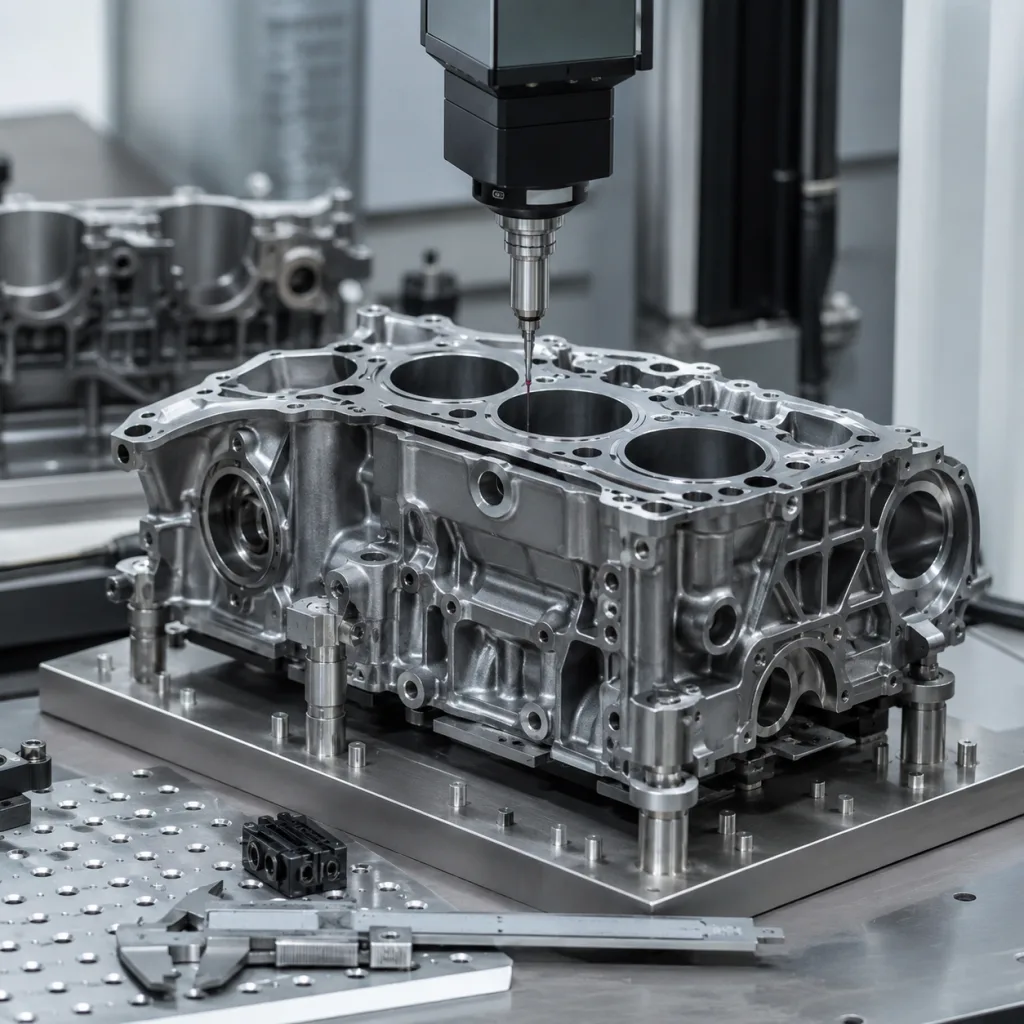
A clutch kit can look interchangeable while still causing installation, release, or drivability issues. Small deviations in clamp load, cover height, hub offset, spline fit, or release bearing face position may lead to clutch drag, slip, pedal noise, premature lining wear, difficult gear selection, or warranty returns. Dimensional control should therefore be part of sample approval and incoming inspection, not only a visual comparison against an old unit.
Check item
Procurement relevance
Typical verification method
Driven plate diameter
Confirms torque and package compatibility
Vernier caliper or CMM sampling
Lining thickness and rivet depth
Supports wear life and prevents flywheel contact
Thickness gauge and rivet-depth inspection
Spline count and shaft fit
Prevents gearbox input-shaft mismatch
Go/no-go spline gauge
Hub offset and damper clearance
Prevents interference with flywheel or pressure plate
Height gauge on surface plate
Cover mounting pitch
Confirms flywheel interface
CMM or bolt-pattern fixture
Cover height and finger position
Affects release travel and pedal feel
Load-height test equipment
Release bearing face position
Prevents over-travel or incomplete release
Fixture measurement
Runout and dynamic balance
Reduces NVH and rotating assembly stress
Dial indicator and balance machine sampling
</tr></thead><tbody> </tbody></table>For serial purchasing, inspection frequency, sample size, measurement method, and acceptance criteria should be agreed before the first purchase order. Buyers should also define what happens when a measurement is near the tolerance limit, especially for high-volume repair-chain or distributor programmes. Driventus can work from customer samples, technical drawings, or validated aftermarket references through custom manufacturing, including dimensional reports for buyer approval.
Validation Testing for Replacement Confidence
Procurement professionals should ask how a clutch kit is validated before volume supply begins. Replacement clutches are exposed to repeated heat cycles, stop-start urban driving, towing loads, hill starts, driver abuse, and contamination from real workshop environments. Laboratory validation cannot reproduce every field condition, but it helps reduce early claims by confirming that the design, materials, and production process are controlled.
Useful validation and control activities include:
Static clamp-load measurement across the working travel range
Load-height curve comparison for the diaphragm spring and cover assembly
Burst testing of rotating clutch components at defined safety margins
Friction coefficient testing before and after thermal cycling
Cover assembly fatigue testing for diaphragm spring durability
Release bearing noise, rotation, and seal checks under axial load
Disc torsional damper testing for spring rate, angular travel, and stop-pin durability
Runout and balance checks for rotating components
Salt-spray or corrosion assessment for exposed metal surfaces where relevant
Packaging drop and vibration checks for export distribution
Quality frameworks such as IATF 16949:2016 and ISO 9001:2015 support process discipline, traceability, corrective action, and production change control. Importers may also request environmental or chemical compliance documents. For EU distribution, REACH (EC) No 1907/2006 material declarations are commonly requested, particularly when buyers maintain central compliance files for multiple product families.
Validation records should be linked to part family, drawing or specification revision, production lot, and approved material source. A qualified supplier should be able to explain which tests are completed during development, which checks are repeated in routine production, which records are retained, and how corrective actions are handled when field feedback identifies a pattern.
Materials, Friction Formulation, and NVH Control
A clutch kit vauxhall replacement specification should go beyond application coverage and carton labelling. The friction facing, pressure plate casting, diaphragm spring steel, driven plate damper, hub spline finish, release bearing grease, and surface treatment all influence service life, engagement quality, and complaint rates. Buyers should confirm not only what parts are included, but how critical materials and subcomponents are controlled.
Organic friction facings are common in passenger-car replacement kits because they provide progressive engagement and acceptable wear for normal road use. Formulation stability matters: a facing that is too aggressive can accelerate flywheel and pressure plate wear, while poor friction stability can cause slip, judder, or fade at elevated temperatures. Copper content, resin type, fibre reinforcement, filler selection, and curing process should be covered by documented material controls and change-approval procedures.
The clutch cover must retain clamp load after repeated heat cycles. Diaphragm spring characteristics should be evaluated through load-height curves rather than free height alone. The driven plate damper should be matched to engine torque pulsation and gearbox behaviour to reduce rattle, chatter, and harsh engagement. Release bearings require consistent grease fill, seal integrity, raceway quality, and contact geometry so the actuation system remains smooth across the service interval.
For buyers supplying repair chains, NVH consistency is commercially important because workshops may reject a kit that fits correctly but produces chatter, squeal, vibration, or rough take-up. Driventus applies production checks through its quality system, including batch traceability, inspection records, controlled supplier inputs, and corrective action procedures for recurring field feedback.
Documentation, Packaging, and Import Readiness
Import managers should treat documentation as part of the product specification. A technically suitable clutch kit can still cause delays if cartons, labels, declarations, inspection records, or compliance files are incomplete. For multi-country distribution, packaging must support warehouse picking, workshop identification, customs clearance, and protection from moisture, impact, and handling damage during sea or air freight.
Recommended RFQ documentation includes:
Application list with engine, gearbox, year range, body type where relevant, and kit contents
Cross-reference table using customer references or generic OE-style references where supplied
Drawing or critical-dimension report for the clutch cover, driven plate, and release bearing
Material declaration and REACH (EC) No 1907/2006 statement where required
Certificate copies for IATF 16949:2016 and ISO 9001:2015 where applicable
PPAP-style documentation if requested by OEM, Tier-1, or controlled private-label customers
Packaging specification with carton dimensions, gross weight, pallet quantity, stacking limits, and barcode format
Batch coding method, production-date identification, and warranty claim traceability procedure
Sample approval record covering kit contents, label layout, carton artwork, and inspection status
Private-label programmes should define artwork approval, carton strength, humidity protection, spare label control, print colour tolerance, and rules for label replacement. Neutral packaging may be preferred for wholesalers serving several brands or channels. Repair-chain buyers may also need installation notes, kit content photos without logos, scan-ready part references, and clear separation between similar applications to reduce workshop picking errors.
Supplier Evaluation for Replacement Programmes
A replacement programme depends on repeatable supply, not only a competitive unit price. Buyers should evaluate production control, engineering support, export experience, response time, and change-management discipline before approving a range extension. For a clutch kit vauxhall replacement line, the main commercial risks are mixed applications, unverified substitutions, inconsistent clamp load, bearing source changes, packaging errors, and weak batch traceability.
A practical supplier review can focus on:
Manufacturing capability for clutch covers, driven plates, assembly control, and release bearing sourcing
Incoming inspection of steel, castings, friction facings, rivets, springs, hubs, and bearings
In-process fixtures for rivet height, runout, cover height, diaphragm position, and spline fit
Final inspection for kit completeness, part marking, label accuracy, and packaging condition
Engineering support for sample comparison, drawing review, validation reports, and corrective action
Export history to target markets and familiarity with importer documentation requirements
Clear change-control procedure for friction material, bearing source, tooling revision, packaging, or approved sub-supplier
Communication process for forecast changes, backorders, claims, and range updates
Driventus supplies B2B aftermarket distributors, wholesalers, OEM/Tier-1 customers, and multi-location repair chains from Taizhou, Zhejiang. The company exports to more than 60 countries and supports engine and powertrain component sourcing beyond clutch kits. For range planning, buyers can review our catalog, discuss custom manufacturing, or request a quote with application data, packaging requirements, sample expectations, and forecast volume.
Frequently asked questions
Provide vehicle application, engine size, fuel type, gearbox code where available, clutch diameter, spline count, kit contents, target market, packaging needs, and forecast volume. Samples, drawings, or validated cross-references help reduce fitment risk.
Yes. Driventus supports B2B private-label and neutral-pack clutch kit programmes, subject to artwork approval, MOQ, packaging specification, and application validation. Documentation can include inspection records and quality certificates where required.
No. Driventus is an independent aftermarket manufacturer; brand names are referenced for fitment only. Cross-references are used to identify application compatibility and do not imply approval or endorsement by any vehicle manufacturer.
For Vauxhall-fitment clutch kit sourcing, send application data, target packaging, and annual volume so our team can review feasibility and quotation details. Start here: /contact.html