Clutch Kit RAM OE Equivalent: What Buyers Need to Prove Before Approval
A catalogue match is not enough when you are sourcing a **clutch kit RAM OE equivalent** for distribution, fleet service, or private-label aftermarket supply. Buyers need to know whether the cover assembly, driven plate, and release component will match OE behaviour closely enough to avoid install issues, slip, noise complaints, or short service life.
That makes this a verification job, not a branding exercise. The useful questions are specific: are the dimensions controlled, is torque capacity stated with margin, are the friction materials consistent, and can the supplier trace what was tested to what will actually ship?
Cross-reference control matters too. Many RFQs start from OE numbers, platform codes, transmission families, or regional catalogue data rather than retail vehicle descriptions. Commercial terms need the same level of precision. Sample MOQ may sit at 2-10 kits, pilot orders often run 50-200 kits, and repeat production MOQ can move to 300-1,000 kits depending on whether the cover, disc, and release component are standard stock or a dedicated build. Lead time should also be split into sample preparation, validation, and serial production instead of being quoted as one generic number.
This article breaks the topic down the way sourcing teams usually review it: what OE-equivalence should actually mean, where replacement programmes fail, what evidence makes one offer stronger than another, and how to approve a supplier without creating avoidable warranty cost later. Driventus is an independent aftermarket manufacturer; brand names are referenced for fitment only.
Decision Framework: What OE-Equivalent Should Actually Mean
For a replacement programme, OE-equivalence should mean measurable similarity to the original assembly. It should not mean “looks close” or “fits the bolt pattern.” A complete clutch kit usually includes the pressure plate cover, friction disc, and release bearing or concentric slave component, depending on platform.
For RAM applications in pickup and light commercial use, buyers usually need evidence on these points:
Clamp load window of the cover assembly, often held within about +/-5% of approved nominal value
Friction lining material grade and facing thickness, commonly checked to about +/-0.15 mm to +/-0.30 mm depending on disc size and drawing standard
Spline count and hub dimensions on the driven plate, including major/minor diameter and go/no-go gauge conformity
Outside diameter and installed height, matched to the intended flywheel and release geometry
Release travel compatibility, including bearing contact position and disengagement margin
Torsional damper spring rate and hub hysteresis behaviour across the specified angular deflection range
Dynamic balance condition of rotating parts, typically verified in g.mm against internal limit
Corrosion protection for warehousing and 30-60 day export transit
A supplier should also explain how the cross-reference was built. If the enquiry starts from an OE number already circulating in the market, that link should be declared clearly, for example OE 06A107065 when relevant to the source enquiry. In many clutch programmes, though, the real fitment logic comes from vehicle platform, transmission family, and engine torque output rather than a single aftermarket application line.
That distinction matters because a kit can bolt on and still be wrong. Pedal effort may drift. Engagement can feel unstable. NVH may worsen. Service life can collapse under load. A clutch kit RAM OE equivalent should therefore be judged on function and repeatability, not physical fitment alone.
Torque reserve is the quickest filter. If the target vehicle produces 420 N.m peak engine torque, buyers usually expect working margin above that figure under heat, towing, repeated launch, or stop-start use. Matching nominal torque one-to-one is not a serious approval standard.
Spec Deep-Dive: Which Dimensions and Bench Checks Matter Most
Before serial supply, a replacement clutch programme should pass three gates: dimensional inspection, bench validation, and material verification. Mixed-fleet distribution makes this more important, because one small deviation can create a concentrated return problem across many workshops.
Check area
Typical verification point
Why it matters
Cover assembly
Bolt pattern, installed height, clamp load
Prevents mounting error and loss of torque capacity
</tr></thead><tbody> </tbody></table>In a real sourcing review, pass/fail is not enough. Buyers should ask for nominal dimensions, tolerance bands, and actual readings. Useful examples include:
Disc outside diameter: nominal 280 mm or 300 mm class depending on application, with actual readings taken at multiple points
Disc axial runout: often controlled to <=0.50 mm on finished assembly, with tighter internal targets on premium programmes
Cover installed height: typically controlled within about +/-0.30 mm to protect release feel and clamp consistency
Spline fit: 100% gauge check against approved gearbox input specification
Clamp load: recorded in daN or N with test-equipment calibration status shown on the report
Even if the drawing set is confidential, the supplier should still be able to provide controlled inspection reports, gauge records, and sample approval documentation.
Process discipline matters as much as the sample itself. A supplier working to IATF 16949:2016 and ISO 9001:2015 should be able to show control plans, measurement-system discipline, lot traceability, and nonconformance handling through its quality system.
When assessing a clutch kit RAM OE equivalent, the question is simple: can the supplier prove that the measured sample and the future production lot are governed by the same controls? If not, a good-looking sample has limited value. One or two pieces are also too thin for a serious decision. A more useful basis is often 5-10 kits for inspection and bench validation, then 20-50 kits for a controlled field release if the SKU matters strategically.
Comparison Angle: What Evidence Separates a Serious Offer From a Catalogue Offer
The fastest way to screen suppliers is to compare document depth, not brochure language. Many offers will claim OE quality. Fewer will show the data.
Recommended document pack
Material declaration for friction facings and metallic components
Dimensional inspection report for first-off samples
Clamp load test record for pressure plate assemblies
Disc runout and parallelism report
Torsional damper performance data
Release bearing durability or rotational endurance test summary
Salt spray or corrosion-protection test record for coated parts
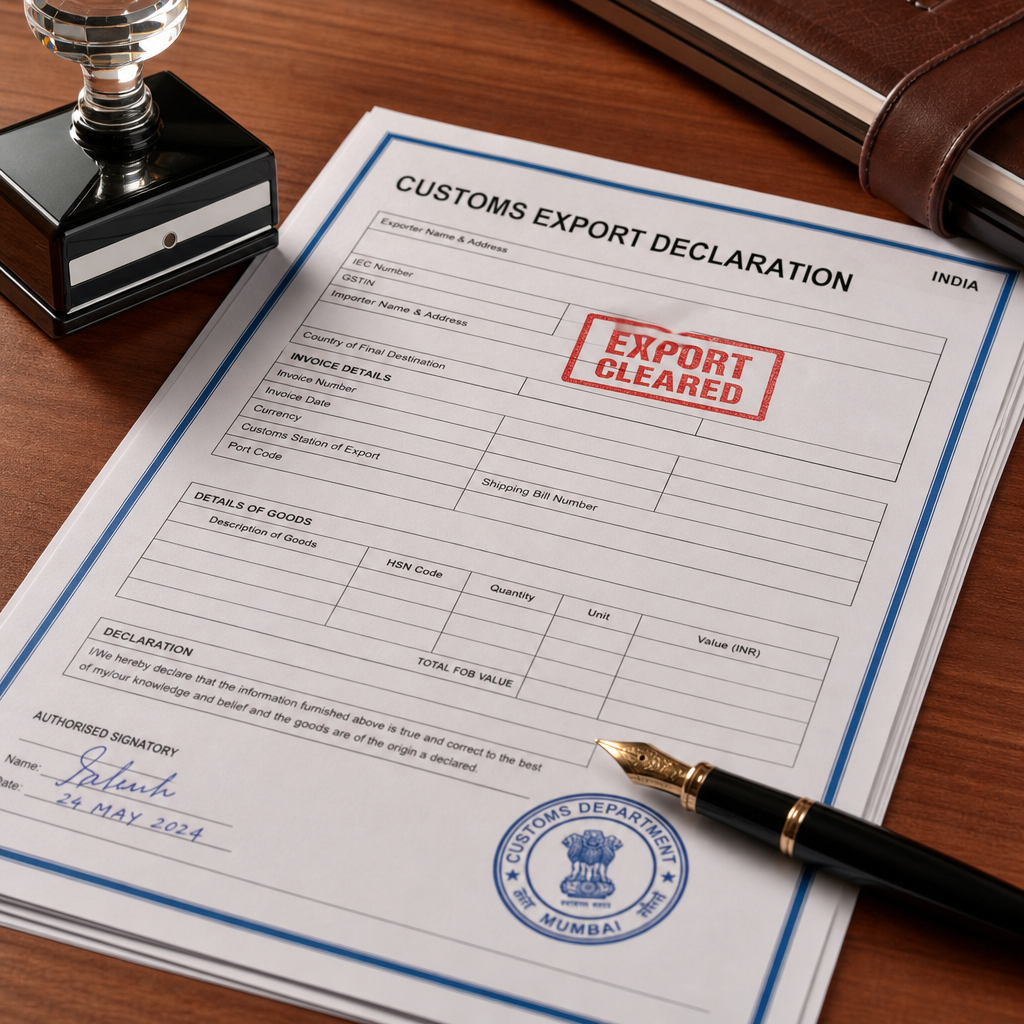
Packaging validation for export handling and moisture protection
REACH and restricted substance declaration aligned with REACH (EC) No 1907/2006
There is no single universal clutch standard covering every light-vehicle replacement programme in one clean way. Because of that, buyers should ask suppliers to identify the exact internal, customer-specific, or laboratory test methods used, along with sample size and acceptance criteria. That is far more useful than a generic claim such as “tested to OE standards.”
The strongest test summaries also give numbers that can be compared across offers. Typical examples include clamp load at specified installed height, facing wear after endurance cycle, disc runout before and after hot-cycle testing, damper angular deflection in degrees at given torque steps, bearing noise observations after endurance rotation, and corrosion hours achieved in neutral salt spray.
Another important comparison point: does the evidence reflect the final kit content? If the balancing method, release-bearing source, friction facing specification, or included hardware changes after sample approval, the original report may no longer describe the shipped product.
If the programme involves private label, regional tuning, or kit-content changes, confirm whether the supplier can support custom manufacturing with revised balancing, friction materials, packaging specifications, or barcode formats. That matters especially when a clutch kit RAM OE equivalent is being developed for a distributor range rather than supplied as a stock item. It also changes the commercial structure. Low-volume variants may carry sample tooling or validation charges, while label-only programmes may hold price if MOQ is high enough to keep packing-line changeovers efficient.
Failure Modes: Where RAM Replacement Programmes Usually Go Wrong
Most sourcing failures do not show up during catalogue review. They appear after installation, often across several branches at once.
Typical failure points
1. Dimensional mismatch despite nominal fitment: Small deviations in disc hub offset, cover height, or release geometry can disrupt disengagement. 2. Incorrect torque reserve: A low clamp load may seem acceptable in light duty, then slip under towing, payload, or repeated commercial use. 3. Inconsistent friction material batches: Engagement feel, fade resistance, and wear rate can vary by lot. 4. Bearing noise after installation: Grease retention, race finish, and sealing quality are common weak points in low-control supply chains. 5. Poor export packaging: Corrosion, moisture ingress, or carton damage during sea freight can turn acceptable parts into field failures.
These are manageable risks when the supplier shows PPAP-style discipline even in the aftermarket channel: sample retention, batch identification, process change control, and corrective-action tracking. Buyers should also ask how engineering changes are communicated, especially where a kit supersession affects release components, fasteners, or accessory hardware.
Application severity is another common blind spot. A reference that performs acceptably in private-use vehicles may not hold the same margin in towing service, workshop fleets, or light commercial stop-start duty. Sourcing teams should ask whether the supplier has considered torque spikes, repeated launch, and thermal loading typical of the target market.
Lead time can also hide technical risk. A quoted 30 days may only describe final assembly time after all subcomponents are already available. Buyers should separate component readiness, sample validation, mass-production scheduling, and freight transit. In practice, standard stock kits may ship in 15-30 days, while non-stock or revised private-label programmes can take 45-75 days after sample sign-off. If cover assemblies, damper hubs, or bearings are sourced from different vendors, ask which item drives the true critical path.
When reviewing suppliers, use our catalog and fitment matrices as a starting point, then move quickly to measured inspection and test evidence before approving a programme.
Buyer Scenario: How Total Cost Changes the Supplier Choice
Unit price matters. It is just rarely the deciding number on its own.
Consider two offers for the same RAM reference. Supplier A is cheaper at opening quote level. Supplier B is slightly higher, but provides stable batch coding, faster technical response, better inspection records, and stronger export packaging. If Supplier A creates higher returns, more workshop labour claims, emergency replenishment orders, or more account-management time, the cheaper quote becomes the more expensive programme.
A practical supplier assessment should therefore cover:
Manufacturing scope: whether core components are produced in-house or heavily outsourced
Traceability: batch coding on cover, disc, and bearing where feasible
Certification status: active IATF 16949:2016 and ISO 9001:2015 certification
Compliance support: declarations for REACH (EC) No 1907/2006 and destination-market documentation
MOQ and lead time stability: especially for mixed-SKU export containers
Warranty feedback loop: response time for 8D or equivalent corrective action
For distributors and repair chains, repeat-order consistency usually matters more than the lowest first quote. Ask for production lot photos, sample reports, and packing specifications. Confirm whether the supplier controls revisions on labels, barcodes, pallet configuration, and outer-carton marking so the product can move through your receiving system without avoidable exceptions.
Commercial responsiveness also has a cost impact. A supplier that can answer application questions quickly, clarify supersessions, and explain revision changes reduces post-launch friction. Slow or incomplete technical support does the opposite.
Pricing structure needs the same scrutiny. A supplier may quote one level for 50-99 kits, a lower level at 100-299 kits, and another reduction above 300 or 500 kits once batching, packaging procurement, and outbound consolidation improve. Buyers should confirm whether MOQ applies per SKU, per shipment, or per combined order family. That becomes important when building a RAM range with several slower-moving references.
Payment and inventory terms can also outweigh small unit-price differences. A slightly higher price may still be commercially stronger if the supplier can hold buffer stock, combine multiple SKUs into one container, or support scheduled releases against a blanket order. The manufacturer should also state clearly that it is not affiliated with the vehicle brand. That keeps the clutch kit RAM OE equivalent positioning accurate and defensible in packaging, catalogue copy, and listing language.
Step-by-Step: A Practical Approval Sequence Before Serial Orders
Before placing repeat orders, buyers should move through a short but disciplined approval path.
Confirm exact application scope by platform, engine, transmission, and torque band
Validate any OE-number cross-reference used in the RFQ
Review dimensional inspection against approved sample data
Check clamp load, runout, balance, and release component test records
Verify friction material declaration and restricted-substance compliance
Confirm export packaging standard, carton strength, and anti-corrosion protection
Review certification copies and audit scope
Define warranty, claim analysis, and corrective-action response times
For a new replacement range, it is usually sensible to start with a controlled pilot order, monitor return data, and release larger volume only after stable field performance is confirmed.
In practice, the strongest approval decisions combine three things: accurate application mapping, documented validation, and confidence that serial production will match the approved sample. If one is weak, the sourcing risk rises quickly.
A workable buying sequence is usually:
1. RFQ with application list and target annual volume 2. Sample order with agreed validation scope 3. Pilot run with defined lot number and packaging standard 4. Serial order after review of test data and early field performance
At each stage, buyers should document the commercial terms as carefully as the technical ones: sample MOQ, pilot MOQ, repeat MOQ, ex-works or FOB basis, and lead time from deposit or order release. For many aftermarket programmes, that means sample lead time of about 2-4 weeks, pilot production 4-6 weeks, and repeat supply 30-60 days depending on stock policy.
If you are evaluating a clutch kit RAM OE equivalent for aftermarket distribution or service-network supply, a document-led approval process usually prevents the most expensive problems before launch. Driventus is an independent aftermarket manufacturer; brand names are referenced for fitment only.
Frequently asked questions
At minimum, request dimensional inspection reports, clamp load data, disc runout results, material declarations, traceability records, certification copies, and compliance statements for REACH (EC) No 1907/2006. For higher-volume programmes, add packaging validation, sample approval records, warranty response procedures, and a clear statement of sample size, acceptance criteria, and measured values such as installed height, clamp load, runout, and bearing endurance results.
No. A kit may mount correctly but still have incorrect pedal effort, disengagement travel, torsional behaviour, NVH performance, or torque reserve. Buyers should verify dimensions, clamp load, balance, friction material, and release component performance before approval. In practical sourcing terms, fitment should be supported by measured tolerances, torque-capacity margin, and controlled validation data rather than a catalogue match alone.
Batch variation can change engagement feel, noise levels, wear rate, and durability across the same SKU. For distributors and repair chains, that increases returns, labour claims, and confidence problems in the field. Stable process control and lot traceability reduce that risk. Buyers should ask how the supplier controls key variables such as facing thickness, clamp load, runout, and bearing source from one lot to the next.
For application review, sample evaluation, or export supply details, you can request a quote through /contact.html. Driventus can support range development, validation documentation, and serial supply planning, including discussion of MOQ, pilot-order structure, lead-time assumptions, and packaging requirements for mixed-SKU export programmes.