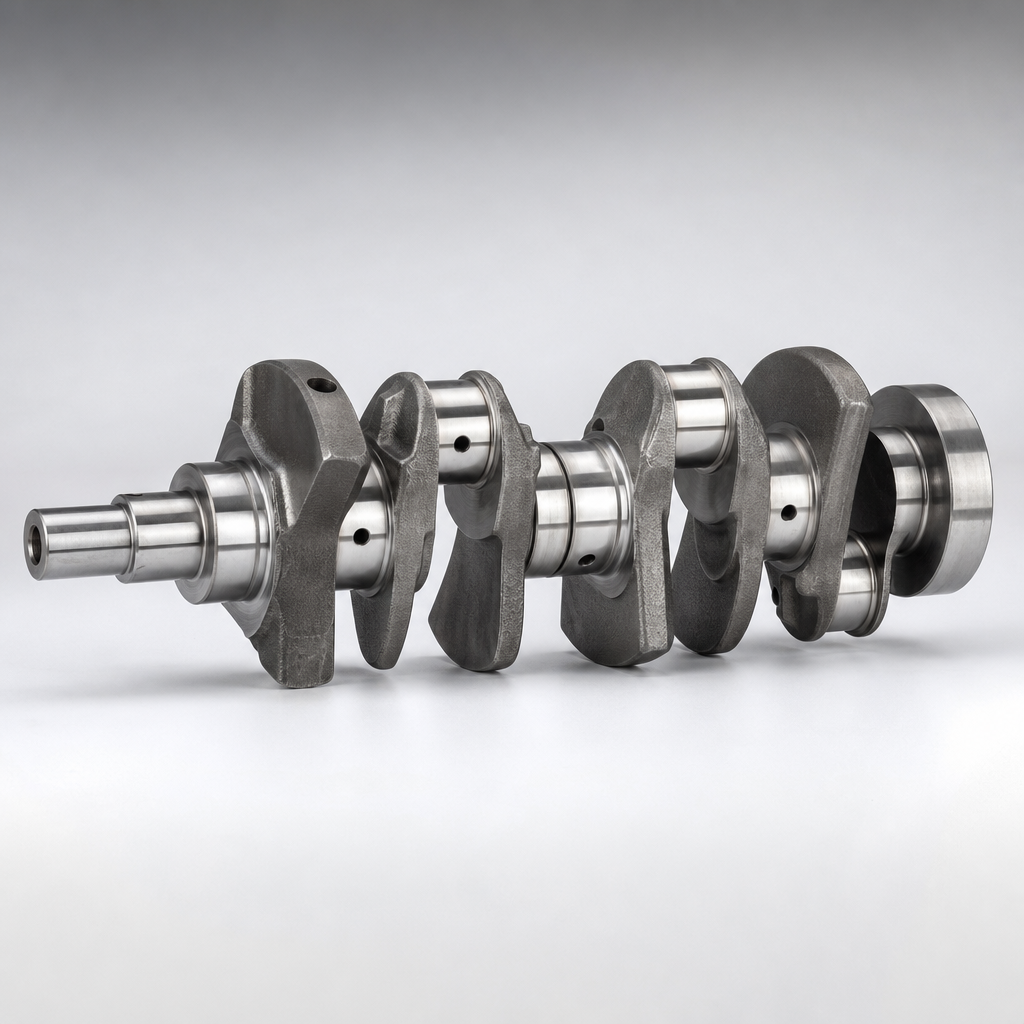
thermostat housing · 2026-07-03

Thermostat Housing Specifications for B2B Sourcing

Thermostat housing specifications affect more than fitment on the assembly line. They shape leak performance, warranty exposure, service life, and the cost of approving a supplier twice because the first sample looked right but the production process was never fully defined. For buyers, the risk is rarely the headline material choice alone. It usually sits in the details: flange flatness, O-ring groove control, outlet angle, sensor boss strength, pressure capability, and whether the supplier can repeat those results across lots and tools. In aftermarket programmes, consistency across repeat orders matters most. In OEM and Tier-1 supply, that baseline expands into capability, validation evidence, traceability, and controlled change under IATF 16949:2016 and ISO 9001:2015. This article breaks down the thermostat housing specifications procurement teams should request, where sourcing failures usually start, how polymer and aluminium options compare, and what should be fixed in the RFQ before price comparisons mean anything. Driventus is an independent aftermarket manufacturer; any brand names or OE references are mentioned for fitment identification only.

Start With The Decision Framework, Not The Part Name

A thermostat housing is easy to underestimate. On paper it can look like a simple coolant connection. In sourcing, it behaves more like a multi-interface sealing component, and that changes how buyers should define it.

The first question is not "what material do we want?" It is "what can fail in service, and which features control that risk?" Once that is clear, the specification becomes much easier to build and supplier quotes become much easier to compare.

A usable thermostat housing specification should lock down these items:

  • Base material: glass-filled PA66, PPS, ADC12 aluminium, or another approved equivalent
  • Operating temperature range: commonly -40 C to 135 C continuous for polymer housings, with short-term peaks of 150 C to 160 C depending on the coolant circuit
  • System pressure resistance: typically 150 kPa to 250 kPa working pressure, with proof pressure often at 1.5x working pressure and burst at 2.5x to 4.0x depending on programme risk
  • Flange flatness: often <= 0.15 mm, tightened to <= 0.08 mm to 0.10 mm for sensitive O-ring interfaces
  • Port diameter tolerance: commonly +/- 0.10 mm to +/- 0.20 mm where hose retention and clamp load matter
  • Mounting hole position tolerance: often <= 0.20 mm true position, with critical engine-side patterns held tighter
  • Wall thickness range: typically 2.5 mm to 4.5 mm for moulded polymer housings to balance fill, strength, and warpage
  • Sensor or thread interface: thread class, insert material, tightening torque, and pull-out or crack-resistance requirement
  • Surface finish: machining requirement on sealing faces; machined gasket lands are often Ra 1.6 to 3.2 um
  • Leak-test requirement: pressure, stabilization time, dwell time, and acceptance limit
  • Thermal cycling validation: cycle count, media, and pass-fail criteria for crack formation, creep, or seal loss

If the part includes an outlet neck, bleed screw, thermostat seat, or sensor boss, treat each as a controlled feature. Buyers get into trouble when those details are left inside general notes instead of specified one by one.

The commercial side needs the same discipline. Ask suppliers to tie the quoted thermostat housing specifications to MOQ, tooling ownership, cavity count, and lead-time assumptions. A price based on a single-cavity tool and 500-piece MOQ is not directly comparable with one built around a 4-cavity tool, annual demand above 50,000 pieces, and stocked inserts or seals.

Compare The Two Main Paths: Polymer Or Aluminium

Most sourcing decisions narrow quickly to one core choice: reinforced polymer or cast aluminium. That decision affects cost, tooling, weight, and failure mode more than any other line on the drawing.

</tr></thead><tbody> </tbody></table>### What buyers should check before choosing

For polymer housings, PA66 GF30 is common because it balances stiffness, heat ageing, and mouldability. But that shorthand is not enough on its own. Buyers should ask how the resin performs after coolant exposure, thermal ageing, and conditioning. A practical control point is retention of mechanical properties after ageing, such as an agreed percentage of original tensile performance after 1,000 hours at 125 C to 135 C in the defined environment.

Some programmes move to PPS GF40 for higher-temperature or harsher chemical exposure. That can be justified. It can also be over-specified. The right question is whether the application data actually requires it.

For aluminium housings, the part drawing should state casting alloy, porosity limits, machining allowance, and coating or surface-treatment requirements. Common die-cast alloys include ADC12 or A380-class materials. Machined sealing lands and ports often add 15% to 30% to piece cost versus an as-cast concept.

In commercial terms, polymer usually becomes more attractive once annual demand reaches roughly 20,000 to 30,000 pcs/year and the tool can be amortised cleanly. Aluminium can remain the better choice for service parts, mixed-model demand, or annual volume below 10,000 pcs/year where tooling recovery is harder.

Where regional compliance applies, request a supplier declaration aligned with REACH (EC) No 1907/2006 and, where needed, support for material reporting or IMDS-style disclosure. For many buyers, that paperwork is part of thermostat housing specifications, not a separate follow-up.

Focus On The Dimensions That Actually Create Field Failures

Not every dimension on the drawing carries the same sourcing risk. Some features mainly affect appearance or general fit. Others decide whether the part leaks, cracks, distorts the hose path, or fails during installation.

These are the dimensions buyers should review first:

  • Mating flange thickness: affects clamp load, gasket compression, and long-term sealing
  • Sealing groove width and depth: controls O-ring squeeze, retention, and compression set
  • Hose outlet bead height: affects hose retention under pressure pulse and thermal cycling
  • Sensor bore or insert concentricity: affects alignment, sealing, and installation torque
  • Thermostat seat diameter: influences thermostat fit and bypass sealing
  • Overall outlet angle: matters when engine-bay packaging is tight and hose routing is fixed
Attribute Glass-filled PA66 housing Aluminium housing
Typical useHigh-volume passenger vehicle coolant circuitsHeavy-duty applications, older platforms, or areas with higher thermal and mechanical load
WeightLower, often 30% to 50% below a comparable machined aluminium partHigher
Corrosion behaviourNo red-rust corrosion; coolant chemistry still needs validationGood rigidity; coolant chemistry and galvanic interaction still matter
Mould/casting toolingInjection mould tooling requiredDie casting or gravity casting tooling required
Dimensional stabilityGood when moisture conditioning and moulding parameters are controlledGood after machining of critical faces and ports
Common risksCreep, warpage, insert cracking, hydrolysis under poor material choicePorosity, burrs, coating issues, galvanic concerns
Cost positionUsually lower at scaleUsually higher due to metal and machining content
Typical MOQ logicOften economical from 1,000 to 3,000 pcs per release after tooling amortisationOften viable at lower annual volume if machining content is acceptable

</tr></thead><tbody> </tbody></table>A common mistake is to request a nominal drawing without a tolerance hierarchy. That leaves suppliers to decide what is critical. They will not all make the same choice.

For OE cross-references, list them exactly as provided by the customer, for example OE 06A107065 or OE 11251..., and only where that reference is already part of the sourcing file. Broad cross-matching without dimensional confirmation is risky because apparent interchangeability can hide differences in sensor depth, thermostat seat geometry, or outlet orientation.

In practice, thermostat housing specifications should clearly separate CTQ features from general dimensions. That supports a better inspection plan and better quote comparison. Many buyers require 100% first-off verification on CTQs, then move to defined SPC or sampling once process capability is proven, for example Cpk >= 1.33 for stable serial dimensions and Ppk/Cpk >= 1.67 on critical sealing interfaces where tighter control is required.

Build The RFQ Around Test Logic, Not Just Drawings

A drawing alone does not tell you whether the part will survive service conditions. It only shows what the part is supposed to look like. The RFQ needs to define how performance will be proven and how production will be controlled.

Common validation items include:

  • Leak test: pressure decay at a defined pressure and dwell time, such as 200 kPa for 30 to 60 seconds, with a maximum pressure loss such as <= 2 kPa after stabilization
  • Burst or proof pressure test: many buyers set proof at 300 kPa to 400 kPa and burst above 500 kPa to 800 kPa depending on application and wall section
  • Thermal shock: often 200 to 1,000 cycles between cold soak and 120 C to 135 C hot media to assess cracking, seal movement, and material stress
  • Coolant compatibility: exposure to OAT, HOAT, or programme-specific coolant chemistry for 500 to 1,000 hours with dimensional and mass-change limits
  • Torque test for inserts and threaded ports: verifies crack resistance, thread retention, and repeat assembly performance
  • Vibration durability: important where the housing supports pipe mass, brackets, or sensor load
  • Salt spray or corrosion test: relevant mainly for metallic housings, coated parts, and fastener interfaces

The useful buyer question is simple: what would cause a field return, and where is that failure prevented in the validation plan?

For polymer parts, push suppliers to define whether inserts are overmoulded or heat-staked, whether sealing faces are as-moulded or post-machined, what the resin drying window is before moulding, and whether parts are conditioned before final dimensional inspection. Those details affect cost and repeatability.

For aluminium parts, the process route should identify casting method, X-ray or porosity control level, machining sequence, deburring method, and 100% leak-test point. Without that, two suppliers may quote the same nominal part while planning very different levels of process control.

Production release should also link back to traceability. Ask how the supplier connects approvals to tool cavity records, resin batches, machining batches, and leak-test logs under IATF 16949:2016. If the programme serves regulated road markets, engineering change control matters almost as much as the dimensional report.

Lead times need the same level of precision. Typical ranges are 4 to 8 weeks for repeat aftermarket orders from stocked tooling, 8 to 12 weeks where inserts or packaging need preparation, and 10 to 16 weeks for a new custom programme requiring tooling, samples, PPAP-level submission, and validation testing. If a quote looks unusually fast, confirm whether validation parts, production parts, and packaging approval are all included.

Audit The Control Package Before You Trust The Piece Price

A low unit price tells you very little by itself. The more useful question is whether the supplier's control package is strong enough to hold thermostat housing specifications in serial production.

A stable programme normally includes:

  • Controlled drawing with revision history
  • Material certificate or resin declaration by batch
  • Dimensional inspection report for critical features
  • Leak-test work instruction and acceptance record
  • PPAP-style submission where required by the customer
  • Packaging specification that protects sealing faces and outlet geometry
  • Change-notification procedure for tooling, resin, insert supplier, machining source, or process-parameter changes

Under ISO 9001:2015, document control and corrective action are baseline expectations. Under IATF 16949:2016, buyers usually expect stronger evidence of traceability, risk analysis, and control-plan execution.

For supplier evaluation, review the manufacturer's quality system, available product range in our catalog, and whether the supplier can support drawing changes through custom manufacturing. If your sourcing team buys across related cooling and engine components, a broader review of /products/engine-components.html may also be useful.

On audit, look for the link between the quote and the shop floor. Check whether leak-test equipment is calibrated, whether groove and port gauges are defined, whether traceability survives through packing, and whether tooling or material substitutions require formal approval.

It is also worth checking the commercial triggers tied to quality. Ask who pays for repeat sampling after an engineering change, whether annual pricing is linked to resin or aluminium index movement, what scrap allowance is built into the quote, and whether MOQ is driven by raw material pack size, tool efficiency, or subcontract machining minimums.

A useful audit request is one recent production record set from the same part family: incoming resin or casting lot, first-off report, in-process dimensional checks, leak-test log, final pack traceability, and nonconformance closure. That evidence says more than a generic capability statement.

What A Complete Sourcing Brief Looks Like In Practice

Many RFQs fail because they are technically incomplete but commercially urgent. The result is predictable: slow clarification loops, wide quotation spread, and sample approvals that do not translate cleanly into production.

For thermostat housing procurement, the sourcing brief should contain:

1. Vehicle or engine application and annual volume forecast 2. OE or customer cross-reference, if already known 3. 2D drawing and 3D model, with critical-to-quality features marked 4. Required material grade and colour, if applicable 5. Seal type, mating parts, and clamp specification 6. Validation matrix with pressure, temperature, and cycle requirements 7. Packaging, labelling, and traceability requirements for import distribution

That is the technical base. To make the RFQ commercially comparable, add the assumptions buyers often leave out:

  • Annual volume by scenario: prototype, SOP year, and steady-state service demand
  • Release quantity assumption: for example 500 pcs, 2,000 pcs, or 10,000 pcs per shipment
  • MOQ target: especially important for fragmented aftermarket demand
  • Target ex-works or FOB price band: useful where an alternative process route may be needed
  • Tooling expectation: supplier-owned, buyer-owned, or amortised into piece price
  • Required sample timing: for example T1 in 4 to 6 weeks, corrected samples in 2 to 3 weeks, and production approval after validation
  • Incoterm and destination market: this affects packaging, labelling, and compliance workload

The pattern is consistent. Low annual volume plus high complexity usually means higher unit cost, lower tooling commitment, and more flexible MOQ. Higher annual volume with stable fitment supports dedicated tooling, firmer release schedules, and lower piece price.

For example, a supplier may quote a polymer housing at one price with 3,000-piece MOQ and a lower price at 10,000-piece MOQ because resin purchasing, tool uptime, cavity utilisation, and leak-test fixture loading all improve at the larger run size.

Well-written thermostat housing specifications also help internal alignment between procurement, engineering, and quality. When the failure modes, test methods, CTQs, and documentation requirements are stated up front, supplier discussions get shorter and approval risk drops.

Driventus manufactures engine and cooling-system components for export programmes and private-label aftermarket supply. For specification review or a formal quotation, use request a quote.

Frequently asked questions

Glass-filled PA66 is common in high-volume passenger vehicle applications because it reduces weight and supports complex moulded geometry. Aluminium remains relevant where rigidity, legacy platform compatibility, higher thermal margin, or different mounting loads make metal the better option. In sourcing terms, polymer usually becomes more competitive once annual demand and release quantities are high enough to recover tooling cost across volume.

The highest-risk features are flange flatness, mounting-hole position, hose outlet diameter, O-ring groove geometry, thermostat seat diameter, and outlet angle. Small variation in these areas can lead to leaks, clamp loss, assembly stress, or interference with surrounding components. Buyers should also control bead height, thread interface strength, and sensor bore alignment where the housing includes integrated ports.

Yes. For coolant components, routine leak testing is standard practice. The RFQ should define the method, test pressure, dwell time, sample frequency, and acceptance limit so different suppliers are quoting to the same control level and buyers can compare process discipline as well as price. For higher-risk programmes, buyers often require 100% end-of-line leak testing rather than lot-only verification.

If you need a drawing review, sample assessment, or a quotation for a cooling-system programme, contact the Driventus team here: /contact.html

Request a Quote
Critical feature Typical control range Why it matters
Flange flatness<= 0.15 mmPrevents coolant seepage at the head or block interface
O-ring groove depth+/- 0.05 mm to +/- 0.10 mmMaintains seal compression without cutting or over-compressing the seal
O-ring groove width+/- 0.05 mm to +/- 0.10 mmControls seal fill, retention, and installation stability
Hose port OD+/- 0.10 mm to +/- 0.20 mmControls hose fit, clamp load, and retention performance
Hose bead height+/- 0.10 mmPrevents blow-off under pressure pulse and thermal ageing
Hole position<= 0.20 mmPrevents assembly stress, bolt cross-loading, and difficult installation
Outlet angle+/- 1.0 deg to +/- 2.0 degProtects hose routing and nearby component clearance
Thread torque capacityprogramme-specific, often 1.5x service torque without crack or pull-outPrevents cracking or pull-out at sensor and bleed ports