Clutch Kit Mini Supplier: Sourcing Guide for Buyers
For buyers searching for a clutch kit mini supplier, the key questions are usually straightforward: can the factory maintain dimensional consistency, document material traceability, and ship on a dependable lead time? Mini and small-engine clutch kits are commonly sourced for aftermarket distribution, regional assembly, and service networks, so procurement teams need fitment control and repeatable quality rather than broad product claims. Driventus is an independent aftermarket manufacturer; brand names are referenced for fitment only. We manufacture in Taizhou, Zhejiang, and export to 60+ countries, with production aligned to IATF 16949:2016 and ISO 9001:2015. That combination matters when buyers need consistent friction performance, controlled clamp load, and packaging that supports cross-border inventory. The sections below cover sourcing criteria, typical build details, validation checks, and how to move from RFQ to sample approval without wasting time.
What buyers should verify first
When evaluating a clutch kit mini supplier, start with the factors that affect fitment and service life, not with price alone.
Application mapping: engine family, spline count, hub offset, cover pattern, and driven plate diameter, matched against the specific transmission input shaft and basket dimensions
Material control: friction lining type, spring steel grade, hub rivet material, and heat-treatment records for the carrier and cover components
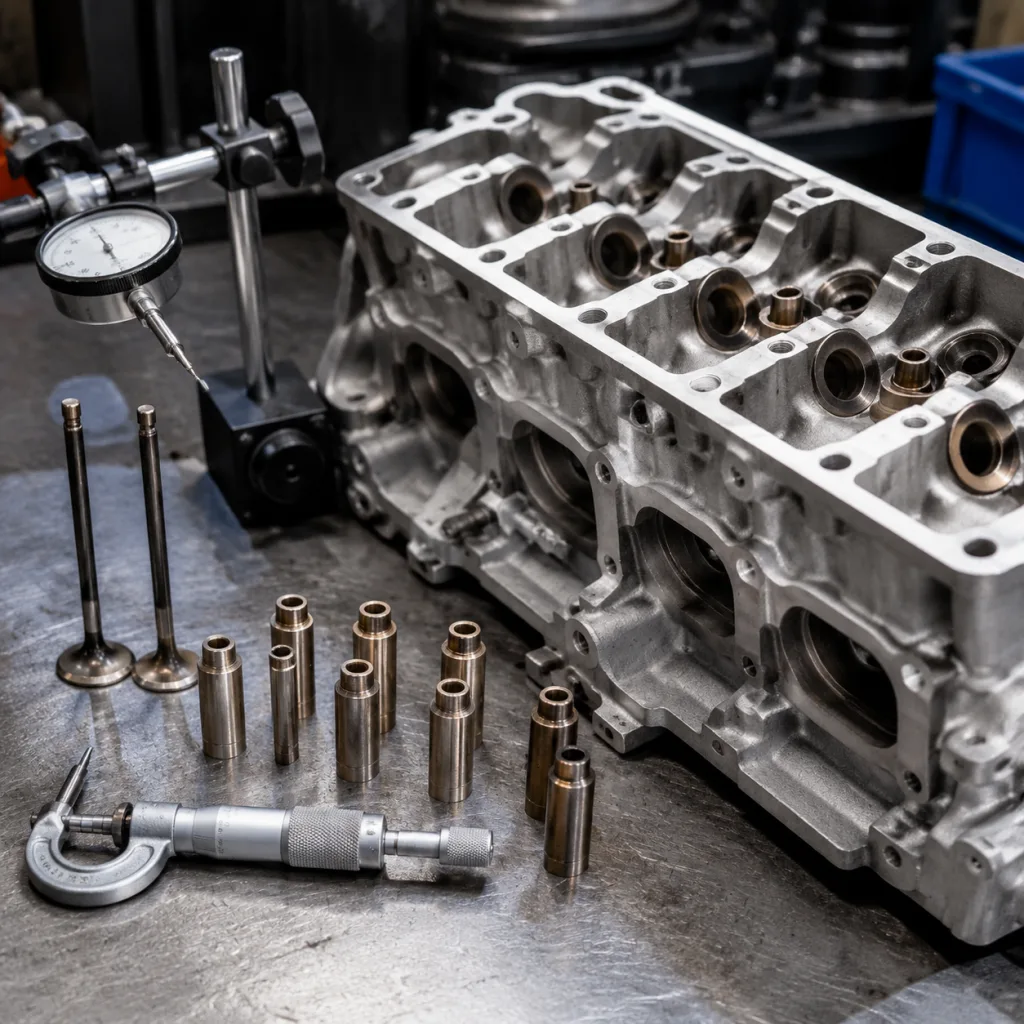
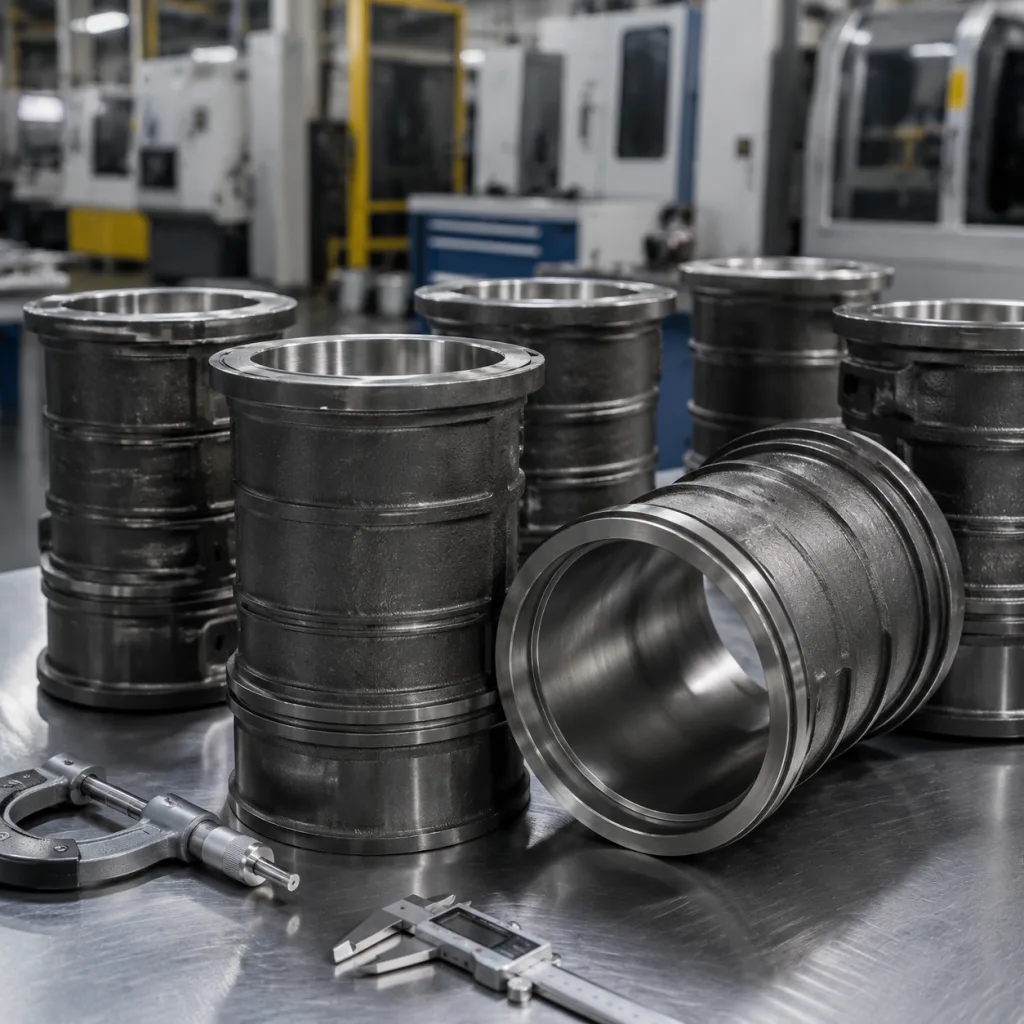
Dimensional stability: hub runout, plate thickness, free height, and assembly stack-up tolerance with recorded inspection limits
Documentation: first-article report, material certificates, lot traceability, and carton labelling format tied to the part number revision
Trade readiness: incoterms, carton count, palletisation, lead-time commitment, and re-order protection for repeat programme volumes
A capable supplier should connect each kit to a controlled part number and provide revision history when specifications change. For buyers managing multiple markets, that traceability can matter as much as the unit price. A practical buyer-level target is to request confirmation that critical dimensions are held within the drawing tolerance, with no unscheduled process changes between sample and mass production.
Typical clutch kit build and key specs
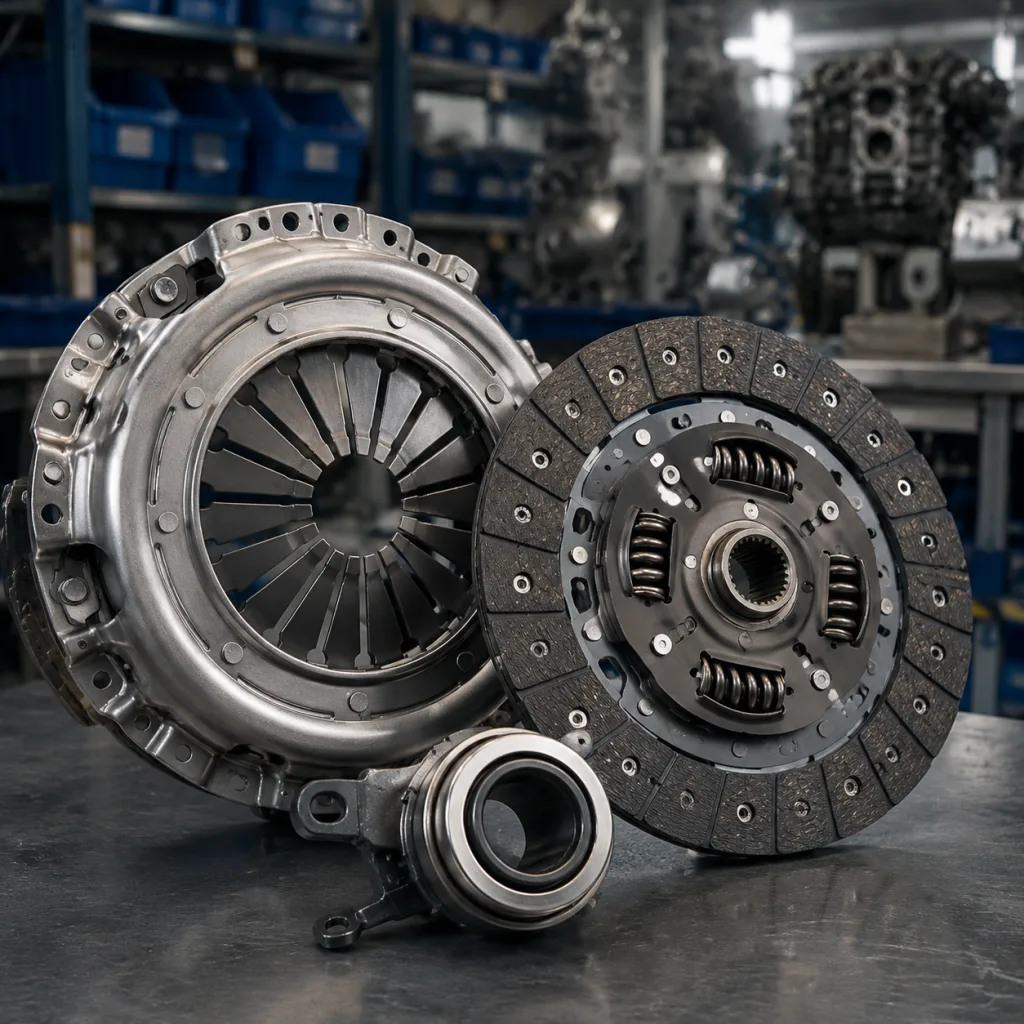
A mini clutch kit normally includes a pressure plate, driven disc, release hardware, and related fasteners or alignment parts where the application requires them. For procurement teams, the useful comparison is the specification envelope rather than the brand label.
Item
Common control point
Buyer check
Driven disc OD
application-specific, often controlled within ±0.2 mm on the finished part
Match OE or approved sample
Hub spline
count and major diameter, commonly held to drawing tolerance and gauge fit
Verify with transmission input shaft
Friction material
organic, semi-metallic, or aramid blend with declared coefficient range
Confirm temperature and wear target
Cover assembly
clamp load and spring rate, with test data at stated deflection points
Review test data, not brochure claims
Runout
controlled during assembly, typically measured at the friction face
Require inspection record
Packaging
moisture and corrosion protection, with export carton drop resistance as specified
Inspect export pack spec
</tr></thead><tbody> </tbody></table>Where relevant, ask for validation against published standards such as IATF 16949:2016, ISO 9001:2015, REACH (EC) No 1907/2006, and any customer-specific endurance programme. For parts that are intended for mini and small-displacement applications, it is reasonable to request a sample pack that includes measured disc thickness, hub spline gauge result, cover clamp-load test summary, and final runout values from the same lot. If your catalogue includes adjacent powertrain parts, you can also review our catalog for related lines.
MOQ, lead time, and sourcing terms
Supplier selection often comes down to supply discipline. A reliable factory should state minimum order quantity, sample lead time, production lead time, and packaging options before the first trial order.
For import managers, these are the questions that reduce risk:
1. What is the MOQ by part number or by model family? 2. How long does first-sample approval take? 3. Can the plant hold safety stock for repeat orders? 4. Which documents ship with each batch? 5. What is the process for engineering change control?
For catalogue buyers and distributors, stable replenishment is usually more valuable than a one-off low quote. As a practical sourcing benchmark, many programmes are easier to manage when the supplier can support sample lead time of about 7-15 days, trial production lead time of about 25-35 days after sample approval, and repeat orders in the 30-45 day range depending on order size and packaging complexity. MOQ should be quoted per SKU, not only per family; if a supplier can consolidate variants, ask for tiered pricing at 300-500 pcs, 1,000 pcs, and 3,000+ pcs so you can compare landed cost rather than unit price alone. If you need multiple clutch kit variants under one sourcing programme, ask for a split by annual volume, target forecast, and packing format. Driventus also supports custom manufacturing for buyers needing non-standard hub dimensions, private label packaging, or consolidated export packing.
How we control quality and fitment
Quality control should be visible at the part level. Our quality system is built around incoming inspection, in-process checks, and final release documentation.
Key controls include:
Incoming verification of friction material, steel stampings, and spring components against purchase specifications and lot numbers
Dimensional checks for disc thickness, spline fit, and assembly concentricity, with critical dimensions recorded against the drawing revision
Torque and clamp-related checks during cover assembly, including spring force verification at defined compression points
Batch traceability through lot coding and inspection records, with retention of the production lot and test status
Final visual inspection for corrosion, damage, packaging defects, and label accuracy before carton sealing
Where a buyer needs OE cross-reference support, part numbers should be listed clearly in the form of a matching reference, for example OE 06A107065 when the application data already uses that convention. Driventus does not claim vehicle manufacturer approval or endorsement; fitment references are used for identification only. For an actionable approval process, we can review a customer sample, confirm spline and OD measurements, and then quote a controlled sample run before production release.
When to choose Driventus for export supply
Driventus fits buyers who need a production partner rather than a trading layer. That distinction matters when your team is comparing suppliers across the EU, UK, US, Canada, Australia, and Brazil.
Choose us when you need:
Controlled manufacturing from a vertically integrated plant in Taizhou
Export documentation suitable for customs and distributor onboarding
Repeatable batches for aftermarket networks and multi-location repair groups
Engineering support for sample approval and pack customisation
Alignment with formal quality requirements, including IATF 16949:2016 and ISO 9001:2015
For buyers, this usually means a clearer commercial structure: quoted MOQ by SKU, sample charge if required, lead time tied to a confirmed forecast, and a packaging spec that defines inner box count, master carton count, desiccant or anti-rust protection, and pallet height limit. If your programme also covers neighbouring engine and drivetrain items, you can extend the sourcing scope through our catalog or the engine family overview at /products/engine-components.html.
RFQ checklist for faster approval
Use a disciplined RFQ to avoid back-and-forth on fitment.
Vehicle or engine application, plus year range
OE cross-reference, if available
Disc OD, spline count, and cover pattern
Required annual volume and target MOQ
Packaging format, labelling, and pallet requirements
Destination country and preferred Incoterms
Required documents: test report, inspection record, and origin paperwork
If your team already has a drawing, sample, or failed part, send it with the enquiry. That shortens validation and helps the factory confirm whether the request is a direct replacement or a custom build. For the fastest response, request a quote with the application data and target order volume. To move from RFQ to approval efficiently, include a target price band, desired first shipment date, and whether you want standard packaging or private label so the supplier can quote the correct process route the first time.
Frequently asked questions
Yes. We can support private label packaging, label formats, and carton artwork when the order volume and compliance requirements are confirmed during quoting.
Yes, when the application data is clear. We verify the fitment reference against dimensions, spline details, and assembly configuration before sample release.
Typical documents include packing list, commercial invoice, and batch inspection records. Additional documents can be arranged based on destination and customer requirements.
If you are qualifying a new supplier or consolidating a clutch programme, send the application data and target volume through /contact.html and we will review the fitment path.