Clutch Kit Mazda Wholesale: Sourcing Guide for Buyers
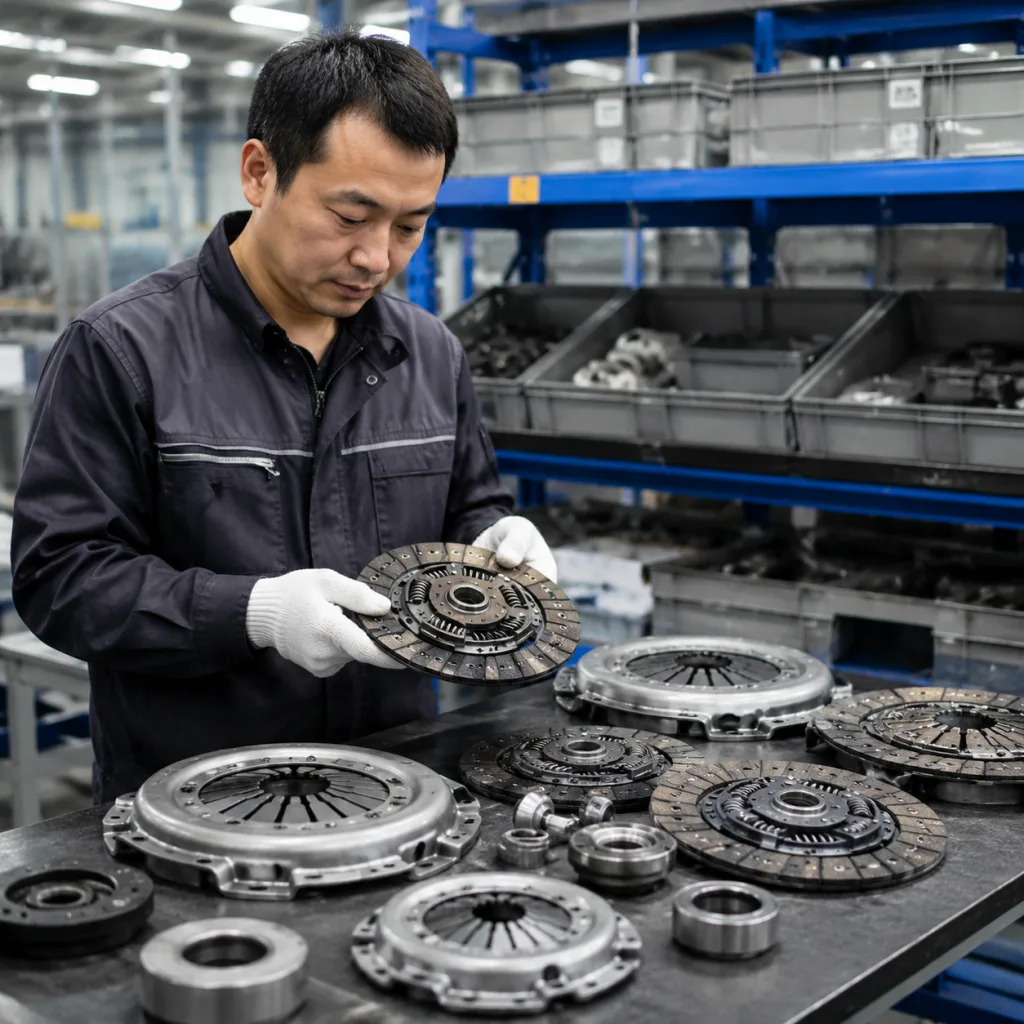
Buying clutch kits for Mazda applications at wholesale level is less about finding a part and more about controlling fitment risk, batch consistency, and supply timing. Procurement teams need dimensions, traceability, and repeatability—not broad promises. For distributors, repair chains, and export importers, the real question is whether the kit matches OE geometry, whether the supplier can hold tolerances from lot to lot, and whether the paperwork will clear customs without delay. Driventus is an independent aftermarket manufacturer; brand names are referenced for fitment only. Our production base in Taizhou serves B2B buyers across 60+ export markets, with IATF 16949:2016 and ISO 9001:2015 systems in place. This guide shows what to verify before placing a wholesale order, which specs matter most, and how to compare suppliers when buying clutch kit Mazda wholesale for different Mazda platforms.
Start with fitment control, not the part number
The fastest way to avoid returns is to verify fitment from the hardware outward. A part number is useful, but it is not enough on its own. Mazda programmes can change by engine code, gearbox family, and transmission variant even when the vehicle name looks identical.
Before approving a PO, ask for:
- OE cross-reference
- Vehicle application by engine code and transmission type
- Disc diameter and spline details
- Pressure plate cover size and clamp-force range
- Hub offset and stack height
- Release bearing type, inner diameter, and overall height
- Packaging quantity and carton dimensions
- Country-of-origin marking and export documents
For a wholesale buyer, the key is dimensional confirmation. A credible supplier should provide a controlled sheet with measured values, not a catalogue description. Typical checks include disc OD within ±0.5 mm, hub runout held to a defined inspection limit, spline fit matched to the OE profile, and cover flatness controlled to the supplier’s standard. If those numbers are missing, the risk shifts to your warehouse and your installer network.
For adjacent product sourcing, see our catalog and the engine-side range in engine components.
Why certification is a filter, not a finish line
Certification matters because it tells you the factory has process control. It does not prove every shipment is perfect. For clutch kit Mazda wholesale programmes, IATF 16949:2016 and ISO 9001:2015 are useful because they support traceability, corrective action, and repeatable inspection discipline.
A serious supplier review should cover:
1. Incoming checks for steel, friction lining, diaphragm spring steel, and rivets 2. In-process control on hub runout, rivet depth, and cover flatness 3. Final checks for engagement feel, torque transfer, and release consistency 4. Batch traceability to material lots and assembly records 5. Retained reference samples for claim analysis
Ask how critical dimensions are controlled and how often gauges are calibrated. If the factory cannot explain its control plan, you are not buying a validated component—you are buying a description of one. For buyers that need audit support, Driventus documents its quality system. Driventus is an independent aftermarket manufacturer; brand names are referenced for fitment only.
Spec differences that decide field performance
Two clutch kits can look similar on a quote sheet and perform very differently in the field. The differences usually come from friction material, spring rate, machining accuracy, and the release bearing stack height. Mazda applications are especially sensitive to exact hardware because the same badge may hide multiple drivetrain combinations.
| Spec item | What to confirm | Why it matters |
|---|---|---|
| Disc diameter | OE dimension in mm, typically controlled within ±0.5 mm | Affects torque capacity and pedal feel |
| Spline count | Input shaft profile and tooth form | Prevents installation failure |
| Hub style | Spring-centred or rigid, plus damper travel | Impacts NVH and drivability |
| Cover load | OE-equivalent clamp-force range | Protects release system life |
| Surface finish | Flywheel and pressure face Ra | Influences break-in and chatter |
| Kit contents | Disc, cover, bearing, alignment tool, hardware if specified | Avoids incomplete deliveries |
| Bearing height | OEM stack height and contact face | Prevents drag or incomplete release |
| Rivet depth | Print and pull-through requirement | Affects lining retention |