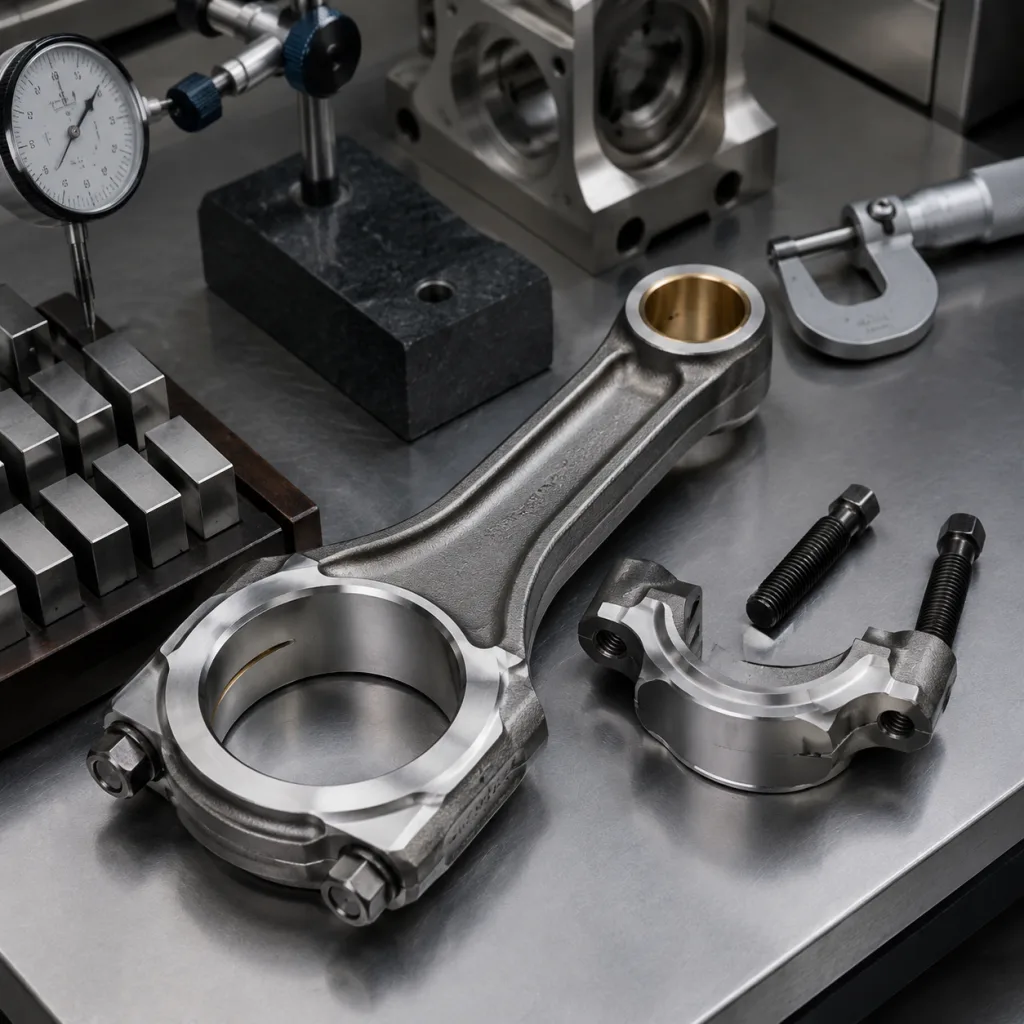
When buyers look for a clutch kit Mazda OE equivalent, the real issue is not the brand on the box. It is whether the replacement kit can match OE function, fit and service life closely enough for the vehicle parc and duty cycle it is meant to serve. For distributors, repair networks and private-label programmes, that means checking dimensional accuracy, clamp load, friction material stability, release system compatibility and batch consistency.
A clutch kit marketed as OE-equivalent should be validated against the original application drawing set or a verified production sample, then held under a documented quality process. Buyers should also confirm traceability, corrosion protection, packaging integrity and regional compliance requirements. This article covers the practical checkpoints procurement teams can use when reviewing Mazda clutch kit replacements for aftermarket supply, including what to ask the manufacturer before approving a sourcing programme.
Because Mazda applications vary by engine output, gearbox family, production year and market, any OE-equivalent review needs to be reference-specific. A 1.5L passenger car used mostly in urban traffic may require a different friction and damper setup than a higher-torque diesel or light commercial version, even when catalogue data looks similar at first glance. Good sourcing decisions combine catalogue mapping with technical evidence, process control and clear change-management rules.
Driventus is an independent aftermarket manufacturer; brand names are referenced for fitment only.
What OE-equivalent means for a Mazda clutch kit
For replacement programmes, OE-equivalent does not mean the part comes from the same source as the original. It means the kit is engineered to suit the intended application in the areas that matter most for installation and service performance.
For a clutch kit, buyers typically need alignment in these areas:
Cover assembly dimensions: bolt pattern, cover height, diaphragm spring geometry, locating features
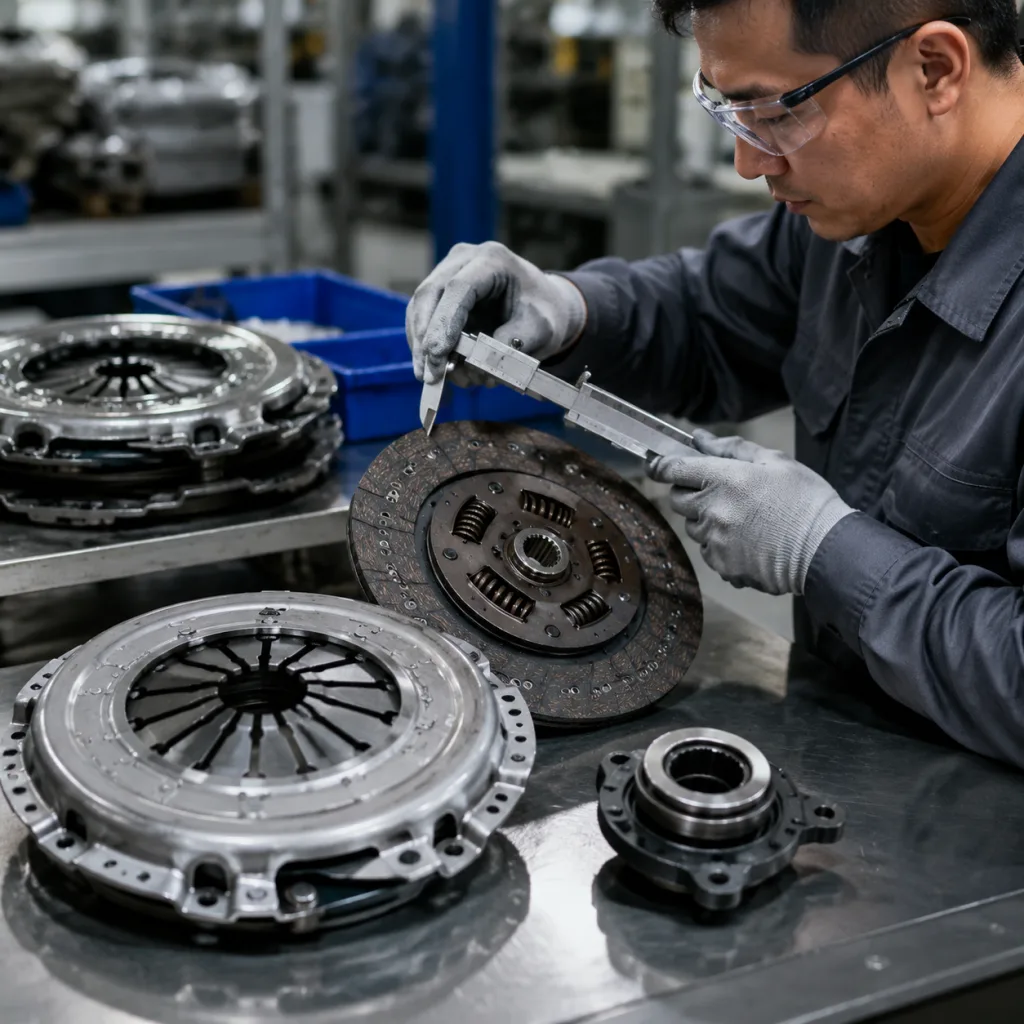
A capable supplier should be able to show how the replacement was benchmarked. In practice, that may include reverse engineering from OE samples, checking critical-to-fit dimensions on CMM equipment, and validating clamp load and disc runout on dedicated fixtures.
For Mazda references, OE-equivalent also needs to account for differences across model lines such as compact passenger cars, crossovers and light commercial vehicles. Even when disc diameter appears to match, there can still be important differences in hub depth, damper calibration, release bearing height or pressure plate characteristics. That is why buyers should be cautious with any “one-size-fits-many” kit unless the supplier can prove interchangeability.
A practical definition for procurement teams is simple: an OE-equivalent clutch kit should install without modification, release correctly within the original operating window, transmit the expected torque without abnormal slip, and deliver predictable wear life under the intended duty cycle. If one of those points is unsupported by data, the programme is still unverified.
In sourcing discussions, three direct questions usually reveal a lot:
1. What OE sample, drawing or validated benchmark was used? 2. Which dimensions and performance parameters are treated as critical? 3. How are those parameters controlled from batch to batch?
For teams managing multiple references, it is also worth confirming whether the supplier can support custom manufacturing for private-label packaging, kit-content changes or market-specific specifications. That may include adding or removing release components, supplying pilot bearings where relevant, or adapting packaging for regional distribution while keeping traceability intact.
Key technical checks before approving a replacement kit
A clutch kit review should go well beyond a catalogue match. The comparison points below form a solid minimum screen for an OE-equivalent programme.
Check item
What to verify
Why it matters
Disc outer diameter
Nominal diameter and tolerance
Affects fitment, contact area and torque transmission
Spline profile
Tooth count, major/minor diameter, hub fit
Prevents input shaft installation issues
Installed height
Cover and disc stack dimensions
Influences release travel and pedal feel
Clamp load
Tested load range at defined deflection
Too low causes slip; too high affects driveability
Disc runout
Axial runout control after assembly
Reduces judder and engagement vibration
Friction facings
Material type, bonding/riveting method
Determines heat stability and wear behaviour
Damper springs
Spring rate and retention design
Affects noise, vibration and torsional compliance
Release bearing
Bearing type, grease specification, seal design
Supports durability and noise control
Surface protection
Phosphate, oiling or equivalent coating
Limits corrosion during storage and transit
Traceability
Batch code on cover/disc/box
Supports claim handling and containment
</tr></thead><tbody> </tbody></table>These checks need to be read together, not one by one. A disc may match diameter and spline count on paper yet still create installation or drivability issues if hub offset, marcel height or assembled stack dimensions drift out of range. In the same way, a cover assembly may pass static dimensional inspection and still perform poorly if clamp load consistency is weak or diaphragm spring heat treatment is unstable.
Documents buyers should request
Application list with vehicle coverage and transmission pairing
Dimensional inspection report for critical features
Clamp load and release point test data
Disc balance or runout report
Material declaration where required for regional compliance
Packaging specification and corrosion protection details
Beyond the basic file set, buyers should ask for the acceptance criteria behind each report. A document becomes far more useful when it shows nominal values, tolerances, sample size, measurement method and pass/fail judgment. That makes it easier to compare the supplier’s internal controls with your own approval standard.
Practical review points by component
1. Clutch disc
Look beyond diameter and spline count. Review:
Hub offset and total hub depth
Spline lead-in quality and burr control
Facing thickness uniformity
Marcel configuration and resilience
Torsion damper spring arrangement and retention
Rivet setting consistency and head profile
These details shape installation effort, engagement smoothness and torsional behaviour. Small deviations here can turn into field complaints that are hard to diagnose later.
2. Pressure plate cover assembly
For the cover, focus on:
Mounting pattern and locating feature accuracy
Overall cover height and installed height
Pressure ring flatness
Diaphragm spring finger height consistency
Clamp load at defined test deflection
Surface finish and corrosion protection
In Mazda applications with narrow release windows, finger height variation can influence pedal feel, disengagement point and release bearing contact quality.
3. Release bearing or concentric release component
Where included in the kit, verify:
Bearing envelope dimensions
Contact profile with diaphragm fingers
Internal lubrication specification
Seal integrity
Rotation noise control
Guide interface and travel compatibility
A weak release component can undermine an otherwise acceptable disc-and-cover set, so it should not be treated as a minor add-on.
Questions to raise during sample approval
Was the sample built with production tooling or prototype tooling?
Are the submitted parts from the same line planned for mass production?
Which parameters are checked 100%, and which are checked by sampling?
What is the control plan for clamp load, runout and finger height?
How are mixed-reference packaging errors prevented during kit assembly?
If the supplier operates under IATF 16949:2016 and ISO 9001:2015, ask how incoming steel, friction facings, springs and bearings are controlled, and how non-conforming batches are segregated. Certification helps, but it does not replace process discipline. In B2B sourcing, the strongest approvals are the ones that can still be defended six months later with the same data structure, the same inspection logic and the same batch traceability.
Materials and validation data that indicate a stable supply programme
The quality of an OE-equivalent clutch kit depends heavily on material choice and process repeatability. General claims are not enough here; buyers should ask specific, technical questions.
Friction material and torque stability
For disc facings, check whether the compound is suited to the target use case: passenger car urban driving, mixed highway duty or light commercial operation. The material should maintain stable friction characteristics across normal operating temperatures and resist fade under repeated engagement. The supplier should also control facing thickness variation and rivet setting force.
Buyers should ask how the friction material has been validated:
Static and dynamic friction behaviour across the temperature range
Recovery after thermal loading
Wear rate under repeated engagement cycles
Resistance to glazing or hot spotting
Facing compressibility and its effect on engagement feel
Where a Mazda reference is used in taxi fleets, stop-start traffic or delivery service, thermal stability becomes especially important. A material that performs adequately in light private use may still generate premature wear or slip complaints in high-frequency engagement conditions.
Cover and diaphragm spring consistency
The pressure plate cover assembly has to hold clamp load within a defined production window. That requires stable spring steel properties, controlled heat treatment and verification during assembly. Ask for the clamp load test method and whether sampling is batch-based or 100% for key parameters.
Important supporting questions include:
What steel grade is used for the diaphragm spring?
How is heat treatment validated and recorded?
What is the acceptable clamp load range at the specified deflection?
Is finger height measured after final assembly?
How are spring characteristic drifts identified between batches?
If the supplier cannot explain these controls clearly, long-term consistency may be weaker than the initial sample suggests.
Bearing and grease selection
Release bearing complaints are often caused by grease breakdown, seal failure or raceway finish issues rather than major dimensional errors. For export markets, storage stability and transit protection also matter. Packaging should guard against moisture ingress and impact damage.
Buyers should request detail on:
Bearing source and qualification standard
Grease type and temperature suitability
Seal design and contamination resistance
Noise and smoothness testing method
Shelf-life assumptions under warehouse conditions
This is especially relevant for distributors that may hold stock for long periods before sale. A bearing can be dimensionally correct and still create noise claims if storage protection is poor.
Damper system materials and wear points
An OE-equivalent Mazda clutch disc should also be reviewed for damper durability, not just torque capacity. The hub, side plates, spring windows and friction washers should be made and assembled so torsional compliance remains stable in service.
Review points include:
Spring material and spring rate consistency
Pocket wear resistance
Retainer design
Friction washer material
Side plate hardness and wear behaviour
These details affect rattle control, torsional vibration isolation and long-term drivability.
Validation evidence that buyers should expect
A stable supply programme usually comes with more than a single sample report. Buyers should expect a validation package that may include:
Dimensional comparison against OE benchmark or approved drawing
Clamp load test records
Runout and balance reports
Durability or cycle-test summary
Salt spray or corrosion-resistance data where relevant to finish claims
Packaging drop or transit-protection checks for export programmes
Process flow and control plan for critical steps
The exact format may vary, but the key question is whether the supplier can tie product claims to measurable evidence.
Compliance considerations
For EU and UK programmes, buyers may ask for declarations aligned with REACH (EC) No 1907/2006 where applicable to substance communication in articles and packaging. If wood packaging is used for bulk export, confirm the relevant phytosanitary controls for the destination market.
Depending on destination, buyers may also want confirmation of labelling content, carton marking consistency and any customer-specific restricted substance requirements. Compliance is part of programme stability, because missing declarations or inconsistent packaging data can delay customs clearance or create audit issues downstream.
A credible manufacturer should connect product validation to its quality system, rather than treat testing as a one-time exercise. The strongest suppliers can show how material approval, line control, periodic revalidation and engineering change review all support continued OE-equivalent performance after launch, not just at quotation stage.
Common fitment and field issues in aftermarket clutch kits
Even when the application listing is correct, field claims can still come from small but avoidable deviations in production control.
Typical issues buyers should monitor
Judder on take-up: may relate to disc runout, uneven facing thickness, contamination or flywheel condition
Slip under load: may indicate low clamp load, incorrect facing specification or installation mismatch
Release noise: often linked to bearing quality, lubrication control or misalignment
Difficult gear engagement: can come from incorrect stack height, incomplete release or spline fit problems
Short service life: may point to damper spring wear, facing heat damage or inconsistent riveting
Each symptom needs to be broken down carefully during supplier review, because the same complaint can have more than one root cause.
Judder and harsh engagement
Judder complaints are frequently associated with:
Excessive disc axial runout
Uneven friction facing thickness
Pressure ring surface inconsistency
Warped mating surfaces after poor storage or handling
Incorrect marcel characteristics
Contaminated flywheel or pressure surface during installation
For buyers, the key question is whether the supplier has preventive controls for disc flatness, facing thickness and final assembly runout. Without those controls, judder risk may stay elevated even if incoming components appear acceptable one by one.
Slip and low torque transmission
Slip under load can result from:
Clamp load below target
Friction material not suited to the application duty cycle
Incorrect pressure plate geometry
Misapplied reference in the catalogue
Use on a worn or heat-damaged flywheel
For fleet and workshop-group programmes, it helps if the supplier can separate product-caused slip from installation-caused slip through returned-part analysis. That reduces the chance of endless claim loops between distributor, installer and end user.
Release complaints and gear selection issues
Difficulty selecting gears, dragging on release or abnormal pedal behaviour can come from:
Incorrect installed height
Bearing travel mismatch
Diaphragm finger height variation
Hub interference on input shaft splines
Release system wear elsewhere in the vehicle
That is why sample review should include assembled stack measurements and release-function checks, not just loose-part dimensions.
Noise, rattle and premature wear
Noise-related field issues may include bearing whine, spring rattle or inconsistent engagement sound. These often trace back to:
Low bearing quality or grease failure
Weak damper spring retention
Excessive clearances in the hub assembly
Inadequate rivet setting consistency
Poor storage conditions leading to corrosion or contamination
Some noise complaints are vehicle-system related, but a disciplined supplier should still be able to inspect returned parts and determine whether wear patterns are normal, abusive or product-related.
Not every claim points to a product defect. The supplier should define installation prerequisites such as flywheel inspection limits, release system checks and torque procedures for cover bolts. For larger accounts, it is helpful when the manufacturer can support claim analysis with returned-part inspection, dimensional verification and basic root-cause reporting.
What buyers should ask about warranty feedback loops
A strong aftermarket programme involves more than shipping product and issuing invoices. Buyers should ask:
How are returned parts logged by batch and failure mode?
Is there a standard inspection checklist for warranty analysis?
How quickly can containment actions be implemented?
Are corrective actions shared in written 8D-style format or equivalent?
How are design or source changes communicated after a field issue?
Procurement teams should also confirm whether the supplier can maintain kit consistency over time. A low entry price offers limited value if disc facings, springs or bearings change without formal notice. Uncontrolled substitution remains one of the most common hidden risks in aftermarket clutch sourcing, especially when traders rely on multiple outside assemblers.
How B2B buyers should qualify a clutch kit supplier
For importers and distributors, part approval should combine technical review with supply-chain review. A practical qualification checklist includes:
Certified management systems: IATF 16949:2016 and ISO 9001:2015
Defined PPAP-style documentation support where required by the customer
Incoming inspection standards for steel stampings, friction materials and bearings
In-process controls for riveting, balancing, clamp load and final inspection
Traceability from raw material lot to finished kit batch
Clear AQL or agreed outgoing inspection criteria
Stable export packaging for sea freight and warehouse storage
Ability to support private label, barcode and pallet configuration needs
Complaint handling process with containment and corrective action timelines
A manufacturer with integrated machining, stamping or assembly control can usually respond faster to dimensional corrections and packaging changes than a trader coordinating multiple unrelated plants. That matters when buyers need running changes, market-specific labels or bundled release components.
Evaluate the supplier beyond the quotation sheet
A competitive RFQ is only the starting point. Buyers should assess whether the supplier can repeatedly deliver the same clutch kit mazda oe equivalent reference with stable materials, stable performance and stable documentation. Useful review areas include:
Manufacturing footprint and level of in-house process control
Dependence on subcontracted disc, cover or bearing sources
Engineering capability for dimensional review and reference validation
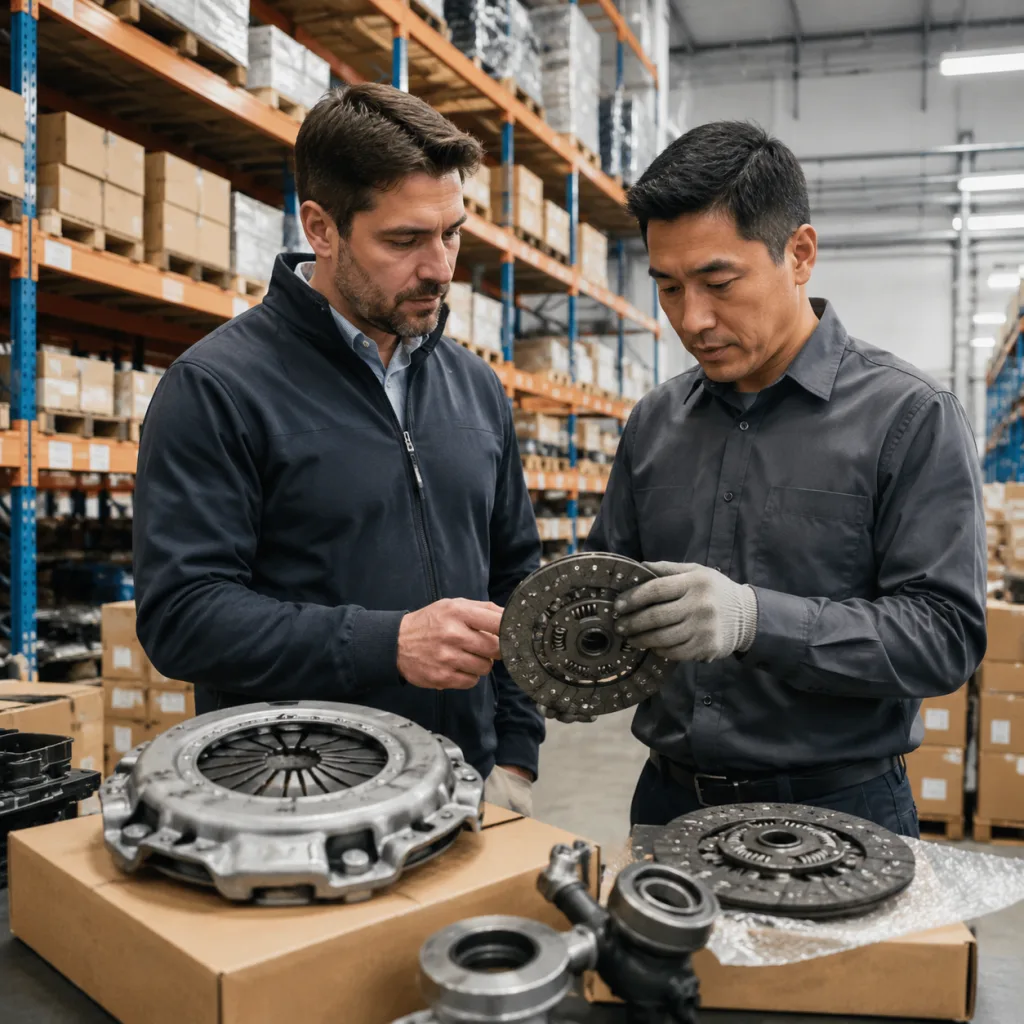
Availability of sample inspection data before bulk order
Capacity planning for seasonal or promotional demand spikes
Export experience to the buyer’s target market
A supplier that cannot clearly map its production chain may struggle to contain quality issues quickly when a field claim appears.
Confirm change-management discipline
For long-term private-label or distribution programmes, engineering change control is critical. Buyers should ask whether the supplier has a formal rule for notifying customers before any of the following are changed:
Friction facing material or source
Bearing supplier or grease specification
Diaphragm spring steel source
Damper spring configuration
Corrosion-protection method
Packaging format that affects storage life or traceability
Without formal notification and approval, buyers may unknowingly receive a product that differs from the approved sample.
Review packaging and logistics readiness
In clutch kits, logistics quality matters because covers, discs and bearings can be affected by shock, moisture or mixed-reference packing errors. A B2B supplier should be able to define:
Individual component protection inside the carton
Anti-corrosion treatment and storage assumptions
Master carton loading quantity
Pallet pattern and stretch-wrap standard
Barcode content and carton label format
Controls for reference segregation during kitting
These details are especially important for sea freight, long warehouse dwell time and multi-country distribution.
Ask for a realistic launch process
Before approving a new supplier, buyers should clarify:
MOQ by reference
Lead time for first samples and repeat orders
Sample approval sequence
Pilot order or trial batch options
Warranty handling method
Documentation included with each shipment
Reorder planning for fast-moving versus slow-moving references
You can review our catalog to compare current product groups, or discuss custom manufacturing if your programme needs unique kit content, packaging or inspection documentation.
For buyers evaluating an RFQ, useful commercial points also include MOQ, lead time by reference family, sample approval process, warranty handling method, and whether replacement kits can be supplied alongside related drivetrain or engine references in the same shipment.
The strongest supplier relationships rest on three things: a technically credible product, a controlled manufacturing system and a transparent commercial process. When those elements are in place, buyers can scale a Mazda clutch programme with lower risk, better claim visibility and more predictable stock performance.
Frequently asked questions
Start with critical fit and function: disc diameter, spline profile, cover geometry, installed height, clamp load and release bearing compatibility. If these are not controlled, the kit may match the catalogue but still perform poorly in service.
No. IATF 16949:2016 and ISO 9001:2015 are useful indicators, but buyers should still review inspection reports, validation data, traceability, packaging standards and claim-handling procedures before approving supply.
Yes, if the manufacturer offers controlled kit assembly, custom packaging, barcode labelling and batch traceability. It is also important to confirm whether any specification or component changes require customer approval before implementation.
If you are qualifying a replacement clutch programme and need dimensional review, validation support or private-label supply, you can request a quote at /contact.html.