Clutch Kit Dodge Supplier: Sourcing Notes for Buyers
Procurement teams sourcing a clutch kit Dodge supplier need more than a price list. They need a source that can hold critical dimensions, verify spline count and hub offset, maintain stable clamp load, trace materials by lot, and repeat the same build after sample approval. A clutch kit has multiple failure-sensitive interfaces: the disc hub must match the transmission input shaft, the pressure plate must release within the target travel window, the release bearing must suit the fork or hydraulic system, and the friction material must match the torque and thermal load of the application.
Driventus supplies clutch kits for aftermarket and B2B channels with production controls aligned to IATF 16949:2016 and ISO 9001:2015. We manufacture engine and powertrain parts in Taizhou, Zhejiang, and export to more than 60 countries. Driventus is an independent aftermarket manufacturer; Dodge and other brand names are referenced for fitment identification only.
For buyers covering fleet repair, wholesale distribution, e-commerce replenishment, or cross-border import programmes, the main sourcing questions are fitment range, MOQ, sample timing, production lead time, packaging, documentation, and validation against OE dimensions. This article sets out the checks to complete before placing a purchase order, including part matching, build materials, factory audit points, testing expectations, and supplier selection criteria for repeat supply.
What buyers should verify before sourcing Dodge clutch kits
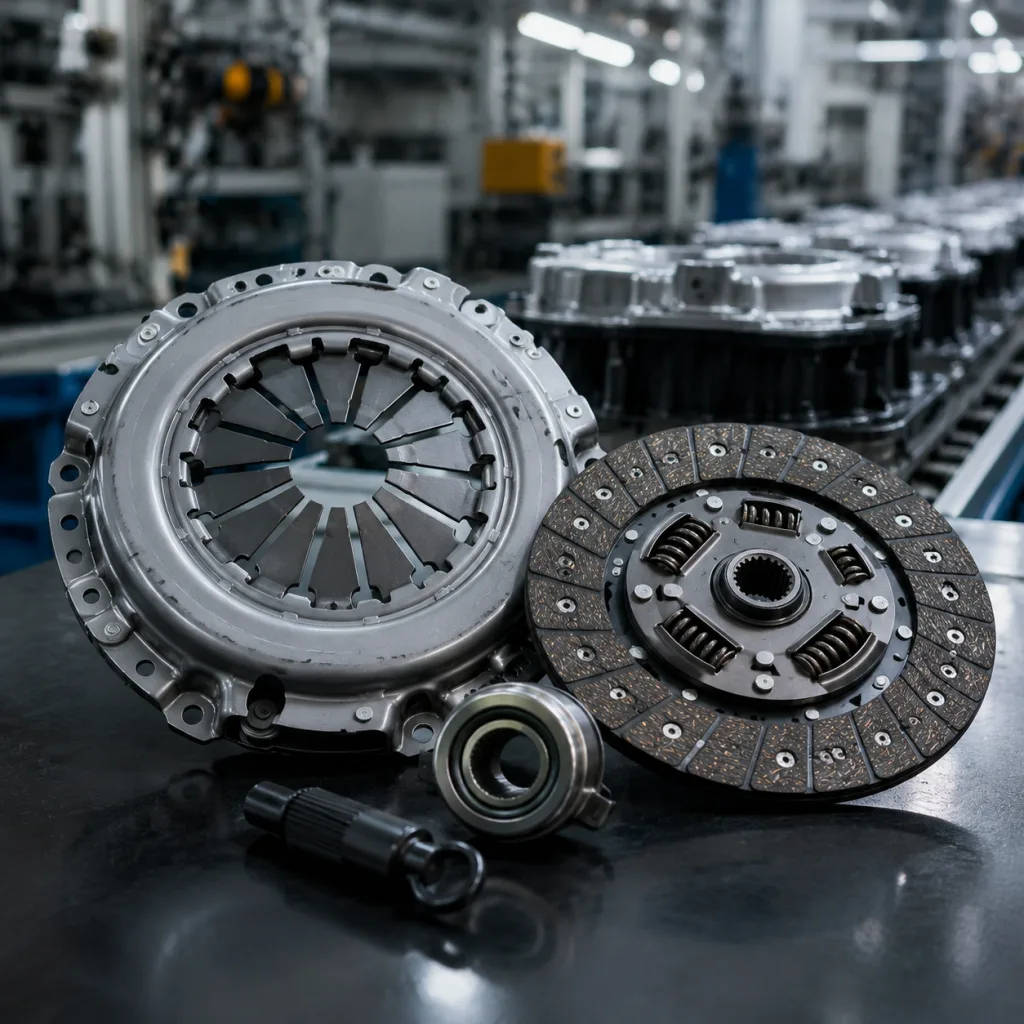
A clutch kit is not a single component, and even small specification mistakes can create major installation problems. For most Dodge applications, the kit includes the clutch disc, pressure plate, release bearing, and in some cases the pilot bearing, alignment tool, bolts, or installation accessories. Procurement teams should confirm the exact bill of materials before requesting samples or comparing quotations, because two suppliers may quote the same application with different included parts.
Start with the vehicle application, not the part number alone. Useful RFQ data includes the model year range, engine displacement, engine code where available, transmission type, flywheel type, disc outside diameter, spline count, and release system design. If your market uses mixed references from North America, Latin America, the Middle East, or Europe, confirm whether the same vehicle name carries the same driveline package in each region.
Core checks for sourcing:
Vehicle platform, production year, and engine code
Manual transmission type and input shaft spline count
Disc outside diameter, hub profile, and hub offset
Pressure plate cover height, bolt pattern, and clamp load range
Release bearing type, height, inner diameter, and contact face
Pilot bearing requirement, if applicable
Flywheel compatibility, including single-mass or dual-mass configuration where relevant
Packaging requirement for retail, workshop, wholesale, or bulk supply
Item
What to confirm
Why it matters
Disc OD
Match to OE sample, drawing, or validated equivalent
Controls friction area and torque capacity
Spline count
Exact fit to the transmission input shaft
Prevents installation failure and hub damage
Hub offset
Correct offset and damper clearance
Avoids interference with flywheel or pressure plate
Friction material
Organic, ceramic, or reinforced composite
Influences wear rate, heat tolerance, and pedal feel
Cover assembly
Bolt pattern, finger height, and installed height
Affects release travel and clutch disengagement
Clamp load
Validated load range for the target application
Supports torque capacity without excessive pedal effort
Release bearing
Inner diameter, height, and contact profile
Prevents noise, drag, and premature wear
Accessories
Pilot bearing, alignment tool, bolts, or clips
Reduces missing-part claims at installation
</tr></thead><tbody> </tbody></table>If your sourcing list includes OE-style or aftermarket cross-references, confirm the full application data rather than relying on the number alone. Cross-reference lists can contain substitutions, supersessions, or market-specific variants. A dependable clutch kit Dodge supplier should be willing to check the physical dimensions, application range, and kit contents before treating a reference as approved for purchase.
Factory capability, certifications, and audit points
For B2B procurement, certification matters only when it reflects real process control. Driventus operates under IATF 16949:2016 and ISO 9001:2015 systems, with traceable incoming inspection, in-process checks, and final inspection records. For clutch kits, that control should cover stamped and machined parts, friction materials, bearings, assembly settings, dynamic balance, packing, and batch traceability.
A supplier audit should look beyond the certificate PDF. Buyers should ask how drawings are controlled, how engineering changes are approved, how inspection gauges are calibrated, and how nonconforming material is segregated from approved stock. For clutch products, rotating parts and release-system interfaces deserve special attention because dimensional drift can cause vibration, hard shifting, incomplete release, or early bearing noise.
A supplier audit for clutch kits should review:
Incoming material control for steel stampings, castings, springs, rivets, and friction facings
Supplier qualification records for friction materials and bearings
Heat treatment records for cover, diaphragm spring, hub, and other load-bearing parts
Riveting, assembly, and pressure plate setting controls
Dynamic balance control for rotating assemblies
Dimensional inspection method, gauge calibration, and sampling frequency
Clamp load and release load verification process
Traceability from raw material batch to finished carton label
Nonconformance handling, containment, root-cause review, and corrective action process
Storage controls for friction materials and corrosion-sensitive components
For EU buyers, request material and compliance support where relevant to the product package, including REACH (EC) No 1907/2006 declarations for restricted substances. For other destination markets, confirm whether the supplier can support certificate of origin, packing list, commercial invoice, HS code review, and any importer-specific documentation. For regional fitment programmes, ask for validation data against the application range you plan to buy, not a generic claim that the part fits a broad model family.
Lead times, MOQ, and export packaging for distribution
A clutch kit Dodge supplier should be able to quote both trial and production terms. Buyers usually want short sample lead times for fitment review, then a stable replenishment window for container planning. The quotation should separate sample availability, tooling or development time if needed, production lead time, packaging lead time, and shipping preparation so the buying team can plan launch dates and replenishment cycles accurately.
Typical sourcing questions:
1. What is the MOQ per part number, per application family, or per shipment? 2. What is the sample lead time for first-off validation? 3. Are existing molds, drawings, and components available, or does the item require development? 4. What is the production lead time after order confirmation and deposit? 5. Can cartons be labelled for warehouse scanning, country-specific language needs, and private label programmes? 6. What packing protection is used for friction surfaces, bearings, machined faces, and pressure plate fingers? 7. Can mixed-SKU orders be consolidated by pallet, carton mark, or purchase order line? 8. What forecast visibility is needed to hold stable replenishment schedules?
For distributors, export packaging should prevent corrosion, cover face damage, bearing contamination, carton collapse, and part mixing. Clutch kits are relatively heavy, so carton strength, inner supports, moisture control, and pallet pattern matter. A low-cost carton can become expensive if it causes crushed covers, damaged facings, unreadable labels, or warehouse relabelling work after arrival.
We can support private label packaging, barcode labels, palletisation plans, carton marking, and mixed-SKU container loading where order quantities justify it. Buyers should share destination market, preferred carton format, label data, pallet size, and any retailer or warehouse routing requirements during RFQ. If your programme includes multiple engine or driveline families, review our catalog and, where relevant, engine components to consolidate freight, reduce vendor management workload, and improve order planning across related product lines.
Validation testing that reduces claims and returns
Procurement teams should ask for validation evidence before approving a new source. For clutch kits, the minimum useful test set includes dimensional inspection, torque transfer review, release travel confirmation, clamp load testing, balance control, and endurance checks. The goal is not only to prove that one sample can be installed, but to confirm that the supplier can repeat the same specification across production batches.
Common validation items:
Static dimensions against OE sample, approved drawing, or verified reference part
Disc outside diameter, thickness, parallelism, and runout measurement
Spline fit, hub movement, and damper spring clearance check
Clamp load verification on the pressure plate
Release load, finger height, and release travel confirmation
Disc burst strength or high-speed integrity testing where applicable
Dynamic balance review for rotating assemblies
Pedal engagement feel and release point review during fitment testing
Thermal endurance, fade resistance, and recovery performance
Corrosion resistance for exposed metal parts and stored inventory
Noise, vibration, and harshness review for bearing and disc operation
Where the end market includes harsh use, towing, stop-start urban driving, high-mileage fleet operation, or hot-climate service, request road-simulated durability data and surface wear evidence. For warranty-sensitive programmes, it is also useful to define acceptable wear pattern, bearing noise threshold, and installation-related exclusion criteria before launch. Clear validation criteria reduce disputes later because the supplier, importer, and distributor are working from the same approval standard.
If your programme needs a non-standard material stack, higher torque capacity, revised damper design, or application-specific kit contents, custom manufacturing can support development subject to engineering review and tooling feasibility. In those cases, buyers should allow additional time for drawing confirmation, sample trials, bench testing, and packaging approval before issuing a volume purchase order.
How Driventus supports B2B purchasing programmes
Driventus supports aftermarket distributors, OEM and Tier-1 supply chains, and multi-location repair groups with repeatable production and export documentation. Our sales process is designed for buyers who need stable specifications, clear communication, and predictable replenishment rather than one-time consumer packaging. For a clutch kit Dodge supplier review, we can work from OE references, sample parts, drawings, application lists, or an existing aftermarket range that needs verification.
What procurement teams can expect:
Technical confirmation against target application data
Review of disc size, spline count, bearing type, and pressure plate specification
MOQ and forecast-based production planning
Sample support for new references and programme expansion
Export documents aligned to destination market needs
Batch traceability and inspection records where required
Packaging options for distributor, private label, and warehouse-controlled supply
Communication on lead time, order status, and specification changes
We are based in Taizhou, Zhejiang, with vertically integrated manufacturing across engine and powertrain components. That structure helps control cost, lead time, and process consistency across related product families. It also gives buyers a practical way to consolidate sourcing for clutch kits, engine components, and other powertrain parts when the purchasing strategy favours fewer qualified vendors.
For a supplier review, compare drawings, samples, carton format, label content, inspection records, and corrective action process before placing a volume order. A structured approval process should include sample inspection, fitment confirmation, packaging review, pilot order feedback, and then production release. If you are consolidating vendors or preparing an audit, you can also review our quality system before the audit stage.
Choosing a supplier for repeat orders
For repeat purchase programmes, the lowest unit price is not the only decision factor. A clutch kit is installed deep inside the driveline, so a defective or mismatched kit creates labour claims, customer dissatisfaction, and return freight that can quickly exceed the saving from a cheaper quotation. Buyers should score suppliers on dimensional repeatability, claim rate, documentation quality, packaging accuracy, and responsiveness during demand swings.
Use this short checklist during RFQ comparison:
Match rate on sample fitment and application coverage
Accuracy of disc diameter, spline count, hub offset, and bearing specification
Batch-to-batch dimensional variation
Availability of inspection records and traceability data
Complaint closure time and quality of corrective action reports
Packing consistency, carton strength, and labelling accuracy
Ability to support forecast releases and mixed-SKU shipments
Engineering response time for cross-reference checks
Willingness to clarify exclusions, supersessions, and regional fitment differences
Commercial stability across repeat orders, not only the first trial order
A dependable clutch kit Dodge supplier should make it easy to move from sample approval to contract supply without changing the specification between orders. The strongest suppliers are clear about what they can produce, which references need confirmation, what lead time is realistic, and how they will respond if a quality issue appears in the field.
Before awarding a programme, ask for a controlled sample, agreed specification sheet, packaging mock-up or carton photo, and written confirmation of the order standard. If you need pricing, sample availability, or a sourcing review, request a quote and include the OE reference, vehicle application, annual volume, destination market, packaging requirement, and any documentation expected by your import or quality team.
Frequently asked questions
Yes. Send the OE reference, vehicle application, model year, engine details, and transmission information. We verify fitment by dimensions, spline count, bearing type, and assembly specification before quoting.
We can provide product specifications, inspection records, and certification references for IATF 16949:2016 and ISO 9001:2015. Market-specific compliance support, export documents, and material declarations are available on request.
Yes. We support branded packaging, barcode labels, carton marking, pallet plans, and distributor-ready packing formats. Custom manufacturing and non-standard kit configurations are available after engineering review.
If you are comparing suppliers for a Dodge clutch kit programme, send your application list, target volume, OE cross-reference, destination market, and packaging requirement for review. Contact us here: /contact.html