clutch kit · 2026-06-05

Clutch Kit Dodge Aftermarket Replacement: Sourcing Guide

Procurement teams sourcing a clutch kit Dodge aftermarket replacement need more than a catalogue match. A reliable buying decision depends on dimensional compatibility, clamp-load range, release travel, friction material selection, and consistent build quality from one production lot to the next. For passenger cars, pickups, and light commercial platforms, the kit has to align with OE-style fitment: spline count, friction diameter, hub offset, release bearing geometry, and flywheel interface all matter. Driventus supplies aftermarket clutch kits for B2B buyers that need repeatable specifications, batch traceability, and export-ready documentation. Driventus is an independent aftermarket manufacturer; brand names are referenced for fitment only. Our production and inspection processes operate under IATF 16949:2016 and ISO 9001:2015, with material and compliance controls that support sourcing programs for the EU, UK, US, Canada, Australia, and Brazil. This article explains what to verify before ordering, how to compare kit content, and which checks matter most when replacing an OE assembly with an aftermarket equivalent.

What a Dodge clutch kit should match in replacement sourcing

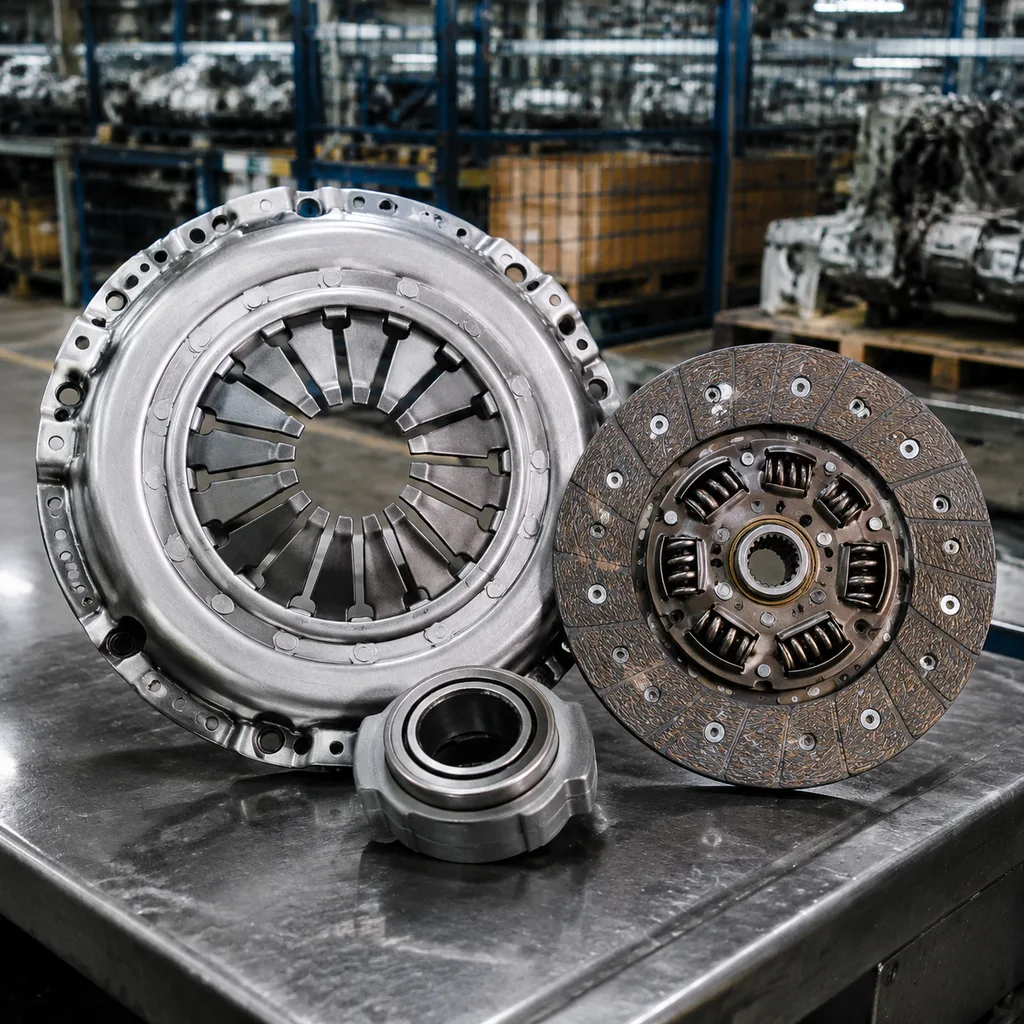
A replacement clutch kit should be treated as a controlled mechanical assembly, not just another catalogue line. For Dodge applications, the first checks are the critical dimensions that determine whether the kit will install correctly and release properly: friction disc outside diameter, input shaft spline count, spline major and minor diameter, hub offset, disc thickness, pressure plate bolt pattern, cover height, diaphragm finger height, and release bearing contact diameter. These values should be compared with the OE sample, the vehicle application data, and the intended flywheel condition.

The friction disc must match the engine and transmission combination closely enough to avoid drivability problems after installation. A disc that looks close but is not equivalent can cause engagement noise, incomplete release, shudder, harsh take-up, or premature lining wear. Procurement teams should confirm whether the disc uses organic, heavy-duty organic, or another friction material, and whether the torsion damper spring layout suits the engine torque curve and duty cycle. Pickup and light commercial applications often need a stronger damper package than passenger car applications, especially where towing, fleet use, or stop-start urban driving is common.

The pressure plate needs the same level of scrutiny. Clamp load, mounting pattern, cover profile, and release travel all affect performance. The goal is not simply more clamp force; it is a balanced specification that holds torque without making pedal effort unacceptable or overloading the hydraulic release system. If the aftermarket pressure plate changes diaphragm geometry or installed height, it can shift the clutch release point and pedal feel even when the kit bolts neatly onto the flywheel.

Release bearing and pilot bearing details also matter. Buyers should confirm whether the kit requires a mechanical release bearing, concentric slave cylinder, pilot bearing, pilot bushing, alignment tool, or fastener set. Small changes in bearing height, face radius, or guide-tube clearance can lead to noise, incomplete release, or repeat warranty claims. For multi-market sourcing, the same Dodge model name may cover different engines, gearboxes, model years, and regional specifications, so fitment should be tied to technical references rather than the vehicle badge alone.

Why OE-equivalent validation matters more than catalogue fitment

Catalogue fitment is a useful starting point, but it does not prove that a clutch kit will perform as an OE-equivalent replacement. Vehicle listings often group applications that appear similar from a sales perspective but differ in flywheel type, transmission input shaft, release system, or torque requirement. A procurement team that approves a clutch kit Dodge aftermarket replacement only by catalogue interchange may discover the gaps later through installer feedback, higher return rates, or inconsistent pedal feel across batches.

OE-equivalent validation links the catalogue reference to measurable product behavior. The supplier should be able to show that the clutch disc, pressure plate, and bearing assembly match the critical dimensions of the original design and meet the functional requirements of the application. This includes engagement quality, torque holding capacity, release travel, burst safety, and resistance to heat-related deformation. Strong sourcing programs usually combine a reference sample, drawing review, dimensional inspection, and performance test data before commercial approval.

Batch consistency matters just as much as first approval. A sample that performs well is not enough if later production changes friction material, spring hardness, diaphragm treatment, bearing supplier, or cover stamping dimensions without proper control. Procurement teams should ask how the supplier manages incoming material inspection, process control, batch coding, and final inspection records. This is especially important for distributors and importers selling across several markets, where one quality issue can affect many installers and customer accounts at once.

OE-equivalent does not mean the aftermarket part must copy every cosmetic detail of the original assembly. It means the replacement kit should install without modification, operate within the expected pedal and release characteristics, and deliver service life appropriate for the application. For B2B buyers, validation helps close the gap between a low unit price and a dependable landed-cost outcome.

Kit content differences that affect landed cost and warranty risk

Two clutch kits with the same application listing may include different components, and those differences can change both landed cost and warranty exposure. A basic kit may contain only the friction disc and pressure plate. A more complete kit may add a release bearing, pilot bearing or bushing, alignment tool, bolts, lubricant sachet, installation notice, and market-specific packaging. Procurement teams should define kit content clearly before comparing quotations, because a lower quoted price may simply reflect fewer included parts.

Release components are a common source of hidden cost. If the release bearing or concentric slave cylinder is not included, installers may reuse worn components or purchase separate parts locally. That can increase warranty risk because clutch failure may be attributed to the kit even when the root cause is a tired bearing, leaking hydraulic part, or incorrect release travel. For applications where the release component is difficult to access after installation, including the correct bearing or hydraulic unit can reduce comeback risk and improve installer confidence.

Packaging also affects landed cost. Export cartons should protect the pressure plate diaphragm fingers, disc hub, and bearing surfaces during ocean freight, inland transport, and warehouse handling. Heavy clutch assemblies can damage each other if separators, inner trays, or reinforced cartons are not specified. For distributors, readable labels, barcodes, application references, and batch codes support warehouse accuracy and after-sales traceability. Poor packaging may look like a small saving at purchase order stage but can become expensive through dents, corrosion, returns, and repacking labor.

Warranty terms should be reviewed alongside kit content. A supplier should define what is covered, what installation evidence is required, and how claims are assessed. Clutch claims often involve installation variables such as flywheel condition, hydraulic system bleeding, oil contamination, driver use, and incorrect application selection. Clear documentation, batch traceability, and defined inspection criteria help separate product issues from installation or vehicle-condition problems.

For procurement teams comparing offers, the practical comparison should include unit price, included components, test evidence, packaging standard, minimum order quantity, lead time, claim handling process, and documentation support. This gives a more accurate view of total sourcing cost than price per kit alone.

Validation tests procurement teams should request

A professional clutch sourcing program should include both dimensional and functional validation. At minimum, procurement teams should request an inspection report covering friction disc diameter, lining thickness, total disc thickness, spline dimensions, hub offset, pressure plate cover height, bolt-hole layout, diaphragm finger height, release bearing dimensions, and relevant runout measurements. These values should be checked against the approved drawing or reference sample, with tolerances agreed before mass production.

Functional testing should include clamp load and release load measurement for the pressure plate. Clamp load confirms that the assembly can hold torque, while release load helps predict pedal effort and compatibility with the vehicle release system. The test should identify the installed height and operating range used, because clamp readings are only meaningful when the test condition matches the application. Where applicable, torque capacity and friction coefficient data help confirm that the selected facing material suits the intended engine output and duty cycle.

Durability testing is important for replacement programs with meaningful volume. Useful checks include engagement cycling, thermal performance, friction material wear assessment, diaphragm fatigue, damper spring durability, and bearing noise or rotation testing. For higher-speed applications, buyers may request burst testing or overspeed safety validation to confirm disc integrity. Not every order needs a full engineering test program, but buyers should understand which tests support the approved product family and which tests are repeated by batch.

Material and compliance documentation should also be part of validation. Depending on the destination market, buyers may request REACH-related declarations, asbestos-free confirmation, material composition statements, friction material information, and supplier quality certificates. Inspection records should be linked to batch numbers so any later issue can be traced to a production lot rather than treated as an unbounded market problem.

Before final approval, sample installation or bench comparison is recommended. The kit should be checked with the target flywheel, release fork or hydraulic bearing, and gearbox input shaft where possible. This step can reveal interference, incorrect bearing height, or unexpected pedal characteristics before inventory is committed.

How Driventus supports replacement programmes

Driventus supports B2B clutch replacement programs with application review, sample development, controlled production, and export-ready documentation. For a clutch kit Dodge aftermarket replacement inquiry, our team reviews the target OE references, vehicle applications, engine and transmission details, annual volume, kit content requirements, and destination market. From there, we can confirm whether an existing specification is suitable or whether a custom configuration is needed.

Our engineering and quality teams focus on the details that affect real-world replacement performance: disc dimensions, spline profile, hub offset, damper design, pressure plate clamp load, diaphragm geometry, release bearing interface, and packaging protection. When buyers provide an OE sample or approved aftermarket reference, we can compare dimensions and functional characteristics before confirming production feasibility. For private-label or distributor programs, we can also support packaging layouts, label requirements, carton specifications, and batch coding.

Production control is built around repeatability. Driventus operates under IATF 16949:2016 and ISO 9001:2015 systems, with inspection and traceability processes designed for aftermarket supply programs. Depending on the order and application, documentation can include dimensional inspection data, batch records, material declarations, compliance support, and test summaries. These records help buyers qualify the product internally and support after-sales investigation if a claim occurs.

We also help procurement teams avoid oversimplified interchange decisions. When a Dodge application has multiple engine, gearbox, flywheel, or release-system variants, we review the fitment data carefully so the approved kit content matches the actual market requirement. This is particularly useful for importers, wholesalers, and regional distributors managing broad catalogues across North America, Latin America, Europe, the UK, Australia, and other replacement markets.

For new programs, the typical process is application data review, technical confirmation, sample or reference comparison, quotation, packaging and documentation alignment, pilot order, and then volume supply. The aim is to give buyers a repeatable clutch kit program that balances price, installation confidence, warranty control, and long-term availability.

Frequently asked questions

Match the disc diameter, spline count, hub offset, release bearing type, and cover height. Catalogue fitment should be confirmed against dimensional data and a reference sample, not vehicle name alone.

Ask for dimensional inspection data, batch traceability, material declarations, and a test summary for clamp load and durability. For regulated markets, request REACH-related documentation where relevant.

Yes. We support custom manufacturing for specific applications, packaging formats, and kit content changes. Send the target OE reference, application list, and annual volume for review.

If you are qualifying a Dodge clutch kit for replacement supply, send the application data and target volumes to our team for review and sampling at /contact.html

Request a Quote