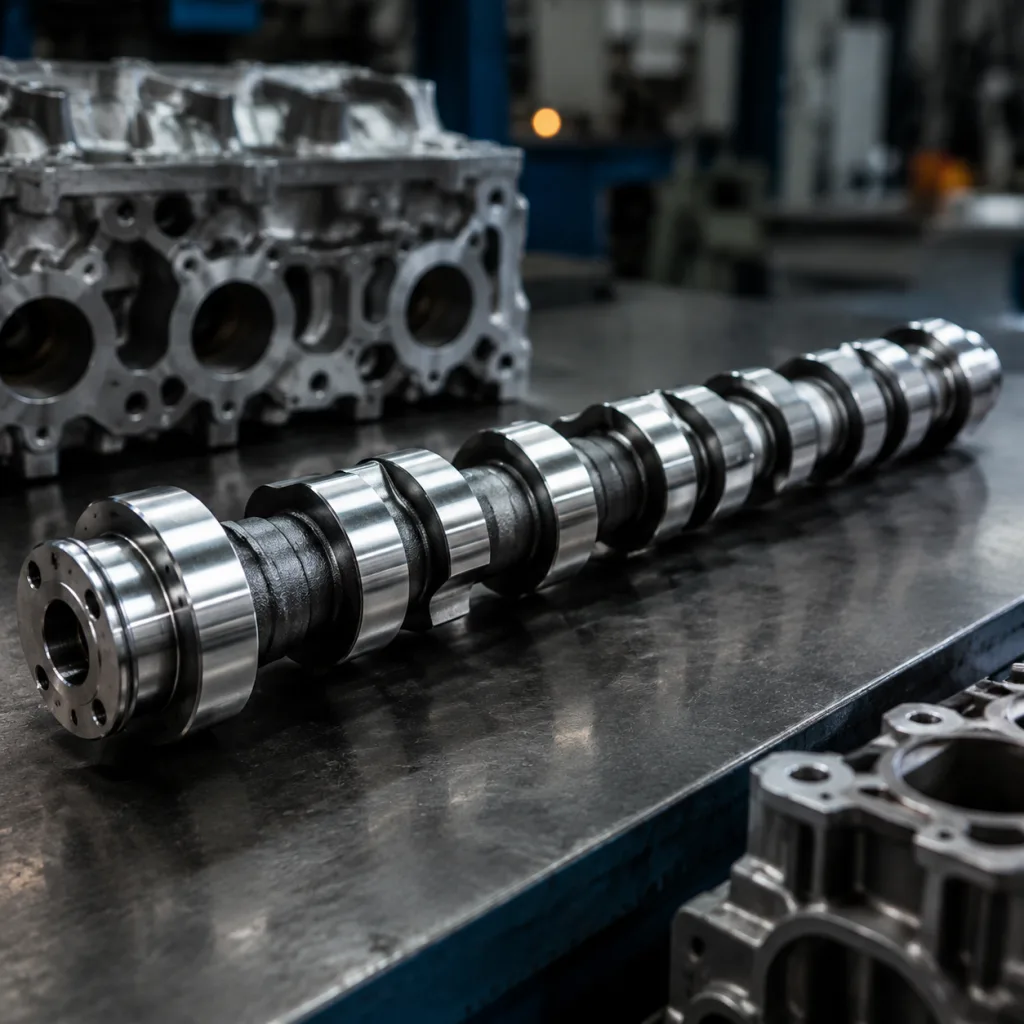
A camshaft BMW OE equivalent cannot be judged by appearance alone. For procurement teams, the real question is whether the replacement camshaft matches the original application’s geometry, material behaviour, surface condition and timing function across the required engine family. Even small differences in lobe lift, base circle, journal diameter or phaser interface can lead to valve-train noise, timing correlation faults, oil-pressure variation or premature wear.
Driventus manufactures camshafts for independent aftermarket and B2B supply programmes, including replacement applications where OE dimensional equivalence is required. Our production is controlled under IATF 16949:2016 and ISO 9001:2015, with inspection records, material traceability and batch-level validation available for buyer review. Driventus is an independent aftermarket manufacturer; brand names are referenced for fitment only. This article explains how importers, distributors and sourcing engineers can assess OE-equivalent BMW camshafts before committing to a purchase order.
Start With the Acceptance Question
For replacement sourcing, the first question is not whether a part fits on the bench. It is whether the camshaft is engineered to meet the original part’s functional requirements for a defined BMW engine application. That is what OE-equivalent should mean in procurement terms.
It does not mean the part is supplied by, approved by or endorsed by BMW. It means the component is designed to operate in the intended cylinder head, valve train and timing system without non-standard modification. If the supplier cannot state the comparison basis clearly, the claim is too vague to approve.
A useful approval file should identify the OEM reference, engine code, model-year range, cylinder-head family, drawing revision and the measurement standard used to confirm equivalence. Without that, the phrase “OE equivalent” has little sourcing value.
Key points to confirm early:
Cam lobe profile, including lift, duration and opening/closing ramps
Base circle diameter and concentricity
Journal diameters, roundness and surface finish
Overall length and axial location
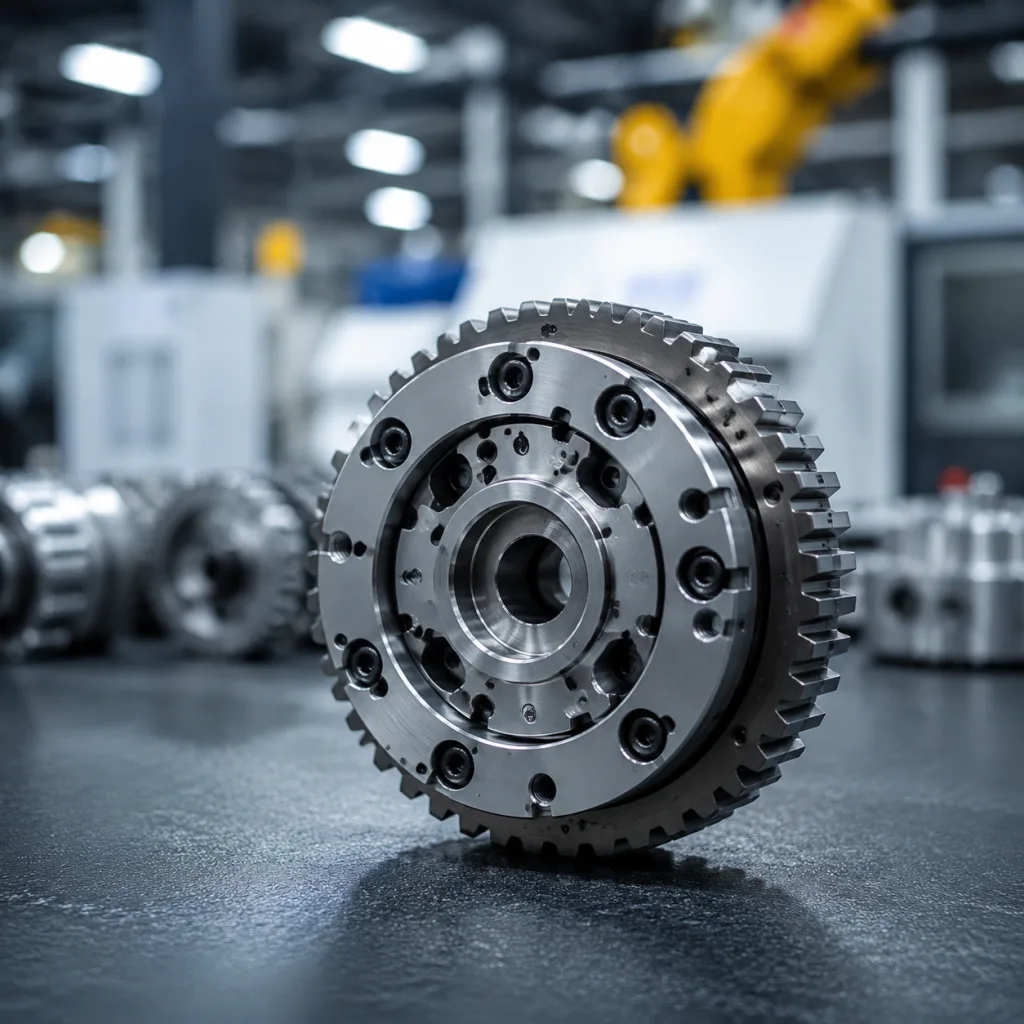
Timing gear, sprocket or phaser interface geometry
Sensor trigger feature position where applicable
Oil feed groove, drilling or lubrication path alignment
Material grade, heat treatment and wear resistance
Packaging protection for transit and storage
For buyers, the evidence should be technical, not promotional. Engineering drawings, master samples, 3D scan data, CMM reports and material certificates help confirm that the part is a dimensional and functional match. Fitment coverage can be reviewed in our catalog, including engine-related replacement components under engine components.
Spec Checks That Decide Fitment
A camshaft is a precision timing component, not just a rotating shaft. That matters most in BMW applications using variable valve timing, where the interface between the camshaft and the timing actuator is critical. If the reference angle is wrong, the ECU may see a correlation fault even when the part installs cleanly.
Procurement teams should ask for measured values, not just declared compatibility. The table below shows the dimensions that usually decide approval.
Feature to check
Why it matters
Typical verification method
Lobe lift and profile
Controls valve opening, airflow and combustion behaviour; profile error can shift valve timing beyond the engine’s tolerance
Cam profile machine or CMM
Journal diameter
Affects oil film, bearing clearance and noise
Micrometre, air gauge, CMM
Journal roundness
Reduces localised wear and oil-pressure loss
Roundness tester
Surface roughness
Influences break-in and long-term wear
Profilometer
Overall length
Controls axial location in the cylinder head
CMM or calibrated height gauge
Thrust face position
Prevents end-float outside design limits
CMM and datum fixture
Phaser/sprocket interface
Maintains valve timing accuracy
Dedicated go/no-go fixture and angular check
Sensor target position
Supports correct ECU signal timing
Optical, CMM or angular fixture inspection
</tr></thead><tbody> </tbody></table>Specifications should name the drawing revision, datum scheme and acceptance method. Where the OE reference is given only as a generic number, the supplier should confirm the exact application scope, engine-code compatibility and inspection basis before quotation. A practical RFQ also requests the report format: sample size, pass/fail limits and whether the plan uses 100% inspection or AQL sampling for critical features.
Material and Heat Treatment: Where Failures Start
BMW engine programs can use different camshaft constructions depending on load, generation and manufacturing strategy. Common routes include chilled cast iron, forged steel and assembled camshaft designs. The correct route depends on the original functional requirement and the economics of the replacement program.
Do not accept “steel quality” or “OEM material” as a full specification. The technical file should identify the material grade, process route, hardness range and surface condition. Relevant checks may include chemical composition testing, hardness testing, metallographic review and surface roughness measurement.
Typical control items:
Material certificate linked to the production batch
Heat treatment or chilling process record
Lobe surface hardness and case depth, if specified
Journal hardness and roughness results
Straightness after machining and heat treatment
Magnetic particle or visual crack inspection where required
Anti-corrosion protection for sea freight and storage
For export markets, buyers may also request material compliance declarations related to REACH (EC) No 1907/2006, particularly where the supply agreement requires substance reporting. This is separate from functional validation but still important for EU and UK import documentation. When a program is price-sensitive, separate base material cost, heat treatment cost and finish-machining cost in the quotation so the buyer can compare landed value instead of only piece price.
A Practical Validation Sequence
A replacement camshaft should be validated at three levels: drawing conformity, assembly compatibility and durability risk. The validation plan varies by volume, application criticality and buyer requirements, but it should be documented before mass production.
For a camshaft BMW OE equivalent program, Driventus typically supports a staged approval path:
1. Fitment confirmation: review the application list, engine code and OE cross-reference mapping. 2. Dimensional approval: run first article inspection with CMM, profile measurement and fixture checks against the agreed drawing or master sample. 3. Material approval: link composition, hardness and process evidence to batch traceability. 4. Functional assembly check: confirm timing interface, phaser or sprocket mounting, sensor feature position and oil passage alignment. 5. Production control plan: define in-process inspection frequency, critical dimension monitoring and non-conforming material handling. 6. Packaging validation: verify corrosion protection, impact resistance and carton or pallet suitability for export routes.
The manufacturing and inspection workflow is managed through our quality system, aligned with IATF 16949:2016 and ISO 9001:2015. These standards define process discipline, traceability and corrective-action expectations; they do not imply approval by any vehicle manufacturer.
For higher-volume programs, timing should also be defined up front. A typical schedule is 2–4 weeks for sample build and dimensional reporting, 1–2 weeks for buyer review after sample receipt, and 4–8 weeks for tooling or line release if the drawing is new. Production lead time after approval is often 30–45 days for standard parts and 45–60 days when new tooling, packaging print or special inspection records are required.
What to Put in the RFQ
A vague enquiry creates avoidable risk. “BMW camshaft” is not enough to prevent fitment errors, wrong timing interfaces or mixed application coverage. The RFQ should give the supplier enough detail to confirm feasibility, tooling, inspection scope and packaging requirements.
Use this checklist when sourcing camshafts for BMW replacement programs:
Target application list by engine family, model year range and market
OE cross-reference format, if available, such as OE 11A…
Required construction type: cast, forged or assembled
Drawing, sample or 3D scan reference for dimensional confirmation
Annual volume forecast and first order quantity
Required packaging: neutral, buyer brand, bulk or export carton
Required documentation: PPAP elements, first article report, material certificate, inspection report, REACH declaration
Marking requirements: batch code, part number, production date or buyer code
Warranty return handling and technical claim procedure
Destination market requirements for labelling and customs documentation
For commercial planning, request three pricing lines: unit price at target volume, MOQ price for the first release and tooling or NRE cost if a new reference is being tooled. Also ask for sample-stage and production-stage lead times so inbound inventory can match launch dates.
For larger programs, custom manufacturing can support buyer-specific drawings, private-label packaging and inspection plans. That is useful when a distributor wants one controlled part family instead of spot purchases from multiple factories.
Failure Modes Buyers Miss
The biggest sourcing risk is not always gross non-fitment. Many camshaft problems show up only after installation or mileage accumulation. Typical examples include lobe wear from inadequate hardness, oil leakage from journal clearance variation, timing faults from incorrect angular indexing and installation rejection due to burrs or poor packaging.
That means the purchase agreement has to do some of the quality work. Critical dimensions, inspection methods, sample status and document requirements should be written down before the order is placed. For repeat orders, batch traceability matters because any field issue needs to be tied back to production date, material lot and inspection records.
Many distributors reduce risk by splitting approval into three commercial stages:
Pilot order to confirm fitment and packaging
Controlled repeat order to confirm process stability
Release order to lock price, lead time and quality plan
Packaging is another common failure point. A camshaft may pass inspection at the factory and still arrive damaged if it moves inside the carton or contacts another metal component during sea freight. Export packing should immobilise the shaft, protect machined surfaces and include corrosion prevention suited to the route and storage time. Specify carton crush resistance, inner protection and whether VCI paper, oil film or sealed wrap is required.
Driventus can supply camshaft replacement programs alongside related engine parts, helping procurement teams consolidate technical review, documentation and shipment planning through one manufacturing source. When buyers share target quantities early, we can usually quote a pilot MOQ, a production MOQ and a lead-time ladder so the commercial terms match the launch plan instead of forcing one blanket price across all order sizes.
Frequently asked questions
No. OE-equivalent means the part is designed and validated to match the functional requirements of the referenced application. Driventus is an independent aftermarket manufacturer; brand names are referenced for fitment only.
Typical documents include first article inspection reports, material certificates, hardness results, cam profile measurements, critical dimension records and batch traceability. For structured programs, buyers may also request selected PPAP elements.
Yes. Depending on application and volume, Driventus can support buyer-specific packaging, marking, documentation and inspection plans for replacement camshaft programs.
If you are evaluating a camshaft BMW OE equivalent programme, send your application list, OE cross-references and volume forecast. Our engineering and export teams can review feasibility and help you [request a quote](/contact.html).