Clutch Kit Dimensions: Specification Guide for Buyers
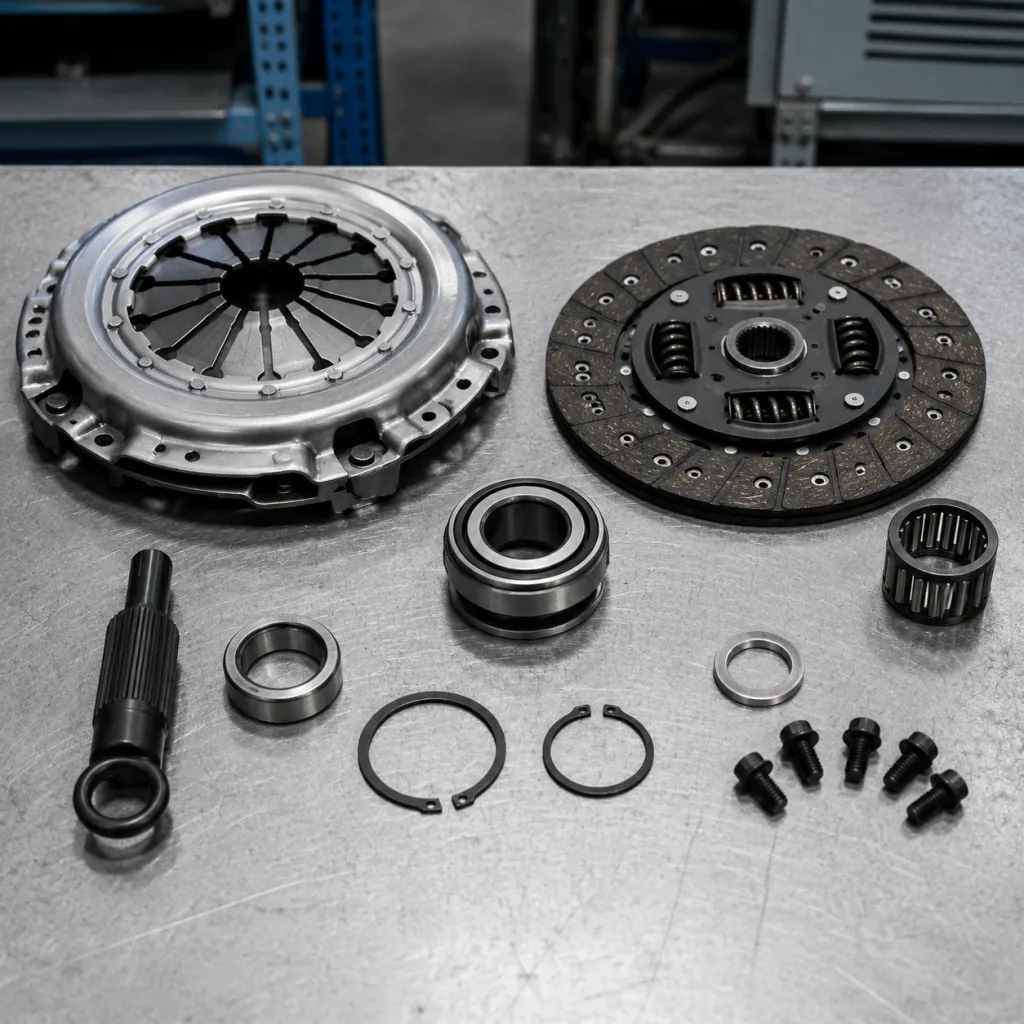
Clutch kit dimensions are not a cosmetic detail; they are a sourcing control point. Buyers use them to confirm OE fit, compare supplier samples, and reduce installation risk in passenger car and light commercial applications. For clutch kits, dimensional control covers the driven plate outer diameter, spline count and major diameter, cover-assembly bolt pattern, release bearing geometry, and assembled stack height, all of which affect pedal feel and disengagement margin. Before the first production order, lock the acceptable tolerance band, sample quantity, MOQ, unit price breaks, and lead-time window so technical approval and commercial approval stay aligned. Driventus is an independent aftermarket manufacturer; brand names are referenced for fitment only. We supply clutch kits under IATF 16949:2016 and ISO 9001:2015 controls, with inspection practices aligned to dimensional traceability and incoming and outgoing verification. If you are building a sourcing file for a distributor programme, workshop network, or private-label range, the right dimensions matter as much as material selection, surface finish, and order economics.
Which dimensions actually decide fit?
When reviewing clutch kit dimensions, focus on the features that control fit, release behavior, and repeatability.
Driven plate outer diameter and thickness
Hub spline count, spline major diameter, and hub offset
Cover assembly bolt-circle diameter and mounting-hole pattern
Release bearing inner and outer diameter, height, and contact-face width
Installed stack height, where OE data provides it
Friction lining outside diameter, lining width, and rivet-head depth
Diaphragm finger height and cover overall height, if the OE drawing lists them
A practical specification sheet should list the vehicle application, OE reference, measured values from a verified sample, and the tolerance basis used for acceptance. For example, many buyers ask suppliers to quote to the OE nominal size with a maximum deviation of ±0.10 mm on critical bore or hub-fit features, ±0.20 mm on non-critical OD features, and a flatness or runout target that matches the approved drawing or sample. If the application is still under validation, ask for sample inspection records, dimensional reports tied to the lot number, and the MOQ that applies if the part becomes a stocked line rather than a one-off buy. For cross-checking, compare the supplier drawing against vehicle service data before placing a production order.
Specification map by component
The table below shows the main points procurement teams should request on a quotation or sample-approval file.
Component
Dimension to verify
Typical buyer note
Driven plate
Outer diameter, thickness, spline form
Ask for nominal OD, allowable tolerance, and lining thickness at 3 points
Hub
Spline count, major diameter, offset
Confirm spline class, shaft fit, and permitted play on the input shaft
Pressure cover
Bolt-circle diameter, overall height
Verify mounting pattern, finger height, and clamp geometry
Release bearing
ID, OD, width, face profile
Confirm fork contact width and bearing height under load
Complete kit
Assembled stack height
Confirm pedal travel, disengagement margin, and pedal free play
</tr></thead><tbody> </tbody></table>For replacement programmes, the goal is a dimensional match to the OE sample within drawing tolerance. If the OE sample measures 225 mm nominal driven-plate OD, the supplier should state the exact nominal and tolerance rather than quoting only the reference number. For new programmes, define the allowable deviation in the RFQ so suppliers quote to the same standard, and state the expected annual volume so the commercial offer can include pricing by tier, MOQ, and replenishment lead time. A common sourcing request is 100-300 kit MOQ for stocked applications, with a 25-45 day standard production lead time and longer timing for first-tool or first-article approval; buyers should confirm these ranges in writing rather than assume them. If you need non-standard dimensions for a regional platform, custom manufacturing can align the kit to your target application.
Where tolerances and materials fail
Dimensional control only works when material control is equally repeatable.
Friction lining thickness and uniformity
Plate runout and flatness
Cover spring force consistency
Hub rivet integrity and torque retention
Bearing rotation smoothness and noise checks
Surface finish on the hub spline and release face
Corrosion protection on metal parts where the application requires it
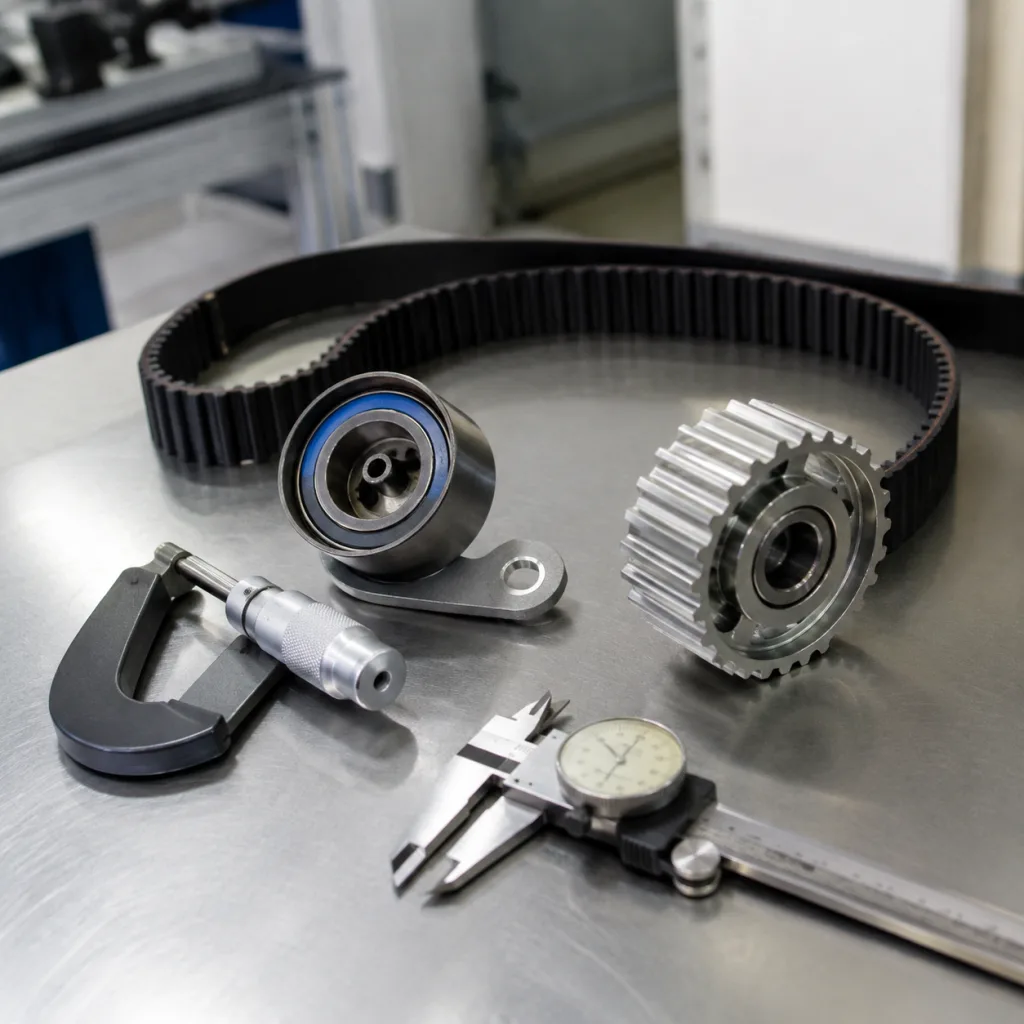
Typical supplier documentation should include first article inspection, in-process checks, and final dimension reports. For many buyers, the key acceptance criteria are runout, parallelism, and concentricity because these affect vibration and engagement feel. As a sourcing rule, many programmes use runout limits of 0.15-0.30 mm, parallelism within 0.10-0.20 mm, and concentricity controlled to the approved drawing, but the exact limits must come from the OE drawing, the service specification, or the buyer’s approved sample, not from a generic catalogue claim. Material declarations may also be required for compliance with REACH (EC) No 1907/2006 in the EU and customer-specific restricted substance rules. Buyers should also ask for the inspection method used for each critical dimension, such as caliper, micrometer, height gauge, spline gauge, or CMM, so the data can be compared across factories and lots.
How to validate a sample step by step
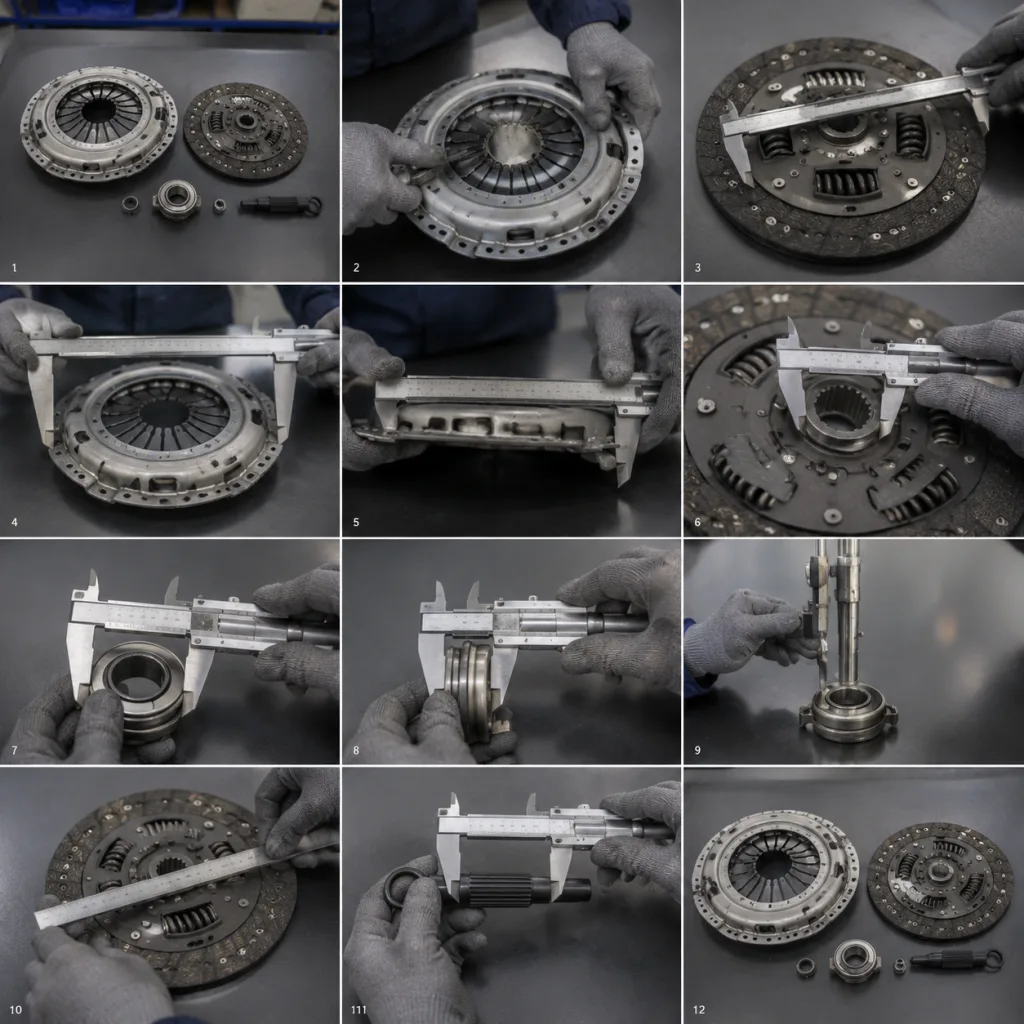
Use a short verification sequence before releasing volume purchase orders.
1. Match the OE reference, application code, gearbox family, and any supersession notes. 2. Measure the driven plate and release bearing with calibrated tools and record actual values, not just pass or fail. 3. Check fit on the input shaft spline and cover mounting pattern, including any interference at the hub or cover edge. 4. Review surface finish, rivet seating, spring alignment, and bearing rotation under hand load. 5. Confirm the sample report against your approved drawing, target tolerance, and commercial terms. 6. Lock the MOQ, unit price by volume tier, and lead-time promise before sample approval is signed off.
A useful buyer workflow is to request 3 samples from the same lot for initial inspection, then another 3 samples from a second lot if the programme will be stocked across branches or warehouse nodes. Compare dimensional spread across the samples, not just the average value; if the driven plate OD varies by more than 0.20 mm across a small sample set, that is a signal to check process control before release. If the application is in a repair-chain programme, request the same kit on multiple samples and compare variation across lots. That is the quickest way to detect dimensional drift before it reaches stores or workshops. For broader engine and driveline sourcing, see our catalog and the related quality system documentation.
What distributors should ask before quoting
Clutch kits are often bought on dimensional confidence rather than brand familiarity, which makes traceable data essential.
Driventus supports quotation and programme review with sample measurement, drawing confirmation, and export-ready packaging for B2B supply chains. For commercial planning, we typically align price to volume bands such as pilot order, stocked order, and annual programme supply; buyers should expect a higher unit price at sample or low-MOQ stage and better pricing once the order reaches repeatable monthly volume. Lead time also changes with order size: sample confirmation and drawing review are usually faster than mass production, while special packaging, private-label marking, or application-specific inserts can extend the schedule. We also support OE part-number cross-references in the form buyers expect, such as OE 06A107065 when an application already uses that reference format. Standards-based quality control is maintained under IATF 16949:2016 and ISO 9001:2015, with inspection routines adapted to export programmes in the EU, UK, US, Canada, Australia, and Brazil.
For distributor sourcing, a useful RFQ should include vehicle list, OE reference, target annual volume, preferred pack configuration, required dimensions, tolerance limits, packaging spec, target MOQ, and the expected first-order lead time. If your team needs a private-label or application-specific programme, request a quote with the target vehicle list, annual volume, required dimensions, and the commercial assumptions you want us to use. That is usually enough to start a technical review and return a quote that can be compared on both fit and landed cost.
Frequently asked questions
The main checks are driven plate outer diameter, spline count and diameter, cover bolt pattern, release bearing size, and assembled stack height. Buyers should also confirm tolerance, runout, and the inspection method used for each critical feature.
No. Use the OE reference as the starting point, then confirm the sample dimensions against the approved drawing or service data. Fitment varies by gearbox and market, and commercial terms such as MOQ, unit price, and lead time should be checked at the same time.
Request the OE or approved-sample tolerance first. If you are creating a new specification, many buyers use tight-control ranges such as ±0.10 mm on critical fit features and ±0.20 mm on non-critical dimensions, plus explicit runout and parallelism limits.
For stocked applications, buyers often see MOQ in the 100-300 kit range, with standard production lead times around 25-45 days after approval. Prototype or private-label orders can be shorter or longer depending on packaging, marking, and sample validation requirements.
Yes. Driventus supports drawing-based programmes, sample validation, and export supply for distributors, OEMs, and repair networks.
If you need a dimensional review for a current programme, send the OE reference, sample photos, target volume, preferred MOQ, and target lead time through /contact.html.