Clutch Kit Buick Supplier: Fitment, Quality, Lead Time
Buick clutch kit sourcing depends on exact transmission family, engine code, release system, and flywheel condition. For procurement teams, the main risk is not the nameplate; it is a part that looks correct on paper but misses spline count, cover height, clamp load, or bearing type. Driventus supplies clutch kits for aftermarket, distributor, and workshop programs with documented traceability, controlled dimensions, and export-ready packaging. Driventus is an independent aftermarket manufacturer; brand names are referenced for fitment only. Buyers can use our catalog, verify application data against VIN or engine code, and then lock the supply specification before first order. For private label or program business, we also support carton artwork, barcode labels, and custom manufacturing aligned to warehouse and import requirements.
What Buyers Should Verify First
Before you send an RFQ, confirm the vehicle's exact application and the commercial terms around it. A Buick clutch kit can vary by transmission type, disc diameter, release bearing design, and whether the flywheel is single-mass or dual-mass. The same model year may use more than one release system, so catalog fitment alone is not enough.
Use this checklist at the sourcing stage:
- Engine code and transmission variant
- Disc outer diameter and spline count
- Cover height and bolt pattern
- Release bearing type and travel window
- Flywheel condition and resurfacing limit
- Target annual volume, carton pack, and lead time
For a stable supply programme, buyers should also define sample approval rules, label content, and whether they need mixed-SKU cartons or pallet-level sorting. That reduces rework after the first shipment and keeps the part master clean across branches and regions.
Fitment Control and Cross-Reference
A useful cross-reference process starts with VIN, engine code, transmission code, and the current OE service number where available. We do not rely on model name alone. For Buick applications, the safest workflow is to validate the friction diameter, hub spline count, pressure plate layout, and release mechanism against the actual vehicle build data.
Data to verify before release
1. Vehicle identification and build code 2. Transmission family and input shaft spline 3. Release system type: cable, hydraulic, or concentric slave 4. Flywheel face condition and thickness after machining 5. Any OE or superseded reference from the customer part master
If the application is shared across multiple brands or regional catalogues, we map the fitment by measurement and function rather than by brand claim. That is the correct approach for procurement, because it reduces substitution errors when a distributor supports multiple markets from one stock pool. You can review the broader range in our catalog and related engine components when you are consolidating supplier records.
Typical Kit Contents and Technical Checks
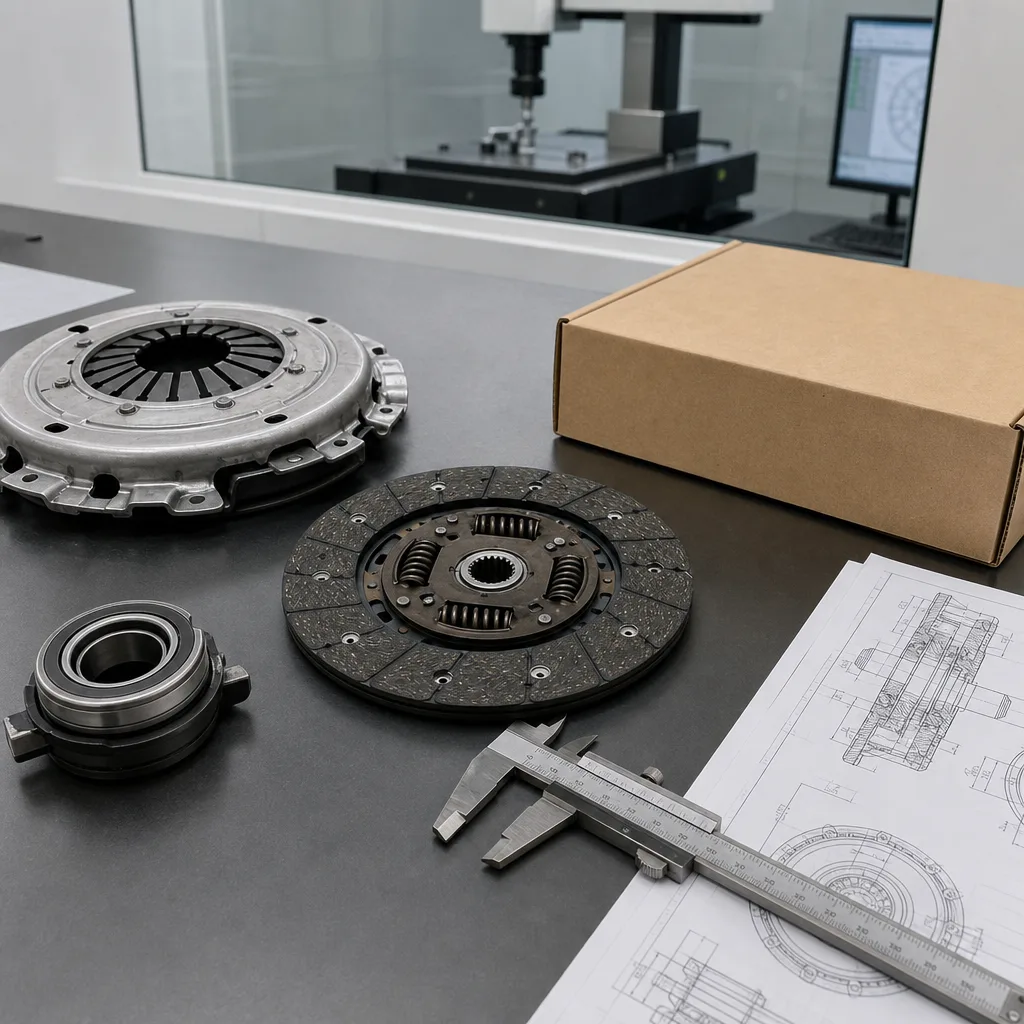
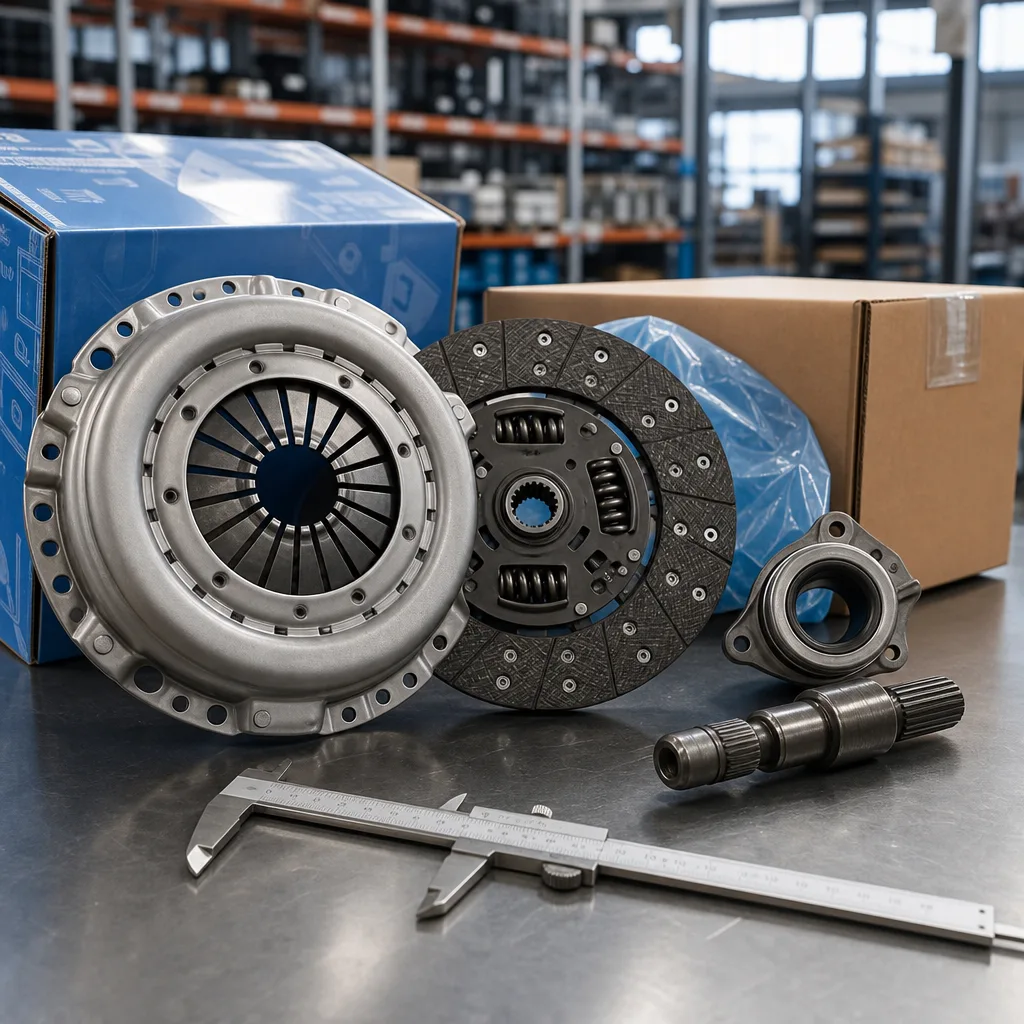
A complete clutch kit normally includes the clutch disc, pressure plate, and release bearing. Depending on the application, it may also include an alignment tool, pilot bearing, or hardware pack. For buyer evaluation, the question is not only what is inside the box, but how each component is controlled.
| Component | What we verify | Why it matters |
|---|---|---|
| Clutch disc | lining material, hub style, spline fit, runout | launch feel, wear rate, and engagement stability |
| Pressure plate | clamp load, diaphragm geometry, balance | torque capacity and pedal effort |
| Release bearing | noise, seal quality, cage integrity | warranty return risk |
| Hardware and tool pack | thread form, fit, completeness | installation time and first-pass yield |