Check Engine Light P0301 and Engine Block Diagnosis
A P0301 diagnostic trouble code identifies a misfire on cylinder 1. The root cause is usually found in ignition, fuel delivery, air leakage, compression, valve-train condition, or sealing—not in the engine block itself. However, the block must be evaluated when repeated misfire repairs fail, compression differs significantly from the other cylinders, coolant or oil enters the combustion chamber, or bore and deck damage is visible. For distributors, repair chains, fleet maintenance groups, and importers, the risk is larger than one unresolved check engine light. A poorly documented P0301 case can lead to repeat labour, warranty disputes, avoidable returns, and incorrect structural parts stocking. This article sets out a practical route from symptom confirmation to mechanical inspection and, when evidence supports it, engine block replacement sourcing. Driventus manufactures engine and powertrain components in Taizhou, Zhejiang, for B2B aftermarket and OE-service channels. Driventus is an independent aftermarket manufacturer; brand names are referenced for fitment only.
What P0301 Means Before Considering the Engine Block
P0301 is the diagnostic trouble code for a cylinder 1 misfire. Under ECE R-83 emissions logic and equivalent OBD requirements used in many markets, the engine control unit monitors crankshaft speed variation and identifies a misfire when cylinder contribution falls outside the calibrated range. The fault may appear only under load, only during cold start, or continuously at idle.
For procurement teams, the important point is diagnostic sequence. A cylinder-specific misfire should not trigger an engine block purchase unless the workshop has evidence of a mechanical or structural failure. Most P0301 cases are solved before any cast-iron or aluminium block replacement is justified.
Common first-level causes include:
Spark plug wear, incorrect heat range, cracked insulator, contamination, or excessive gap
Coil-on-plug failure, weak ignition energy, or high-voltage leakage
Injector clogging, electrical failure, poor spray pattern, or uneven flow
Intake vacuum leak close to cylinder 1
Low compression caused by valve leakage, piston ring wear, or head gasket failure
Coolant or oil contamination in the combustion chamber
Bore scoring, liner movement, deck distortion, porosity, or cracked block material
When field claims arrive with wording such as “check engine light P0301 engine block,” request the diagnostic record before approving replacement. Minimum evidence should include the scan report, freeze-frame data, misfire counters where available, compression readings, leak-down percentage, borescope images, and cooling system pressure test results. This prevents a service-part failure from being escalated into a high-value structural claim.
Symptom-to-Cause Diagnostic Walkthrough
A structured diagnostic workflow reduces unnecessary block replacement and makes supplier claim handling more consistent. Repair chains and distributors can also use the same logic to define the documentation required from workshops.
Observation
Likely area
Inspection method
Procurement implication
Misfire follows swapped coil
Ignition coil
Move coil from cylinder 1 to another cylinder, rescan
No block replacement; stock ignition parts separately
Misfire follows swapped injector
Fuel injector
Injector balance test or cylinder swap
Fuel system claim, not engine block claim
Low compression only on cylinder 1
Valves, rings, gasket, bore
Dry/wet compression and leak-down test
Internal inspection required before parts order
Coolant loss with white exhaust smoke
Head gasket, cracked head, cracked block
Pressure test, coolant analysis, borescope
Block may be relevant if crack path is confirmed
Vertical bore scoring visible
Piston, ring, lubrication, liner, or bore
Borescope and teardown measurement
Block or short block replacement may be justified
Repeated P0301 after ignition/fuel repairs
Mechanical fault, air leak, timing, or calibration issue
Compression, timing checks, ECU data, smoke test
Escalate to mechanical root-cause review
</tr></thead><tbody> </tbody></table>A practical first step is to clear the code and reproduce the condition using freeze-frame data: engine speed, load, coolant temperature, fuel trim, and misfire counter information. If the misfire appears mainly when cold, check for coolant intrusion, valve sealing issues, or marginal compression. If it occurs under high load, inspect ignition energy, injector delivery, and cylinder pressure under operating conditions. If it is strongest at idle and fuel trim is highly positive, a local intake leak should be investigated before internal engine parts are considered.
The diagnostic path should move toward cylinder bore condition and block geometry only after ignition faults, fuel faults, vacuum leaks, and external control issues have been ruled out.
When Block Damage Can Cause a Cylinder 1 Misfire
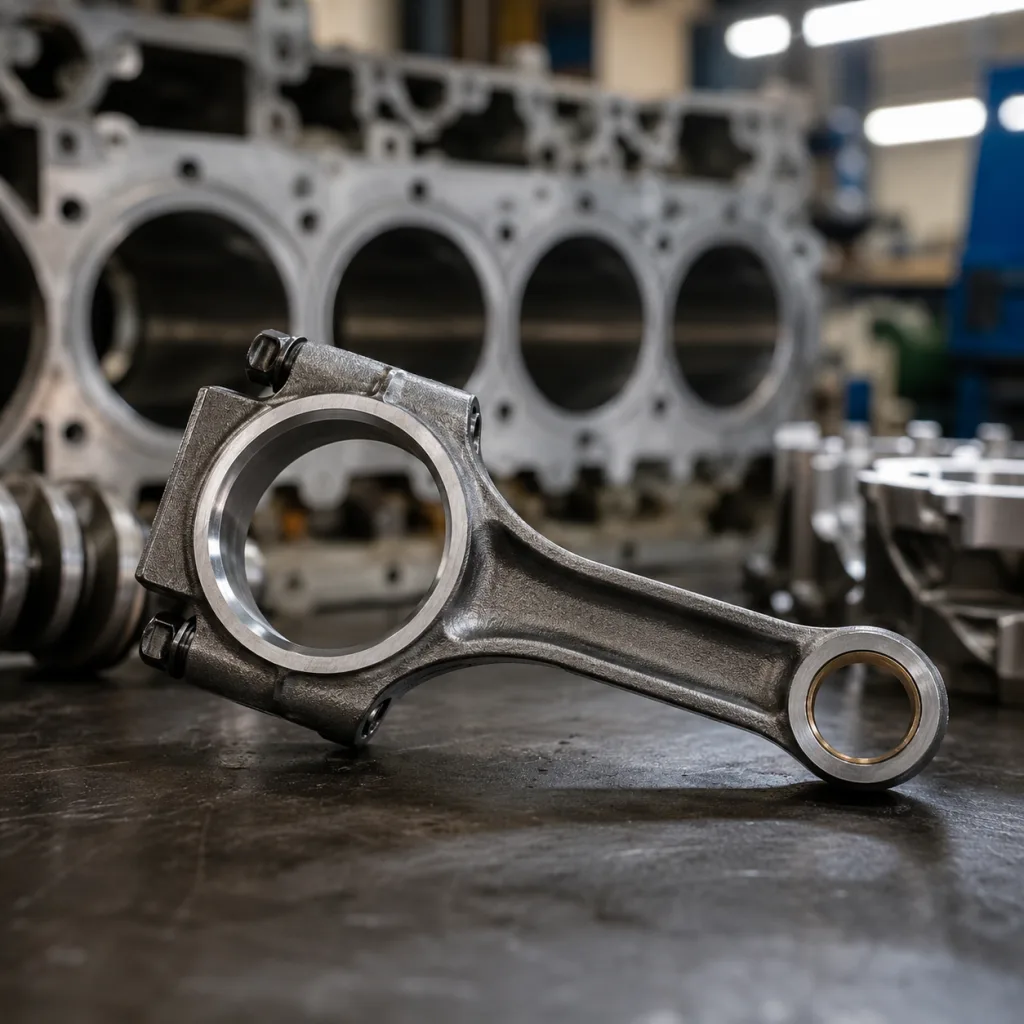
The engine block can affect combustion through bore geometry, deck sealing, coolant containment, oil control, and crankshaft alignment. A structural defect can cause P0301, but it normally comes with supporting evidence rather than a fault code alone.
Block-related failure modes include:
Cylinder 1 bore scoring that reduces ring seal and compression
Bore out-of-round or taper outside the engine service limit
Deck surface distortion causing local head gasket leakage
Porosity or crack paths between a coolant jacket and the cylinder
Liner drop, liner fretting, or sleeve movement in sleeved designs
Main bearing tunnel distortion affecting crankshaft stability and vibration
Inspection should be dimensional, not visual only. Recommended checks include bore diameter at several heights, taper, out-of-round, deck flatness, surface roughness, and crack testing by a method suitable for the material and design. Cast iron and aluminium blocks require different repair decisions because welding, sleeving, machining allowance, and heat-treatment considerations vary.
Practical measurement points for buyers
For replacement sourcing, request engineering drawings, inspection reports, or production control plans that define these items:
Material grade and heat-treatment condition, where applicable
Cylinder bore machining tolerance and honing specification
Deck flatness control after final machining
Main bearing bore alignment and diameter control
Thread integrity for head bolts, main caps, and accessory mounts
Pressure testing of water jackets
Cleaning validation for oil galleries and blind passages
Driventus block-related engine components are produced under controlled machining and inspection procedures aligned with IATF 16949:2016 and ISO 9001:2015. More details are available through our quality system.
Replacement Sourcing Criteria for Engine Blocks
If teardown confirms block damage, the sourcing decision should focus on dimensional match, configuration accuracy, and validation evidence. For multi-location repair chains and importers, one incorrect casting variant or machining specification can create repeated installation delays and avoidable freight cost.
Use a structured checklist before issuing a purchase order:
Confirm application data: engine code, displacement, fuel type, emissions market, and model year range
Match casting configuration: sensor bosses, oil galleries, coolant ports, mount points, and accessory locations
Verify machining status: bare block, semi-finished block, finished block, or assembled short block
Confirm whether liners, core plugs, dowels, and threaded inserts are included
Check compatibility with pistons, crankshaft, oil pump, timing components, and cylinder head
Require batch-level pressure test and dimensional inspection records
Specify packing methods that protect decks, bores, machined faces, and threaded holes during sea freight and inland handling
For catalogue coverage, buyers can review our catalog and the engine range at /products/engine-components.html. For private-label programmes, non-standard castings, or region-specific fitment requirements, Driventus can support custom manufacturing based on drawings, samples, or validated specifications.
Driventus is an independent aftermarket manufacturer; brand names are referenced for fitment only. We do not claim vehicle manufacturer approval or endorsement unless a buyer provides a separate, documented programme requirement.
Quality, Compliance, and Claim Control
Engine block replacement is high-value and labour-intensive, so procurement teams should evaluate both the component and the supplier’s control system. Driventus manufactures in Taizhou, Zhejiang, and exports engine and powertrain components to more than 60 countries. Our factory operates under IATF 16949:2016 and ISO 9001:2015 frameworks for process control, corrective action, traceability, and continuous improvement.
For European and UK buyers, material compliance documentation may also be required under REACH (EC) No 1907/2006. For components sold into emissions-sensitive repair markets, the engine block itself is normally not certified under ECE R-83; however, the repair outcome must not compromise the vehicle’s emissions function. Correct bore sealing, coolant integrity, machining accuracy, and fitment all matter because persistent misfire can increase catalyst temperature and emissions risk.
Recommended claim documentation for a suspected block-related P0301 case:
Vehicle application and engine identification data
DTC report showing P0301 and any related codes
Freeze-frame and misfire counter data
Compression and leak-down results by cylinder
Cooling system pressure test result
Borescope or teardown images of cylinder 1
Measurement report for bore, deck, and gasket sealing area
Oil and coolant contamination observations
This documentation protects both parties. It prevents ignition, injector, vacuum leak, or valve faults from being misclassified as block failures, and it helps manufacturers improve machining, casting, inspection, or packing controls if a true structural issue is found.
Commercial Decision: Repair, Replace, or Source a Block
A check engine light with P0301 does not automatically justify an engine block order. The decision should be based on mechanical evidence, application value, vehicle downtime, and total repair economics.
Decision path
Use when
Risk if misapplied
Replace ignition or injector component
Misfire follows component swap or test failure
Low, if diagnosis is recorded
Repair head gasket or valve issue
Leak-down indicates top-end sealing fault
Missed block deck issue if not measured
Rebuild short block
Bore wear or ring failure is confirmed and machining is viable
Labour cost can exceed replacement value
Replace engine block
Crack, porosity, severe bore damage, or deck distortion is confirmed
High cost if diagnosis is incomplete
Source complete short engine
Multiple rotating assembly and block issues exist
Higher unit cost, lower assembly risk
</tr></thead><tbody> </tbody></table>For distributors, the safest stocking strategy is to separate fast-moving misfire service parts from lower-volume structural engine components. Spark plugs, coils, injectors, sensors, and gasket sets should not be managed in the same way as engine blocks or short blocks. Structural components should be ordered against confirmed application data and diagnostic evidence rather than a fault code description alone. This reduces returns, improves workshop labour recovery, and gives the supplier a clearer basis for technical support.
When the cause is confirmed as block-related, Driventus can support quotation review, fitment confirmation, packing requirements, and documentation for batch orders. Buyers may request a quote with the engine code, target market, annual volume, required machining status, and available diagnostic evidence.
Frequently asked questions
Yes, but it is less common than ignition, injector, vacuum leak, valve, or gasket causes. Block damage becomes likely when compression is low, leak-down is abnormal, coolant enters cylinder 1, or bore and deck measurements confirm structural damage.
Request scan data, freeze-frame data, misfire counter information, compression and leak-down results, cooling system pressure test results, borescope images, and dimensional measurements of the bore and deck. These records help distinguish true block failure from service-part faults.
Driventus supplies engine and powertrain components for B2B aftermarket, repair-chain, and OE-service channels. Availability depends on engine family, machining status, volume, and documentation requirements. Driventus is an independent aftermarket manufacturer; brand names are referenced for fitment only.
If you are evaluating an engine block sourcing case linked to P0301 claims, share the diagnostic record and application details with Driventus for a technical review. Start a low-pressure enquiry at /contact.html