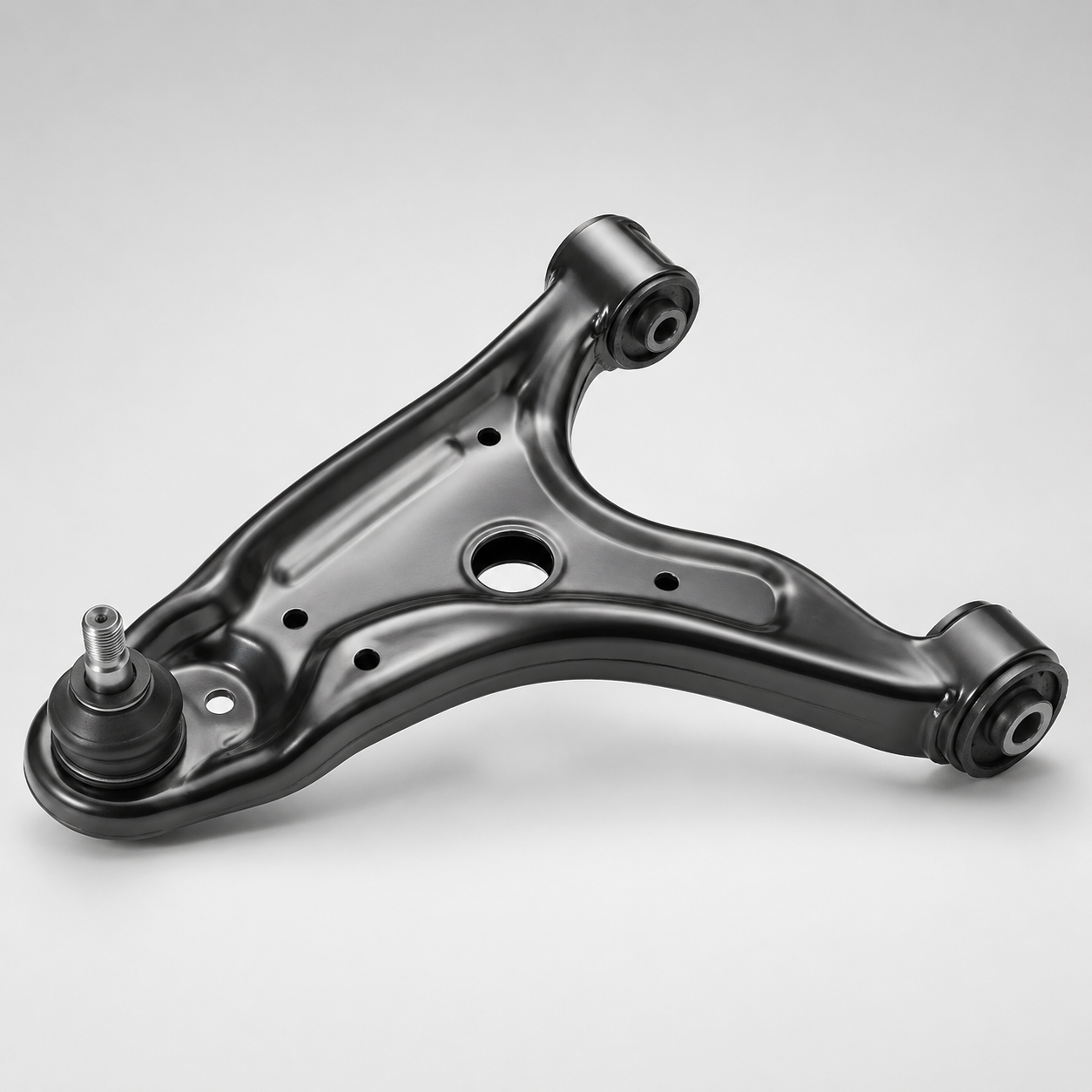
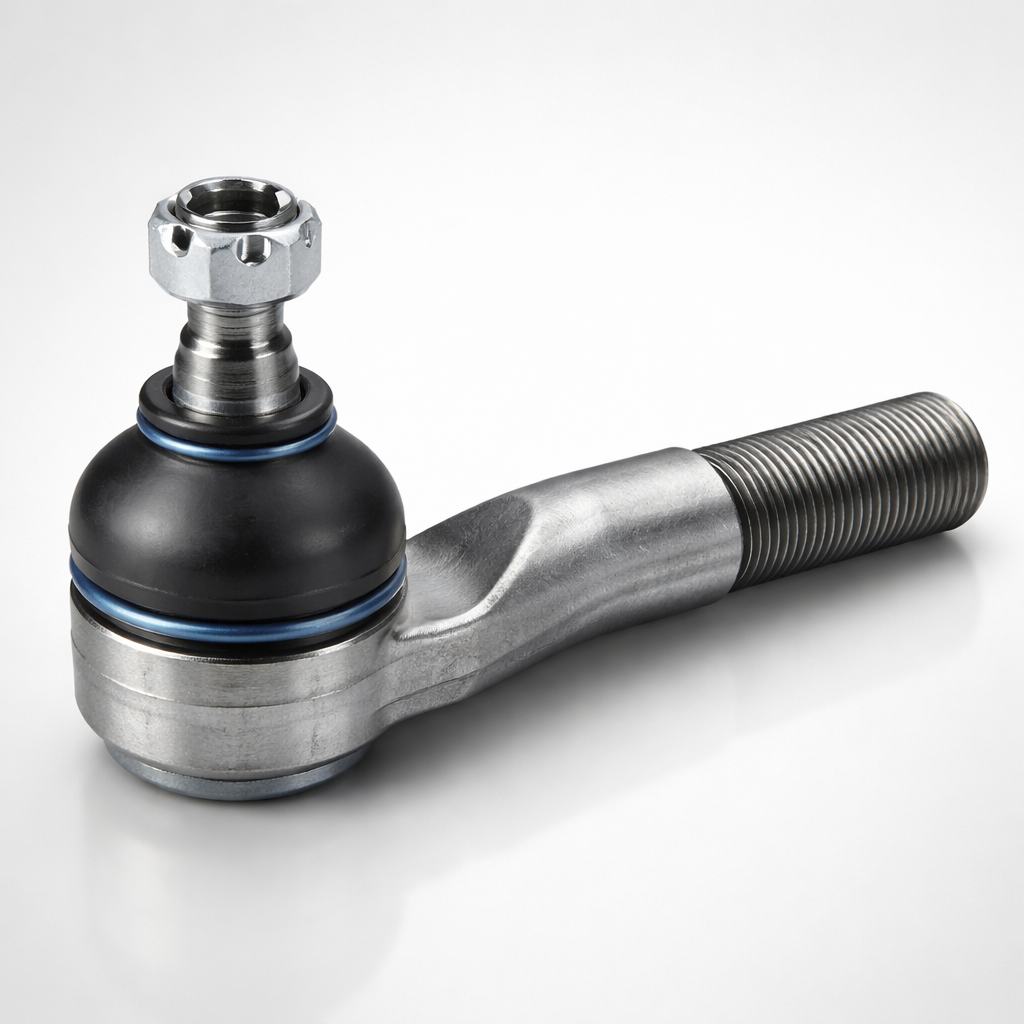
Changing a Control Arm: What Buyers Should Check
Changing a control arm is usually framed as a repair job. For importers, distributors, and fleet-service buyers, it is really a sourcing decision with direct warranty consequences. The part controls suspension geometry, steering stability, braking behaviour, and tyre wear. If the replacement assembly misses OE dimensions or uses inconsistent bushes and ball joints, the result is not just a bad install experience; it is repeat claims, workshop pushback, and shorter service life.
That is why the buying question is broader than fitment alone. When teams evaluate a supplier for changing a control arm across multiple vehicle references, they need to know whether the assembly is consistent from batch to batch, traceable inside a documented quality system, and proven under real aftermarket loads. This article focuses on that commercial reality: how to judge risk, what evidence to request, where low-cost offers usually fail, and how to approve a control arm programme with fewer surprises. Driventus is an independent aftermarket manufacturer; brand names are referenced for fitment only.
Start with the real decision: fitment part or warranty risk?
When buyers source parts for changing a control arm, the safest starting point is not price. It is failure cost.
A control arm has to hold suspension geometry under braking, cornering, and road shock while still allowing controlled movement through the bushes and ball joint. If that balance is wrong, the market notices quickly.
From a sourcing standpoint, the assembly must deliver:
- Dimensional accuracy against the intended OE drawing or approved sample
- Predictable bushing behaviour under heat, oil exposure, and cyclic load
- Durable ball-joint performance with correct stud hardness, retention, and sealing
- Corrosion resistance suited to the target market's climate and road conditions
- Stable arm-body production quality whether the part is forged, cast, stamped, or welded
When one of those variables drifts, the field symptoms are familiar: noise, steering pull, uneven tyre wear, alignment loss, or premature play. A single claim may be blamed on installation. A pattern of claims usually points back to the component.
That is the key commercial lens for changing a control arm: buy the complete assembly as a controlled system, not as a piece of shaped metal.
Where control arm programmes usually go wrong
Most aftermarket issues do not come from dramatic visible defects. They come from small specification misses that slip through early inspection and only show up once the vehicle is back on the road.
| Failure point | What typically drifted | What buyers end up paying for |
|---|---|---|
| Pivot centre distance | Critical geometry out of tolerance | Installation difficulty and alignment complaints |
| Ball-joint stud taper | Poor fitment control or wrong gauge standard | Loose seating, damage during fitting, unsafe retention risk |
| Bushing outer diameter | Inconsistent press-fit control | Bushing movement, walk-out, or persistent noise |
| Bushing hardness | Compound variation outside target window | Excess NVH or unstable handling feel |
| Mounting face flatness | Weak forming or machining control | Torque loss and bracket stress |
| Coating thickness | Uneven finishing or poor adhesion | Early corrosion claims |
| Check area | What to request | Why it matters |
|---|---|---|
| Quality management | IATF 16949:2016 and ISO 9001:2015 certificates | Confirms documented process control and traceability systems |
| Material control | Steel grade, rubber compound data, hardness range | Affects strength, fatigue life, and bushing response |
| Dimensional control | CMM reports, gauge plans, critical-characteristic list | Confirms mounting points, pivot centres, and joint geometry |
| Durability validation | Fatigue, articulation, pull-out, and salt spray data | Reduces warranty and return exposure |
| Traceability | Batch-code method and record retention details | Supports containment and corrective action |
| Compliance | REACH (EC) No 1907/2006 material compliance where applicable | Important for EU market access and customer files |