brake pad · 2026-06-14

Change Rear Brake Pads: B2B Replacement Guide

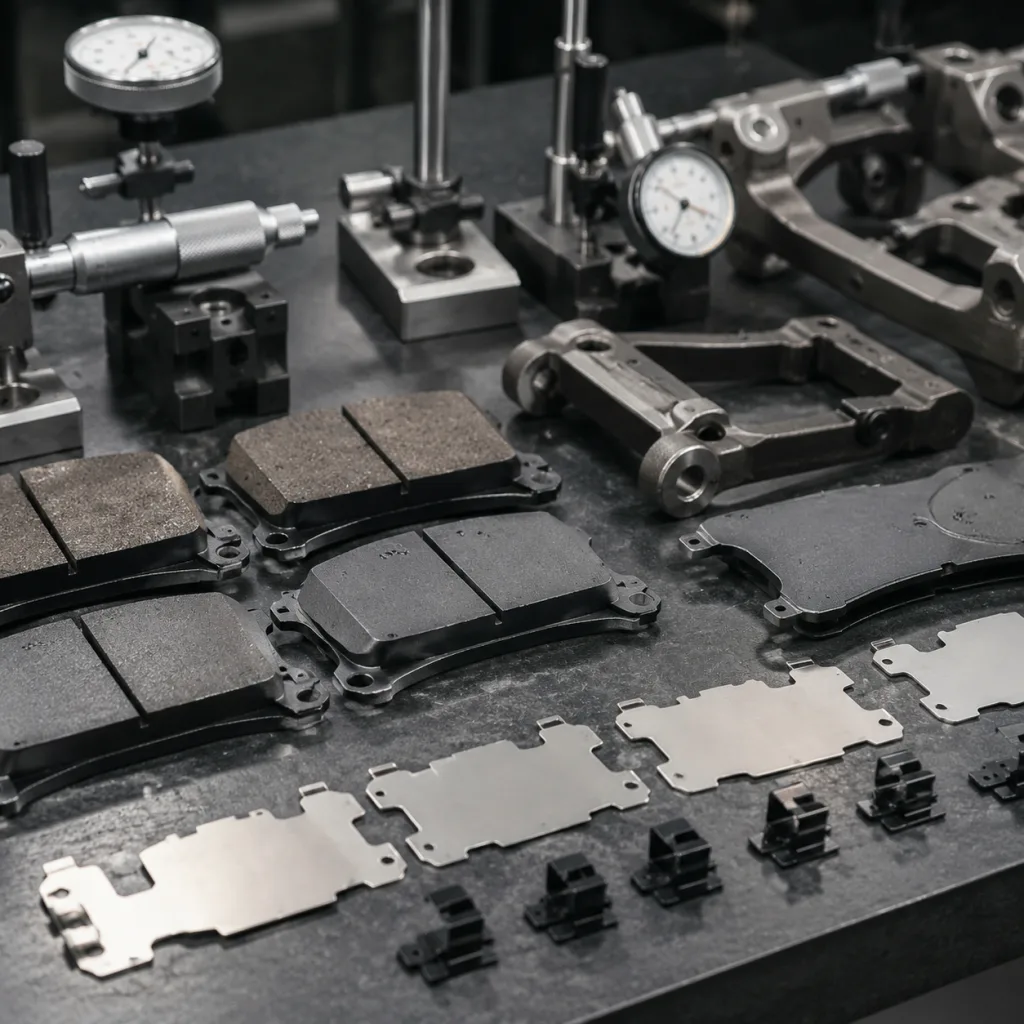
Rear brake pad replacement is routine maintenance, but B2B buyers cannot treat the part as a generic friction block. Each pad set must match the caliper envelope, backing plate geometry, shim stack, chamfer profile, slot pattern, wear-sensor provision, and friction behavior required by the vehicle platform. For distributors, repair chains, and fleet maintenance networks, the goal is repeatable installation, low noise risk, stable pedal feel, and traceable production control. This guide explains what procurement teams should verify before they change rear brake pads across vehicle platforms or add rear pad sets to a sourcing program. It covers OE-equivalent dimensional matching, validation testing, service-related warranty controls, packaging discipline, and compliance documentation. Driventus is an independent aftermarket manufacturer; brand names are referenced for fitment only.

Replacement intent: match the OE design envelope

Rear axle braking demand is often lower than front axle demand, but replacement pads still operate inside a narrow design envelope. Modern rear calipers may include electronic parking brake actuators, integrated wear sensors, low-drag seal designs, or application-specific abutment hardware. A small mismatch in backing plate ear width, hook radius, or total pad thickness can cause drag, rattle, uneven wear, low-speed noise, or service returns.

For a sourcing program, start by defining the reference population: vehicle model years, axle codes, brake disc diameters, caliper type, electronic parking brake status, and OE part-number cross-references where available. If customer data includes OE 06A… or OE 11251… style identifiers, keep them as fitment references only and confirm the physical sample against drawings, caliper notes, and application tables.

Key replacement controls include:

  • Backing plate profile checked by fixture, overlay, or coordinate measurement
  • Total pad thickness controlled against caliper clearance limits
  • Friction material area matched to the rotor swept path
  • Shim and adhesive stack verified for noise control
  • Chamfer and slot geometry matched to platform requirements
  • Hardware kit compatibility confirmed before carton release
  • Wear sensor, if used, checked for connector form and cable routing

A buyer reviewing our catalog should request fitment tables, sample drawings, and inspection reports rather than relying on a short catalogue description.

Dimensional and material checks before approval

Dimensional conformance is the main risk gate before approving a rear brake pad SKU. Friction coefficient data matters, but an otherwise capable formulation can still fail commercially if the pad binds in the caliper bracket, sits outside the swept path, or generates low-speed noise because the shim package differs from the validated design.

</tr></thead><tbody> </tbody></table>Rear pads for electronic parking brake applications need additional care. The pad must retract cleanly after parking brake release, and the backing plate must not interfere with actuator-side piston geometry. For multi-location repair chains, one fitment error can spread quickly across branches, so pre-launch validation should include installation trials on representative calipers, not only bench measurements.

Driventus production uses batch traceability, controlled friction mixing, steel backing plate preparation, and finished-product inspection under an audited quality system. Certification to IATF 16949:2016 and ISO 9001:2015 supports process discipline, while buyer specifications should still define the acceptance criteria for each program.

Validation testing for OE-equivalent performance

When buyers plan to change rear brake pads across a fleet or distributor range, validation has to go beyond static fit. The pad should deliver stable friction after bedding, acceptable wear, low noise tendency, and compatibility with the mating disc material. Rear axle pads can also interact with electronic brake force distribution, stability control, and parking brake calibration, so friction behavior should remain consistent across relevant temperature, pressure, and speed ranges.

Common validation items include:

Check item Typical procurement evidence Why it matters
Backing plate outline2D drawing, sample overlay, gauge reportConfirms fit in the caliper bracket and abutment points
Overall thicknessIncoming inspection report and production control planHelps prevent brake drag or excessive pedal travel
Friction block positionVisual inspection standard and dimensional reportAligns the pad with the rotor swept area
Shim constructionMaterial description and adhesion checkReduces squeal and rattle risk
Chamfers and slotsDrawing revision and production photosInfluences bedding, edge lift, and noise behavior
Hardware kitBill of materials and application listAvoids installer delays and missing clips
Marking and traceabilityBatch code, carton label, date codeSupports recall containment and warranty review

</tr></thead><tbody> </tbody></table>Not every aftermarket SKU requires a full vehicle test program, but procurement teams should request a validation matrix that reflects application risk. High-volume European rear pads, taxi and delivery fleet applications, performance-oriented platforms, and electronic parking brake designs justify deeper testing than low-volume legacy references.

Performance review should include initial bite, hot friction stability, fade recovery, disc wear, pad wear, bedding response, and noise observations. For warranty control, ask whether the production compound is locked to the tested formulation. A test report has limited value if later production can use substitute fibres, resins, abrasives, or lubricants without documented change approval.

Installation variables that affect warranty returns

Even correctly manufactured rear pads can generate field returns when the installation environment is not controlled. Procurement teams supplying repair chains should include service notes in the product data package, especially for rear calipers with electronic or mechanical parking brake mechanisms.

The replacement workflow should confirm the following before vehicle release:

  • Caliper slide pins move freely and use compatible lubricant
  • Abutment clips are replaced or cleaned where specified
  • Rotor thickness, surface condition, and runout are within service limits
  • Electronic parking brake service mode is used when required
  • Piston is retracted with the correct tool and orientation
  • Pad ears move freely without filing away protective coating
  • Brake pedal is pumped before road testing
  • Bedding instructions are followed to stabilise the friction film

These steps are not consumer advice; they are warranty risk controls for networks that service many vehicles per day. If a rear pad wears tapered, overheats, glazes, or produces intermittent noise, the root cause may be a seized slide pin, corroded abutment surface, rotor defect, or parking brake adjustment issue rather than pad formulation. The supplier should help separate manufacturing defects from installation and vehicle-condition issues through clear inspection criteria.

Distributors should also control returned-goods handling. Request photos of both pads, rotor surface, caliper bracket, batch label, and mileage record. A structured return form allows engineering teams to identify repeated fitment errors, packaging mix-ups, or platform-specific noise complaints faster.

Sourcing controls for distributors and repair chains

A rear brake pad program should be managed as a safety-critical product family. Price matters, but inconsistent fitment data, uncontrolled formulation changes, weak carton discipline, or incomplete traceability can create higher total cost through warranty returns, branch downtime, and customer churn.

Recommended sourcing controls:

  • Confirm SKU coverage by vehicle application, axle code, disc diameter, and brake system type
  • Approve golden samples before mass production
  • Define drawing revisions and compound codes in the purchase file
  • Require batch traceability on the pad set, inner box, and master carton
  • Agree inspection levels for backing plate profile and total thickness
  • Audit packaging for humidity protection and hardware separation
  • Review REACH (EC) No 1907/2006 declarations for EU-bound shipments
  • Define response time for 8D reports and containment actions

For private-label or regional range development, custom manufacturing can include friction material selection, backing plate tooling, shim specification, packaging layout, carton labelling, and documentation control. This is useful when a buyer needs a controlled range for the EU, UK, US, Canada, Australia, or Brazil with consistent launch files across markets.

Lead-time planning should include sample approval, tooling confirmation where required, pilot production, labelling review, packaging sign-off, and freight consolidation. Established pad references usually move faster than new tooling programs, but buyers should still reserve time for incoming inspection, ERP setup, and branch data upload before launch.

What to request from a brake pad manufacturer

Before placing a volume order, procurement teams should request a document pack that proves the supplier can control both the product and the manufacturing process. This is especially important when the range includes many rear axle references with similar-looking backing plates, sensor routes, or hardware kits.

A practical RFQ pack should ask for:

  • Application list with fitment notes and exclusions
  • OE cross-reference table using customer-supplied references only
  • Product drawing or critical-dimension report
  • Friction formulation family and change-control process
  • Dynamometer or bench validation summary
  • IATF 16949:2016 and ISO 9001:2015 certificates
  • REACH (EC) No 1907/2006 compliance statement when applicable
  • Packaging specification and pallet configuration
  • MOQ, sample timing, production lead time, and warranty process

Avoid approving a supplier only from catalogue photos. Rear pad shapes can be visually similar while differing in plate thickness, ear geometry, chamfer layout, shim stack, or sensor routing. For high-volume SKUs, request pre-shipment inspection records from the first production batch and retain reference samples for future comparison.

Driventus manufactures brake pads and related powertrain components in Taizhou, Zhejiang, and exports to more than 60 countries. The company supplies aftermarket distributors, OEM and Tier-1 supply programs, and multi-location repair chains. Driventus is an independent aftermarket manufacturer; brand names are referenced for fitment only.

Frequently asked questions

Intervals depend on vehicle weight, driving cycle, rotor condition, caliper function, parking brake design, and electronic brake force distribution. Many rear pads last longer than front pads, but fleets should inspect pad thickness, taper wear, rotor condition, and parking brake operation at scheduled maintenance rather than using mileage alone.

Request application data, critical-dimension reports, sample inspection records, friction performance summaries, batch traceability format, packaging specification, and relevant compliance statements. For EU programs, include REACH (EC) No 1907/2006 documentation. For process control, review IATF 16949:2016 and ISO 9001:2015 certificates.

Yes, but only when the backing plate geometry, total thickness, friction area, sensor provision, shim package, and hardware requirements match the target applications. Buyers should confirm fitment by application table, sample comparison, and installation trial before consolidating SKUs.

If you are building a rear brake pad sourcing program, Driventus can review fitment data, samples, packaging, and compliance requirements. To discuss drawings, MOQ, and validation documents, [request a quote](/contact.html).

Request a Quote
Test area Relevant published reference Procurement interpretation
Dynamometer performanceSAE J2522 and SAE J2707Reviews friction stability, fade, recovery, and wear behavior
Brake noise screeningSAE J2521Helps compare squeal tendency under controlled duty cycles
Friction material complianceREACH (EC) No 1907/2006Supports EU chemical substance control review
Quality managementIATF 16949:2016 and ISO 9001:2015Confirms process-based manufacturing controls