Camshaft vs NPR Alternative: Procurement Comparison
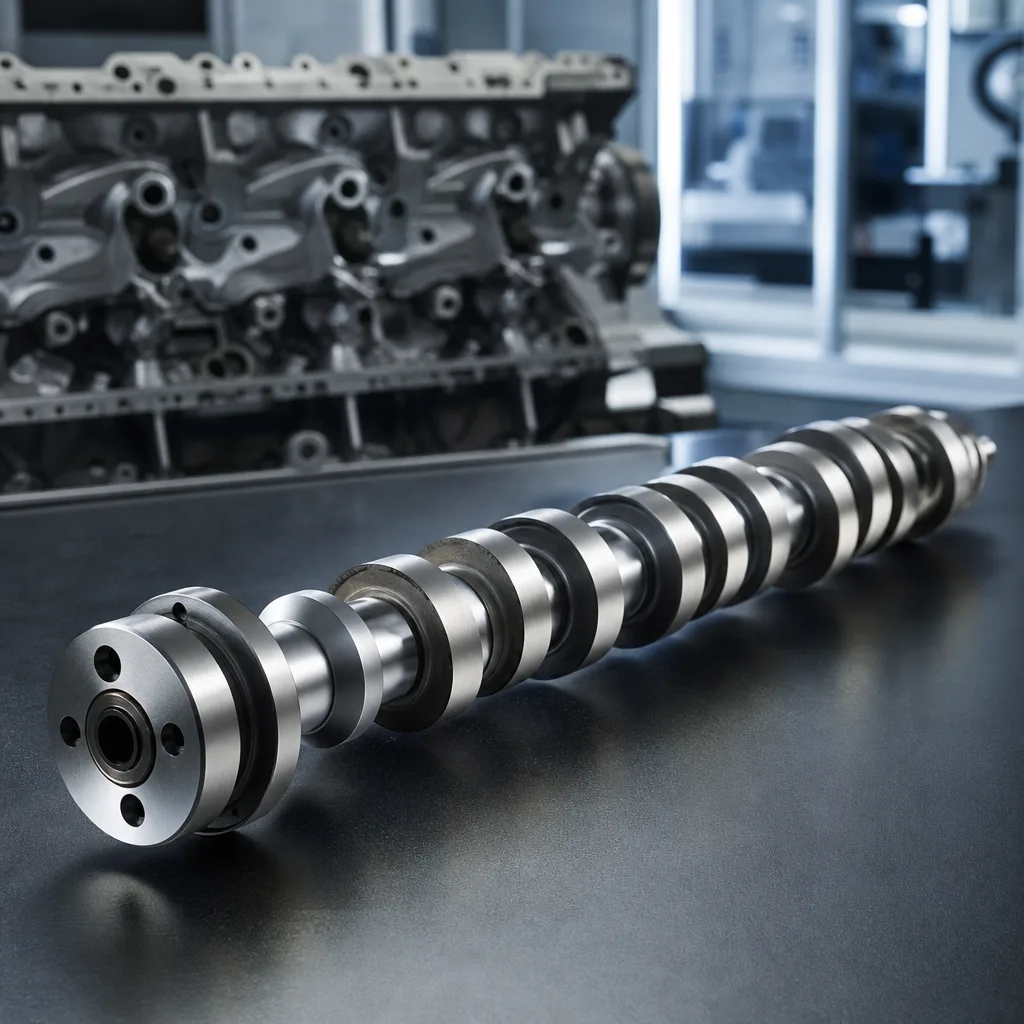
When buyers compare an OE camshaft with an NPR alternative, the useful question is not brand preference. It is whether the replacement matches the drawing, the lobe timing, the journal geometry, and the duty cycle of the engine it will run in. For commercial vehicle fleets, the cost of a poor match is usually not the part price. It is rework, downtime, and repeat complaints about valve timing, noise, or premature wear. Driventus is an independent aftermarket manufacturer; brand names are referenced for fitment only. Our approach is to treat the camshaft as a controlled component: verify base-circle diameter, lobe lift, surface hardness, heat-treatment route, and traceability before shipment. That is the level procurement teams should expect when sourcing for distributors, workshops, and fleet maintenance programmes.
What the comparison should cover
A fair comparison starts with function, not catalogue labels. For an NPR application, the replacement must open and close the valves at the correct point in the cycle, keep oil-film conditions stable on the journals, and survive the expected load profile for commercial service.
The main checks are:
- Lobe lift and lobe timing against the OE drawing or validated sample.
- Journal diameter, spacing, and thrust face width.
- Overall length, nose geometry, and drive-end features.
- Surface finish on bearing surfaces and lobe contact zones.
- Heat-treatment route and hardness profile across the working surfaces.
If the supplier cannot document those items, the part is a risk rather than a sourcing option. That is why the comparison should be based on measured data, not on whether the box says OE-equivalent.
Fitment checks before purchase
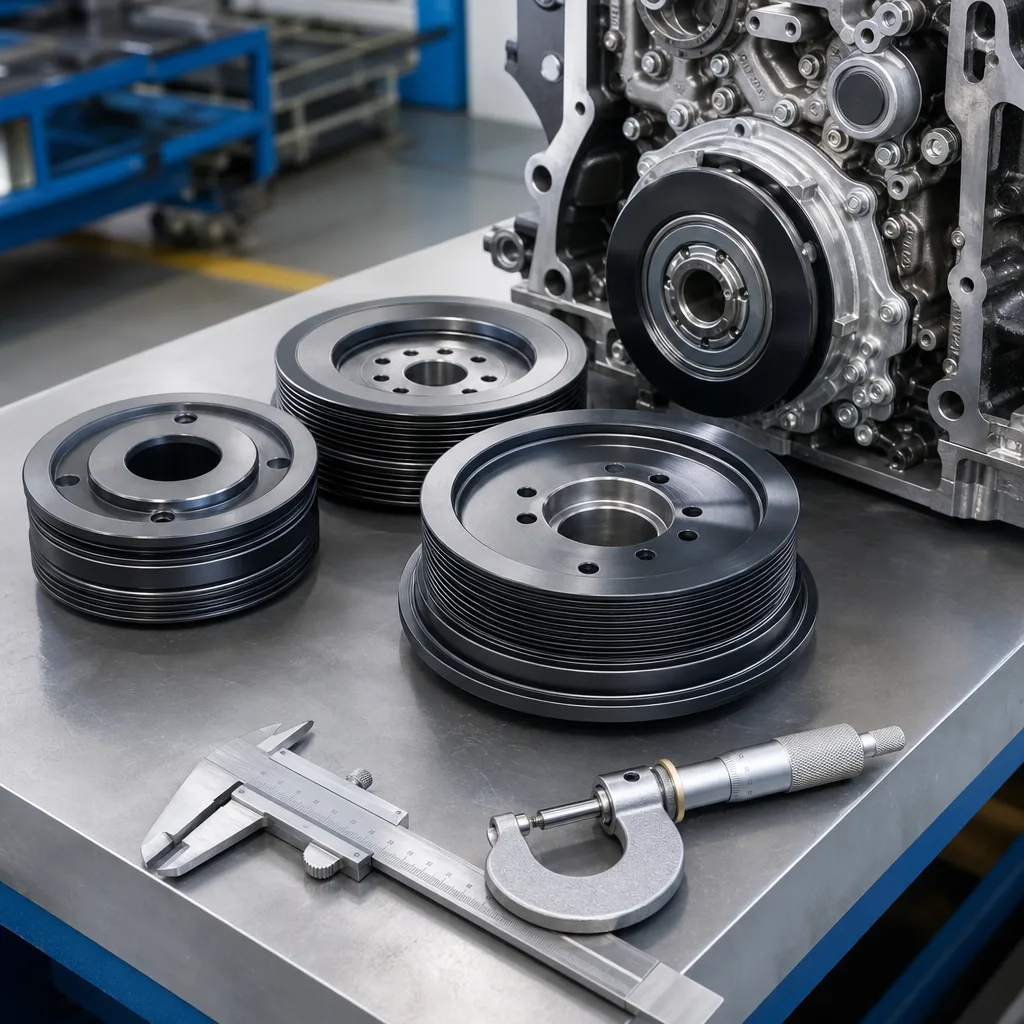
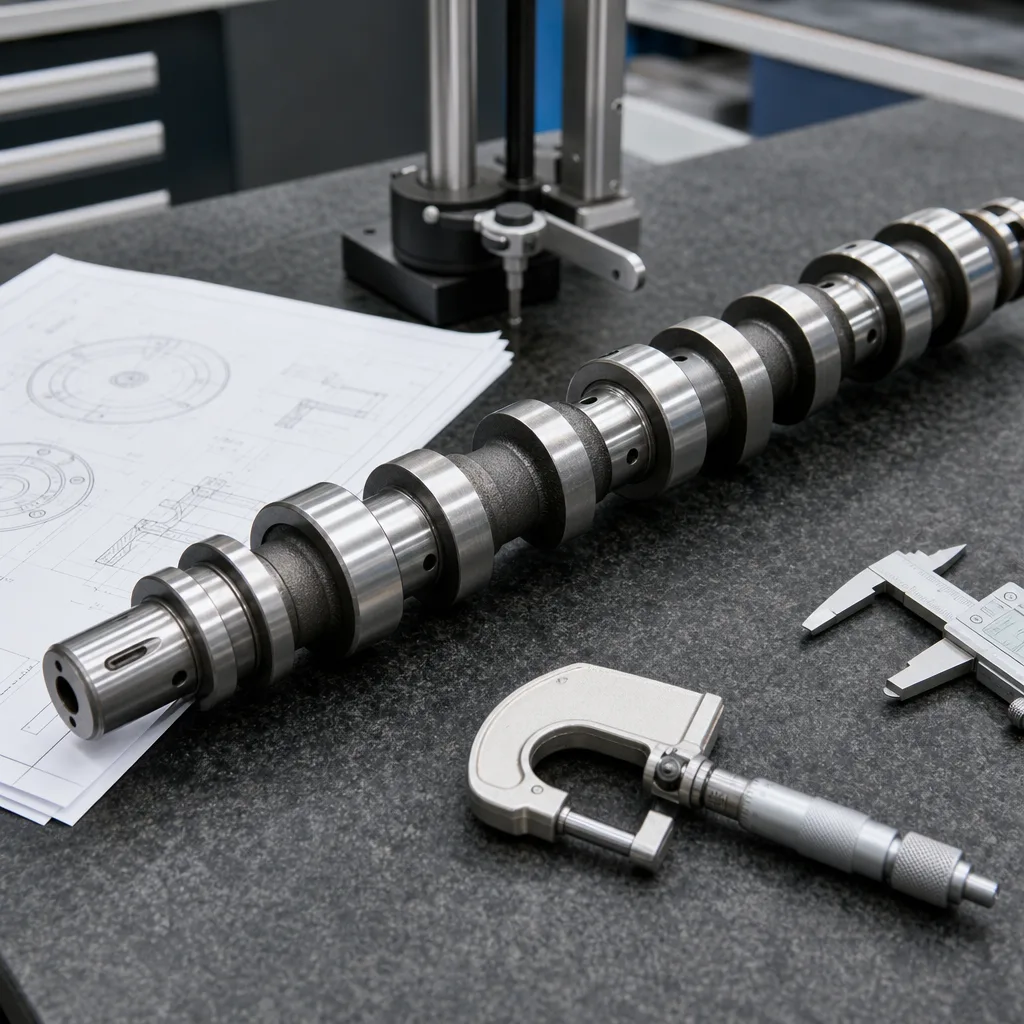
Procurement teams should ask for the dimensional report before they issue a repeat order. The report should confirm the critical geometry that affects valve timing, oil clearance, and assembly fit.
Use this checklist:
- Match the sample part or drawing revision before releasing volume.
- Confirm journal centre distance, base-circle diameter, and lobe lift.
- Check the drive-end, timing gear, and keyway interface where used.
- Verify that the part is compatible with the intended followers, tappets, or rockers.
- Ask for first-article records and batch traceability.
If the supplier cannot tie the part back to a revision-controlled drawing, the risk sits with the buyer. A lower unit price does not compensate for a wrong profile or a different thrust arrangement. For repeated supply, the controlled document set matters as much as the steel itself.
Material, hardness, and surface control
Camshafts for commercial engines are commonly produced in chilled cast iron or alloy steel, depending on the duty cycle and the original design. What matters to the buyer is not the marketing description of the material. It is whether the supplier controls microstructure, hardening, and final grind quality.
A practical procurement spec should cover:
- Material declaration and heat number traceability.
- Case hardening or induction hardening route where applicable.
- Final grinding on lobes and journals after heat treatment.
- Hardness verification on the working surfaces.
- Corrosion protection for storage and export packing.
For regulated supply, Driventus works within IATF 16949:2016 and ISO 9001:2015 controls, and can support material declarations for REACH (EC) No 1907/2006 requests. Where corrosion resistance needs to be proven, buyers may specify a published method such as ASTM B117 for salt-spray exposure. The point is simple: the part should be measured, documented, and repeatable before it enters stock.
Side-by-side sourcing trade-offs
The right choice depends on how tightly your operation controls fitment and validation. A dealership-style OE purchase reduces ambiguity, but it usually carries higher cost and less flexibility. A controlled aftermarket option can reduce unit cost and improve supply resilience, provided the dimensions and materials are verified.
| Criterion | OE supply path | Controlled aftermarket option |
|---|---|---|
| Fitment certainty | High, if bought through the OEM channel | High only after drawing and sample validation |
| Unit cost | Usually higher | Usually lower |
| Lead time | Dependent on dealer stock | Can be planned by factory schedule |
| Documentation | Basic parts data | Dimensional report, material cert, traceability |
| Change control | OEM-managed | Supplier-managed, must be contractually defined |
| Best use case | Low-volume, fast counter demand | Fleet, distributor, and planned replenishment |