Camshaft for Jaguar XF Replacement: Fitment and Validation
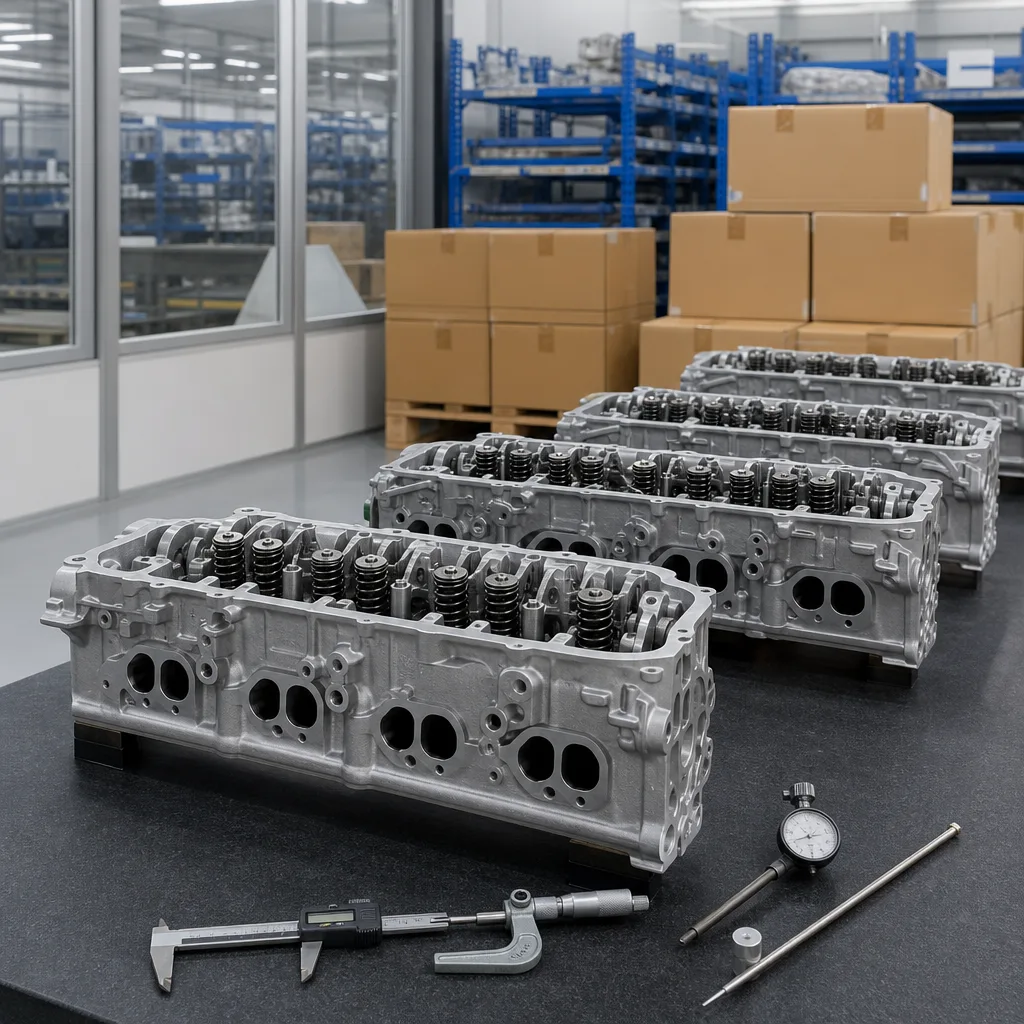
A Jaguar XF camshaft order should be bought on measured fitment, not appearance. For replacement programmes, the critical checks are engine code, intake or exhaust position, trigger pattern, journal size, and valve timing geometry. A part that bolts in but changes lobe lift, duration, or phasing can create noise, idle instability, and avoidable return claims. Driventus supplies replacement camshafts with dimensional control, hardness checks, and lot traceability for B2B buyers who need consistent supply and documented inspection. Driventus is an independent aftermarket manufacturer; brand names are referenced for fitment only. Production and inspection can be aligned with IATF 16949:2016 and ISO 9001:2015, with REACH (EC) No 1907/2006 support available for destination-market documentation.
What to verify before ordering
Not every Jaguar XF uses the same camshaft profile, even when the engine family looks similar in the catalogue. Buyers should confirm the engine code, model year, intake or exhaust side, variable valve timing hardware, and cam sensor target pattern before raising a purchase order.
Use this checklist before you approve a replacement:
- Engine code and exact application range
- Intake or exhaust position
- Journal diameter and overall length
- Lobe height, base circle, and lobe spacing
- Keyway position and trigger wheel pattern
- Required surface hardness and finish
If the original part is worn, measure it and compare the wear pattern to the new part. Casting marks alone are not enough to confirm fitment.
Why OE-equivalence matters
A replacement camshaft has to match the OE envelope on the dimensions that affect timing and lubrication. A polished surface does not compensate for a different base circle, a shifted lobe centreline, or excess runout. On Jaguar XF applications, those small differences can alter valve events enough to affect cold start, top-end power, and follower life.
Driventus parts are inspected against drawing data and controlled machining windows for journal concentricity, lobe indexing, and heat-treatment consistency. That is the difference between a part that looks correct and a part that performs correctly in service.
Materials, standards, and inspection data
Procurement teams should ask for a document pack, not only a part number. A credible pack should include material confirmation, hardness range, dimensional inspection, batch identification, and packaging traceability.
Driventus operates under IATF 16949:2016 and ISO 9001:2015 controls. Where needed, material declarations can support REACH (EC) No 1907/2006 requirements for export markets.
For each lot, ask which checks were completed:
- Runout and straightness measurement
- Journal diameter and lobe profile inspection
- Surface hardness verification
- Crack detection when specified by the buyer
- Functional fit check against the intended timing hardware
If your programme needs broader validation references, published standards such as ECE R-83 or SAE J2527 can be used in adjacent documentation where relevant to the vehicle system or endurance context.
Replacement options compared
The lowest unit price is not always the lowest landed cost. For fleet buyers and distributors, inspection data and supply continuity usually matter more than a small saving on the part itself.
| Option | Fit risk | Lead time | Cost profile | Best use |
|---|---|---|---|---|
| New matched camshaft | Low | Medium | Balanced | Repair channels and stock replenishment |
| Reground camshaft | Medium | Short | Lower upfront | Controlled fleets with measured cores |
| Used salvage camshaft | High | Variable | Uncertain | Temporary recovery only |