camshaft · 2026-06-07

Camshaft for Volvo XC60 OE Equivalent Sourcing

A camshaft for Volvo XC60 OE equivalent replacement has to do more than fit into the cylinder head. For distributors, repair-chain buyers, and import teams, the real sourcing challenge is controlling valve timing accuracy, journal stability, lobe wear resistance, cleanliness, and packaging consistency across repeated production lots. XC60 applications differ by engine family, model year, market, fuel type, and intake or exhaust position, so every programme should start with VIN-based fitment data and buyer-supplied OE part-number cross-references.

Driventus manufactures engine and powertrain components in Taizhou, Zhejiang, and exports to more than 60 countries. We support B2B aftermarket supply programmes with technically documented camshafts, process controls aligned with IATF 16949:2016 and ISO 9001:2015, and practical export packaging options. Driventus is an independent aftermarket manufacturer; Volvo and other brand names are referenced only to identify fitment applications, not to imply endorsement or affiliation.

What OE-Equivalent Means for XC60 Camshafts

OE-equivalence is not the same as approval by the vehicle manufacturer. In aftermarket sourcing, it means the replacement camshaft is engineered to match the relevant functional requirements of the original application, including geometry, material performance, timing features, oil-control surfaces, and installation interfaces.

For Volvo XC60 programmes, buyers should separate three records before ordering: the vehicle application table, the engine code, and the camshaft position. Intake and exhaust camshafts are not interchangeable. A petrol application with variable valve timing may also have different actuator, sensor, and oil-feed requirements from a diesel application, even when the external shape appears similar.

Key verification points include:

  • Camshaft overall length and journal positions
  • Lobe lift, base circle, and phase relationship
  • Gear, sprocket, or actuator interface geometry
  • Sensor trigger feature position and profile
  • Oil hole location, chamfering, and deburring condition
  • Surface hardness and case depth on lobes and journals
  • Straightness and runout after heat treatment and grinding
  • Cleaning level, corrosion protection, and impact-resistant packaging

When a buyer provides an OE cross-reference, Driventus checks it against the supplied vehicle and engine data before quotation or sampling. We do not invent cross-references, and we do not state vehicle manufacturer endorsement. Related engine products can be reviewed in our catalog and the engine components range.

Dimensional Match and Inspection Controls

Camshaft replacement failures often start with small deviations. A journal that is slightly oversized can damage the bearing surface during installation or disrupt the oil film in operation. A lobe profile outside tolerance can alter valve lift, combustion stability, and emissions-related performance. A timing slot or sensor feature in the wrong position may cause starting faults, poor synchronization, or diagnostic trouble codes.

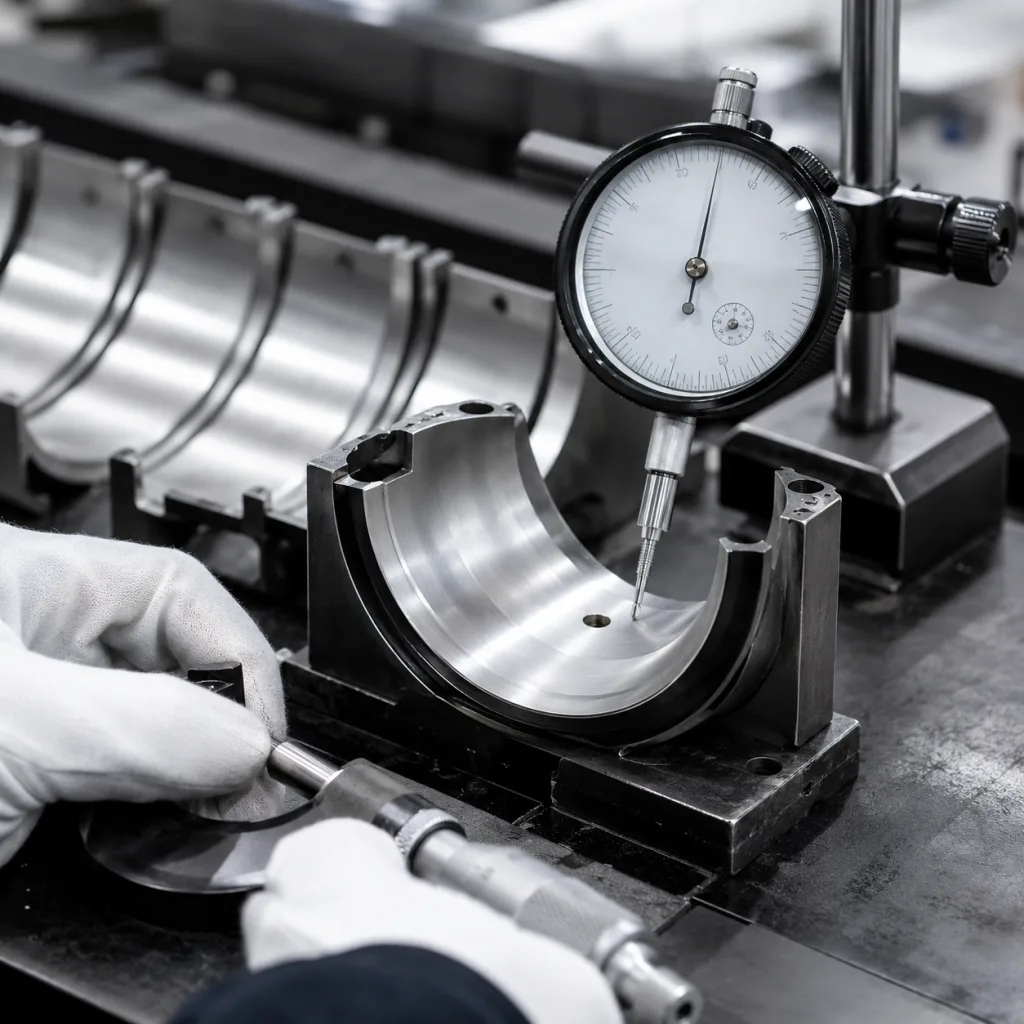
Driventus applies inspection controls at incoming material, machining, heat treatment, grinding, cleaning, and final packing stages. The exact control plan depends on the drawing, sample, and application, but the procurement file should define which characteristics are critical to quality before mass production begins.

</tr></thead><tbody> </tbody></table>Inspection reports can be supplied by batch when agreed in the purchase specification. For higher-volume import programmes, buyers may define AQL sampling, PPAP-style documentation, control-plan requirements, or retained reference samples. Driventus aligns production records with its quality system, including traceability, nonconformity handling, and corrective-action follow-up.

Material, Heat Treatment, and Surface Durability

A camshaft works under repeated sliding and rolling contact while controlling valve motion at high speed. The material route must match the engine design and expected service environment. Common production approaches include cast iron camshafts with chilled or induction-hardened lobes, forged steel camshafts, and assembled camshaft designs using separate lobes and shafts. The correct route depends on the original construction, drawing requirements, and mating components.

For OE-equivalent XC60 replacements, procurement teams should request evidence for the material grade, heat-treatment process, and final surface condition. A visual sample is not enough, because two camshafts can look alike while having different hardness depth, residual stress, microstructure, or lobe finish. Those hidden differences directly affect wear rate, noise, lubrication behaviour, and warranty risk.

Relevant documentation may include:

  • Material certificate or chemical composition report
  • Heat-treatment batch record
  • Lobe and journal hardness results
  • Case depth report where applicable
  • Metallographic inspection for hardened layer structure
  • Surface roughness measurements on lobes and journals
  • Cleaning and anti-rust process confirmation
  • Salt-spray or anti-corrosion packing validation where required by the buyer

Driventus can manufacture to supplied drawings, approved samples, or buyer-specific technical files through custom manufacturing. For export programmes, packaging specifications should be defined early, including neutral carton, private-label carton, pallet pattern, desiccant use, VCI protection, barcode format, and country-specific labelling requirements. Proper packaging is part of the technical specification, not an afterthought, because corrosion or impact damage can turn a dimensionally correct camshaft into an unusable inventory item.

Validation Testing for Replacement Confidence

For a camshaft for Volvo XC60 OE equivalent project, validation should confirm both fitment and functional durability. A first-article sample check is useful, but it is not enough for recurring supply. Buyers should look for repeatable evidence that geometry, surface condition, heat-treatment results, and cleanliness remain controlled after production scales beyond samples.

Validation activities may include dimensional layout inspection, hardness mapping, profile comparison, runout checks, assembly trial, oil-hole cleanliness assessment, and endurance or bench testing where programme volume justifies the cost. Where the camshaft interfaces with a variable valve timing actuator, the mating feature, oil path, and timing reference should be checked with particular care.

Published standards are relevant to the management system and restricted-substance framework, even when they do not define every camshaft dimension. IATF 16949:2016 supports automotive process discipline, defect prevention, and traceability. ISO 9001:2015 supports documented quality management. REACH (EC) No 1907/2006 may be relevant for chemical compliance in products, coatings, packaging, and supply-chain substances. Emissions standards such as ECE R-83 may influence the importance of correct valve timing in the finished vehicle, but replacement camshafts are not certified under that regulation by the aftermarket manufacturer.

A controlled validation plan should answer four practical questions: does it fit, does it time correctly, does it resist wear, and can the factory repeat the result at the agreed volume and cost.

Procurement Checklist for Importers and Repair Chains

A clear RFQ reduces fitment disputes, avoids mixed inventory, and speeds up quotation. For XC60 camshafts, the buyer should identify the application beyond the model name. The same vehicle line can include several engine architectures, fuel systems, emissions levels, and regional specifications.

Include the following in the RFQ:

  • Vehicle model, production year range, fuel type, and market
  • Engine code and displacement
  • Intake or exhaust camshaft position
  • OE cross-reference if already confirmed, using the buyer’s source data
  • Sample photos showing timing end, sensor feature, journal layout, and oil holes
  • Required quantity, annual forecast, and delivery schedule
  • Target packaging: neutral, private label, or repair-chain branded
  • Required documents: inspection report, material report, certificate copies, packing list format
  • Compliance requirements for EU, UK, US, Canada, Australia, Brazil, or other import channels
  • Any special labelling, barcode, pallet, or consolidation requirements

Driventus can support low-volume verification orders before a distributor commits to a larger shipment. For established programmes, buyers can discuss MOQ, batch traceability, private-label packing, inspection documentation, and shipment consolidation with other engine parts. The goal is not only to buy a camshaft that installs once; it is to maintain repeatable fill rate, low warranty exposure, and stable landed cost over the life of the programme.

Procurement teams can request a quote with available cross-reference data, sample images, and annual demand estimates.

Frequently asked questions

Yes, subject to confirmed engine code, model year, market, and intake or exhaust position. Driventus verifies fitment from buyer-supplied OE cross-references, drawings, or samples before quoting. Brand names are used only to identify application fitment.

Depending on the programme, Driventus can provide inspection reports, material records, heat-treatment records, packaging specifications, and copies of IATF 16949:2016 and ISO 9001:2015 certification. Requirements should be stated in the RFQ.

No. OE-equivalent means the aftermarket component is designed to match relevant fitment and functional characteristics. Driventus is an independent aftermarket manufacturer; brand names are referenced for fitment only.

For XC60 camshaft sourcing, send the engine code, camshaft position, cross-reference data, and expected annual volume. Driventus will review the application and respond with a practical quotation path at /contact.html

Request a Quote
Characteristic Procurement concern Typical verification method
Journal diameterBearing clearance and oil filmMicrometer, air gauge, CMM where required
Lobe lift and profileValve timing and engine outputCam profile measuring instrument
Runout and straightnessRotation stability and wearDial indicator or dedicated fixture
Surface roughnessOil retention and friction controlRoughness tester
Hardness and case depthWear resistance and durabilityRockwell/Vickers testing, metallographic checks
Timing feature positionECU synchronization and starting performanceFixture gauge, CMM, functional check
Oil hole conditionLubrication reliability and cleanlinessVisual inspection, deburring check, cleanliness control