camshaft · 2026-06-08

Camshaft Skoda Replacement: Sourcing OE-Equivalent Parts

Sourcing camshafts for Skoda applications is a dimensional, material, and validation exercise rather than a catalogue-only purchase. Buyers must confirm that the replacement part matches the original valve-timing geometry, journal layout, lobe profile, surface hardness, lubrication features, and sensor reference points used across different engine families. A camshaft Skoda replacement programme should therefore begin with disciplined OE-style cross-referencing, engine-code confirmation, drawing or sample review, batch inspection, and a defined documentation path for PPAP-style or customer-specific approval where required. This guide is written for aftermarket distributors, import managers, repair-chain category teams, and sourcing engineers evaluating replacement camshafts for European passenger car applications. It explains what to verify before purchase, which production controls reduce supply risk, and how Driventus manages camshaft manufacturing for B2B customers. Driventus is an independent aftermarket manufacturer; brand names are used for fitment reference only.

Replacement Scope and Fitment Control

A replacement camshaft must reproduce the functional geometry and interface features of the original component. For Skoda applications, fitment control starts with the engine code, fuel type, cylinder-head layout, valve-actuation design, timing system, sensor trigger pattern, and whether the shaft is used on the intake side, exhaust side, or in a combined arrangement.

Procurement teams should not approve a camshaft by vehicle model name alone. The same model range may contain several engine families, emissions calibrations, timing revisions, and superseded part numbers. A reliable sourcing file should capture the information needed to separate similar-looking parts before purchase orders are released:

  • Vehicle application range and engine code
  • Intake, exhaust, or combined camshaft position
  • OE-style part-number cross-reference, where applicable
  • Casting, forging, or assembled-shaft production route
  • Journal diameter, bearing position count, and thrust-face layout
  • Lobe lift, base circle, and timing reference datum
  • Sensor wheel, trigger slot, or reference feature geometry
  • Oil-hole, oil-groove, and lubrication interface details
  • Surface hardness and case-depth requirement
  • Export packaging method and warehouse handling requirements

For catalogue review, buyers can compare relevant engine products in our catalog and related engine component lines at /products/engine-components.html. For non-catalogue applications, Driventus can review samples, drawings, or buyer-provided cross-reference lists through custom manufacturing.

OE-Equivalence Criteria for Camshafts

OE-equivalence does not mean vehicle manufacturer approval. In an aftermarket sourcing context, it means the replacement component is engineered and controlled to match the dimensional, material, and functional requirements of the reference part for the intended fitment.

For a camshaft, the critical match points are the surfaces and geometries that influence valve timing, lubrication, noise, wear, and electronic position recognition. Small deviations can lead to poor idle quality, fault codes, reduced power, abnormal valvetrain noise, or premature follower and tappet wear.

</tr></thead><tbody> </tbody></table>For a camshaft Skoda replacement project, Driventus normally asks for the engine code, annual demand estimate, target market, packaging requirement, and any existing OE-style cross-reference list. If a buyer provides a sample, the sample is measured and compared before tooling, process planning, or production approval begins.

Materials, Heat Treatment, and Machining Controls

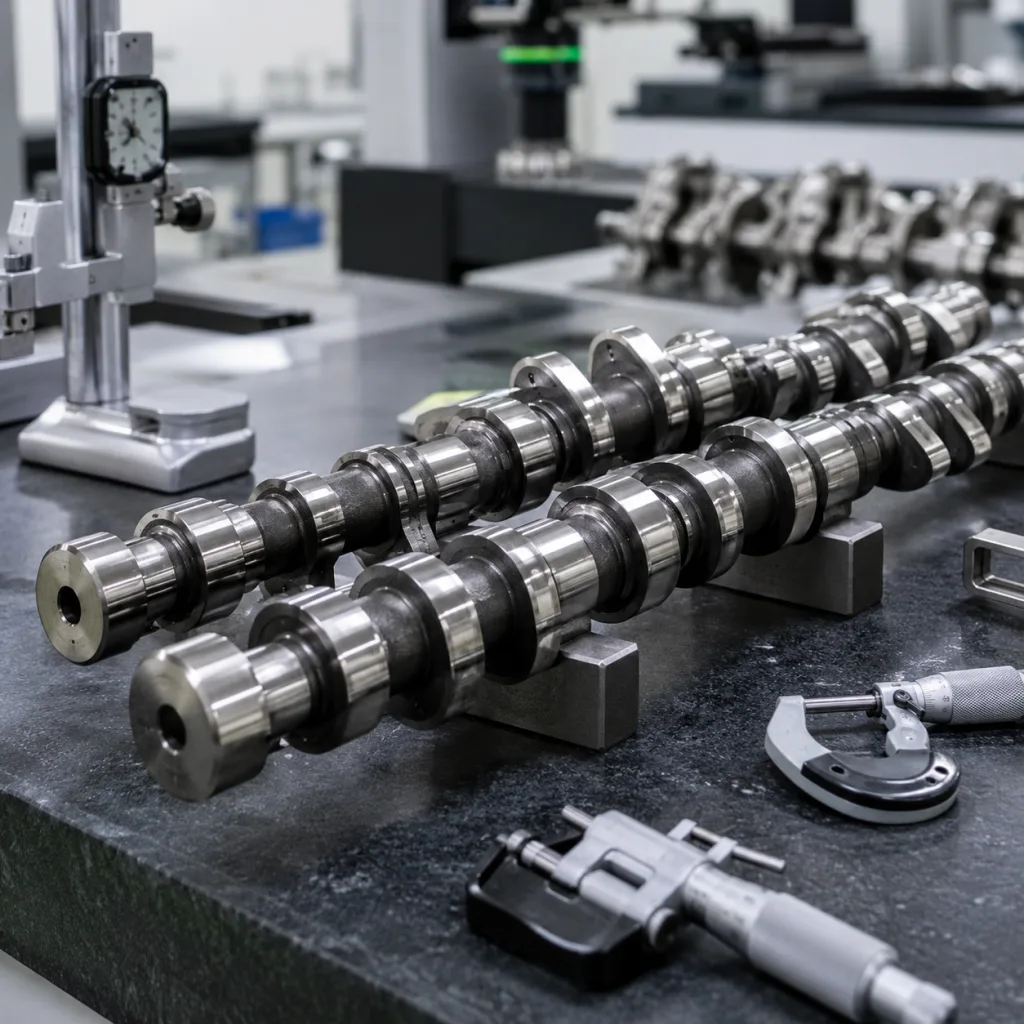
Camshafts are commonly manufactured from cast iron, chilled cast iron, forged steel, or assembled steel designs, depending on engine architecture and load requirements. The correct production route depends on follower type, lubrication conditions, engine speed range, surface-contact stress, and the duty cycle expected in aftermarket service.

Driventus controls camshaft production through material inspection, machining process control, heat-treatment verification, and final dimensional checks. For export programmes, typical technical controls include:

  • Material certificate review for each production batch
  • Chemical composition verification by internal or qualified external testing
  • Rough-machining allowance control before heat treatment
  • Hardness testing on lobes and journals according to the agreed control plan
  • Cam-profile inspection against master data or approved sample
  • Journal runout and straightness checks
  • Surface-roughness measurement on journals, lobes, and thrust surfaces
  • Cleaning, oiling, and anti-corrosion protection before packing

Where customer drawings are available, tolerances are applied from the drawing and reflected in the inspection plan. Where the programme is sample-based, Driventus establishes controlled reference dimensions from approved master samples and buyer confirmation. This is particularly important for older engine families where aftermarket catalogues may contain superseded, merged, or region-specific references.

Driventus manufacturing sites operate under IATF 16949:2016 and ISO 9001:2015 principles. The quality system covers document control, incoming inspection, process control, corrective action, and traceability procedures relevant to engine and powertrain components.

Validation Testing Before B2B Release

Replacement camshafts should pass more than a visual check before B2B release. Buyers supplying multi-location repair chains, import programmes, or national distributor networks need confidence that production batches remain consistent and that any claim investigation can be traced to objective inspection data.

Driventus validation plans are matched to product risk, buyer requirements, application volume, and available reference information. Common validation checks include dimensional inspection, hardness testing, metallographic review where required, profile verification, runout measurement, surface-finish checks, and fitment assessment using representative cylinder-head or valvetrain components.

Typical Pre-Shipment Evidence

A buyer can request the following documents before shipment:

  • Inspection report with key camshaft dimensions
  • Material certificate or batch material confirmation
  • Heat-treatment or hardness test record
  • Surface-finish and runout results where specified
  • Packaging photographs for export cartons or pallets
  • Certificate of conformity for agreed part numbers
  • Traceability code format and carton-labelling details

Compliance requirements may also depend on the destination market. For materials and chemical control, procurement teams may request declarations aligned with REACH (EC) No 1907/2006. Quality management evidence should reference IATF 16949:2016 and ISO 9001:2015 where applicable. Vehicle-level performance and emissions regulations, such as ECE R-83, apply to the broader vehicle system; a replacement camshaft supplier should not claim vehicle-level emissions approval unless a defined test programme has been completed by the responsible party.

How Buyers Should Compare Suppliers

Price is only one part of camshaft sourcing. A low unit cost can be outweighed by warranty returns, catalogue disputes, field complaints, inconsistent batches, or additional inspection work at the buyer’s warehouse. Supplier evaluation should therefore focus on the evidence available before shipment and the inspection burden the buyer is willing to carry internally.

Feature Procurement check Why it matters
Journal diameterConfirm against drawing or master sampleControls oil-film stability and bearing clearance
Lobe lift and base circleMeasure with CMM or cam-profile equipmentMaintains valve opening and closing behaviour
Lobe phasingCheck angular position from timing datumPrevents timing deviation and emissions-related issues
Surface hardnessVerify by batch testReduces wear against followers, tappets, or rocker interfaces
Oil holes and groovesInspect visually and dimensionallyMaintains lubrication at journals and actuator interfaces
Sensor trigger featuresCheck profile, position, and angular accuracySupports ECU camshaft-position recognition
End face and thrust surfacesVerify flatness, finish, and widthControls axial movement, friction, and noise

</tr></thead><tbody> </tbody></table>For a distributor building a camshaft Skoda replacement range, supplier discussions should cover MOQ, lead time, forecast flexibility, inspection reporting, warranty handling, private-label packaging, and long-term availability. OEM-service and Tier-1 buyers should also agree APQP-style planning, PPAP documentation expectations, special-characteristic controls, and change-control rules before purchase orders are released.

Driventus exports engine and powertrain parts to more than 60 countries from Taizhou, Zhejiang. The company supports aftermarket and OEM-service buyers with catalogue parts, engineered replacements, and controlled production for selected custom programmes.

Procurement Checklist for First Orders

Before placing the first production order, buyers should align commercial, technical, packaging, and documentation requirements in writing. This reduces avoidable disputes after goods arrive at the warehouse and gives both parties a clear basis for inspection and claims handling.

Recommended first-order checklist:

  • Confirm exact engine code and camshaft position
  • Provide OE-style cross-reference data if available
  • Approve sample or drawing before mass production
  • Define inspection dimensions and acceptance limits
  • Confirm material, heat-treatment, and hardness expectations
  • Specify neutral, private-label, or branded distributor packaging
  • Confirm carton label fields, barcode format, and country requirements
  • Agree MOQ, lead time, Incoterms, payment terms, and claim procedure
  • Request pre-shipment inspection documents for the first batch
  • Define traceability requirements for cartons, pallets, and paperwork

If the buyer is replacing an existing supplier, failed samples or warranty return notes are useful inputs. Wear pattern, lobe scoring, journal seizure, abnormal noise, or sensor trigger complaints can help identify whether the market problem is linked to material selection, lubrication, profile accuracy, surface finish, handling damage, or application mismatch.

A structured launch process helps procurement teams reduce risk while expanding coverage for Skoda-related engine applications. It also gives repair-chain buyers clearer technical evidence for internal approval before parts are released to branches.

Frequently asked questions

Yes. Driventus supplies aftermarket camshafts and related engine components for selected European applications. Fitment is confirmed by engine code, sample, drawing, or buyer-provided cross-reference data. Driventus is an independent aftermarket manufacturer; brand names are used for fitment reference only.

Depending on the programme, Driventus can provide inspection reports, material confirmation, hardness records, packaging details, certificates of conformity, and traceability information. OEM-service projects may include additional documentation agreed during sourcing.

Start with sample inspection, dimensional comparison, hardness testing, profile verification, packaging review, and a controlled pilot order. For higher-volume programmes, request evidence aligned with IATF 16949:2016 and ISO 9001:2015 supplier approval expectations.

If you are reviewing a camshaft Skoda replacement range or need engineering support for a specific engine family, send the application list, sample details, target packaging, and annual demand estimate to [request a quote](/contact.html).

Request a Quote
Sourcing factor Lower-risk supplier evidence Buyer impact
Cross-reference controlApplication list checked against engine code and sample dataFewer catalogue and fitment disputes
Process capabilityDocumented machining and heat-treatment controlsMore consistent production batches
Quality certificationIATF 16949:2016 and ISO 9001:2015 documentationEasier supplier approval and audit preparation
TraceabilityBatch code on product, carton, or paperworkFaster claim investigation
Export readinessStable packing, labelling, palletisation, and corrosion protectionLower warehouse and transit damage risk
Engineering supportDrawing, sample, or reverse-engineering reviewFaster new-part development and issue resolution