camshaft · 2026-06-08

Camshaft Nissan Wholesale Sourcing Guide

Buying camshafts for Nissan applications is rarely a unit-price decision alone. Dimensional drift, inconsistent casting quality, weak surface hardening and incomplete documentation can turn a low-cost purchase into warranty exposure across a distributor network. This 2026 sourcing guide is written for importers, wholesalers, repair-chain buyers and sourcing engineers who need repeatable aftermarket supply from an independent factory in China. Driventus manufactures engine and powertrain components in Taizhou, Zhejiang, and exports to more than 60 countries. For camshaft Nissan wholesale programmes, we support catalogue-based stocking, buyer-supplied drawings, sample matching and private-label packaging. Driventus is an independent aftermarket manufacturer; brand names are referenced for fitment identification only. Buyers can review [our catalog](/products.html), confirm applicable engine families, then use the guidance below to assess MOQ, lead time, quality controls and audit readiness before placing an order.

Wholesale buying priorities for Nissan camshaft programmes

A wholesale camshaft order should be planned around application coverage, production repeatability and claim control. Buyers need parts that match the intended engine families, arrive with consistent packaging, and can be reordered without changes in lobe profile, journal diameter, thrust surfaces or finish quality.

For Nissan-related aftermarket applications, procurement usually follows one of three models:

  • Distributor stocking: mixed SKUs in carton quantities for regional aftermarket demand.
  • Repair-chain supply: narrower SKU range, steadier forecasts and strict packaging identification.
  • Tier or remanufacturing supply: drawing-based production, batch traceability and additional dimensional reporting.

Before quotation, buyers should define the expected order structure. A broad first order with 20 to 50 SKUs requires different planning from a focused container programme built around a few fast-moving applications. Driventus can quote from existing catalogue applications, physical samples or buyer drawings. For engineered variants, custom manufacturing is the right route because tooling, metallurgy and validation scope must be agreed before mass production.

We do not claim approval or endorsement by any vehicle manufacturer. Fitment data is used only for aftermarket identification and cross-reference checks.

MOQ, lead time and quotation data buyers should prepare

A complete RFQ shortens sampling and prevents avoidable quotation revisions. For camshafts, the most useful inputs are the engine code or application list, annual demand by SKU, expected first-order mix, required packaging format, destination port, inspection level and any buyer-specific test report template.

Typical commercial planning ranges are shown below. Exact figures depend on SKU mix, tooling status, material route, surface treatment and packaging requirements.

</tr></thead><tbody> </tbody></table>For camshaft nissan wholesale enquiries, Driventus recommends sending demand forecasts in quarterly bands instead of only one annual total. This helps align casting batches, machining schedules and export consolidation. Buyers should also state whether the purchase is a one-time stocking order, a launch order with future replenishment, or recurring call-off supply.

Material, machining and inspection controls

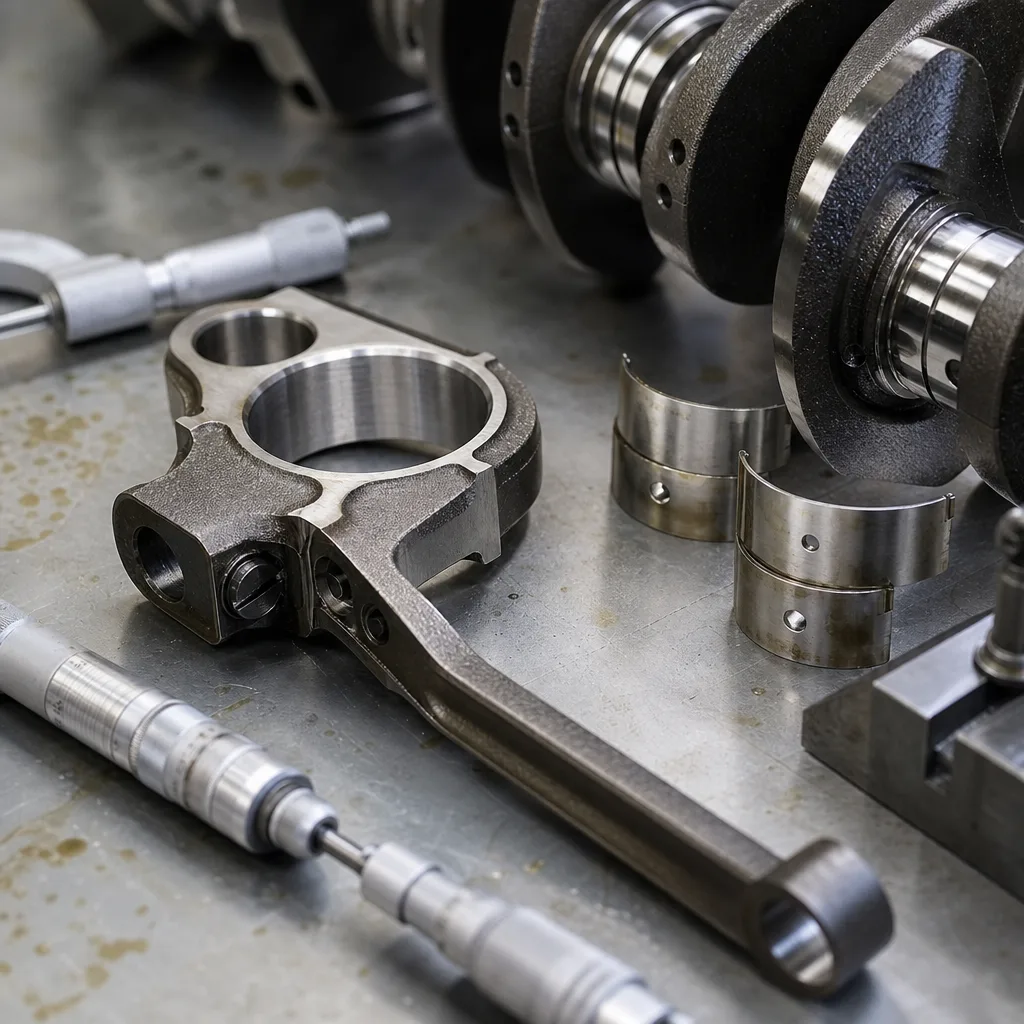
A camshaft is a high-load timing component, so procurement teams should verify more than nominal fitment. Material route, lobe hardness, journal finish, straightness and oil-hole cleanliness all influence durability and installation performance. Common production routes include chilled cast iron, ductile iron and forged or billet steel for selected applications. The correct route depends on engine design, contact load, cost target and required wear resistance.

Driventus controls camshaft production through incoming material checks, rough machining, heat treatment or surface hardening control, finish grinding and final inspection. For programmes that require detailed evidence, we can provide batch inspection data covering critical-to-function dimensions.

Typical inspection focus points include:

  • Lobe lift and profile conformity against approved master data.
  • Journal diameter, roundness and surface roughness.
  • Camshaft straightness after heat treatment and finish grinding.
  • Thrust face width and end-play related surfaces.
  • Oil-hole position, cleanliness and burr control.
  • Visual checks for cracks, casting defects and handling damage.

Hardness verification should be agreed by material route and application. Surface roughness and journal tolerances should be stated on the drawing or confirmed during sample approval. Where buyers set particle contamination limits for engine components, cleanliness expectations may reference ISO 16232.

Quality system, compliance and factory audit evidence

Procurement teams should assess the system behind the part as carefully as the sample itself. Driventus operates under IATF 16949:2016 and ISO 9001:2015 quality management frameworks. These standards do not replace part-specific validation, but they support process discipline, corrective action control, traceability and documented change management.

A buyer audit for a camshaft programme normally covers:

  • Supplier organisation chart and production responsibility matrix.
  • Process flow, control plan and inspection records.
  • Gauge calibration records and retention periods.
  • Material certificates and heat-treatment records.
  • Nonconforming product control and 8D corrective action process.
  • Packaging, labelling and finished-goods storage controls.

For EU and UK importers, material and chemical compliance may also require screening against REACH (EC) No 1907/2006. Buyers should state any restricted-substance declarations, country-of-origin rules or customs documentation requirements during RFQ. Our quality system page gives an overview of certification and inspection structure for buyers preparing supplier files.

Change control is a key audit topic. If the material source, tooling, heat treatment, grinding process, inspection method or packaging specification changes after approval, the buyer should be notified according to the agreed supply contract.

Fitment data, cross-references and private-label packing

Camshaft catalogues rely on accurate cross-reference work. A single interchange error can create high return rates because many engine families share similar external dimensions but differ in lobe timing, sensor trigger features, thrust design or oil-feed layout.

Driventus supports fitment confirmation through application lists, sample comparison and buyer-provided OE part-number cross-references. We recommend that importers provide their existing interchange list and market requirements for each region. The EU, UK, US, Canada, Australia and Brazil often use different catalogue structures and vehicle naming conventions, so data should be validated before label printing.

Private-label supply can include buyer carton artwork, inner bag labels, barcode rules, SKU codes and pallet marks. For multi-location repair chains, carton readability and scan accuracy can be as important as the part itself because branch picking errors often lead to avoidable returns.

Where the order includes related engine components, buyers can review our catalog and the engine components range at /products/engine-components.html. Related items may include timing kits, gaskets, valves, rocker arms and oil pumps, depending on the application.

How to compare camshaft suppliers before awarding volume

Price comparison should include qualification effort, claims handling, documentation quality and delivery stability. A low first quote may not be competitive if the supplier cannot provide reliable inspection records or repeat the approved sample in later batches.

Sourcing item Typical wholesale planning range Procurement note
MOQ for stocked or active SKUs100–300 pieces per SKULower mixed-SKU trial orders may be reviewed case by case
MOQ for new tooling500–1,000 pieces per SKUTooling and sample approval are quoted separately
Sample lead time30–45 daysIncludes dimensional checks and surface treatment confirmation
Mass production lead time45–75 daysDepends on casting, machining capacity and order consolidation
PackagingNeutral, buyer label or private labelBarcode and carton-mark rules should be supplied with the PO
DocumentationInvoice, packing list, CO, inspection reportAdditional forms depend on importing country

</tr></thead><tbody> </tbody></table>For a first camshaft Nissan wholesale order, many buyers start with a pilot shipment covering both high-demand SKUs and selected slow movers. This tests documentation, packaging, dimensional consistency and after-sales response before larger container planning. After approval, call-off schedules can reduce urgent air shipments and improve landed-cost predictability.

If the programme requires a drawing-controlled design, send the technical file early and request manufacturability feedback before locking the target price.

Frequently asked questions

Yes. We support neutral packaging, buyer labels and private-label cartons. Buyers should provide SKU codes, barcode rules, carton artwork requirements and destination-market labelling rules during quotation.

Standard export documents include invoice, packing list, certificate of origin where required and inspection report. Additional material, hardness or dimensional reports can be agreed before production.

No. Driventus is an independent aftermarket manufacturer; brand names are referenced for fitment only. We do not claim vehicle manufacturer approval or endorsement.

Send your application list, annual demand and packaging requirements to [request a quote](/contact.html)

Request a Quote
Evaluation area What to request Why it matters
Technical confirmationDrawing, sample report or master data matchReduces fitment and performance risk
Process capabilityControl plan and critical-dimension recordsShows whether production is repeatable
CertificationIATF 16949:2016 and ISO 9001:2015 evidenceSupports supplier approval files
Export readinessPacking list, HS code support, CO and carton marksReduces customs and warehouse delays
Commercial stabilityMOQ, lead time, payment terms and forecast planHelps category buyers plan stock turns
Corrective action8D process and claim response timeLimits unresolved warranty exposure