Camshaft Citroen Replacement: OE Match and Validation
A Citroen camshaft replacement is not a catalog choice; it is a fit-and-function decision. For procurement teams, the safest path is to verify the OE profile, journal sizes, base-circle diameter, lobe lift, hardening depth, and end-play before release. Small deviations can trigger misfire, low torque, noisy valvetrain operation, or early wear. Driventus supplies replacement camshafts for aftermarket and B2B programs with dimensional control, batch traceability, and validation against sample or drawing data where available. Driventus is an independent aftermarket manufacturer; brand names are referenced for fitment only. For related engine hardware, see [our catalog](/products.html), our [quality system](/quality.html), and [custom manufacturing](/oem-services.html). If you are building a sourcing list, this article shows how to screen, compare, and approve a camshaft Citroen replacement without relying on catalog confidence alone.
The decision checklist: what must match first
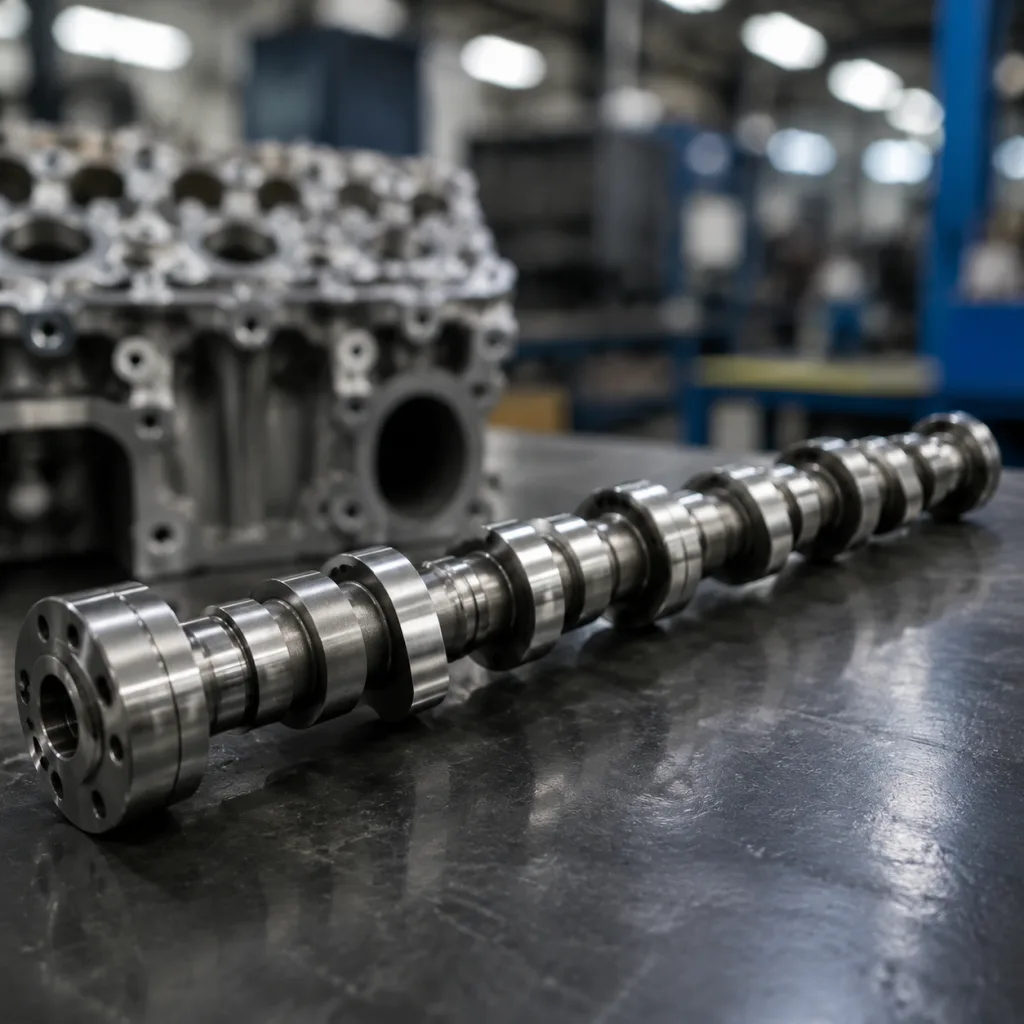
A replacement camshaft must match the functional geometry of the OE part, not just the overall length. For a camshaft Citroen replacement, the first pass should confirm:
- Journal diameter, typically controlled to the drawing or to a tight production window on critical bearings
- Lobe lift and timing events, verified against the OE profile and phasing
- Overall length, thrust face width, and drive-end geometry
- Material grade, core hardness, and case depth where applicable
- Sensor trigger features, keyways, sprocket interfaces, and thrust surfaces
Citroen applications differ by engine family, displacement, valve count, and emissions calibration. Do not buy on model name alone. Match by engine code, OE reference, and physical inspection. That sequence reduces assembly risk and keeps incoming inspection from turning into a rework step.
Common failure modes when the match is off
Most camshaft replacement problems start with a part that is close, but not close enough. Typical failure modes include:
- Incorrect phasing, which can create rough idle, misfire, or poor torque
- Wrong journal size or concentricity, which increases wear and oiling problems
- Inadequate hardness or case depth, which shortens service life
- Poor surface finish, which can damage lifters during break-in
- Runout outside tolerance, which can produce noise and uneven valve action
If the application data is incomplete, ask for a sample comparison against a master part or drawing before issuing a purchase order. For higher-volume programs, a first-article sample, dimensional report, and photo record are worth the time; they prevent repeat disputes later.
Spec deep-dive: the numbers buyers should ask for
A useful sourcing comparison depends on measurable data. Ask the supplier to state the following in writing:
| Check item | What to verify | Typical buyer acceptance logic | Why it matters |
|---|---|---|---|
| OE cross-reference | OE code, engine code, and side/position | Accept only when OE number or validated supersession is confirmed | Prevents fitment errors |
| Geometry | Journal size, lobe profile, thrust width | Require match to drawing, sample, or measurement report | Protects valve timing and oil control |
| Heat treatment | Hardness range and case depth | Target surface hardness often falls in the 55-62 HRC range depending on material and design | Supports wear resistance |
| Surface finish | Journals and lobes free from scoring | Request a clean-as-machined or ground finish with no burrs, pits, or scoring | Reduces break-in damage |
| Packaging | Corrosion protection and part marking | Expect VCI wrap, capped ends, and lot marking on each unit or inner box | Preserves part condition in transit |
| Runout | Total indicated runout and concentricity | Common approval target is ≤0.03-0.05 mm unless the drawing states otherwise | Protects engine smoothness |