camshaft · 2026-07-06

Camshaft for Ram ProMaster OE Equivalent Sourcing

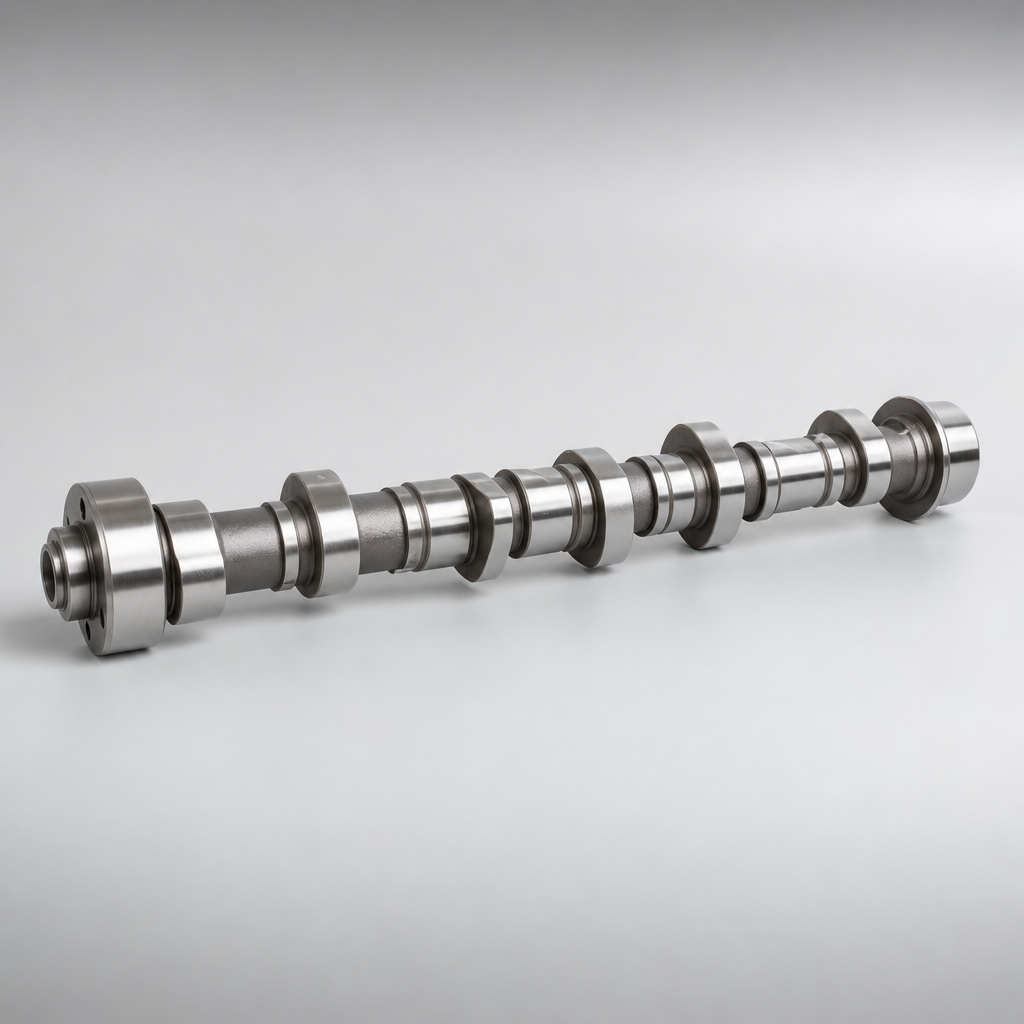
Buying a camshaft for Ram ProMaster OE equivalent supply is not a catalogue exercise. The safe starting point is a verified application file: engine code, model-year scope, intake or exhaust position, OE-style or aftermarket reference, sample status, annual demand, packaging route, inspection level, and target landed cost. Without that file, a low quote can quickly become a returns programme.

The part itself must be controlled around the features that make the engine run correctly: lobe geometry, journal size, phasing, oiling, surface hardness, runout, sensor or timing features, and corrosion protection. For distributors and repair chains, the downside is wider than premature wear. Incorrect consolidation can trigger labour claims, catalogue disputes, mixed warehouse stock, and fitment conflicts across engine variants.

This article sets out how Driventus reviews replacement camshaft projects for Ram ProMaster applications: what to freeze before quoting, what “OE-equivalent” should mean in an independent aftermarket context, which specifications matter most, where sourcing programmes fail, and how to align validation, packaging, MOQ, lead time, and batch traceability. Ram ProMaster and other brand names are referenced for fitment identification only; Driventus is an independent aftermarket manufacturer.

Start With the Fitment Decision, Not the Part Photo

The first sourcing decision is not price. It is whether the proposed reference really belongs to the exact Ram ProMaster application being quoted.

ProMaster vehicles appear in fleet, delivery, trade, camper conversion, and workshop service channels, which encourages broad aftermarket grouping. That grouping is where mistakes start. “Ram ProMaster 3.6” is not enough information for a controlled camshaft quote. Intake and exhaust shafts can be confused. Model-year changes can be hidden inside catalogue descriptions. Sensor-trigger or drive-end differences may not be visible in a marketplace image.

For a camshaft for Ram ProMaster OE equivalent project, Driventus normally asks buyers to provide as much of the following as possible:

  • Vehicle application list by model year, engine code, VIN range if available, and market
  • Sample part, technical drawing, 2D print, 3D scan data, or CMM report
  • Existing aftermarket reference used by the distributor or repair network
  • OE-style cross-reference where it already exists in the buyer’s data
  • Intake or exhaust position, or confirmation that a complete set is required
  • Camshaft position sensor, drive-end, oil-feed, and thrust-face photos if no drawing is available
  • Packaging format: neutral box, buyer brand, or bulk workshop pack
  • Target market: EU, UK, US, Canada, Australia, Brazil, or other regions
  • Expected order volume, launch timing, required MOQ, and sample approval route

A useful rule: if the supplier cannot say which features separate one possible reference from another, the quotation is premature.

Two camshafts may share length, lobe count, and a similar silhouette while differing in journal diameter, thrust-face geometry, oil-feed drilling, camshaft position sensor trigger design, end drive interface, or lobe phasing. Those differences are enough to create installation failure or poor running.

For new references, Driventus typically separates the quotation into sample development, pilot batch, and repeat-production pricing. That makes tooling, gauges, packaging artwork, inspection reports, and retained-sample costs visible instead of hiding them inside a unit price.

Buyers can review broader engine component families in our catalog and the engine category page at engine components before sending a request.

OE-Equivalent: The Working Definition Buyers Should Enforce

OE-equivalent does not mean vehicle manufacturer approval. It means the aftermarket part is engineered to match the functional requirements of the original component for the defined application: fit, timing, lubrication, surface durability, and service behaviour. Driventus is an independent aftermarket manufacturer; brand names are used only to identify fitment.

A practical OE-equivalent review has three layers:

1. Dimensional match: the part installs correctly and aligns with the bearings, thrust faces, oiling points, drive end, and sensor or timing features. 2. Functional match: lobe lift, profile, base circle, angular phasing, and trigger geometry support the intended valve timing and diagnostic behaviour. 3. Durability match: material, hardness, surface finish, cleanliness, and corrosion protection are suitable for real service and distribution conditions.

Target values should come from an approved drawing, golden sample, buyer-signed specification, or controlled reverse-engineering package. The examples below are not universal values for every engine variant; they show the type of controls a buyer should request.

</tr></thead><tbody> </tbody></table>Do not approve a camshaft by external appearance alone. Lobe ramp rate, base-circle diameter, nose radius, and angular phasing influence idle quality, valve-train noise, driveability, diagnostic response, and emissions-related performance. A technically complete quote should state which features are measured 100%, which are sampled under AQL or a control plan, and which require destructive testing from retained or sacrificial pieces.

Where Camshaft Programmes Fail: Material, Heat Treatment, and Grinding

Most sourcing failures are not dramatic at first. They begin with a lobe that wears faster than expected, a journal that marks during installation, a shaft that drifts in runout, or a batch that rusts during ocean freight. The root cause is usually process control, not a single bad operator.

A camshaft works under repeated sliding, rolling, and bending loads. Depending on the original design, it may use chilled cast iron, ductile iron, forged steel, or an assembled shaft construction. The correct route depends on the OE design, follower type, lubrication environment, and hardness profile. Substituting material without revalidating the contact system is a risk.

Driventus production planning normally covers:

  • Incoming material certificate review by heat or batch, including chemical composition and mechanical-property reference
  • Chemical composition checks where required by the control plan, such as carbon, silicon, manganese, chromium, molybdenum, or alloying elements relevant to the selected grade
  • Casting, forging, or blank verification before machining, including visual defects, machining allowance, and straightness condition
  • Rough-machining allowance control before heat treatment or chilling review, leaving enough stock for stable finish grinding without burn risk
  • Heat-treatment process verification, including furnace batch, time, temperature, quench media, and load record where applicable
  • Straightening after thermal operations when required, with pre-grind and final runout logged
  • CNC grinding of journals and lobes using dressed wheels, coolant control, and in-process size checks
  • Deburring of oil holes, edges, keyways, sensor features, and end faces to prevent debris and oil-flow restriction
  • Final washing, magnetic or visual cleanliness check where required, and anti-corrosion protection before packing

Hardness is a common failure point because buyers sometimes ask only for “hardened” material. That is too vague. A responsible plan checks representative locations on lobes and journals and records results by batch. For chilled cast iron lobes, many replacement programmes control lobe hardness in a band such as HRC 50–60 or an equivalent Vickers range, with chill depth verified on development or periodic destructive samples. Values remain specification-dependent. For steel designs, buyers should define effective case depth, surface hardness, and core hardness; a hard surface with a brittle section is not an upgrade.

Grinding and inspection conditions also matter. A journal that measures correctly immediately beside the machine can move outside tolerance if inspected before the part stabilises. Driventus normally stabilises parts before final measurement, controls gauge calibration, records ambient conditions when required, and can provide dimensional inspection reports according to the agreed sampling plan. For repeat programmes, control charts for journal diameter, lobe lift, and runout are more useful than a single clean end-of-line report.

Build the Control Sheet: Features That Must Be Specified

A buyer’s specification should make the camshaft measurable. Reference numbers help, but they are not a control plan. If no OE drawing is available, Driventus recommends creating a reverse-engineered control sheet from at least one approved sample. Two or more known-good samples are better because they help separate design intent from wear, production scatter, or measurement noise.

The control sheet should define:

  • Number of lobes and cylinder application
  • Intake or exhaust position, where separate camshafts are used
  • Overall shaft length, end-face datum, and measurement method
  • Journal count, diameter, width, spacing, taper, roundness, and cylindricity requirement
  • Thrust-face width, location, parallelism, and surface finish
  • Lobe lift, base circle, nose radius, ramp profile, flank shape, and angular position
  • Drive-end interface, including gear, sprocket, slot, dowel, keyway, thread, or pressed feature
  • Camshaft position sensor trigger design, tooth/window geometry, edge quality, and index angle
  • Oil-hole quantity, diameter, chamfer, angular orientation, and burr-free requirement
  • Thread size, pitch, depth, and torque-related engagement length for end fasteners, if present
  • Surface roughness on journals, lobes, thrust faces, seal areas, and contact shoulders
  • Maximum total indicated runout, datum selection, support method, and inspection points
  • Any coating, phosphate, oiling, VCI paper, or corrosion-protection requirement

Example incoming specification format

Attribute Buyer requirement Typical verification method
Overall lengthMatch approved sample or drawing, often controlled within ±0.10–0.20 mmVernier, height gauge, CMM
Journal diametersControlled to drawing tolerance; common aftermarket control band may be ±0.008–0.015 mm depending on designMicrometer and roundness check
Journal roundness/cylindricityPrevent bearing noise and oil-film instability; often ≤0.005–0.010 mm where specifiedRoundness tester or V-block comparison
Lobe lift and profileMatch valve-lift and timing requirement; lift commonly controlled within ±0.03–0.05 mmCam profile measurement
Lobe angular phasingMaintain timing relationship between lobes and sensor features; typical control may be ±0.25–0.50°Profile machine, rotary CMM, indexing fixture
Lobe surface hardnessCompatible with follower interface, with method and location statedRockwell or Vickers hardness test
RunoutControlled to reduce bearing load and timing variation; common maximum TIR target is 0.03–0.05 mm unless drawing states otherwiseDial indicator between centres
Oil-feed holesPosition, diameter, chamfer, and burr-free condition matchedPin gauge and visual inspection
Sensor or timing featuresCorrect indexing and geometryFixture inspection or CMM
Surface finishSuitable for lubrication film and running contact; journals often specified around Ra 0.2–0.4 µmRoughness tester

</tr></thead><tbody> </tbody></table>This format reduces ambiguity before tooling, sampling, or mass production. It also keeps engineering confirmation separate from commercial negotiation.

Example: if the opening order is 200 pieces and annual demand is 600 pieces, the first-batch price may need to carry gauges, packaging plates, development samples, and documentation. If the annual forecast is 3,000–5,000 pieces, those costs can often be amortised differently. The technical file gives both sides a cleaner basis for that discussion.

Validation Path: From Sample Bench to Release Order

Validation should match the risk. A distributor launching a new reference across several warehouses needs more evidence than a buyer testing a small sample lot. Camshaft replacement involves significant labour, so the cost of a wrong part or early wear claim usually exceeds the part cost many times over.

For a camshaft for Ram ProMaster OE equivalent supply programme, Driventus typically supports a staged path:

1. Sample confirmation: comparison against the buyer’s sample, drawing, scan data, or approved reference, with photos and a marked-up feature list. 2. Dimensional inspection: measurement of critical-to-fit and critical-to-function features, normally including all journals, overall length, thrust faces, oil holes, and drive-end features. 3. Profile review: confirmation of lobe lift, base circle, nose radius, ramp relationship, and relevant timing geometry where specified. 4. Hardness verification: lobe and journal hardness recorded by batch or agreed sampling level, with destructive depth checks when the specification requires them. 5. Runout test: shaft straightness checked between centres or in a controlled fixture, with the measurement location and TIR limit stated. 6. Surface-finish check: roughness verification on contact surfaces where specified, commonly journals, lobes, thrust faces, and seal areas. 7. Assembly review: confirmation of drive-end features, sensor trigger geometry, oil holes, threaded ends, chamfers, and burr-free condition. 8. Cleanliness and corrosion review: confirmation that oil passages, drilled holes, and packaging protection are suitable for export handling. 9. Packaging drop and corrosion review: used when long sea freight, mixed storage, or private-label presentation is expected.

A practical launch sequence is often simple: 2–5 development samples for dimensional and profile approval, then a pilot batch of 50–100 pieces for packaging and warehouse release, then mass production after sign-off. First article inspection should include a full dimensional report. Repeat orders can use a reduced control plan if the process is stable.

Pre-shipment inspection can be set at buyer-defined AQL levels, with critical defects at 0 acceptance and major/minor defects aligned to the buyer’s internal policy.

Quality-management standards such as IATF 16949:2016 and ISO 9001:2015 are useful frameworks for document control, corrective action, process control, and traceability. They do not prove that a part number fits a specific engine. The product still needs application-specific verification, retained samples, and a clear deviation process for any measured value outside the agreed print.

Traceability and Compliance: Questions to Ask Before the First Batch

A first sample can be correct while the third batch is not. That is why procurement teams should evaluate the supplier’s system as well as the part. Camshaft quality depends on repeatability across blanks, heat treatment, grinding, inspection, packing, and shipment.

Driventus operates under a documented quality system aligned with IATF 16949:2016 and ISO 9001:2015 expectations for manufacturing control, nonconformity handling, corrective action, record retention, gauge calibration, process change control, and traceability.

Before approving a supplier, ask these traceability questions:

  • Can each shipment be linked to a production batch number and manufacturing date range?
  • Is the material batch or heat reference tied to a material certificate?
  • Can the casting, forging, or blank supplier lot be identified where applicable?
  • Are CNC, grinding, fixture, and key machining route records retained?
  • Are heat-treatment, chilling, nitriding, induction-hardening, or hardness records available when applicable?
  • Are in-process inspection records kept for journals, lobes, runout, and critical features?
  • Does the final inspection report show sample size and acceptance criteria?
  • Are packing list, carton count, pallet ID, and shipment trace controlled?
  • Are retained samples held when agreed?
  • Is there a documented nonconformity and corrective-action route?

For EU and UK buyers, material declarations and chemical compliance may also be relevant. REACH (EC) No 1907/2006 is often requested for substances management in the European supply chain. If the camshaft ships with cartons, bags, rust-prevention paper, labels, plastic caps, or inserts, buyers may also request packaging material declarations according to their market obligations.

Private-label packaging adds another layer of control. Artwork version, barcode type, country-of-origin statement, and carton markings should be frozen through the purchase order or packaging specification.

A camshaft is not an emissions-control device by itself. However, incorrect valve timing can affect engine performance, fuel consumption, diagnostic behaviour, and emissions output. Buyers distributing into regulated service networks should keep fitment evidence, inspection records, and installation guidance available for claim review. Driventus does not claim approval or endorsement by any vehicle manufacturer.

Commercial Scenario: Low Unit Price vs. Controlled Landed Cost

After technical approval, the commercial decision should not collapse into unit price. Camshafts carry higher claim exposure than simple service parts because installation labour is significant and failure analysis takes time. A cheap shaft can become expensive if dimensional drift, poor packaging, rust, or mixed references create returns.

Commercial sourcing should cover:

  • Minimum order quantity by reference, packaging type, and launch phase
  • Sample lead time, pilot-batch lead time, and mass-production lead time
  • Incoterms, port of loading, freight mode, and consolidation plan
  • Batch inspection level, report format, and whether inspection cost is included in the unit price
  • Private-label artwork control, barcode format, label placement, and carton strength
  • Rust-protection period required for ocean freight and warehouse storage
  • Warranty handling process, evidence required for claims, and response timing
  • Forecast sharing for seasonal, fleet-driven, or promotional demand
  • Spare carton, label, and documentation requirements for multi-market distribution

A realistic timeline for new camshaft references is often 30–60 days for sample development after the approved sample or drawing is received, plus 45–75 days for first mass production. Blank availability, heat treatment, packaging, inspection workload, and export documentation can all move that schedule. Repeat production is usually shorter when material and packaging are forecast, but it still needs machining, grinding, hardness checks, cleaning, anti-rust treatment, and shipment preparation.

MOQ is usually driven by blank production, heat-treatment batch size, packaging print run, and inspection setup. A common structure is a higher MOQ or surcharge for the first order, followed by better repeat-order economics once demand stabilises.

Driventus supports replacement programmes for aftermarket distributors, wholesalers, OEM and Tier-1 service channels, and multi-location repair chains. For buyers needing drawing-based changes, material conversion, or bundled camshaft kits with related engine components, custom manufacturing can be reviewed before project kick-off.

For repeat orders, stable forecasting improves material purchasing, machining planning, heat-treatment capacity, inspection scheduling, and finished-goods availability. It also reduces the risk of urgent substitutions that have not passed the same approval route. When comparing quotations, ask whether the price includes FAI reports, private-label cartons, rust protection for sea freight, retained samples, and pre-shipment inspection. Those items change the true landed cost.

Final Approval Checklist: Freeze These Items Before the PO

The purchase order should be the result of an approved file, not the start of engineering discovery. Before issuing a PO for a Ram ProMaster camshaft replacement programme, connect application data, engineering controls, packaging, and commercial terms in one decision record.

Buyer approval checklist

  • Confirm exact engine application, market, model-year range, and any VIN or engine-code limitations.
  • Confirm whether the order is for intake, exhaust, or a matched set, and whether parts must be packed separately or together.
  • Provide a sample, drawing, scan file, CMM data, or approved reference data.
  • Define critical dimensions: journals, lobes, oil holes, drive end, sensor features, thrust faces, and threaded ends.
  • Agree measurable tolerances for journal diameter, lobe lift, runout, phasing, surface finish, and oil-hole location.
  • Agree hardness method, hardness range, case/chill depth requirement, and test locations.
  • Request first article inspection or a sample report before mass production.
  • Confirm packaging, labelling, barcode, carton strength, pallet pattern, and country-of-origin marking.
  • Confirm anti-corrosion protection for the expected transport and storage route, such as oil film, VCI paper, sealed bag, or desiccant where required.
  • Review supplier certification, inspection records, gauge calibration status, and traceability method.
  • Define claim-handling procedure, required evidence, response timing, and whether failed parts must be returned for analysis.
  • Confirm MOQ, sample cost, first-order quantity, repeat-order price breaks, lead time, payment terms, and Incoterms.

If the product will be sold in multiple markets, verify catalogue language, fitment data, customs descriptions, and local compliance documents early. Wholesale and repair-chain channels often use different data flows; one catalogue error can create avoidable returns across both.

Before final release, Driventus recommends signing off four items: one golden sample, one inspection standard, one packaging specification, and one commercial order sheet. That gives engineering, purchasing, warehouse, and claims teams the same source of truth.

Frequently asked questions

Provide the engine code, model-year range, market, intake or exhaust position, sample or drawing, existing reference, target quantity, and packaging requirement. If critical dimensions are available, include journal diameter, lobe lift, runout limit, oil-hole layout, surface finish, hardness range, phasing requirement, and sensor or drive-end details.

No. OE-equivalent means the part is engineered to match the functional fit, timing, lubrication, and durability requirements for the defined application. Driventus does not claim approval, endorsement, or authorisation by any vehicle manufacturer.

Yes. Inspection reports can be agreed before production. Typical records include dimensional checks, hardness results, runout measurement, surface-finish checks, profile-related measurements where specified, and batch traceability. The exact report format depends on the buyer’s sampling and documentation requirements.

Yes. Driventus can support neutral packaging, buyer-branded packaging, and bulk workshop packs. Artwork control, carton strength, barcode format, labelling rules, pallet format, and anti-corrosion protection should be confirmed during the quotation stage.

If you are building a camshaft for Ram ProMaster OE equivalent sourcing file, send the application data, sample status, reference details, critical tolerances, packaging route, target volumes, MOQ expectations, and required launch date for review. You can [request a quote](/contact.html) or contact the Driventus team through the contact page.

Request a Quote
Field Recommended buyer input
ApplicationRam ProMaster, engine code, market, model year range, and intake/exhaust position
Part typeIntake camshaft, exhaust camshaft, or complete set with matched packing
ReferenceBuyer’s existing reference, sample number, OE-style cross-reference, or approved drawing
Critical toleranceJournal diameter ±0.01 mm, lobe lift ±0.03 mm, runout ≤0.05 mm TIR, phasing ±0.5°, oil-hole position per drawing
Surface and hardnessJournal Ra target, lobe Ra target, lobe hardness range, case/chill depth if applicable
Validation requestDimensional report, hardness report, profile plot, fitment sample, retained sample
PackagingIndividual boxed, bulk, kit pack, or private label with barcode and carton specification
Commercial targetMOQ, annual forecast, first order quantity, target ship date, and Incoterms