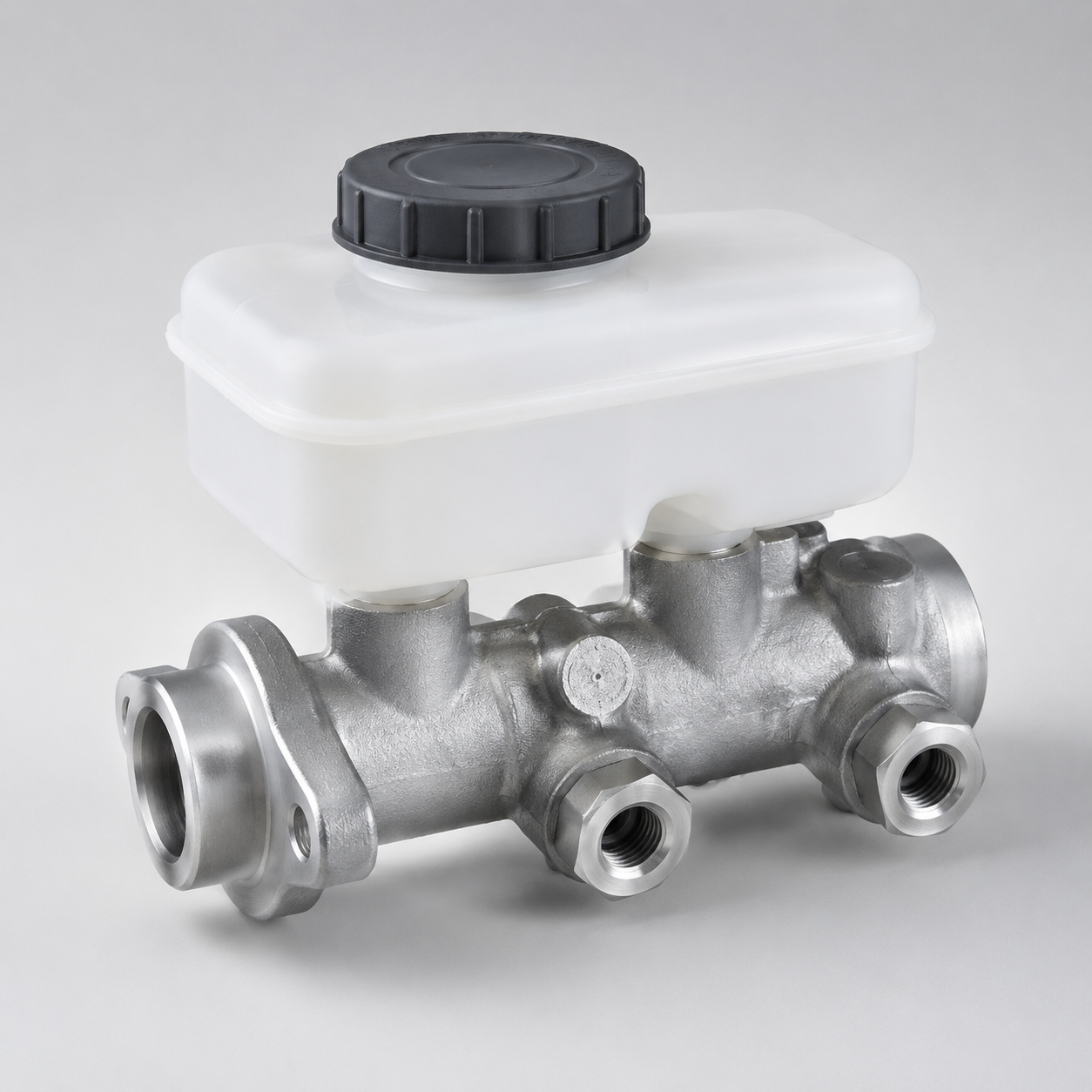
A cylinder sleeve seat is a small interface with outsized consequences. If the seat loses location, face contact or surface integrity, the liner can sit incorrectly, sealing load can shift, heat transfer can suffer and assembly failures may appear long after incoming inspection. That is why choosing a cylinder sleeve seat supplier is not a unit-price exercise. It is a repeatability test.
For import managers, sourcing engineers and category buyers, the useful question is simple: can the supplier hold concentricity, surface finish, face geometry and traceability batch after batch, and can they prove it with records your quality team will accept? This article approaches the decision from several angles: terminology risks, supplier failure modes, tolerance control, MOQ planning, audit evidence, RFQ preparation and pre-shipment validation.
Driventus manufactures engine and powertrain components in Taizhou, Zhejiang, with IATF 16949:2016 and ISO 9001:2015 systems applied to APQP, production control and export documentation. Driventus is an independent aftermarket manufacturer; brand names are referenced for fitment only.
Start by defining the part, not the supplier
“Cylinder sleeve seat” is not used the same way in every market. In one RFQ it may mean a replaceable seat ring. In another, it may refer to a machined landing in an engine block, a sleeve support insert, or a precision component used with a wet or dry liner assembly. If the terminology stays vague, every quotation that follows is unstable.
Before comparing any cylinder sleeve seat supplier, lock down the technical identity of the part.
A usable RFQ normally defines:
Engine application, drawing number, revision and datum structure
Wet liner, dry liner or semi-finished sleeve interface
Material grade, heat treatment and hardness range, for example HB 180–240 or HRC 28–34 where specified
Outer diameter, inner diameter, height, wall thickness and seating face geometry
Fit class or target clearance/interference against the liner or block feature
Concentricity, circular runout, flatness, parallelism and surface roughness requirements
Chamfers, radii, edge-break and burr limits, commonly 0.2–0.5 mm unless the drawing states otherwise
Packaging method for corrosion prevention and traceability
Annual volume, release pattern and required service level
Aftermarket buyers often care most about cross-reference coverage and repeatable reorder quality. OEM service and Tier-1 buyers usually place more weight on PPAP-style records, change control, traceability and nonconforming product response. The same component name can therefore carry very different documentation expectations.
Driventus supplies cylinder sleeve-related components alongside pistons, crankshafts, gaskets, water pumps and turbochargers. Buyers can review adjacent engine component groups in our catalog or the engine component family page at /products/engine-components.html.
Decision matrix: what separates a capable supplier from a risky quote
Do not compare price until the risk baseline is equal. A low quote is not useful if the supplier measures from the wrong datum, omits hardness evidence, or treats packaging as an afterthought. A better comparison asks: where could this programme fail, and what evidence reduces that risk?
Sourcing criterion
What to verify
Why it matters
Drawing control
Revision, datum scheme, CTQ dimensions, tolerance standard such as ISO 2768 or customer-specific GD&T, and inspection method
Prevents disputes over measurement method and acceptance criteria
Material confirmation
Grade, chemical composition, hardness, tensile properties and microstructure if specified
Supports wear resistance, seating behaviour and thermal stability
Machining capability
CNC turning, boring, grinding, honing, lapping, deburring and washing as required by the drawing
Controls fit, roundness and sealing face quality
Measurement system
CMM, roundness tester, profilometer, height gauges, air gauges, plug gauges and calibrated fixtures
Gives objective evidence for incoming inspection
Process control
Control plan, in-process checks, tool-wear limit, first/last piece approval and reaction plan
Reduces batch-to-batch variation
MOQ policy
Per part number, per shipment, per material batch and per packaging type; ask for price breaks at 100, 300, 500 or 1,000 pcs where realistic
Affects distributor stock planning and landed cost
Lead-time
Tooling, first article, pilot lot and repeat production timing; separate sample lead-time from mass production
Reduces programme launch and replenishment risk
Certification
IATF 16949:2016, ISO 9001:2015 and applicable customer requirements
Shows process discipline, not automatic product approval
Export readiness
HS code support, packing list, invoice, certificate of origin if required, fumigated pallet options and shipping marks
Reduces customs, receiving and payment-document delays
</tr></thead><tbody> </tbody></table>Also ask what the quotation excludes. Vehicle manufacturer approval? Branded packaging? Design ownership? Lifetime fitment guarantees? Validation beyond the agreed test plan? These should not be assumed. Driventus does not claim approval or endorsement by any vehicle manufacturer.
Spec deep-dive: the dimensions that usually cause trouble
Cylinder sleeve seats work under clamping load, thermal cycling, vibration and contact stress. Material selection depends on engine design, liner type, block material and the customer drawing. Common options include alloy cast iron, ductile iron and selected steel grades. Some programmes add controlled hardness, tensile properties or microstructure requirements to match the liner and surrounding engine structure.
The most common problem is not that a supplier misses every dimension. It is that one functional feature drifts while the rest of the part still looks acceptable.
Typical control points include:
Diameter tolerance: defined by drawing; locating diameters often require ±0.01–0.03 mm control, while less critical ODs may allow ±0.05 mm or more.
Roundness: important where the seat supports liner alignment and prevents uneven loading; buyers often specify 0.01–0.03 mm for precision seating features.
Concentricity and runout: critical when the seat locates against multiple functional surfaces; common drawing limits may be 0.02–0.05 mm depending on engine size.
Flatness and parallelism: needed for consistent load distribution and sealing face contact; seating faces may require 0.01–0.04 mm flatness.
Surface roughness: commonly controlled on seating faces and locating diameters; Ra 0.8–1.6 μm is a frequent target, with Ra 0.4 μm possible after grinding or lapping.
Chamfer and edge condition: helps prevent assembly damage to liners, seals or block features; burr height should normally be controlled below 0.05 mm on functional edges.
Cleanliness: removes abrasive particles from machining and grinding operations; specify particle limits or visual cleanliness if the part enters a controlled engine assembly line.
Corrosion protection: protects functional surfaces during storage, sea freight and warehouse handling; VCI bag, anti-rust oil and sealed cartons are common options for 3–12 months of protection depending on climate.
Driventus selects production routing based on part geometry, material and order volume. A typical route may include incoming material verification, rough turning with 0.3–0.8 mm stock allowance, stress relief where required, semi-finish boring, finish turning or grinding, chamfering, deburring, washing, anti-rust treatment and final inspection.
The real test comes after tool wear, material batch changes and shift changes. If the drawing contains tight geometric tolerances, the RFQ should state whether they are checked on every part, by sampling, or through a capability-controlled process with Cpk targets such as 1.33 for stable production or higher if required by the customer.
Commercial planning scenario: when MOQ and lead-time change the landed cost
A sourcing team may find two similar unit prices and still make the wrong decision. Why? Because MOQ, gauge charges, anti-rust packaging, pallet density and replenishment lead-time can change the true landed cost.
MOQ for cylinder sleeve seat projects depends on material, machining complexity and whether tooling or gauges must be developed. For standard aftermarket references, the minimum order quantity can often be consolidated with related engine parts. For special drawings, MOQ is usually affected by casting, forging or bar-stock purchase quantity, fixture cost, inspection effort and packaging requirements.
As a planning guide, standard references may be quoted from 100–300 pcs per part number when material is available. Custom machined parts may require 300–1,000 pcs or a material-batch MOQ. If a dedicated fixture, plug gauge, air gauge or grinding wheel profile is required, expect a separate tooling or gauge charge. Ask for two or three price breaks rather than one number.
Critical dimensions, fitment notes, reference samples if available
Feasibility comments and inspection proposal
Sampling
Sample PO and approved drawing revision
First article samples and measurement report
Pilot order
Confirmed packaging, label and shipment terms
Controlled batch with traceable records
Repeat supply
Rolling forecast or call-off schedule
Production lots under agreed lead-time
</tr></thead><tbody> </tbody></table>Separate sample lead-time from repeat production lead-time. Drawing review and quotation may take 3–7 working days after complete data is received. Sample production is often 20–45 days depending on material and tooling. A pilot or first mass-production lot may require 35–60 days, while repeat orders for stable parts can often be planned at 30–45 days plus transit.
Clarify when the clock starts: PO, drawing approval, deposit receipt, material arrival or packaging confirmation. For heavy steel or cast-iron rings, calculate landed cost by net weight, pallet utilisation and customs duty, not only by piece price.
For distributors carrying multiple engine families, mixed-container planning can reduce freight cost and improve stock availability. Driventus can discuss consolidated shipments that include cylinder sleeves, seats, pistons, gaskets and related powertrain components, depending on part availability and destination requirements.
Audit trail: proof that the process can repeat
A certificate is a starting point, not a product approval. It tells you a management system exists. It does not prove that a specific cylinder sleeve seat will meet your drawing next month.
Driventus operates under IATF 16949:2016 and ISO 9001:2015. Buyers can review our quality system for information on certification, inspection equipment and quality management approach.
For a factory audit, procurement and quality teams commonly request:
Business licence and export registration
IATF 16949:2016 and ISO 9001:2015 certificates, including scope and validity
Process flow chart for the part family
Control plan and inspection standard with sample size and frequency
Material certificate or chemical composition report, with heat or lot number where available
First article inspection report covering all drawing dimensions or agreed CTQs
Calibration list for critical gauges with due dates and gauge IDs
Gauge R&R or measurement system evidence where required, commonly targeting under 10% for critical measurements or an agreed customer limit
Nonconforming product control procedure
Corrective and preventive action process, including 8D format if requested
Traceability method from raw material to shipment
Packaging and corrosion prevention standard
Change control procedure for material, tooling, process or sub-supplier changes
Where environmental and chemical compliance is required, buyers may also request declarations related to REACH (EC) No 1907/2006. For parts supplied into markets with end-of-life vehicle regulations, restricted substances policies or customer-specific material reporting rules, state the compliance request at RFQ stage rather than after sampling.
One useful audit question is: “Which dimensions would stop shipment if out of tolerance?” The answer should match the control plan and the product function. If every dimension is treated equally, the supplier may not understand the risk points. If only appearance is checked, go deeper into functional geometry, material verification and traceability.
For repeat orders, ask to see one completed lot file: raw-material record, in-process inspection sheet, final report, nonconformance log if any, packing photos and shipment number.
Build the RFQ like a control document
A weak RFQ creates rework. A strong RFQ reduces sampling loops, price revisions and late-stage disputes. Treat the RFQ as the first control document for the programme, not as an email asking for a quick number.
Recommended RFQ information
Part name and application description
Drawing in PDF plus CAD file where available, preferably STEP, IGES or DWG for complex geometry
Drawing revision and date
Annual forecast and first order quantity, with expected monthly or quarterly releases
Required MOQ, if the buyer has a stocking constraint
Target incoterm, such as EXW, FOB, CIF or DDP where applicable
Destination country and import documentation requirements
Material grade and heat treatment requirement
Hardness range, coating or surface treatment requirement if applicable
Surface treatment or anti-rust requirement, including expected storage period such as 6 or 12 months
Critical dimensions and inspection method, including datums and whether CMM, roundness tester or functional gauge is required
Required sample quantity, commonly 3–10 pcs for dimensional approval or more for assembly trials
PPAP, first article or dimensional report level, if required
Packaging quantity per carton, pallet limit and label format
Barcode, private-label or neutral packaging requirements
Any restricted substance requirements, including REACH (EC) No 1907/2006 where applicable
If the programme is not based on a customer drawing, provide a physical sample or confirmed fitment information. For aftermarket references, include any available OE part-number cross-reference in a generic form only when already used in your sourcing file, such as OE 06A… or OE 11251…. Brand names should be used only to clarify fitment, not to imply endorsement.
Define ownership early. Who owns the drawing, gauges and tooling? If the buyer funds a dedicated fixture or gauge, specify whether it is buyer-owned, supplier-held, transferable, and replaced after a defined wear limit or production quantity.
Driventus can support custom manufacturing for buyer-owned drawings, modified dimensions or private-label distribution requirements. Tooling, gauges, sample approval steps and documentation level should be agreed before sampling.
Pre-shipment validation: catch the defects that warehouses miss
Many cylinder sleeve seat defects are not obvious at receiving. A part can look clean, packed well and still fail because face runout, roundness or seating height is outside the agreed limit. Pre-shipment inspection should therefore combine dimensional, material, appearance and packaging checks.
A typical validation package may include:
Dimensional report for critical and major dimensions
Material certificate or internal material confirmation
Hardness test result when specified, with location and method such as HBW, HRC or HRB
Surface roughness record for seating faces if required
Flatness, runout, roundness or concentricity data when required by drawing
Visual inspection for dents, burrs, corrosion and contamination
Gauge calibration reference for critical measuring tools
Batch traceability record linking material lot, production date and inspection lot
Packing photos and carton label confirmation
Quantity confirmation by carton, pallet and shipment lot
For higher-volume programmes, statistical process control can be applied to key dimensions such as locating diameter, seating height and face runout. Buyers should define acceptance criteria before production starts. If AQL inspection is required, document the sampling plan, inspection level, acceptable quality limit and defect classification in the purchase agreement. ANSI/ASQ Z1.4 or ISO 2859-1 general inspection level II is commonly used, with separate AQLs for critical, major and minor defects. Functional out-of-tolerance dimensions are often treated as critical or zero-acceptance items.
Validation depends on the part design. Some sleeve seat programmes require assembly checks with matching liners or blocks, including insertion force, seating height, protrusion and visual contact pattern. Others rely on dimensional conformance, material verification and cleanliness. The supplier should not substitute one test for another without written approval.
If the part is safety- or warranty-sensitive, retain approved samples, signed inspection records and shipment traceability so any later investigation can identify the affected batch quickly.
Q&A for buyers considering Driventus
What does Driventus contribute beyond a quotation? Driventus combines manufacturing control with export service for B2B buyers that need dependable supply, practical documentation and clear communication before production begins. The company is based in Taizhou, Zhejiang, and supplies engine and powertrain components to customers in more than 60 countries.
What support is available during sourcing?
Drawing review and manufacturability feedback, including tolerance-risk comments before quotation is finalised
Standard and custom part quotation with MOQ and price-break discussion
MOQ discussion by part number, material batch and consolidated order
Sample production with dimensional reporting
Batch production under documented process controls
Neutral, private-label or buyer-specified packaging where agreed
Export carton and pallet planning, including gross weight, carton quantity and shipping mark confirmation
Shipment documentation support for target markets
Follow-up on reorder forecasts and mixed-SKU shipments
Does every buyer need the same documentation? No. A distributor may need wide coverage, mixed SKUs and stable reorder lead-time. A Tier-1 buyer may need stronger APQP evidence, change notification and production part approval documentation. A repair-chain buyer may focus on availability, packaging consistency and low receiving error.
What should a buyer request before appointment? Ask for a sample report, production control plan and realistic delivery schedule. A transparent answer at RFQ stage is more useful than an optimistic lead-time that later slips. The right cylinder sleeve seat supplier should be able to explain the manufacturing route, inspection method, documentation scope and commercial constraints in terms that both purchasing and quality teams can use.
Frequently asked questions
A drawing or sample is preferred, along with material, tolerance, annual volume, first order quantity, destination country, packaging needs and documentation level. If the part is for aftermarket fitment, provide confirmed application data and any existing cross-reference format used in your sourcing file.
Yes. Driventus can quote standard aftermarket references where available and custom parts based on buyer drawings. Custom projects require technical review, sample approval and agreement on tooling, gauges, MOQ and documentation before production.
IATF 16949:2016 and ISO 9001:2015 are relevant quality management standards for automotive production control. Some buyers also request restricted substance declarations related to REACH (EC) No 1907/2006, depending on market and customer requirements.
Driventus does not claim approval or endorsement by any vehicle manufacturer. Driventus is an independent aftermarket manufacturer; brand names are referenced for fitment only. Buyers should verify fitment, specification and documentation against their own programme requirements.
If you are comparing suppliers for a current cylinder sleeve seat programme, share your drawing, volume and target market so our team can review feasibility, MOQ and lead-time. You can [request a quote](/contact.html).