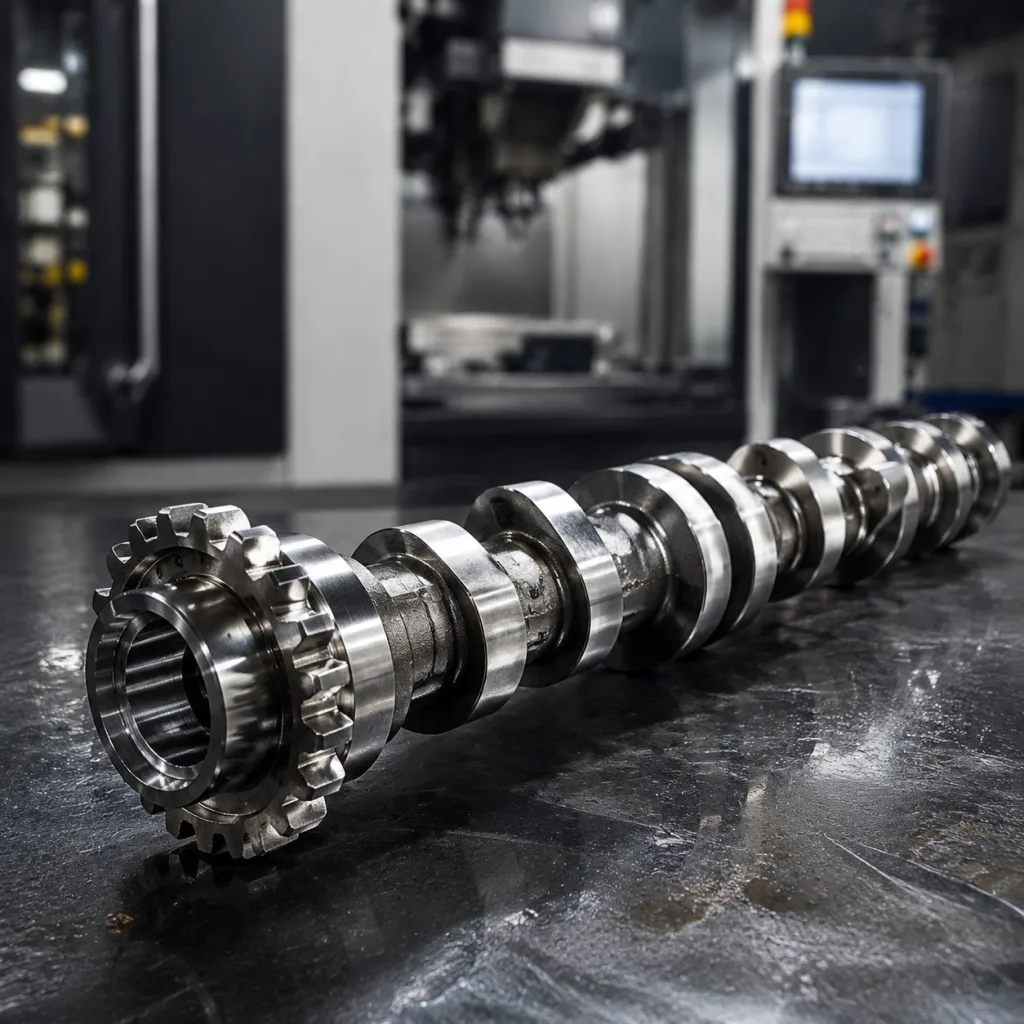
Camshaft for Porsche Boxster Aftermarket Replacement
A camshaft for Porsche Boxster aftermarket replacement is a timing-critical engine part, not a catalogue filler SKU. The purchasing decision should start with one question: can this part reproduce the intended OE valve events, cam position signal, lubrication behavior, and bearing support for the exact engine variant without installer modification? If not, low unit cost quickly becomes warranty cost.
For importers, distributors, engine rebuilders, and repair chains, the useful checks are practical and measurable: lift curve, base circle, journal diameter, runout, lobe phasing, thrust faces, oil-feed features, drive interface, trigger geometry, hardness, surface finish, and batch traceability. Boxster engine layouts leave little room for “close enough.” Similar-looking camshafts can differ by bank, intake/exhaust position, variable valve timing arrangement, sensor feature, or supersession history.
This guide approaches sourcing as a risk-control exercise. It covers fitment decisions, failure modes, inspection points, material and heat-treatment evidence, pilot validation, RFQ structure, and warranty review. Driventus manufactures engine and powertrain components in Taizhou, Zhejiang, under IATF 16949:2016 and ISO 9001:2015 systems. Driventus is an independent aftermarket manufacturer; vehicle brand names are referenced only to identify fitment.
Decision Gate: Prove Interchangeability Before Price Talks
Start with fitment proof. A replacement camshaft must reproduce the required lift curve, lobe relationship, journal geometry, thrust location, drive interface, oil-feed detail, and sensor or trigger features for the target Boxster engine family. If any one of those points is assumed rather than confirmed, the part should remain outside the approved range.
The buyer’s first decision gate should answer four questions:
Which engine code, model-year range, bank, and intake/exhaust position is the part for?
Does the camshaft use the same variable valve timing layout, trigger design, oil-feed detail, and drive interface as the approved reference?
Is the evidence based on a controlled drawing, master sample, or locked fitment matrix rather than catalogue wording?
Can the supplier trace every batch from raw material to machining, heat treatment, inspection, packing, and carton label?
Mixed-generation inventory is where mistakes happen. A cross-reference may make two parts appear interchangeable when the lobe phasing, trigger feature, or bank-specific geometry says otherwise. Treat each part as non-interchangeable until the drawing, master sample, or controlled fitment matrix proves it.
A buyer-ready approval file should include:
Application matrix by engine code, production range, bank, and intake/exhaust position
Controlled drawing with datum scheme, revision level, and critical-to-function dimensions
Material grade, heat-treatment route, and target hardness range, for example 52–60 HRC where applicable to hardened lobes
Lobe lift, base-circle, opening/closing angle, and lobe-separation report against the master profile
Trigger or timing feature angle report, commonly controlled within ±0.5° camshaft angle when required by the program
Packaging method for corrosion, end protection, and sea-freight handling
Batch traceability from raw-material heat number to final inspection and carton label
OE part-number cross-references may be used for identification when supplied by the customer. They are not proof of vehicle manufacturer approval, endorsement, or supply status. Driventus does not claim approval, endorsement, or supply status from any vehicle manufacturer.
Failure Modes That Start as Small Measurement Errors
Camshaft problems rarely begin as dramatic defects. More often, a journal is slightly wrong, a lobe profile is copied visually instead of measured, a trigger feature sits a fraction out of angle, or an intake camshaft is packed as an exhaust position. The engine then reports the error as noise, timing deviation, poor idle quality, cam correlation faults, oil-film breakdown, or accelerated wear.
Use the inspection plan to prevent those failures before sample approval:
Inspection item
Failure prevented
Typical procurement control
Overall length and thrust face width
Axial mislocation, end-float noise, carrier wear
Match approved drawing, commonly within ±0.05–0.10 mm depending on datum
100% inspection or AQL sampling; tolerance typically in the 0.01–0.03 mm range when drawing-controlled
Journal roundness and cylindricity
Local loading, uneven oil film, vibration
Checked on precision measuring equipment according to control plan
Cam lobe lift and base circle
Wrong valve lift, idle instability, power loss
Profile checked on cam measuring equipment, with lift deviation commonly held within ±0.02–0.05 mm
Lobe phasing
Incorrect timing relationship, correlation faults
Verified against master profile, often specified in cam degrees rather than visual position
Runout
Bearing load, valve-train vibration, uneven wear
Checked between centres; procurement target often ≤0.03–0.05 mm TIR when design permits
Surface hardness
Lobe wear, journal scoring, short service life
Confirmed after heat treatment at defined lobe and journal locations
Surface roughness
Poor bedding, oil-film disruption, follower wear
Lobe and journal Ra targets stated, often 0.2–0.8 μm depending on design and process
Sensor or timing trigger feature
ECU synchronisation errors, no-start or fault codes
Matched to target application and angle-verified to the approved reference
</tr></thead><tbody> </tbody></table>Where the buyer does not have an engineering drawing, build the inspection plan from an approved OE sample and lock the revision before tooling or bulk production. Visual comparison is not enough for a camshaft for Porsche Boxster aftermarket replacement.
Keep intake and exhaust camshafts separate unless controlled fitment data proves interchangeability. Variable valve timing features, trigger wheels, oil-feed details, drive slots, and bank-specific geometry can differ by engine generation. Importers should require separate part numbers for physically similar but non-interchangeable parts, and carton labels should state position clearly enough for warehouse staff and installers to avoid left/right or intake/exhaust errors.
A distributor buying from our catalog or the engine component range at /products/engine-components.html should still confirm exact application data before ordering production quantities.
Spec Deep-Dive: Metallurgy Is Not a Checkbox
“Hardened camshaft” is not a specification. Durability depends on the material route, lobe hardening method, machining accuracy, lubrication environment, follower interface, and installation condition. Depending on the design, replacement camshafts may use chilled cast iron, ductile iron, forged steel, or machined steel bar stock. The route should match the original architecture and expected contact stress.
For procurement, define the evidence instead of accepting broad claims:
Chemical composition verified for each melt or material batch, with raw-material certificates retained by heat number
Casting, forging, or bar-stock route controlled according to the approved process flow
Heat-treatment records linked to batch number, furnace load, time, temperature, and quench or cooling method
Surface hardness checks at defined lobe and journal locations, with target ranges stated in the inspection plan
Case-depth or hardened-layer checks where the process requires them, such as induction-hardened steel designs
Microstructure checks where required, especially for cast or chilled-iron routes
Grinding burn control through visual, etching, or process-based verification where applicable
Surface finish inspection on lobes, journals, thrust faces, and seal-contact areas
Demagnetising, cleaning, anti-corrosion oiling, VCI protection, and sealed export packaging
IATF 16949:2016 and ISO 9001:2015 help show that manufacturing processes are planned, audited, corrected, and documented. They do not, by themselves, prove the camshaft profile, material route, or interchangeability. Buyers need both: a controlled quality system and part-specific evidence.
That evidence should include drawing revision, control plan, inspection record, material route, heat-treatment record, surface finish data, and traceability method. If EU distribution is planned, REACH (EC) No 1907/2006 should be addressed through supplier declarations for applicable materials, oils, coatings, and packaging substances.
Packaging deserves the same discipline. A well-made camshaft can still arrive unusable if sea freight, warehouse handling, or mixed-carton picking damages lobes, journals, trigger features, or end faces. Specify corrosion protection, end protection, recyclability, pallet height, barcode format, carton drop resistance, and label layout before mass production.
Step-by-Step Pilot Approval Before Bulk Orders
Do not jump from a promising sample to a container order. A proper pilot approval links dimensional inspection, material verification, bench checks, installation feedback, and packaging review. The goal is simple: confirm that the camshaft supports correct oil-film formation, valve-event accuracy, trigger alignment, free rotation, and wear resistance in the intended application.
A practical approval sequence looks like this:
1. Drawing and sample review: confirm journals, lobes, thrust faces, drive features, oil-feed details, seal areas, and sensor or trigger features against the approved reference. 2. Dimensional report: measure lift, base circle, runout, lobe angle, journal diameter, thrust dimensions, surface roughness, and timing feature position. 3. Material and hardness report: confirm base material, chemistry, heat-treatment result, surface hardness, and case depth or microstructure where required. 4. Bench or fixture check: verify timing feature alignment, bearing support, end float, and free rotation in representative conditions before engine installation. 5. Pilot installation or engine validation: assess start-up, idle stability, absence of cam correlation fault codes, oil pressure behavior, abnormal noise, and post-run wear pattern. 6. Packaging drop and corrosion review: check export readiness for sea freight, 60–90 day storage cycles, mixed-carton handling, and warehouse picking.
For a new application, start with 2–5 sample pieces per part number for inspection and trial fitment. If results are clean, move to a pilot lot of 20–50 pieces before committing to wider distribution. Established designs can move faster, but the first mass-production lot should still include a pre-shipment inspection report and a defined containment rule for any critical dimension outside tolerance.
Repair chains should collect installation feedback by branch, installer, engine code, mileage, oil specification, and production batch. Early warning signs include abnormal valve-train noise, cam sensor correlation codes, poor idle quality, low oil pressure, or uneven lobe marking. Any repeated pattern should trigger batch containment until the root cause is understood.
Driventus supports replacement programs with production control plans, inspection records, and traceable batch documentation through its quality system.
Sourcing Scenario: Distributor RFQ Versus Repair-Chain Rollout
A distributor and a repair chain may ask for the same camshaft, but they do not carry the same risk. The distributor needs clean application data, packaging that survives inventory movement, and pricing that works across reorder cycles. The repair chain needs repeatable fitment, installer clarity, and fast warranty evidence if a branch reports noise or a fault code.
A balanced RFQ should define:
Target application range, engine codes, model years, bank position, and intake/exhaust position
Buyer-supplied OE cross-reference format, with no implication of vehicle manufacturer endorsement
Annual volume forecast, first-order quantity, and reorder trigger point
Sample quantity, approval timing, and responsibility for sample freight and destructive tests
Inspection report format, measurement units, language, and required measuring equipment
Packaging specification, including single-piece protection, VCI bag or oiling, carton strength, label layout, and barcode type
Marking rules for part number, batch, orientation, and anti-mix control
Required certificates, including IATF 16949:2016 and ISO 9001:2015 documentation
Incoterms, payment terms, freight preference, lead time, and service-part availability
Plan the timeline in separate blocks: sample preparation, tooling or fixture work, production, inspection, and freight. Typical aftermarket camshaft discussions may use 30–45 days for sample preparation when the reference and process are clear, and 45–75 days for first production after approval depending on material and heat-treatment capacity. New tooling, casting patterns, or special gauges can extend that schedule.
MOQ logic should be explicit. A trial order may be negotiated by part number for validation. Repeat production is often priced better when the buyer consolidates variants, confirms an annual forecast, or accepts economic batch quantities aligned with heat-treatment and grinding setup.
Compare landed cost, not just EXW or FOB unit price. A cheaper camshaft can become expensive if rejection rates rise, batch traceability is weak, packaging causes damage, or a 1–2% claim rate creates labour reimbursement disputes. Ask suppliers to quote sample price, pilot-lot price, mass-production price breaks, tooling or gauge charges, packaging cost, and raw-material price validity.
Private-label wholesalers often need carton artwork, neutral marking, barcode rules, and country-specific import documentation. Repair chains may value stable repeat supply more than broad catalogue coverage. For OEM or Tier-1 style projects, custom manufacturing can align drawings, tolerances, validation evidence, and change-control procedures with the buyer’s engineering process.
Driventus can support distributors in the EU, UK, US, Canada, Australia, and Brazil with structured sourcing discussions for camshaft and related engine component programs.
Warranty Q&A: When Is the Camshaft Really at Fault?
Can a correctly made camshaft still fail early? Yes. A camshaft can be damaged by a contaminated, oil-starved, incorrectly timed, or poorly prepared engine. Common non-product causes include blocked oil galleries, low oil pressure, reused worn followers or lifters, incompatible mating components, incorrect sealant use, poor lubrication during first start, contamination from previous engine damage, over-tightened caps, mixed bearing caps, damaged cam carrier surfaces, or incorrect variable valve timing actuator installation.
What should the carton or technical sheet tell installers? It should identify the application, engine position, bank where applicable, pre-lubrication requirement, related components to inspect, timing procedure requirement, and oil specification reminder. Clear documentation reduces avoidable claims and helps branches install the right part in the right position.
What evidence belongs in a warranty file? Use a checklist: photos of all lobes and journals, engine code, vehicle mileage, mileage at installation, mileage at failure, oil type and viscosity, oil-pressure information where available, fault codes, timing-tool confirmation, related parts replaced, installation notes, invoice date, and batch number from the packaging. Protect the returned camshaft from corrosion or impact so the wear pattern, discoloration, scoring, or fracture surface can still be evaluated.
When should inventory be contained? Agree on the rule before launch. Two similar early-life claims from one production lot should trigger stock hold, dimensional recheck of retained samples, hardness review, packaging audit, and installation-data comparison before more inventory is released.
What is the strongest way to reduce disputes? Control interchangeability. For a camshaft for Porsche Boxster aftermarket replacement, the buyer reduces warranty exposure when the part matches the required geometry, material route, hardness range, surface finish, timing features, packaging protection, and batch documentation.
Frequently asked questions
Yes, subject to application confirmation. Driventus can review engine code, camshaft position, bank position, sample data, drawings, target tolerances, annual volume, and buyer-supplied OE cross-references to assess replacement feasibility. Driventus is an independent aftermarket manufacturer; brand names are referenced for fitment only.
Request a dimensional inspection report, material or chemistry confirmation, heat-treatment and hardness records, surface finish checks, timing or trigger feature verification, batch traceability, packaging specification, and relevant IATF 16949:2016 and ISO 9001:2015 certificates.
Aftermarket replacement parts are normally sourced by dimensional and functional equivalence, not by vehicle manufacturer approval. Driventus does not claim endorsement, approval, or supply status from any vehicle manufacturer.
For application review, sample discussion, or a distributor RFQ, send the engine code, camshaft position, target quantity, packaging needs, and annual forecast to Driventus and [request a quote](/contact.html).