Camshaft Phaser vs NPR Alternative: Buyer Checklist
For procurement teams, the real question is not whether two parts look alike. It is whether the camshaft phaser will hold cam timing inside the engine calibration window under real oil pressure, temperature, and duty-cycle variation. That is why the camshaft phaser vs NPR alternative decision should be handled as a technical sourcing review, not a simple price comparison. In fleet repair, distributor stocking, and private-label supply, the wrong choice can lead to cold-start rattle, unstable idle, DTCs, reduced fuel economy, and returns that quickly erase margin. Driventus is an independent aftermarket manufacturer; brand names are referenced for fitment only. A practical comparison should be dimensional, hydraulic, and validation-based: bore size, vane travel, locking position, surface finish, seal material, cleanliness, and test evidence. Buyers should also review documentation quality, traceability, packaging protection, and lead time before placing volume orders.
What Buyers Should Compare First
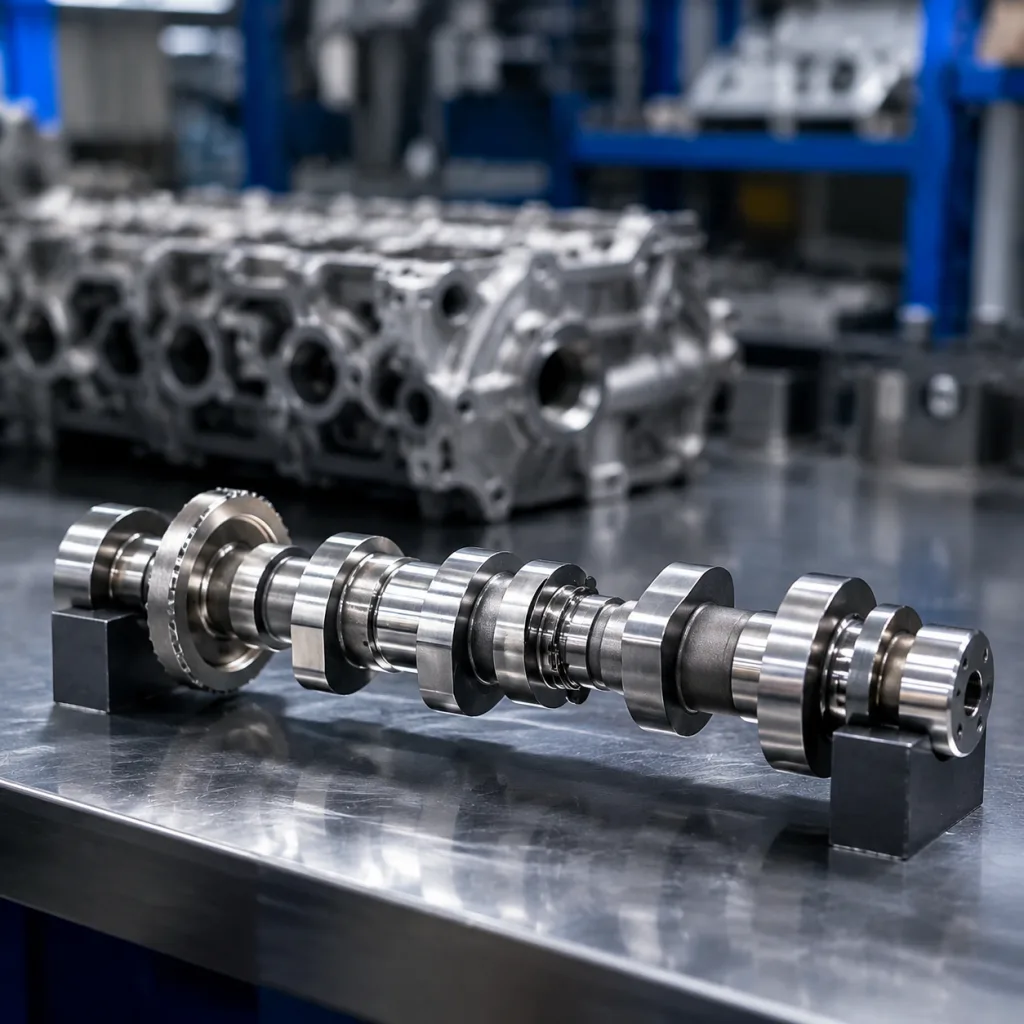
Start with function, not price. A cam phaser changes valve timing by rotating the camshaft relative to the drive element, and the engine expects that movement to stay within a narrow hydraulic and mechanical window. An NPR alternative is acceptable only if it matches the same phase authority, oil-control behavior, and lock strategy expected by the ECU and the service environment.
Before comparing unit price, procurement should check the items that directly affect field performance:
Checkpoint
OE-style cam phaser
NPR alternative
Phase authority
Matches the calibrated crank/cam angle range
Must replicate the angle range within acceptable tolerance
Lock position
Stable at low oil pressure and during shutdown
Must lock positively during cranking and hot idle
Oil control
Sized for intended flow, viscosity, and return rate
Must not bleed pressure or delay response
NVH behavior
Known acoustic profile
Must not introduce rattle, chatter, or oscillation
Service risk
Established benchmark
Requires validation evidence and field confidence
</tr></thead><tbody> </tbody></table>It also helps to confirm how the part is being sold: direct replacement, OE-equivalent, or application-specific aftermarket fitment. Those labels are often used interchangeably in sales language, but they are not the same from a quality or warranty standpoint. If the alternative does not clearly document phase range, lock strategy, and pressure sensitivity, it is a sourcing risk rather than a savings opportunity.
Fitment Details That Affect Service Life
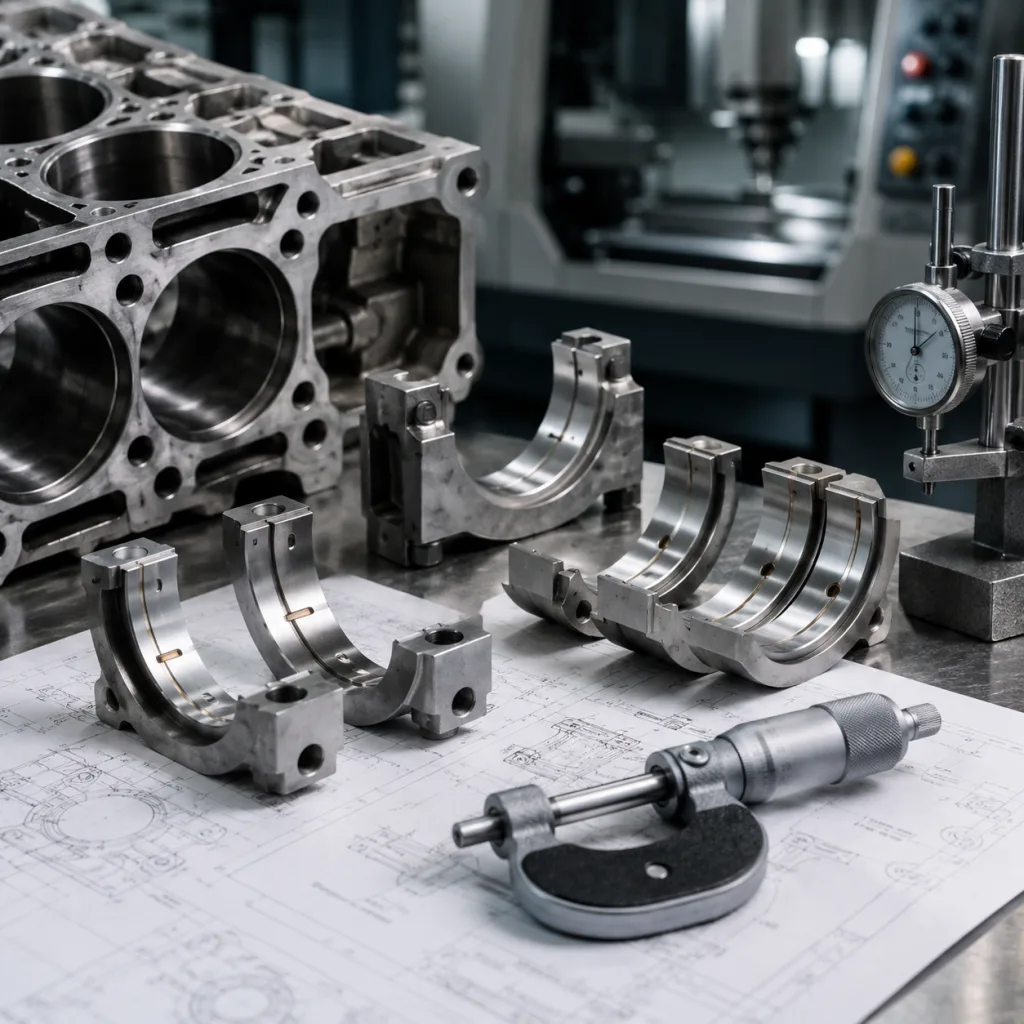
Procurement teams should request a dimensional report before approval, not after the first complaint. Small differences in machining, surface condition, or seal geometry can change internal leakage, delay actuation, and affect timing repeatability. Over time, those differences show up as intermittent fault codes, rough idle, poor cold-start behavior, or a return pattern that is difficult to diagnose.
Key items to verify during fitment review:
Bore and journal diameter
Rotor-to-stator clearance
Vane thickness, chamber volume, and edge quality
Lock pin engagement depth and return position
Oil gallery alignment and port geometry
Surface roughness on sealing faces
Heat-treatment depth where applicable
Seal elastomer compatibility with engine oil, additive packages, and temperature
Fastener interface and torque-seat condition where the phaser is supplied as an assembly
A single sample fitting is not enough. Buyers should look for repeatability across lots, because lot-to-lot variation is what creates service complaints in distribution channels. If the part is supplied as part of a broader timing system, align the phaser with the related components rather than buying it in isolation. Use our catalog and, where needed, products for engine components to check system-level compatibility before release.
Validation Evidence Procurement Should Ask For
For sourcing decisions, validation matters more than claims. A credible supplier should be able to tie test evidence to the exact application, not just to a generic part family. Buyers should ask how the part was validated, which failure modes were considered, and whether the test conditions reflect the engine's actual oil pressure, viscosity, thermal range, and duty cycle.
Common references include IATF 16949:2016 and ISO 9001:2015 for quality systems, plus material and chemical compliance where relevant under REACH (EC) No 1907/2006. Depending on the programme, buyers may also want PPAP-style documentation, process flow records, control plans, inspection plans, and change-control visibility so that the approved part does not drift after launch.
A sound test package may include:
Functional cycle testing across the expected oil-pressure range
Leak-down testing or hold-position verification
Endurance testing with measured phase drift over time
Hot-soak and cold-start testing to check lock behavior
Corrosion-resistance testing where the vehicle sees road salt, humidity, or water intrusion
Cleanliness control, contamination limits, and incoming material traceability
Dimensional inspection results tied to lot numbers and production dates
If the application is emissions-sensitive, ask how the part supports engine-control stability under the intended duty cycle. The key question is not whether the part passed a bench test once, but whether the supplier can explain the method, the acceptance criteria, and the evidence trail clearly enough for procurement, quality, and warranty teams to sign off with confidence.
When an NPR Alternative Is Acceptable
An alternative part is acceptable when it is a true dimensional and functional match, not just a similar-looking assembly. In practice, that means the supplier can prove the part behaves the same way in the areas that matter to the engine, the technician, and the end user. If those behaviors do not align, the part may still install, but it may not perform within the original service window.
A credible NPR alternative should demonstrate:
Equivalent envelope and connection geometry
Matching lock behavior at startup and shutdown
Compatible oil flow, fill rate, and response time
Stable operation through the expected temperature band
Acceptable acoustic behavior during cranking, idle, and transient load changes
Traceable production controls for repeat orders and warranty handling
This matters most for workshops and distributors supporting high-mileage vehicles, where small timing deviations can turn into repeat repairs. It also matters for fleets, where a lower unit cost can disappear quickly if downtime, labor, and returns rise. For that reason, the lowest landed cost is the right metric, not the lowest purchase price. If the part is being considered for a multi-vehicle or multi-channel programme, confirm the quality system and process discipline first by reviewing our quality system before approving a new source.
Sourcing Requirements For Volume Buyers
Volume sourcing is easier when the supplier can support documentation, packing, and production flexibility from the start. Buyers should ask how the supplier handles inspection records, lot traceability, packaging protection for oil passages and machined faces, and minimum order quantity before moving from sample approval to release. These details are often treated as logistics items, but in practice they are part of the product quality plan.
For camshaft phasers and related timing components, packaging is not a minor issue. A unit that arrives with contamination, damaged sealing surfaces, or distorted protective caps may pass visual inspection and still fail once installed. Volume buyers should therefore define acceptable packaging methods, shelf-life assumptions, and storage conditions up front, especially when stock will move through distributors or regional warehouses.
Driventus supports custom manufacturing for programmes that need private-label packaging, application-specific tolerances, controlled batch scheduling, or a launch plan tied to channel inventory. That is useful when the buyer is supplying several routes to market at once, such as aftermarket distributors, repair chains, and regional wholesalers, each with different labeling, carton, and replenishment expectations.
For procurement comparison, use these decision points:
1. Confirm fitment by part family and application data. 2. Review dimensional and functional evidence tied to the actual engine program. 3. Check quality documentation, traceability, and audit readiness. 4. Confirm lead time, MOQ, packaging, and replenishment terms. 5. Approve sample results and pilot orders before volume release. 6. Define escalation rules for nonconformance, returns, and replacement supply.
If these steps are completed, the part becomes a managed sourcing item rather than a recurring exception. That is the outcome buyers should aim for in any camshaft phaser vs NPR alternative decision, because it protects service quality while still leaving room for margin and supply-chain flexibility.
Frequently asked questions
Only if the phase range, lock position, oil response curve, and operating tolerances match the engine's calibrated window. If those values differ, fault codes, idle instability, cold-start rattle, or emissions issues can appear. Buyers should request test data and application-specific validation rather than assume interchangeability.
At minimum, ask for dimensional inspection records, material traceability, quality certificates, and evidence of production control under IATF 16949:2016 or ISO 9001:2015. For some programmes, chemical compliance under REACH is also required, along with lot-level traceability and change-control records.
Approve samples against the target application, not only against a drawing. Confirm oil control, lock behavior, packaging integrity, batch traceability, and assembly cleanliness before release. If possible, run a short field trial on representative vehicles and compare cold-start noise, idle stability, and scan-tool data before scaling the order.
If you need a fitment review, validation pack, or a private-label supply plan for a specific application, [request a quote](/contact.html).