Camshaft Phaser Opel Wholesale: Sourcing Guide
Camshaft phasers for Opel engines are a procurement item where fitment, oil control, and batch consistency matter more than brochure claims. Buyers usually need a supplier that can hold dimensional match across production lots, document material traceability, and support repeatable lead times for aftermarket distribution or repair networks. Driventus is an independent aftermarket manufacturer; brand names are referenced for fitment only. For wholesale buyers, the decision should start with the engine family, valve timing architecture, and target application rather than the vehicle badge. The right programme will balance OE-equivalent geometry, validated phasing response, packaging for export, and documents that pass supplier qualification. This article sets out what to verify before you place an order, which quality controls matter, and how to compare suppliers without relying on marketing language.
What to confirm before you place an order
A camshaft phaser should be sourced against the engine build, not just the model name. For Opel applications, ask for the exact engine code, intake or exhaust position, drive type, connector or oil control interface, and any OE reference supplied by your customer. If the buying team works across multiple countries, also confirm carton labelling, barcoding, and export document format before the first shipment.
Use this as the minimum intake checklist:
- Engine code and valve timing layout
- Intake or exhaust location
- OE reference provided by the buyer
- Target market and label requirements
- Annual volume, forecast split, and MOQ tolerance
- Sample approval method and return policy
You can review our catalog to map the part family before requesting a quote. If the application includes adjacent timing hardware, it is often more efficient to source the full set from the same supplier so that packaging, traceability, and warranty handling stay aligned.
Key technical checkpoints for Opel programmes
For wholesale sourcing, the most useful technical questions are the ones that affect installation success and warranty risk. A phaser can look correct externally and still fail if its oil passages, locking behaviour, or phase travel do not match the engine calibration.
| Procurement check | Why it matters | What to request |
|---|---|---|
| Mounting and spline or bolt pattern | Prevents fitment issues at assembly | Dimensioned drawing or sample match report |
| Oil gallery and seal surfaces | Affects response time and leakage risk | Cross-section photos and functional test data |
| Phasing range and locking position | Must align with ECU strategy | Test summary from sample validation |
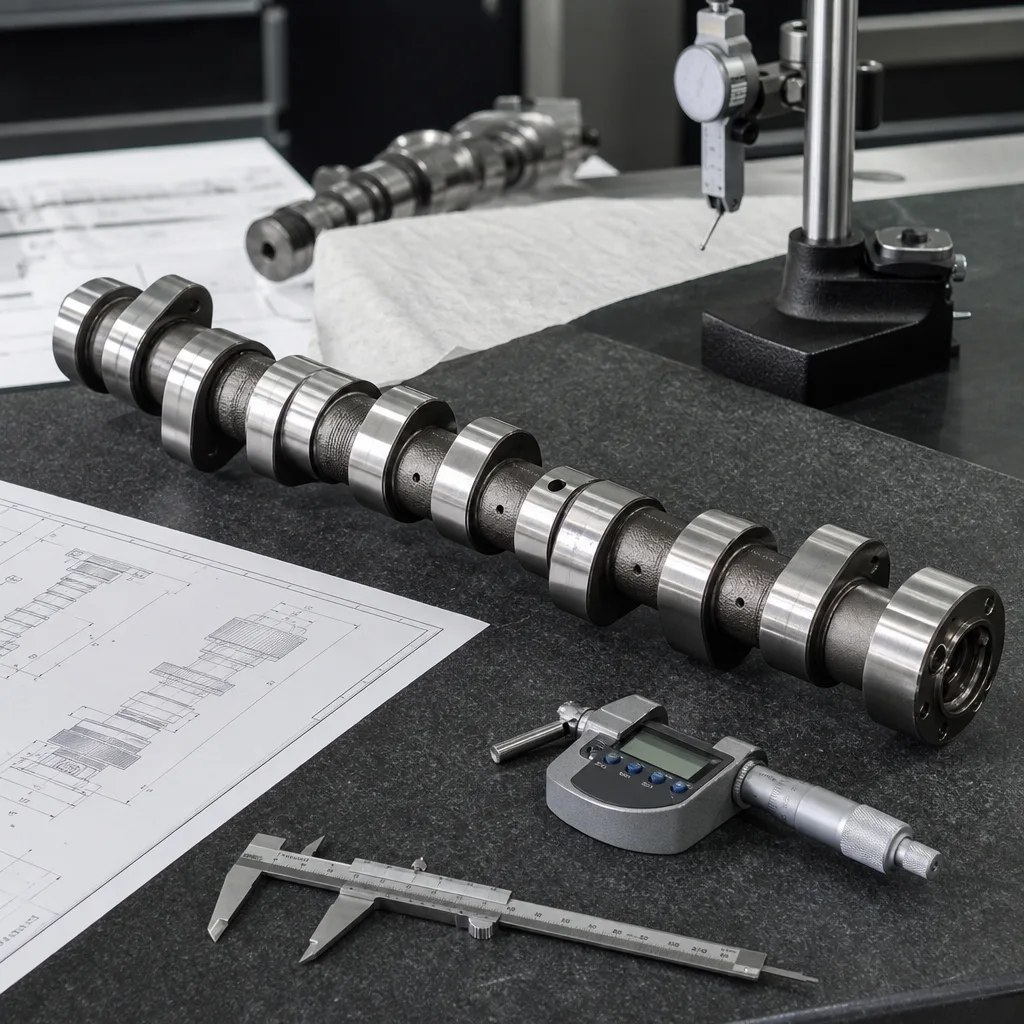
| Surface finish and runout control | Influences wear and oil stability | Inspection record with critical dimensions |
| Packaging and corrosion protection | Reduces transit damage and shelf degradation | Export carton spec and preservation method |