Cylinder Sleeve Nissan Wholesale: How B2B Buyers Actually Qualify Supply
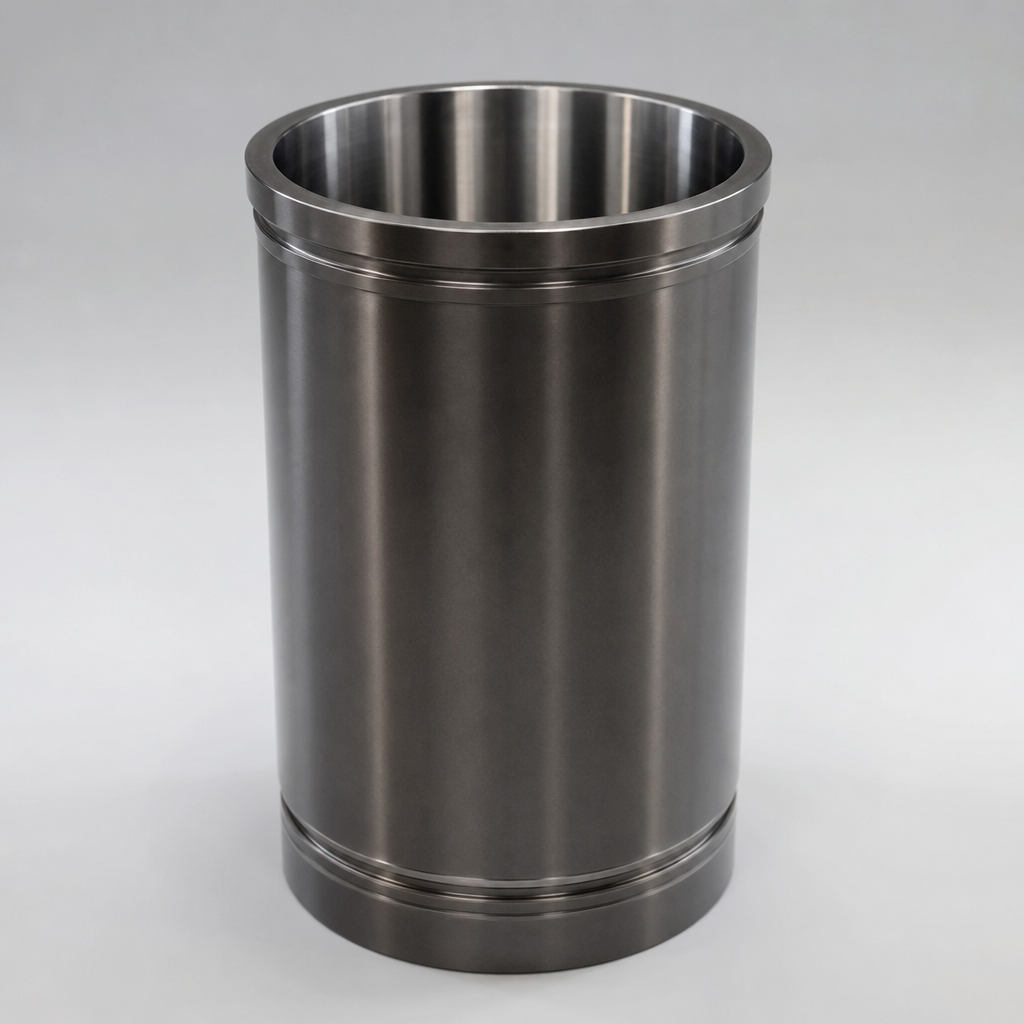
Procurement teams buying cylinder sleeves for Nissan engine applications usually need more than a price list. The real decision sits in dimensional control, metallurgy, batch traceability, MOQ, and whether a supplier can repeat the same result across multiple engine families without quality drift. For importers and distributors, sleeve failure turns into warranty cost fast, so supplier screening has to rest on measurable controls, not catalogue language.
This article breaks down cylinder sleeve nissan wholesale sourcing the way buyers typically handle it in practice: first define the fitment and machining route, then pressure-test the technical controls, then verify whether the factory can keep those numbers stable at production volume. It also covers commercial terms, document requirements, and the warning signs that usually show up before a sleeve program becomes expensive.
Start With the Decision, Not the Quote
Before comparing prices, lock down three variables: engine code, sleeve configuration, and finishing status. That sounds basic, but most sourcing errors start here. Nissan-fit cylinder liners can differ by bore size, flange geometry, outer diameter, wall thickness, and parent block material. If any of those assumptions are wrong, the result is usually machining delay, installation scrap, or field claims.
For cylinder sleeve nissan wholesale enquiries, ask suppliers to confirm these points before quotation approval:
Application list by engine code and market region
Sleeve type: dry sleeve or wet sleeve
Material grade and hardness range
Critical dimensions with tolerances: inner diameter, outer diameter, total length, flange diameter where applicable
Surface finish values for bore and seating surfaces
Packaging format per set, carton, and pallet
Batch traceability method and inspection report availability
Export compliance documents where required, including REACH (EC) No 1907/2006 declarations for relevant markets
One decision changes everything downstream: semi-finished versus finish-honed supply. A semi-finished sleeve gives the rebuilder final control after installation, but it also shifts more machining and inspection work to the buyer side. A finish-honed sleeve saves time in the workshop, yet it demands tighter agreement on bore size, surface finish, and piston-to-wall clearance.
At RFQ stage, buyers should ask for nominal drawing values and the control method for each critical feature. A semi-finished sleeve may carry an ID machining allowance of about 0.20 to 0.50 mm for post-installation honing. A finish-honed sleeve, by contrast, may need bore tolerance held within roughly +/-0.01 to +/-0.02 mm depending on engine family and service program. For press-fit applications, outer diameter tolerance is often discussed around +/-0.01 to +/-0.03 mm, but the usable value depends on block material, interference target, and installation method.
Also settle the commercial basics early:
Is the quote per sleeve, per engine set, or per cylinder position range?
Are dimensions controlled at 20 C reference temperature?
Are ends rough-cut, finish-faced, or flange-machined?
Is anti-rust oil, VCI paper, or sealed polybag packing included?
Does MOQ apply by part number, engine family, or combined order?
If the supplier also offers related engine hard parts through our catalog, buyers can combine purchasing and reduce container fragmentation. That matters for freight efficiency and stock planning.
Failure Modes That Separate a Good Sleeve From a Cheap One
A sleeve rarely fails because the quote sheet looked incomplete. It fails because one of a few technical controls drifted and nobody caught it in time.
The main failure paths are predictable:
Incorrect OD or interference fit, leading to loose seating or installation damage
ID inconsistency, which disrupts honing allowance or finished piston clearance
Poor roundness or cylindricity, causing ring sealing and oil-control issues
Unstable wall thickness, affecting heat transfer and distortion behavior
Hardness outside target range, creating wear or machinability problems
Flange variation, which can alter protrusion and head-gasket sealing
Weak traceability, which turns one defect into a broad warranty problem
That is why material and machining control need to be reviewed as operating risks, not box-ticking items.
What a serious supplier should be able to state clearly
Base material: typically alloyed cast iron or centrifugally cast iron selected for wear resistance and dimensional stability
Hardness range: controlled for ring compatibility and service life, with defined test frequency
Microstructure control: graphite distribution and matrix consistency checked through metallurgical review
Bore tolerance: agreed according to semi-finished or ready-to-install supply
Roundness and cylindricity: measured and reported on critical references
Wall thickness consistency: checked by section, not just by nominal callout
Chamfer and edge condition: controlled to reduce installation damage
For supplier comparison, this summary keeps the discussion grounded:
Check point
Why it matters
Typical buyer question
Inner diameter tolerance
Ring sealing and piston clearance
Is the sleeve semi-finished or finish-honed?
Outer diameter tolerance
Block fit and retention
What press-fit range is specified?
Hardness control
Wear life and machinability
What is the tested hardness range by batch?
Material certificate
Metallurgical consistency
Can you provide heat or batch records?
Surface finish
Oil retention and assembly quality
What Ra value is controlled on bore and seating surfaces?
Traceability label
Warranty containment
Can each carton be linked to inspection data?
</tr></thead><tbody> </tbody></table>In real sourcing discussions, buyers expect numbers. Typical reference values often reviewed include bore surface finish around Ra 0.4 to 1.2 um for finished internal surfaces, external seating surface finish around Ra 1.6 to 3.2 um, hardness in a controlled range such as 180 to 260 HB or equivalent by drawing, and roundness or cylindricity roughly within 0.01 to 0.03 mm depending on size and process stage. These are not universal release values, but they are the level of specificity a capable supplier should handle without hesitation.
Wall thickness deserves extra attention. For a medium-size dry sleeve, buyers may ask for minimum wall tolerance within +/-0.05 mm or better where thermal distortion or fit stability is critical. For flanged sleeves, flange thickness and flange face runout also need confirmation.
Just as important: ask how the dimensions are measured. Room-temperature standard, gauge type, sampling frequency, and report format all matter. Small variation in OD or bore geometry changes press-fit behavior, honing allowance, and service life. If a supplier cannot present these controls in a stable, repeatable format, the risk shifts directly to the importer.
Compare Factories by Process Stability, Not Sample Appearance
A clean sample does not prove a stable program. For recurring orders, the real question is whether the supplier can hold the same bore, OD, wall section, and traceability standard when the volume increases and part numbers change over.
A practical factory assessment for Nissan-fit sleeve programs should cover:
Incoming raw material control
Casting source management or in-house foundry capability
Machining process sequence
In-process gauging and final inspection equipment
Calibration records
Lot identification through production and packing
Nonconformance handling and containment process
Export packaging validation
Standards such as IATF 16949:2016 and ISO 9001:2015 help because they impose structure on control plans, corrective action, and traceability. They do not guarantee performance by themselves. Buyers still need to verify how the factory runs.
A useful walk-through traces the part step by step: raw casting receipt, rough turning, heat stabilization if applicable, semi-finish machining, internal boring, OD grinding or turning, flange machining, honing, deburring, washing, rust prevention, final inspection, and packing. Ask which stages are in-house and which are subcontracted. If honing or final inspection is outsourced, lead time and lot control usually become less predictable.
Then get specific about capability. Ask whether the plant tracks Cp or Cpk on critical dimensions such as outer diameter, bore size, and total length. Many buyers use 1.33 as a minimum reference for stable mass production. Even if the supplier does not run full SPC on every characteristic, it should still define first-off approval, in-process check frequency, and final lot audit rules.
Capacity claims also need proof. A supplier quoting 5,000 to 10,000 sleeves per month should be able to show machine count, shift pattern, and inspection throughput that support that number. If your demand is spread across 15 to 30 Nissan references, ask how often each part number is scheduled and what the normal batch size is. That determines whether the supplier can support smaller replenishment orders without forcing you into excess inventory.
If private label, dimensional adaptation, or custom packing is required, buyers should also review the supplier's custom manufacturing capability. For broader engine hard-part procurement, buyers may also review our catalog to align sleeve sourcing with pistons, rings, gaskets, or cranktrain parts in the same supply base.
Work Through MOQ and Lead Time Like an Operations Problem
Commercial terms on sleeve programs are usually manageable when discussed early. Problems appear when MOQ, batch logic, and lead-time structure stay vague until after sample approval.
The main checkpoints are:
MOQ: often tied to part number, carton quantity, or machining efficiency
Lead time: different for stocked references, repeat orders, and custom programs
Tooling: relevant where new dimensions or non-standard features are needed
Sample policy: first-article approval before mass production
Inspection basis: AQL level or agreed dimensional sampling plan
Incoterms: needed for landed-cost visibility
Warranty handling: evidence requirements and claim timing
For import managers, stable lead time often matters as much as piece price. A cheaper sleeve becomes expensive when production slips by four to six weeks or dimensional variation increases sorting labor at the warehouse.
Ask for a written lead-time split covering:
1. Sample preparation 2. Mass production 3. Packing 4. Port delivery
That gives a more realistic picture than a single headline promise.
MOQ should also be defined precisely. Does it apply per part number, per shipment, or per combined production run? Some suppliers can mix models efficiently in one container. Others only price well when each size runs as a full batch. That difference directly affects working capital and stocking strategy.
As a practical market reference, standard wholesale MOQs are often discussed around 100 to 300 pieces per part number for regular sizes, or one to five cartons when semi-finished stock is already available. Custom dimensions, special flange features, or private-label boxed sets may raise MOQ to 500 to 1,000 pieces because setup loss, packaging print cost, and inspection effort must be spread across fewer units. Ask what is really driving MOQ: foundry melt batch, machining setup, honing stones, printed boxes, or carton minimums.
Price logic should be broken out the same way. Request a quote that shows:
Unit price by volume break, such as 100, 300, 500, and 1,000 pieces
Added cost for finish honing versus semi-finished supply
Packaging surcharge for private label boxes, barcode labels, or master-carton redesign
Tooling or sample charge if a new drawing is opened
Cost effect of mixed-size loading in one order
Lead-time logic follows the same pattern. A repeat program may ship in 15 to 30 days. A made-to-order sleeve with new packing and first-article approval may take 35 to 60 days from deposit and drawing confirmation. First orders involving tooling, outsourced casting, or artwork approval usually take longer than replenishment orders. Buyers should ask suppliers to state both figures in writing.
Request a Document Pack That Can Survive a Claim
A wholesale sleeve order should arrive with a document pack that makes incoming inspection, traceability, and warranty containment easier. Certificates alone are not enough. Buyers need records tied to the shipped lot.
Recommended document set
Dimensional drawing or approved technical sheet
Material declaration where market requires it
Final inspection report by lot
Packing list with quantity per carton and pallet
Traceability label format
Certificate references to IATF 16949:2016 and ISO 9001:2015 where applicable
Corrective action workflow for nonconforming product
If a supplier claims process control, review the quality system in practical terms: gauge control, inspection frequency, record retention, and how nonconforming material is isolated.
For cylinder sleeves, the inspection report should show actual measured values, not just pass or fail. At minimum, buyers commonly request ID, OD, total length, flange diameter, flange thickness where applicable, hardness result, inspected quantity, lot size, and inspection date. If the sleeve is semi-finished, the report should state machining allowance clearly so the warehouse or rebuilder does not misclassify the part as final-size stock.
A useful first-order document pack may include:
Approved drawing with revision level
Material grade statement and hardness specification
Dimensional report for sample and production lot
Packaging specification with unit count, carton dimensions, and gross weight
Palletization plan where container efficiency matters
Nonconformance and 8D response timing commitment
Record retention should be agreed as well. Many importers ask suppliers to keep inspection and traceability records for at least 2 to 5 years so field claims can be traced back to shipment lot. In higher-risk commercial or fleet rebuild channels, buyers may require longer retention.
This is especially relevant when repeat orders move into the EU, UK, US, Canada, Australia, or Brazil, where internal supplier qualification rules are often stricter than the base purchase contract.
A Practical Approval Sequence for Long-Term Supply
The strongest supplier is usually not the one with the lowest opening price. It is the one that can hold specification across repeat lots, communicate deviations early, and support commercial flexibility without losing traceability.
A practical selection checklist looks like this:
Stable dimensional capability across production lots
Clear application mapping by engine code
Documented material and hardness control
Manageable MOQ for your stocking model
Predictable production and shipment schedule
Responsive claim handling process
Ability to combine related engine components in one procurement plan
For teams qualifying a new source, a staged approval path works better than a large first order.
1. Review drawings, tolerances, and fitment mapping. 2. Approve samples against dimensional and material requirements. 3. Place a pilot lot, often around 50 to 200 pieces. 4. Compare incoming inspection data against the approved sample and drawing. 5. Collect installation feedback before releasing the first full commercial batch.
That sequence gives buyers a real baseline for supplier review. During the pilot phase, track incoming defect rate, dimensional variation by lot, lead-time adherence, and response speed on technical questions. Those numbers are more useful than a polished capability presentation.
For ongoing scorecards, practical KPIs often include:
On-time delivery percentage by promised ship date
PPM or percent defect rate at incoming inspection
Claim response time, such as 24 to 72 hours for initial containment reply
Repeat-order lead time stability by part number
Price consistency across raw-material changes and annual negotiations
In long-term cylinder sleeve nissan wholesale purchasing, repeatability is what protects margin. A supplier that shares inspection data, flags delays early, and understands engine-code fitment usually reduces hidden cost across freight, warehousing, warranty, and planning.
Driventus supplies engine and powertrain components for B2B customers in export markets and supports catalogue supply as well as customer-specific programmes. Driventus is an independent aftermarket manufacturer; brand names are referenced for fitment only. To discuss drawings, MOQ, packing, or audit requirements, use the request a quote page.
Frequently asked questions
MOQ depends on whether the sleeve is a standard item or a custom program. Many suppliers quote by part number and carton quantity. As a practical range, regular wholesale references may start around 100 to 300 pieces per size, while custom sleeves or private-label boxed programs can require 500 pieces or more. Buyers should also confirm whether MOQ changes for private label packaging, mixed-model orders, or combined production runs.
That depends on the rebuild process. Semi-finished sleeves give the rebuilder final control over bore sizing after installation and often include a machining allowance of roughly 0.20 to 0.50 mm. Finished sleeves can reduce machining time, but dimensional agreement, target piston clearance, bore finish, and inspection standards must be clearly defined before order release.
For B2B procurement, IATF 16949:2016 and ISO 9001:2015 are the main quality management references. Buyers should still verify actual process controls, inspection records, traceability, calibration discipline, and corrective action handling during qualification. In practice, measured lot reports, documented hardness control, and clear dimensional tolerances are more actionable than certificates alone.
If you are qualifying a new source for cylinder sleeves, send your application list, drawings, target tolerances, and annual volume through our [request a quote](/contact.html) page.